

The summer walk can wait a little
Hot days can make normal dog routines feel surprisingly different. A walk that felt easy in spring can become too much in July. A sunny patio can turn uncomfortable faster than it looks. Even a short car stop can become dangerous if the temperature climbs.
The confusing part is that many dogs will still try to be dogs about it. They may want the walk, the game, the garden patrol, the exciting errand, and the official sniffing route. That does not always mean the plan is safe. In warm weather, humans have to become the tiny weather department.
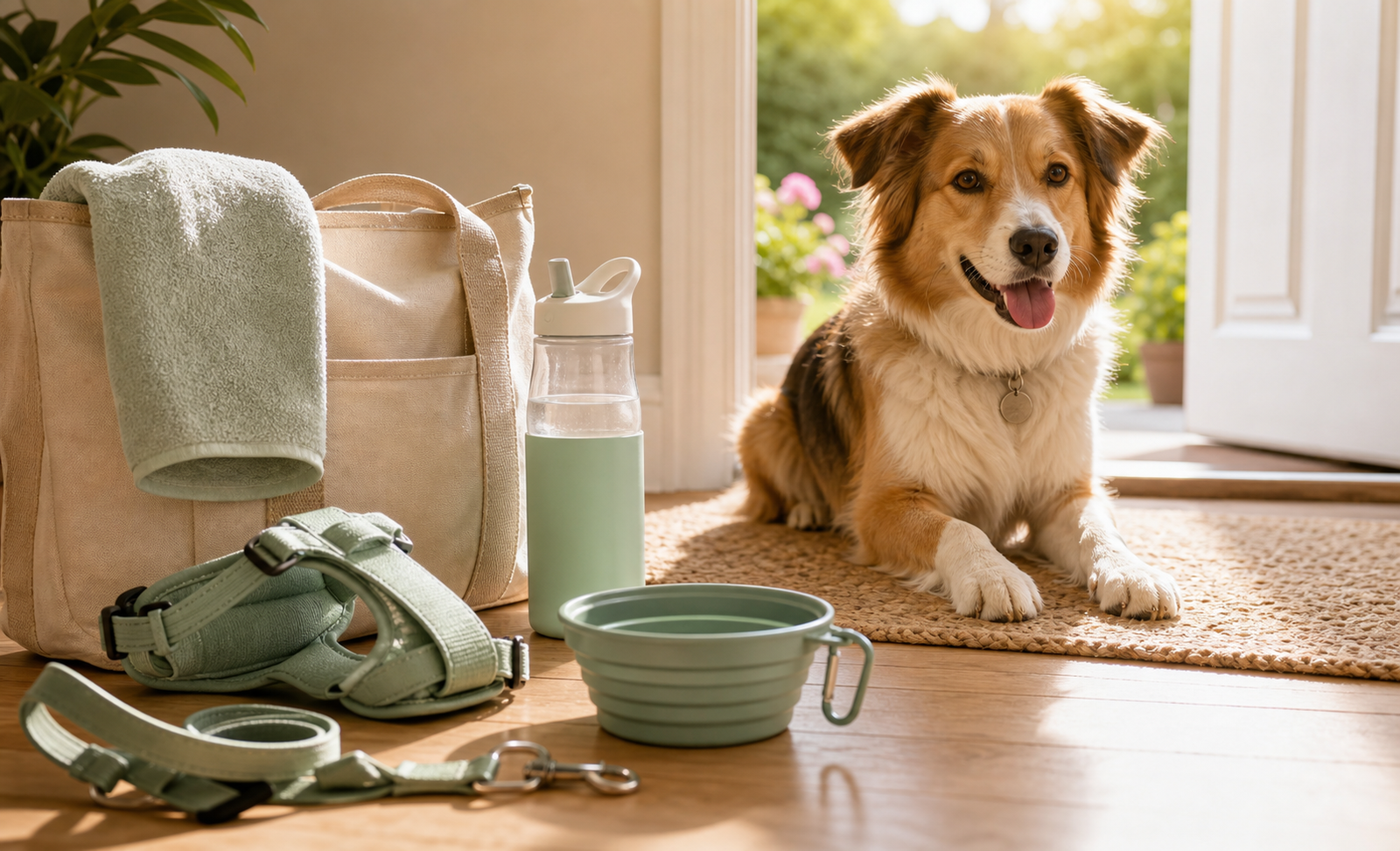
The goal is not to make summer boring. It is to shift the routine so your dog still gets comfort, attention, enrichment, and gentle movement without being pushed into heat stress. Shade, water, timing, and calmer choices do a lot more than people sometimes realise.
Why Hot Days Can Sneak Up On Dogs
Dogs do not cool themselves exactly the way we do. Panting helps them move heat out of the body, and they can lose a little heat through their paw pads, but they are still carrying a warm body in a fur coat. Some dogs manage heat better than others, but no dog is magically heat-proof.
Flat-faced breeds, older dogs, puppies, overweight dogs, dogs with heart or breathing problems, and dogs with thick coats can struggle sooner. But a fit young dog can still overheat if the day is hot enough, the pavement is too warm, or the activity goes on too long.
That is why hot-weather safety is not only about dramatic heatwaves. It is about noticing when normal plans need editing. The dog may be enthusiastic, but enthusiasm is not a cooling system.
Walk Timing Matters More Than Distance
On hot days, the best walk is often the boringly sensible one: early morning or later evening, shorter than usual, with a route that includes shade and easy ways to turn back. The point is not to hit a step count. The point is to let the dog sniff, move, and settle without turning the walk into a tiny endurance test.
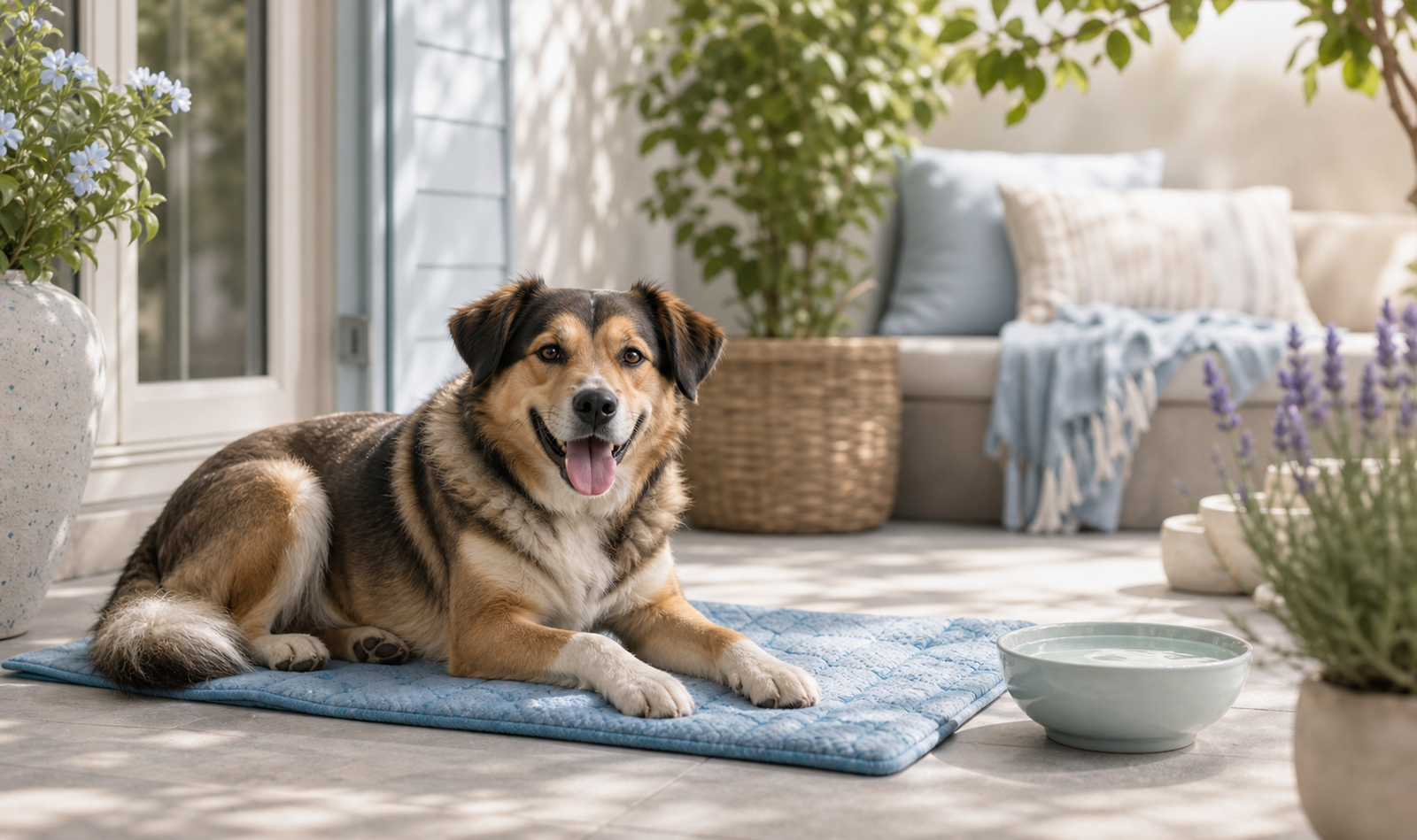
If the day is already warm before breakfast, keep the walk gentle. Swap long pavement routes for shaded grass, quiet streets, or a short sniff loop. If the air feels heavy, the dog is pulling less, or they keep seeking shade, that is useful information. The route can shrink. The dog will survive the scandal.
For very hot days, enrichment at home can replace the walk completely. A missed walk is not a failure. It can be the safest choice.
Shade, Water And Quiet Breaks Are Not Optional
Dogs should always have access to fresh water, but warm weather makes that rule louder. Water bowls should be easy to reach indoors and outdoors, and a portable bowl is useful if you are going anywhere longer than a tiny doorstep mission.
Shade matters too. Not decorative shade that disappears after ten minutes, but real shade where the dog can rest without sitting in direct sun. A cool room, tiled floor, shaded garden spot, fan-assisted airflow, or cooling mat can turn a hot afternoon from stressful to manageable.
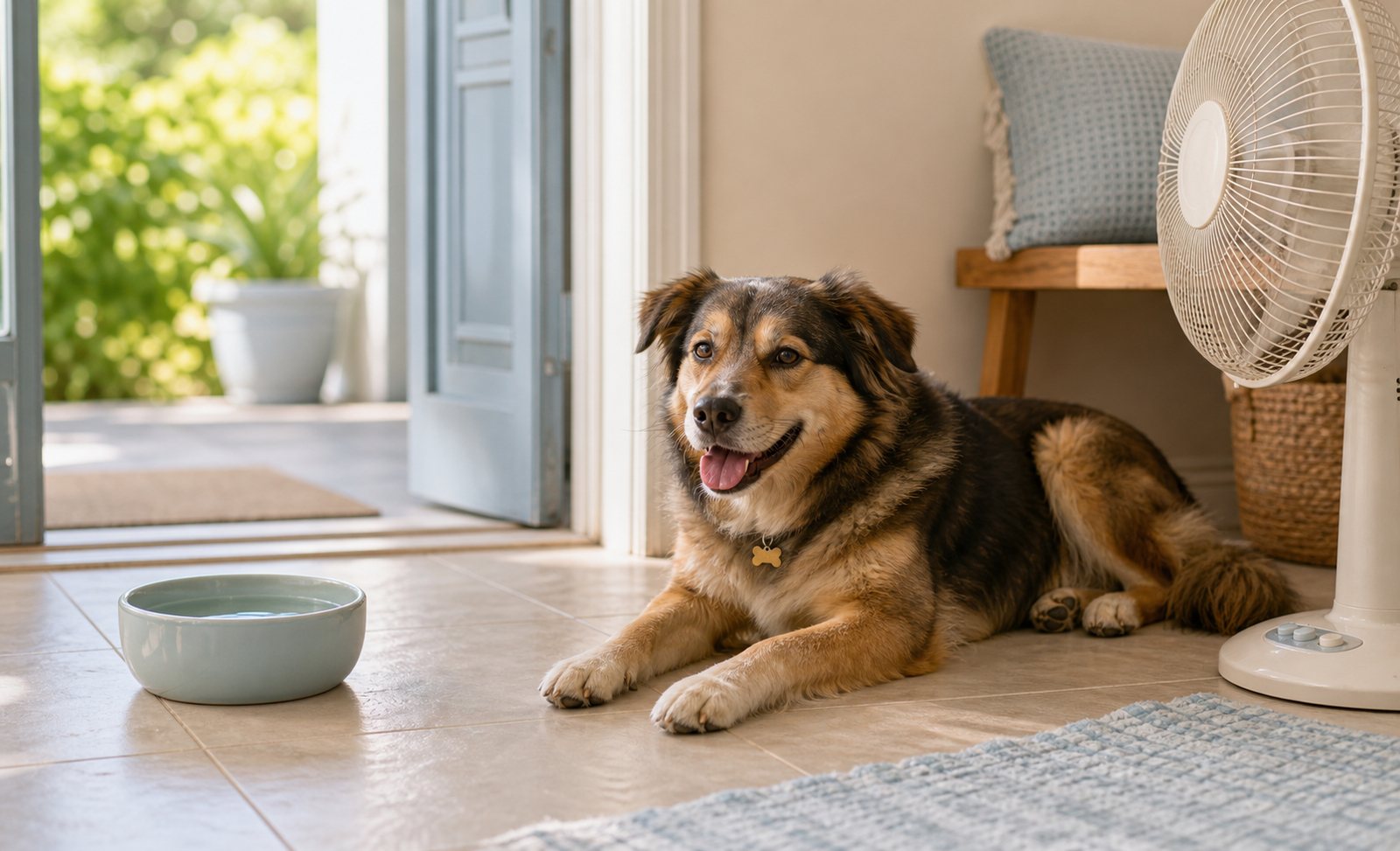
Quiet breaks are part of the plan. If a dog has been playing, travelling, or walking, they need time to settle. Some dogs will keep asking for more because the game is exciting. That is where the human has to be the sensible one.
Hot Pavement Is A Hard No
Pavement, decking, artificial grass, patios, and dark surfaces can get much hotter than the air around them. If it feels uncomfortable on your hand or bare foot, it is not a fair walking surface for paws.
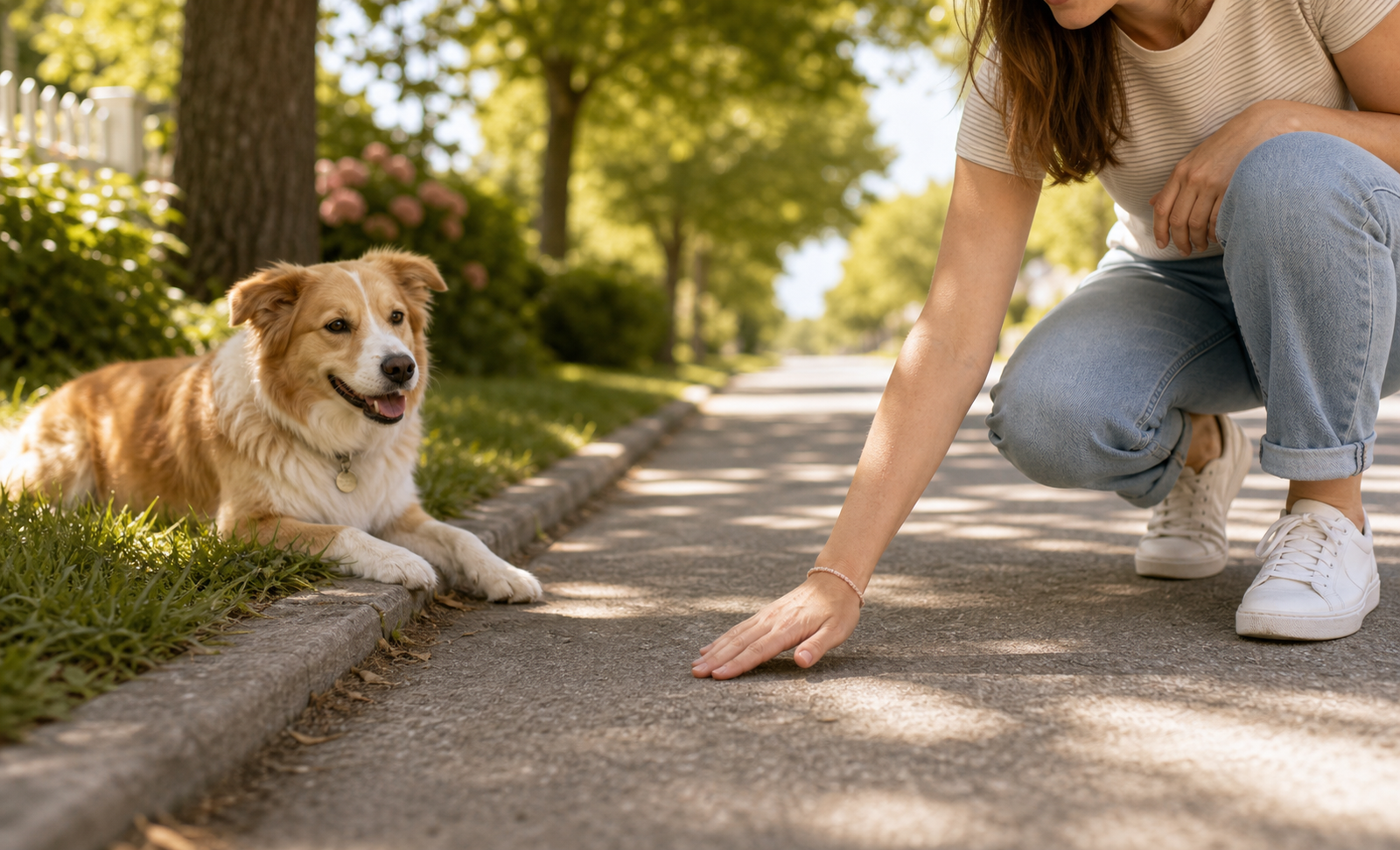
The safer move is simple: test the surface, choose shade, use grass where possible, and avoid midday walks. Paw burns are painful, and dogs may not immediately understand why the ground suddenly hurts. If a route is mostly pavement and the day is hot, it is probably not the route for that day.
This is also why “just a quick walk” can still be a problem. Quick on hot pavement is still hot pavement.
Give Them Cooler Summer Jobs
Dogs do not need every summer activity to be fast or physical. Many dogs are perfectly happy with slower jobs when the job still feels interesting. A snuffle mat, food puzzle, frozen lick mat, gentle training session, cardboard-box search game, or supervised cool treat can give the brain something to do while the body stays calmer.
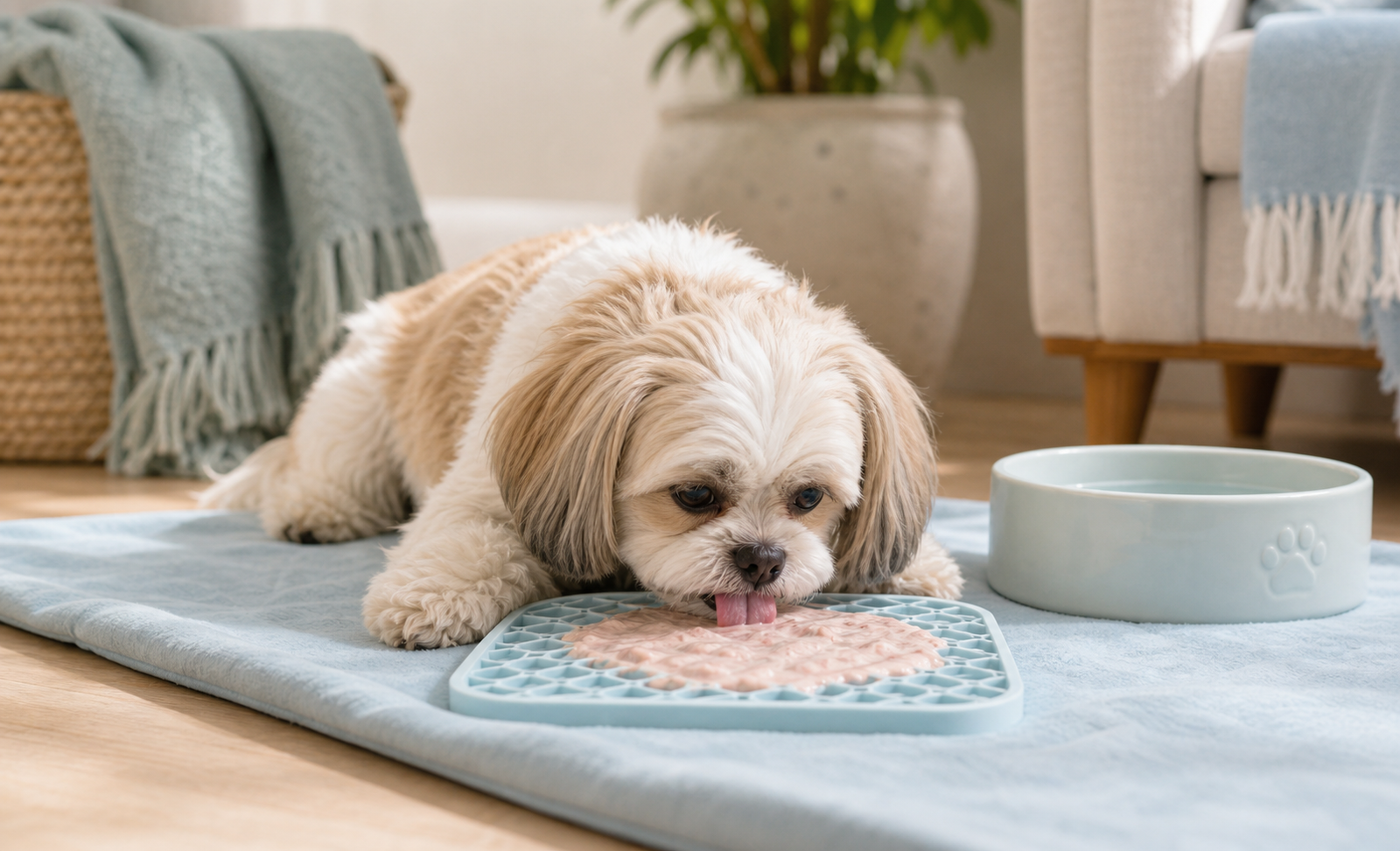
The best summer enrichment feels like a tiny assignment: find the treat, lick the mat, sniff the towel, choose the toy, settle in the cool spot. It gives the dog a way to participate in the day without turning the whole room into a sports event.
If your dog loves water, paddling can help, but keep it safe and supervised. Not every dog loves water, and not every splash session is automatically cooling if the dog is still overexcited, sun-exposed, or unable to rest.
Cars Need Extra Respect
Cars can heat up quickly, even when the outside temperature does not seem extreme. A cracked window is not a safety plan. If a dog cannot come with you safely, the dog is usually better staying home in a cool room.
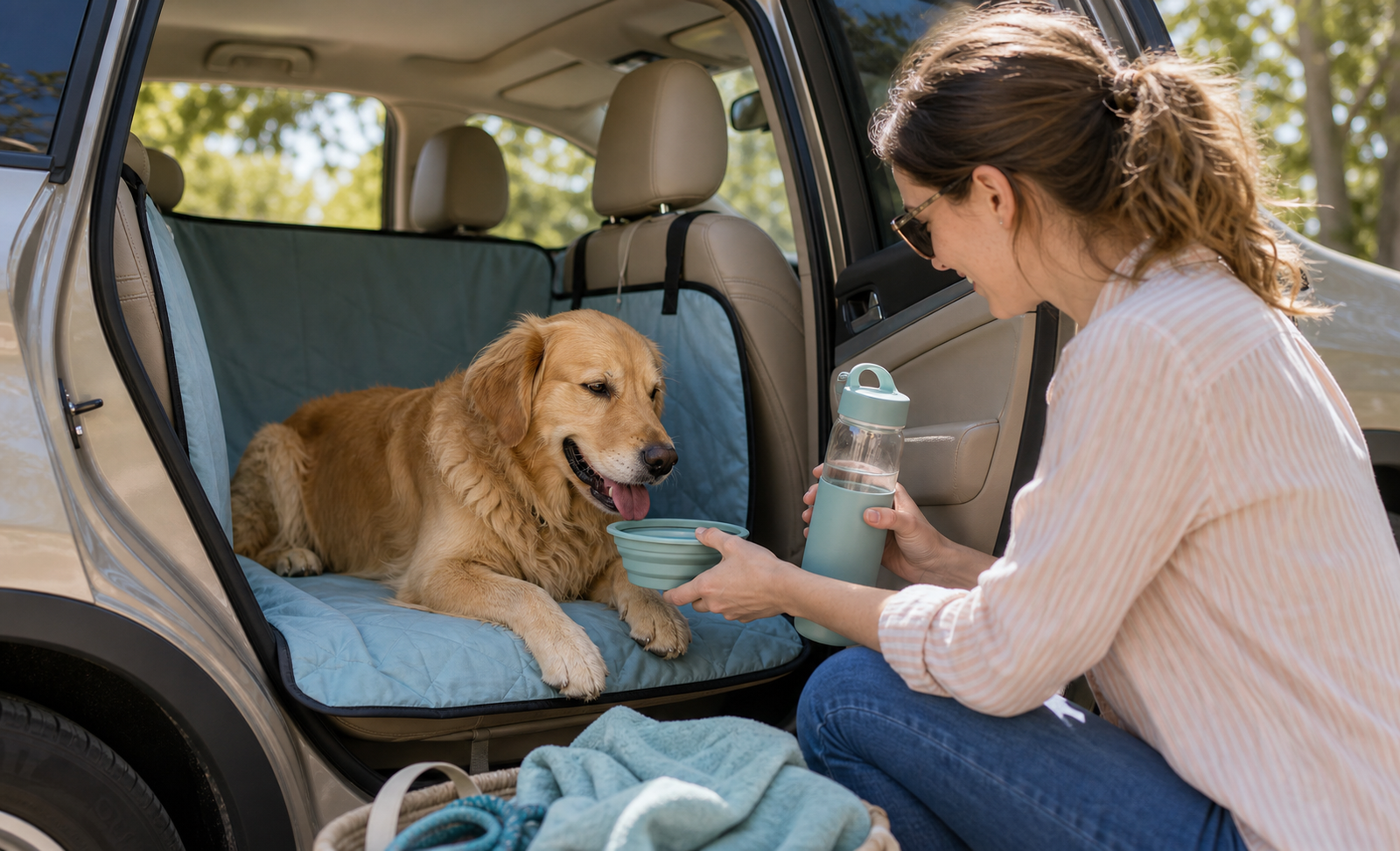
For necessary travel, plan like the dog is part of the route, not luggage. Bring water, use shade, avoid unnecessary stops, keep the car ventilated, and never leave the dog alone in a warm vehicle. If the errand is not dog-safe, it is not a dog errand.
This is one of those rules where cute exceptions are not worth it. The risk rises too quickly.
Signs Your Dog May Be Getting Too Hot
Early heat stress can be easy to miss if you are expecting something dramatic. Watch for heavy panting, drooling, slowing down, weakness, confusion, wobbliness, vomiting, glazed eyes, bright red or very pale gums, collapse, or a dog that cannot seem to settle.
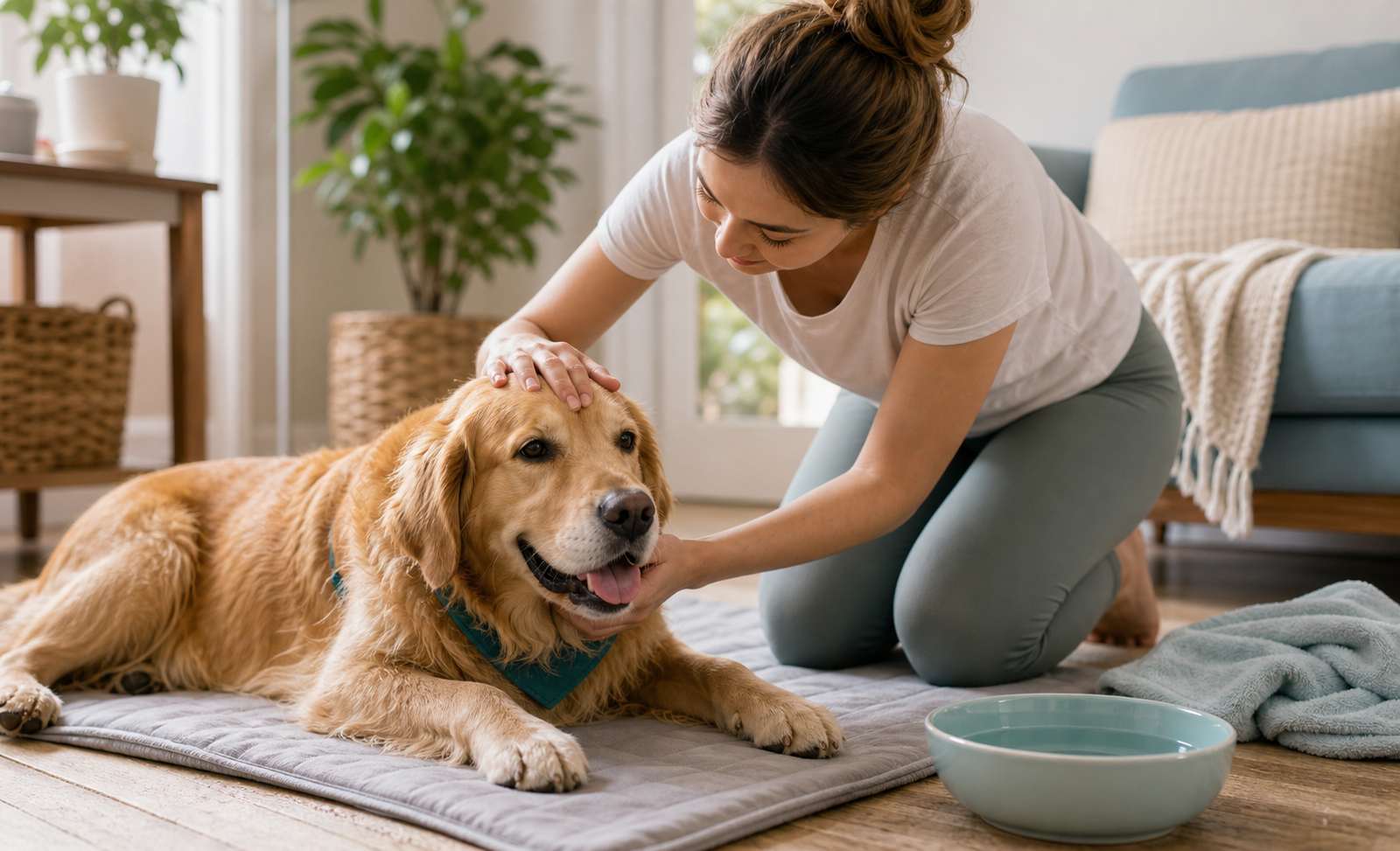
If you think your dog is overheating, move them to a cooler shaded place, offer small amounts of water if they can drink, start cooling them carefully, and contact a vet urgently. Heatstroke can become serious fast, so this is not a “wait and see for ages” situation.
The useful CloudyAww version is this: if your dog suddenly looks like the day is too much, believe them.
The Tiny Summer Rule
Hot-weather dog care is mostly about making the plan smaller before the dog has to prove it was too much. Shorter walks. Earlier walks. More shade. More water. More quiet. Less pavement. No hot cars. Fewer dramatic outdoor missions.
That may sound less exciting than the normal routine, but dogs do not need a heroic summer schedule. They need a safe one. A cooler room, a water bowl, a slow sniff, and a human who notices the weather can be the whole win.
And honestly, if a dog gets to nap in the shade while everyone else overthinks the forecast, they may be the smartest person in the house.
Keep following the behaviour trail with A Better Dog Walk Starts With Time to Sniff and How to Help a Dog Who Slips on Smooth Floors. More warm, practical pet explainers live in Aww Articles.