
A pet bird can turn one small neck movement into an entire press conference.
The head dips. It rises. The bird repeats the performance with the confidence of someone announcing very important news to a room that has not yet understood the urgency. Sometimes the music is playing. Sometimes breakfast is approaching. Sometimes a favourite human has simply committed the serious offence of walking past.
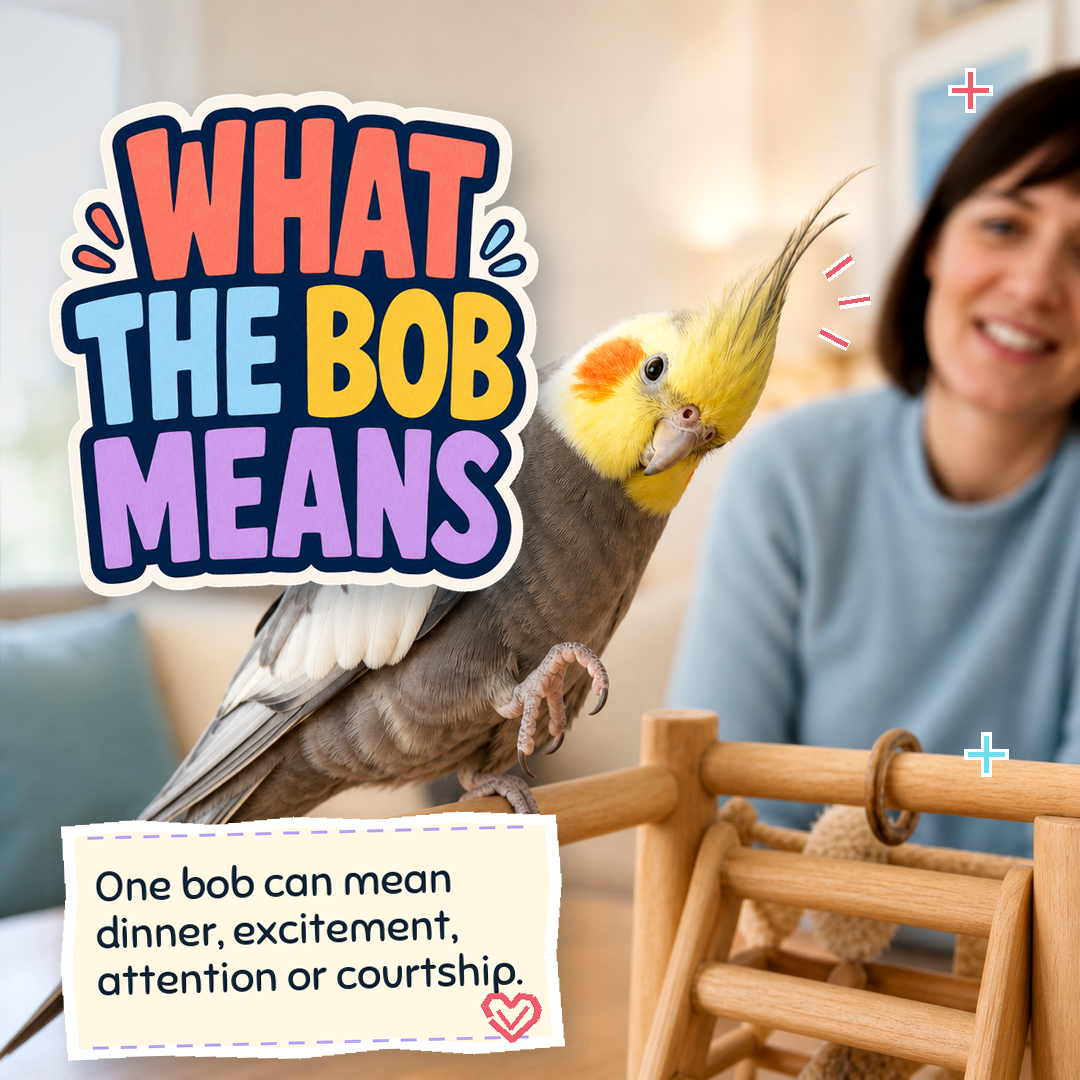
Head bobbing is not one fixed message. Young birds may bob around feeding. Some parrots bob when excited, eager to move or trying to recruit attention. A bonded adult may combine bobbing with regurgitation during courtship behaviour. Another bird may have learned that a particular song, laugh or human dance produces an excellent household reaction.
The useful question is not only, “Why is my bird bobbing?” It is: who is this bird, what happened immediately before the movement, what did the rest of the body do, and what happened next?
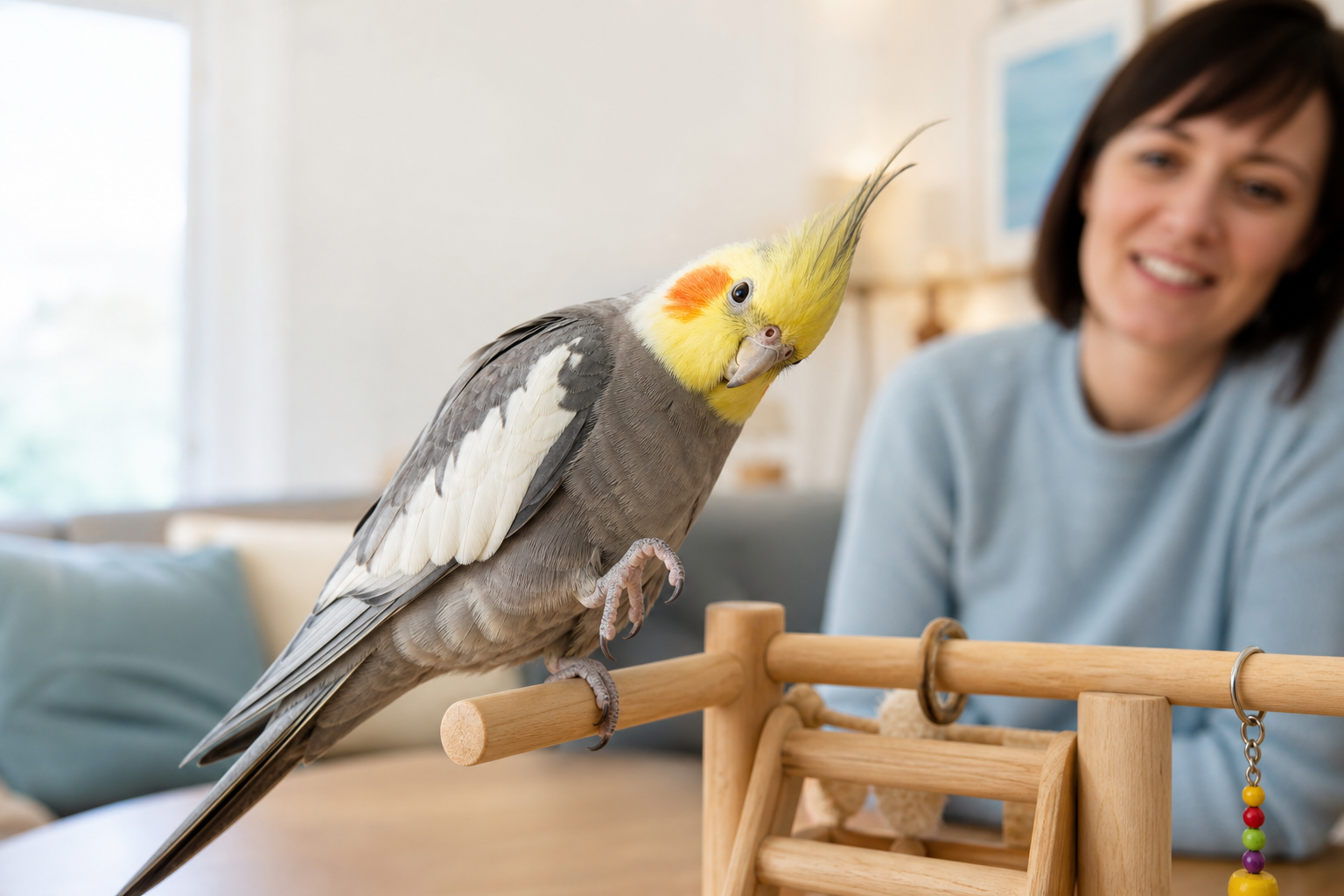
One Bob, Several Messages

Bird body language is gloriously inconvenient for anyone hoping for a one-movement dictionary.
Lafeber’s pet-bird behaviour guidance lists several possible contexts for head bobbing, including young parrots, birds eager to go somewhere and birds regurgitating as part of a social bond. It also notes that Quaker parrots may bob more than some other species. The movement itself is therefore a clue, not a verdict.
Begin with four quick questions:
- Who? Is the bird young or adult, and is this movement ordinary for their species and personality?
- Trigger? Did food, music, a person, another bird, a toy or the prospect of leaving the perch appear first?
- Whole bird? Are the feathers, eyes, wings, tail, feet and posture loose, excited, fearful or unsteady?
- Recovery? Does the bird return to eating, playing, preening or resting normally?
A quick bob before stepping onto your hand belongs to a different scene from repeated neck pumping followed by food appearing in the beak. It also belongs to a completely different scene from a bird whose tail moves with every breath while they sit fluffed and quiet.
The Young-Bird Dinner Request

Very young birds can produce a rapid up-and-down head movement as part of the natural feeding response. Veterinary guidance from VCA describes this bobbing in baby birds during feeding.
That does not mean every adolescent bird who bobs is asking to be hand-fed, and it is not an invitation to improvise with syringes or feeding formula. Hand-feeding an unweaned bird carries serious risks and belongs with an experienced breeder, rehabilitator or avian veterinary team.
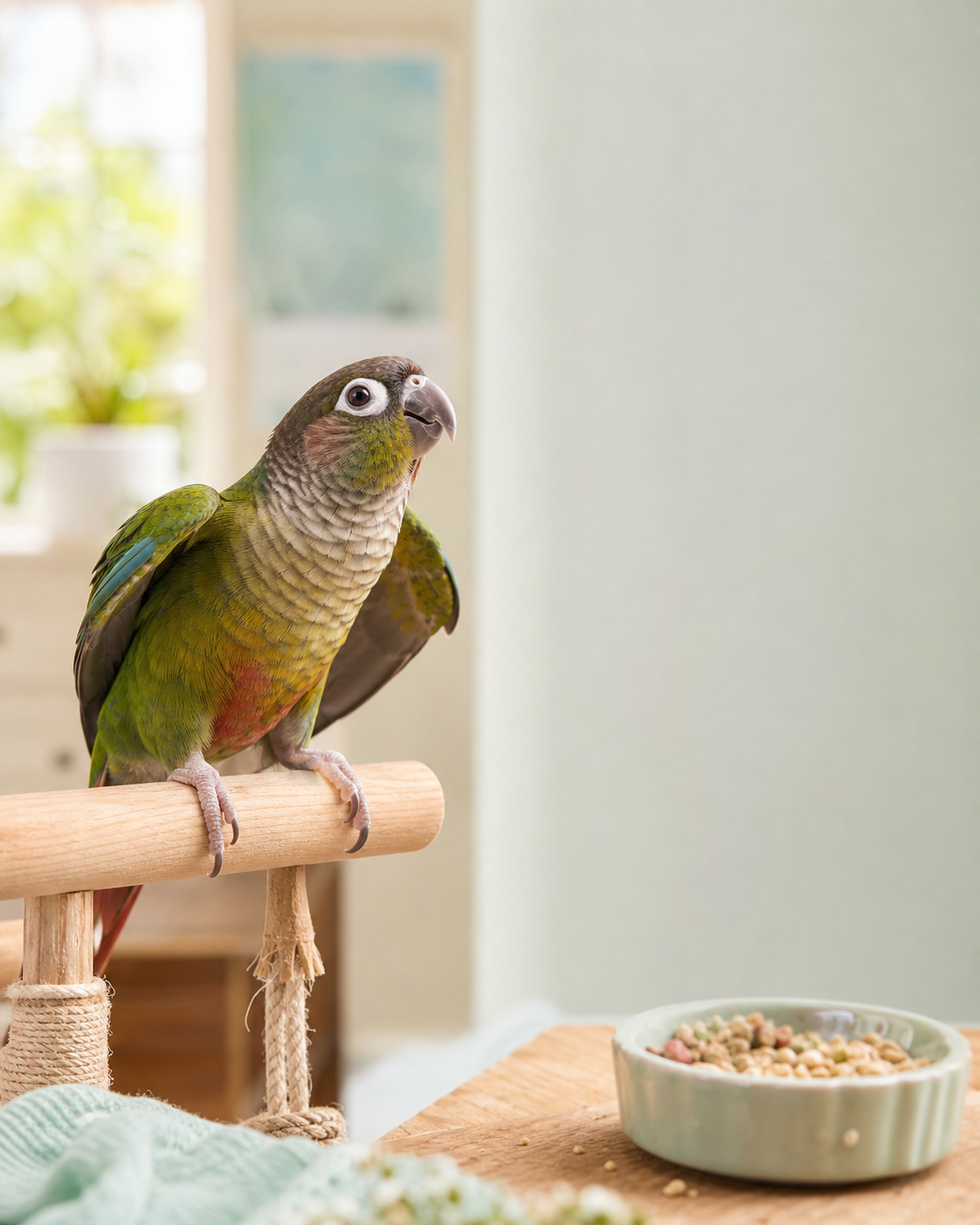
Older juveniles may keep pieces of baby-style begging behaviour after weaning. A young parrot may crouch, make small calls, hold the wings slightly away from the body or bob enthusiastically when food or a familiar person approaches. If the bird is eating independently, maintaining weight and behaving normally, the scene may be more “I remember room service” than emergency.
Age matters here. So does history. A recently weaned bird with a sudden change in appetite, weight or feeding behaviour needs professional advice rather than an internet translation.
Excitement Has a Rhythm

Some head bobbing appears in bright, busy moments: a favourite person enters, the cage door opens, the bird anticipates a trip to the play stand, or a familiar song begins.
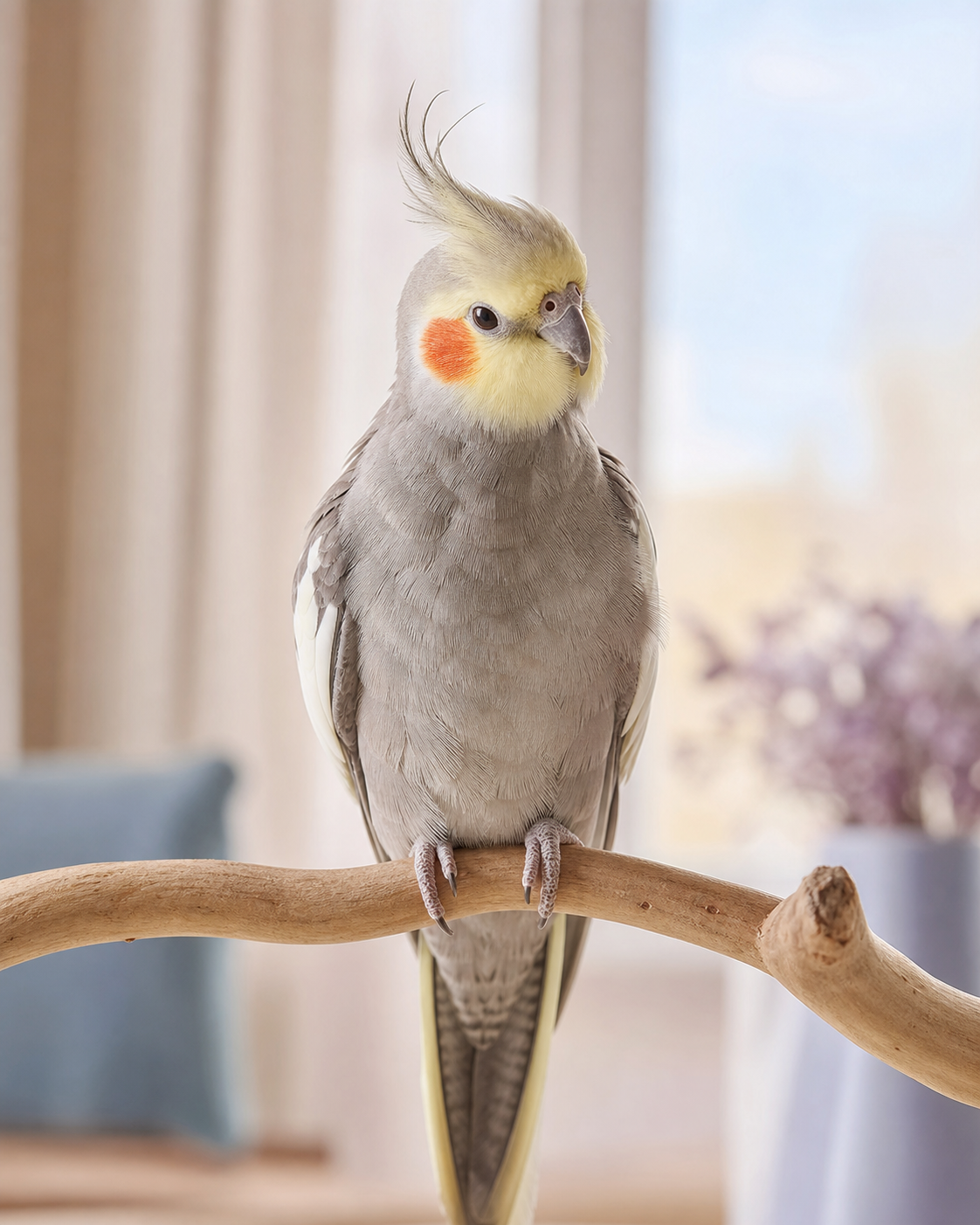
Look for a sequence that stays voluntary and coordinated. The bird may lean forward, shift their feet, vocalise, bounce or flap while holding the perch, then settle into another normal activity. A cockatiel’s crest, a parrot’s eyes and the position of the wings and tail can add useful context. Excited and aggressive postures can overlap, so “energetic” does not automatically mean “please put your fingers closer.”
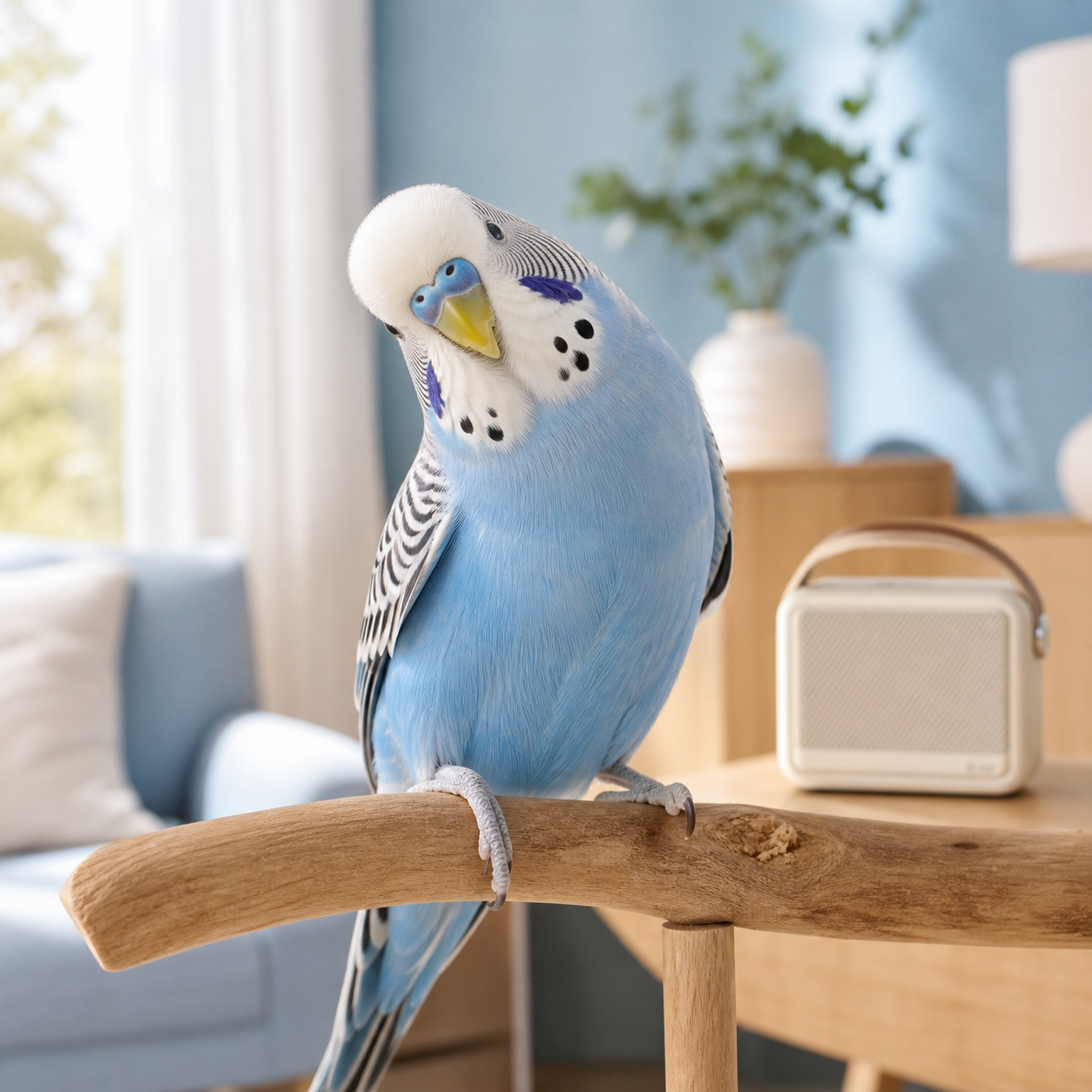
Some parrots also learn a dance routine. Music starts, a human moves, everybody laughs, and the bird discovers that bobbing has astonishing production value. Lafeber notes that common parrot dances can include pumping and bobbing movements and that some birds learn to move after seeing people dance to a familiar song.
Enjoy the show if the bird is choosing it. Keep the volume comfortable, leave an easy route away and do not restart the music repeatedly after the bird has disengaged. A tiny performer still gets to finish the set.
Attention, Courtship and the Awkward Gift

Head and neck pumping can happen before regurgitation. In an adult bird, regurgitating food toward another bird, a person, a mirror or a favourite toy may be courtship or pair-bond behaviour.
This is one of those compliments that is emotionally sincere and operationally inconvenient.
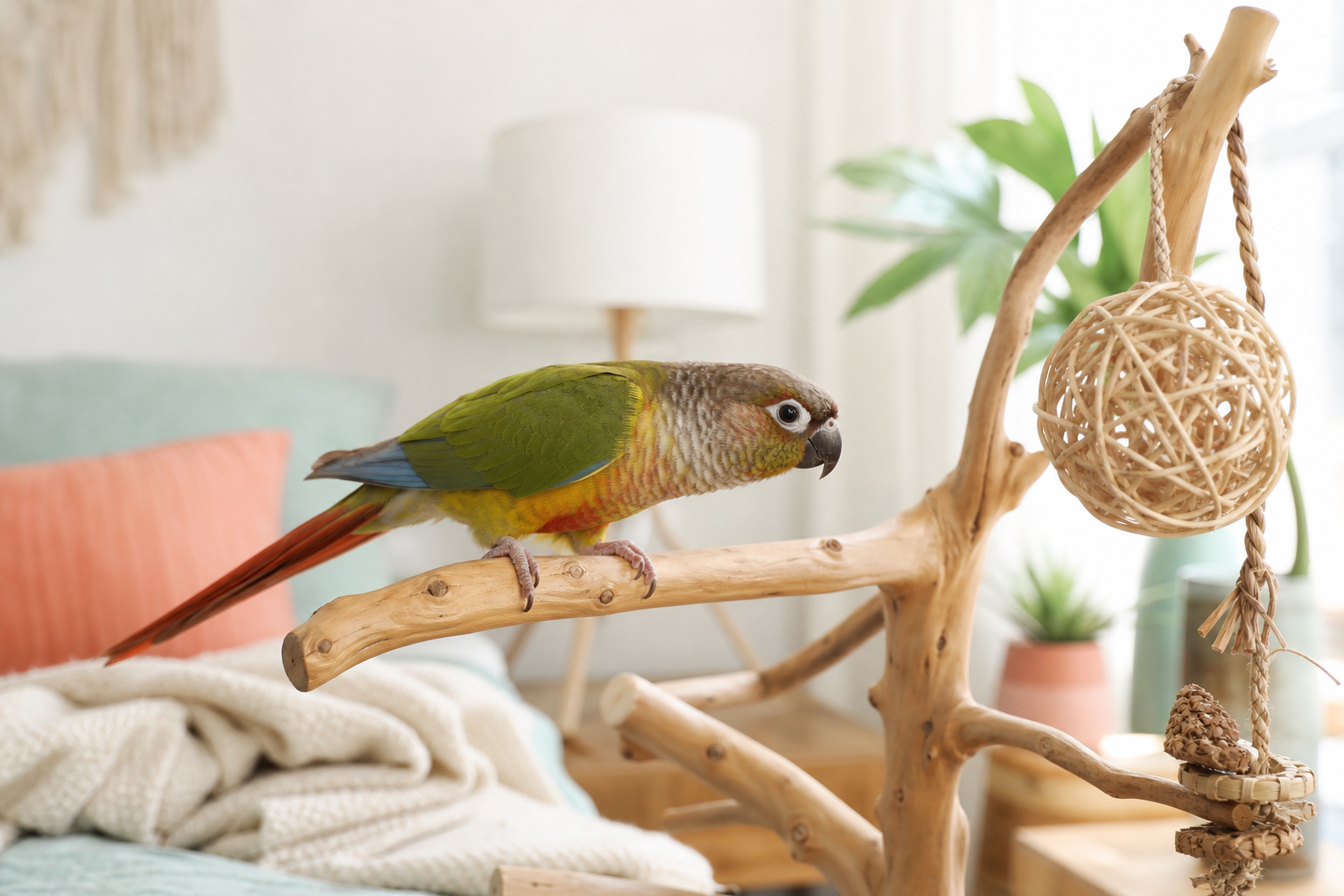
The context around it may include intense focus on one person or object, seasonal behaviour changes, nest seeking, territoriality or increased vocalisation. VCA’s avian guidance warns that repeatedly stroking a bird’s back or hind body can contribute to sexual stimulation. Calmly redirecting the bird toward foraging, play or another location is usually kinder than making the moment into a large social event.
Regurgitation and vomiting are not interchangeable. Courtship regurgitation is often directed and purposeful. A vomiting bird may shake the head side to side, scatter food or fluid, and end up with material stuck around the face or head. Excessive regurgitation can also be a health concern. If you are unsure which one you are seeing, contact an avian veterinarian.
Species and Personality Change the Read
Birds do not share one universal body-language font.
Very young parrots commonly bob. Quaker parrots are particularly known for rhythmic movement. Cockatiels and cockatoos add a visible crest to the conversation. African grey parrots may show frequent head-shaking behaviour that looks different again. Other pet birds may offer subtler versions, or almost none.
This is why your bird’s baseline matters. Notice the ordinary pattern before trying to interpret the unusual one:
- What usually triggers the bob?
- How fast and how long does it last?
- Does the bird vocalise or move the wings?
- Is the movement directed at food, a person, another bird or nothing obvious?
- What does the bird do immediately afterward?
A healthy bird who has performed the same cheerful breakfast bounce for years gives you a useful history. A bird who begins a new, intense movement alongside quieter behaviour, reduced appetite or balance changes gives you a reason to call the vet.
Comparison videos can be entertaining, but your cockatiel does not have to dance like somebody else’s cockatoo to be normal.
Read the Whole Bird

The body around the bob is more informative than the dramatic size of the bob.
An excited or socially engaged bird may remain alert, coordinated and interested in the environment. They may approach and retreat freely, keep a secure grip, use ordinary vocalisations and return to preening, eating, playing or resting.
A worried or overstimulated bird may become tall and stiff, flatten the feathers, hold the wings ready for flight, lunge, open the beak, fan the tail or pin the eyes. Lafeber’s veterinary body-language guide stresses that excitement and aggression can look similar and that body-language clues are not foolproof.
Give the bird a pause before handling. Lower the household energy, stop crowding the perch and let the bird choose distance. If the body softens and ordinary activity resumes, recovery has given you useful information.
Do not deliberately provoke another bob, another lunge or another regurgitation just to confirm the theory. The first scene already happened. Your job is to make the next one easier.
Head Bobbing Is Not Tail Bobbing

The phrase “bobbing” can hide an important distinction.
Behavioural head bobbing involves the head and neck. Tail bobbing describes the tail moving up and down with each breath. A small amount of tail movement can happen during normal activity, but pronounced rhythmic tail movement while a bird is resting can be associated with increased breathing effort.
VCA’s illness guidance lists tail movement with every breath alongside respiratory signs such as open-mouth breathing, wheezing, coughing and nasal discharge. This is not a behaviour puzzle to solve at home.
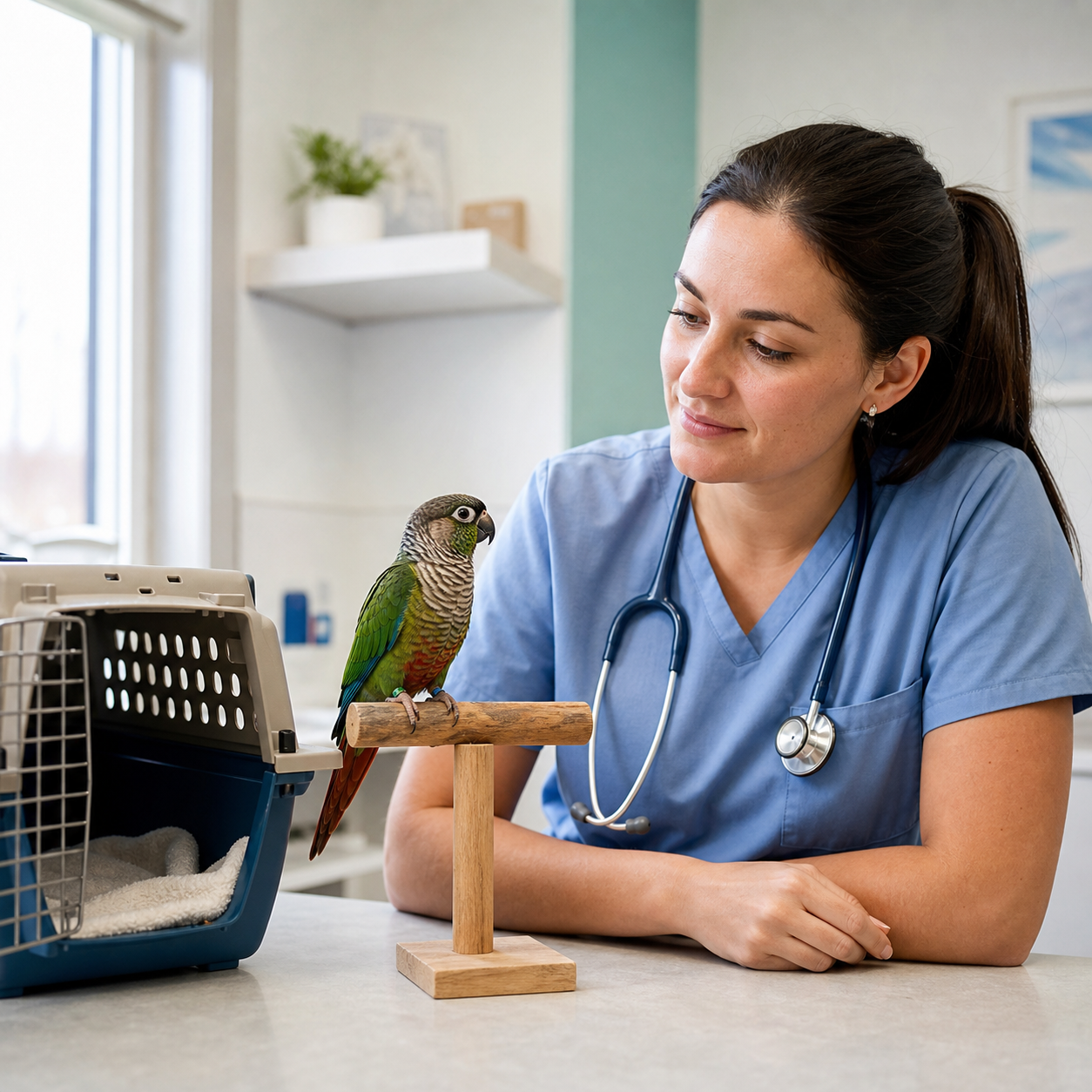
Contact an avian veterinarian promptly if tail bobbing at rest appears with breathing difficulty, fluffed posture, weakness, reduced activity or any other change from normal. If a bird is struggling to breathe, treat it as urgent and minimise stressful handling while seeking veterinary instructions.
One bob may be a tiny public announcement. The other may be the body working harder to breathe. Look at which end of the bird is moving, what the breathing looks like and how the bird is behaving overall.
When the Pattern Changes

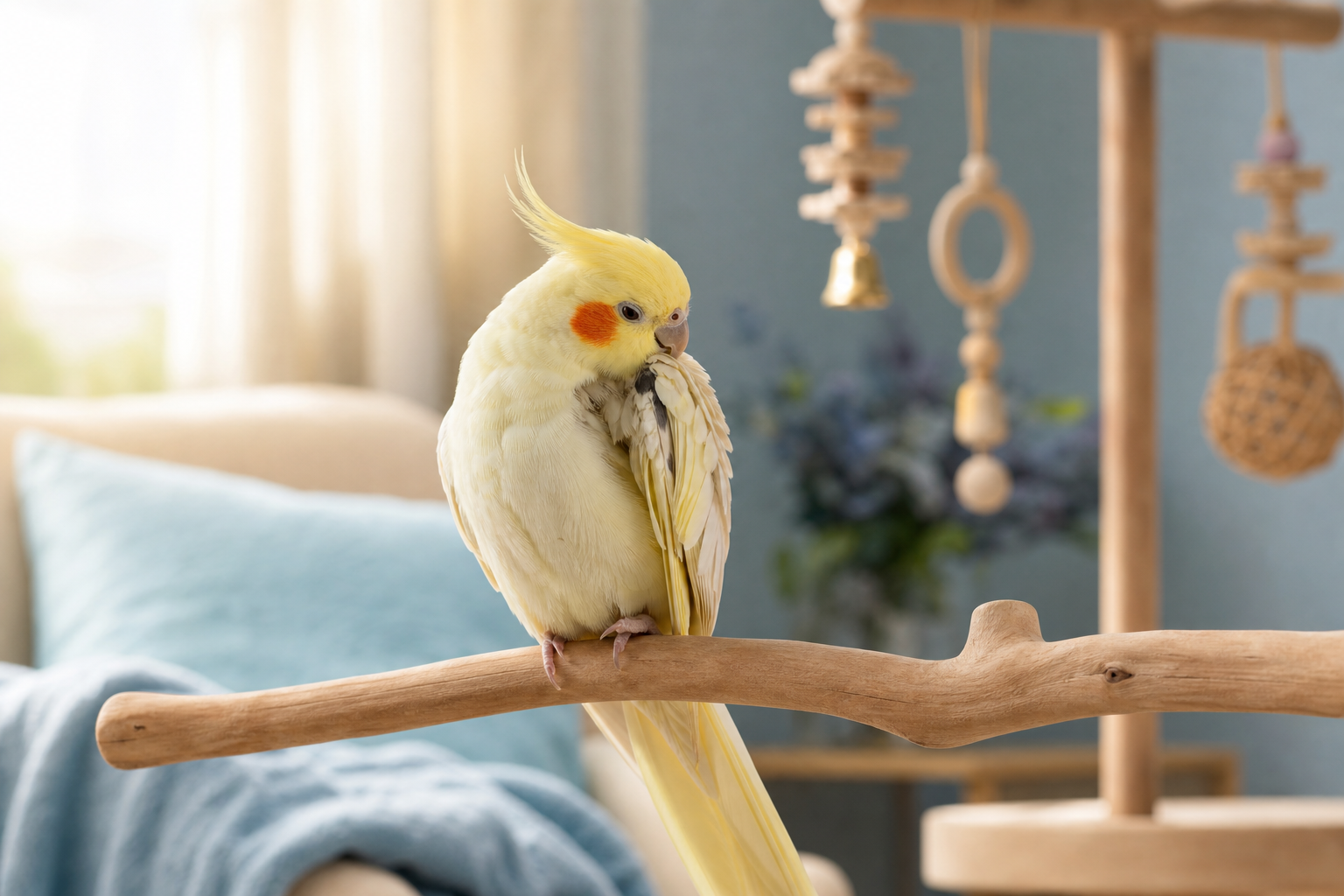
Birds often hide signs of illness, which makes changes from their normal routine especially useful.
Ask an avian veterinarian for advice if head movement becomes sudden, intense, persistent or difficult to interrupt, or if it appears with:
- food, fluid or mucus scattered around the cage or stuck to the face;
- repeated or excessive regurgitation;
- reduced appetite, weight loss or changes in droppings;
- fluffed feathers, closed eyes, weakness or unusual quietness;
- loss of balance, falling, head tilt, twitching or seizures;
- breathing difficulty or tail bobbing at rest;
- a clear change in personality, coordination or usual activity.
A short video can help the veterinary team see the rhythm and the surrounding body language. Film from a calm distance if it is safe to do so. Do not delay urgent care to collect the perfect clip, and do not restrain a breathless or unstable bird for content.
The CloudyAww read is simple:
Dinner: Is this a young bird showing a familiar feeding or begging sequence?
Dance: Did music, movement or exciting social activity begin first—and does the bird stay coordinated and free to stop?
Declaration: Is the bird asking to move, recruiting attention or performing a species-typical routine?
Courtship: Does the bob lead into purposeful regurgitation toward a favourite bird, person or object?
Different: Is this new, persistent or paired with a health or breathing change?
Most head bobbing is not a secret code with one translation. It is one moving part of a larger bird-shaped sentence. Read the trigger, the whole body, the recovery and the change from baseline. Your bird may be requesting dinner, announcing the next dance number or filing a formal complaint about the closed cage door.
You do not have to translate it perfectly. You only have to notice when the scene is ordinary for your bird—and when it is not.
For more feathered household logic, read why some birds copy household sounds. For another small-pet movement that makes more sense in context, explore what guinea-pig popcorning may mean, or browse the full Aww Articles library.
Sources & further reading
- Lafeber: Pet Bird and Parrot Behavior
- LafeberVet: Reading Bird Body Language
- VCA: Sexual Behavior in Birds
- VCA: Recognizing the Signs of Illness in Pet Birds