
The floor can be the whole villain
Some pet moments are funny because the problem is obvious before the pet realises it. A dog decides the hallway is normal, the paws commit to the plan, and then the smooth floor quietly says absolutely not.
That is why today’s CloudyAww Short, “The Floor Said No”, works so fast. The joke is visible straight away: the dog is not being dramatic for no reason. The route really does look like a tiny traction emergency.
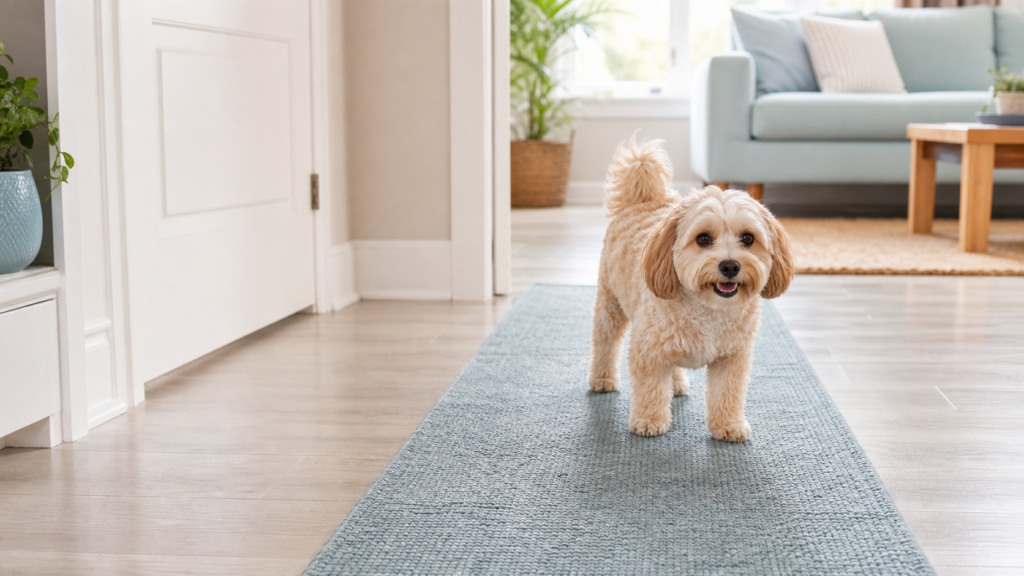
But behind the silly little slide, there is a useful home-care point. Slippery floors can make dogs hesitate, rush, scramble, avoid rooms, or lose confidence in places they used to cross without thinking. For some dogs it is just a surface problem. For others, repeated slipping can reveal pain, weakness, arthritis, nail or paw issues, fear, or a setup that needs changing.
The fix is not to make every room complicated. It is to make the easiest safe route obvious.
Why smooth floors can feel so unfair
Dogs rely on traction more than we sometimes notice. On carpet, grass, or a grippy mat, the paw lands and the body trusts the floor. On laminate, polished wood, tile, glossy vinyl, or a smooth doorway strip, the paw can slide at the exact moment the dog is turning, stopping, jumping, or speeding up.
That little slip can matter. A confident dog may simply recover and keep going. A nervous dog may start rushing because rushing feels like the only way across. An older dog may tense up, which can make the movement even less stable. A dog with sore joints may begin avoiding the route completely.
VCA Animal Hospitals lists signs of osteoarthritis in dogs that can include lameness, slower walks, hesitation with steps or jumping, difficulty getting up and down, and reduced stamina. Cornell’s canine osteoarthritis guidance also describes mobility changes and practical home support such as non-slip rugs. A slippery floor does not automatically mean arthritis, but if the behaviour is sudden, repeated, painful, or getting worse, it deserves a closer look.
First, build a safe route
The fastest practical upgrade is boring in the best way: rugs, runners, mats, or washable carpet strips that create one clear path through the problem area.
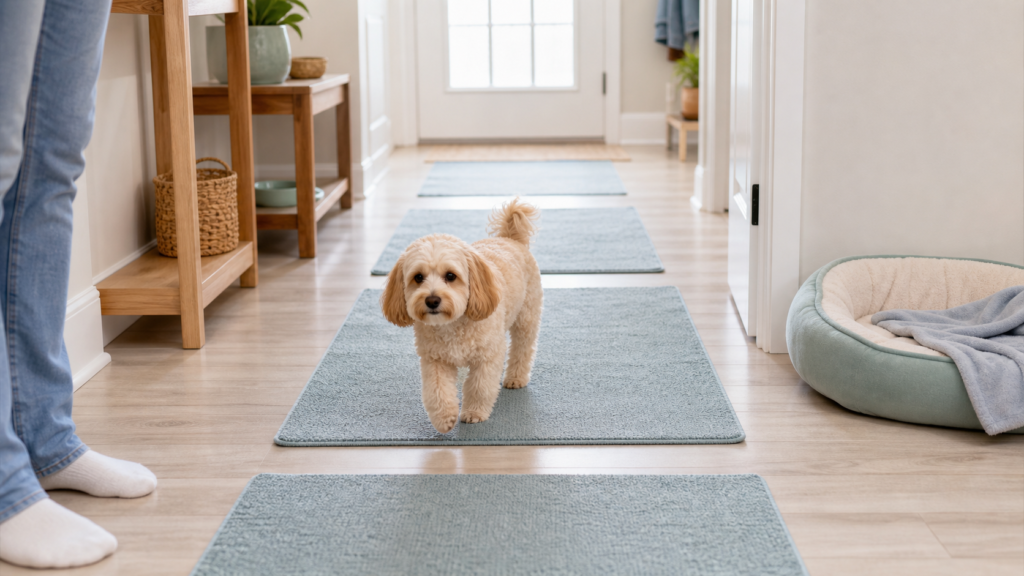
Think like a tiny traffic engineer. Where does your dog actually need to go? Door to bed. Hallway to kitchen. Sofa to water bowl. Back door to garden. If those routes have smooth floor gaps, add grip where the paws land, not just where the room looks pretty.
Rugs should not slide underneath the dog, because then the rug becomes a new prank. Use non-slip backing, rug pads, or mats designed to stay put. Keep edges flat so they do not become trip points. If your dog is small, older, recovering, or already worried, a boring secure runner can be more useful than a fancy rug placed in the wrong spot.
Watch the Short: The Floor Said No
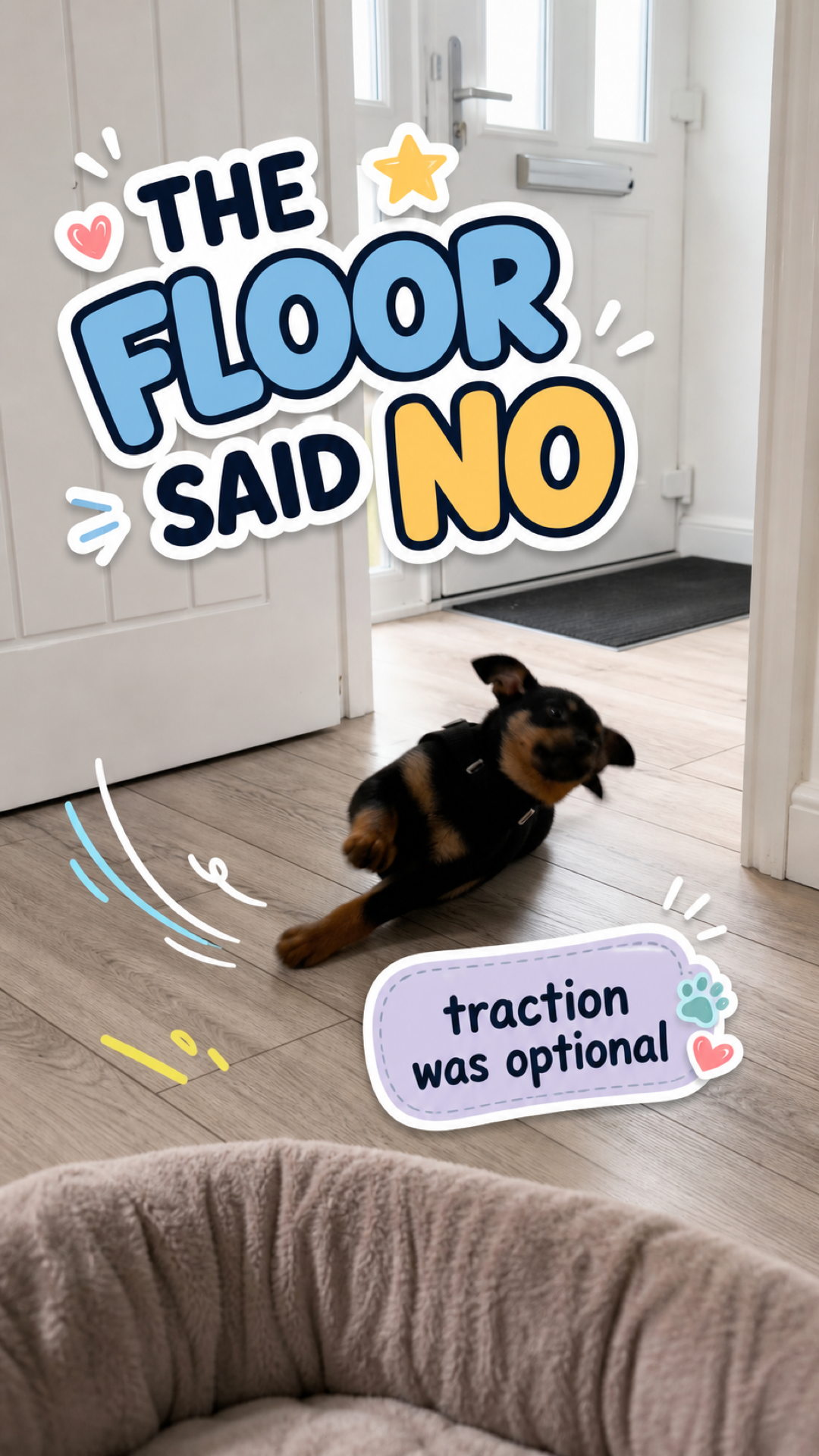
Watch the floor say no in real time.
The Short is funny because the traction problem is visible immediately: speed, smooth floor, and one very surprised little route plan.
Do not force confidence
If a dog is worried about a floor, pulling them across it can make the floor feel even worse. They are not learning “this is safe”. They may be learning “this place is scary and now I get dragged through it.”
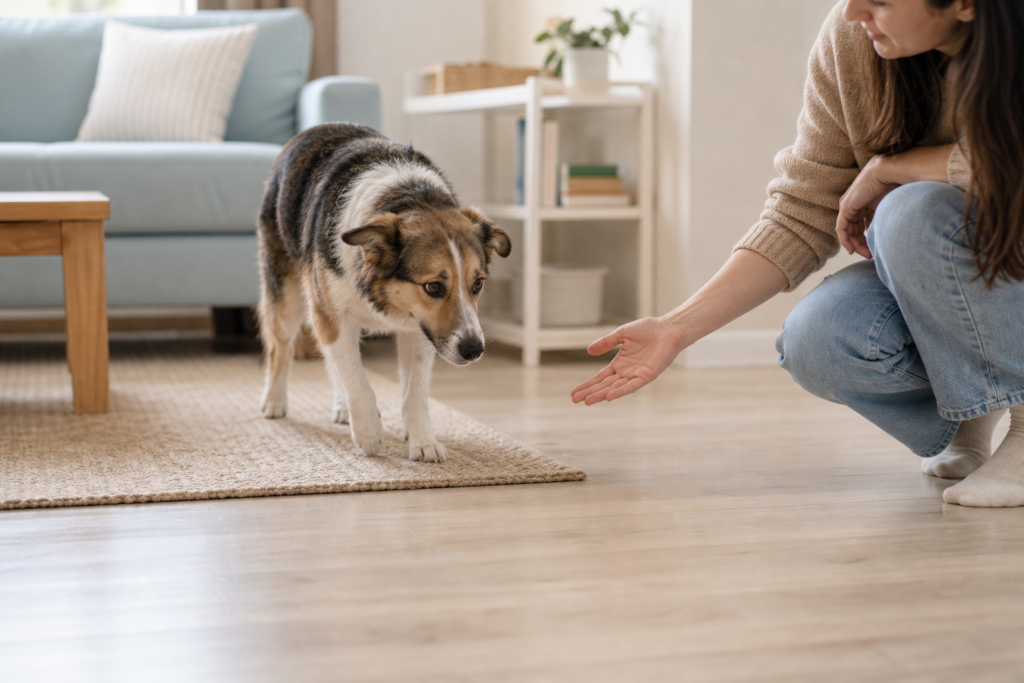
Instead, make the easy choice easier. Put down grip. Let the dog start from a secure surface. Reward tiny calm steps. Keep sessions short. Stop before the dog panics. If they decide to take the rug route instead of the shiny shortcut, that is a win, not a failure.
Confidence comes back better when the dog can test the surface without being rushed. A few calm seconds on a grippy mat can teach more than one dramatic crossing.
Practice in tiny steps
Once the route is safer, you can help the dog rebuild trust with small, boring repetitions. Ask for one step onto the rug, reward. Two steps, reward. A slow turn, reward. Walk from one mat to another, reward. Then stop while the dog still looks comfortable.
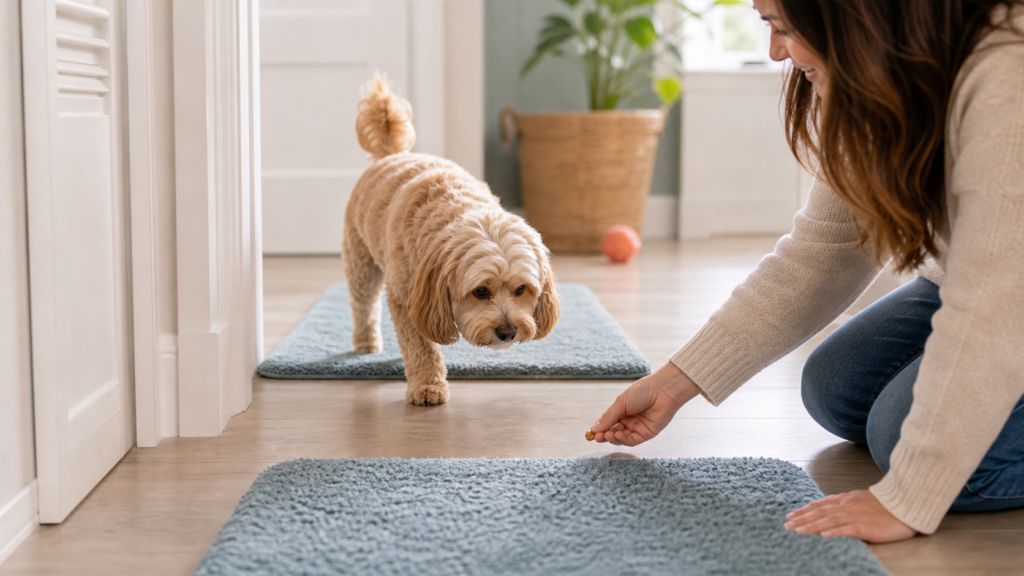
This is not about turning the hallway into a training arena. It is about letting the dog learn that the new setup works. Treats, praise, a toy, or access to the garden can all help, depending on what the dog actually likes.
Keep the pace gentle. If the dog starts rushing, freezing, crouching, scrambling, or looking for an escape route, the step is too big. Add more grip, shorten the distance, and make the job easier.
Check paws, nails, and little traction details
Sometimes the floor is not the only issue. Long nails can change how a dog places their feet. Fur between paw pads can reduce contact with the floor. Dry paw pads, tender paws, or a previous slip can also change how confident a dog feels.
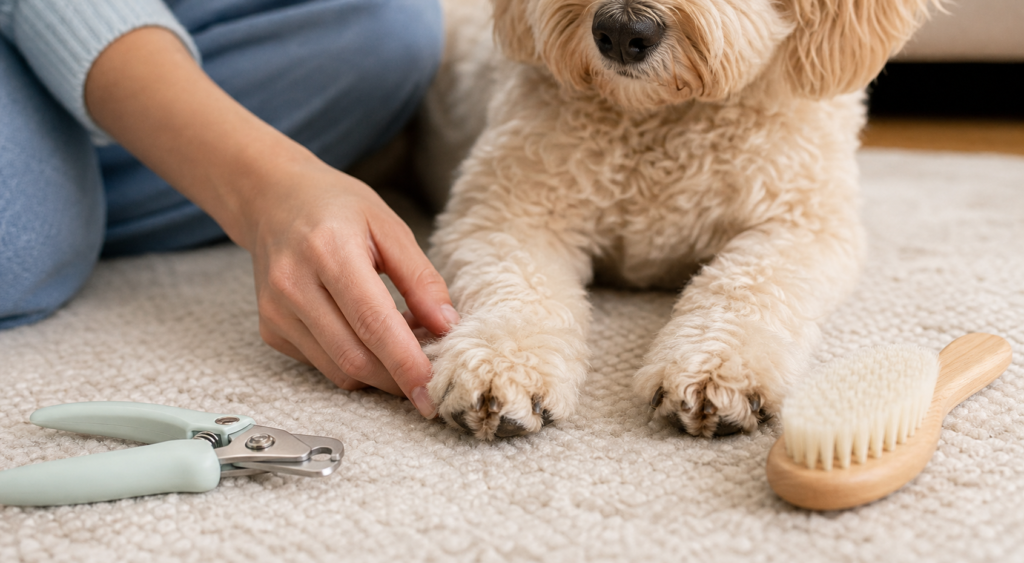
That does not mean grabbing clippers and improvising if you are not comfortable. Nail and paw care should be calm, safe, and done by someone who knows what they are doing. If nail trims are stressful, ask a groomer or vet team for help. If the paw looks sore, swollen, cut, hot, or painful, that is not a thumbnail moment. That is a vet question.
The small details matter because dogs use their feet for information. If the feet do not feel secure, the whole route can feel suspicious.
Traction helpers can work, but only if the dog accepts them
Some dogs do well with grippy socks, toe grips, traction booties, harness support, ramps, or extra mats near doorways. Other dogs find socks deeply offensive and walk like the floor has become even more haunted.
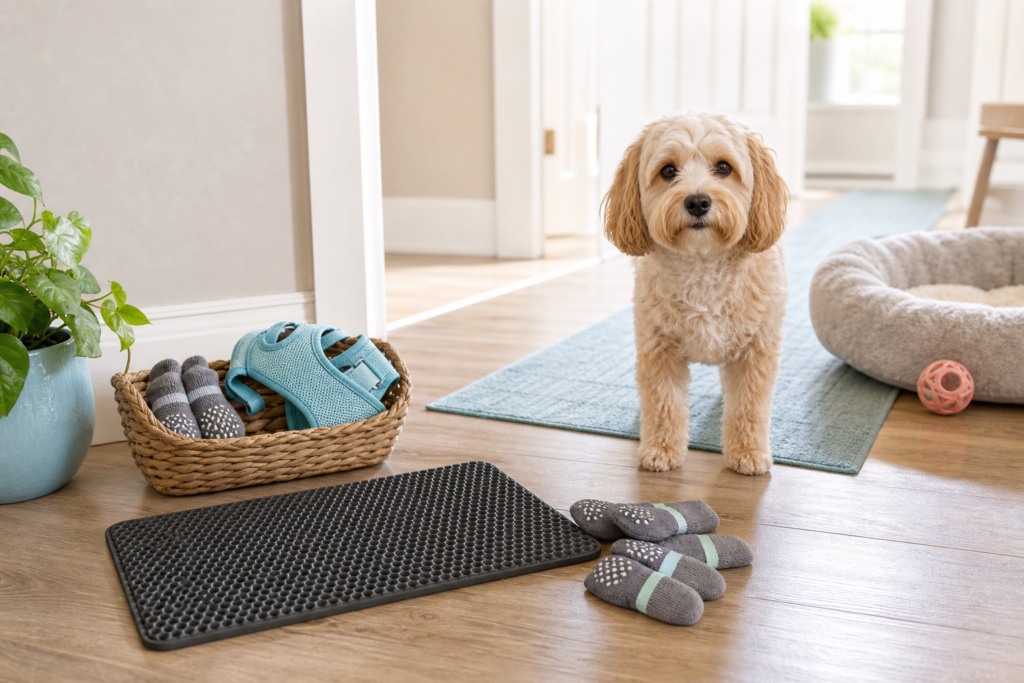
Introduce anything wearable slowly. Let the dog sniff it. Try one paw for a short time. Reward calm behaviour. Watch their movement. If a product makes the dog freeze, trip, chew, panic, or move worse, it is not helping that dog in that moment.
Home setup usually comes first: rugs, runners, blocked-off slippery areas, and safer routes. Wearable traction can be useful, but it should not replace noticing whether the dog is comfortable.
When slipping is a vet clue
A one-off slide on a shiny floor can just be bad luck. Repeated slipping, limping, reluctance, sudden fear, weakness, yelping, stiffness, odd posture, or a dog avoiding a route they used to manage is different.
General veterinary guidance treats limping as something to take seriously, especially when it is sudden, severe, persistent, worsening, or paired with swelling, pain, weakness, or refusal to use a limb. VCA also recommends non-skid floor surfaces as one of the simple comfort and mobility changes for dogs managing osteoarthritis. PDSA’s arthritis guidance likewise recommends anti-slip mats and advises veterinary support when mobility changes.
That is the line: change the floor setup, but do not blame every problem on the floor. If the movement itself looks wrong, painful, or new, ask a vet.
Make doorways and turns less chaotic
Doorways are sneaky because dogs often speed up there. The garden is outside. The human has keys. Someone is home. A tiny emotional parade begins, and suddenly the paws are trying to brake on a surface with no grip.
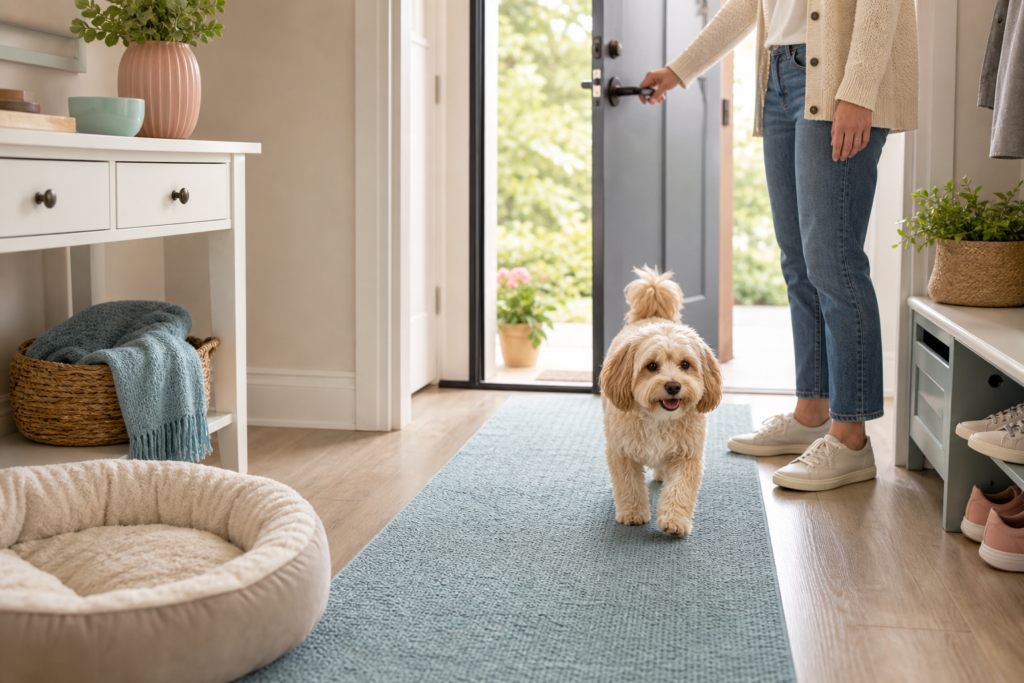
Put mats before and after the door. Keep the route wide enough for turning. Move bowls, shoes, bags, and dog beds out of the landing zone. If the dog tends to sprint, ask for a slower pause on the mat before the door opens. The goal is not military obedience. It is less chaos at the exact place where chaos makes slipping more likely.
If the dog is older, small, long-backed, recovering, or unsure, ramps and steps may help in some areas too. Keep them stable, low-stress, and introduced gradually.
The tiny traction plan
Helping a dog who slips on smooth floors is mostly about removing the trick question. Give the paws somewhere to land. Make the safe route obvious. Practice calmly. Watch for pain. Keep nails and paw care sensible. Do not force a scared dog across a surface that already proved suspicious.
The funny CloudyAww version is simple: sometimes the floor is the villain.
The useful version is even better: the floor can be edited.
More tiny pet logic lives across CloudyAww, where dramatic moments usually have a very small, very real reason hiding underneath them.
Keep following the behaviour trail with A Better Dog Walk Starts With Time to Sniff, Tiny Guide to Dog Body Language: Tail, Ears and Tiny Pauses, and How to Help Dogs Stay Cool on Hot Days. More warm, practical pet explainers live in Aww Articles.