
The Shortcut Was Not the Problem. The Cat Was.
There is a very specific kind of cat logic that appears about three seconds before a bad decision.
The normal route is right there. The door is open enough. The room is not complicated. A human would simply walk around, step through, or wait. But the cat looks at the tiny gap, does a little calculation in its head, and decides that the narrowest, least convenient route is clearly the correct one.
That is what makes the CloudyAww Short `The Shortcut Was Fake` so instantly funny. The cat is not just stuck near a sliding door. It looks like it chose the shortcut with confidence, only for the shortcut to immediately betray the whole plan.
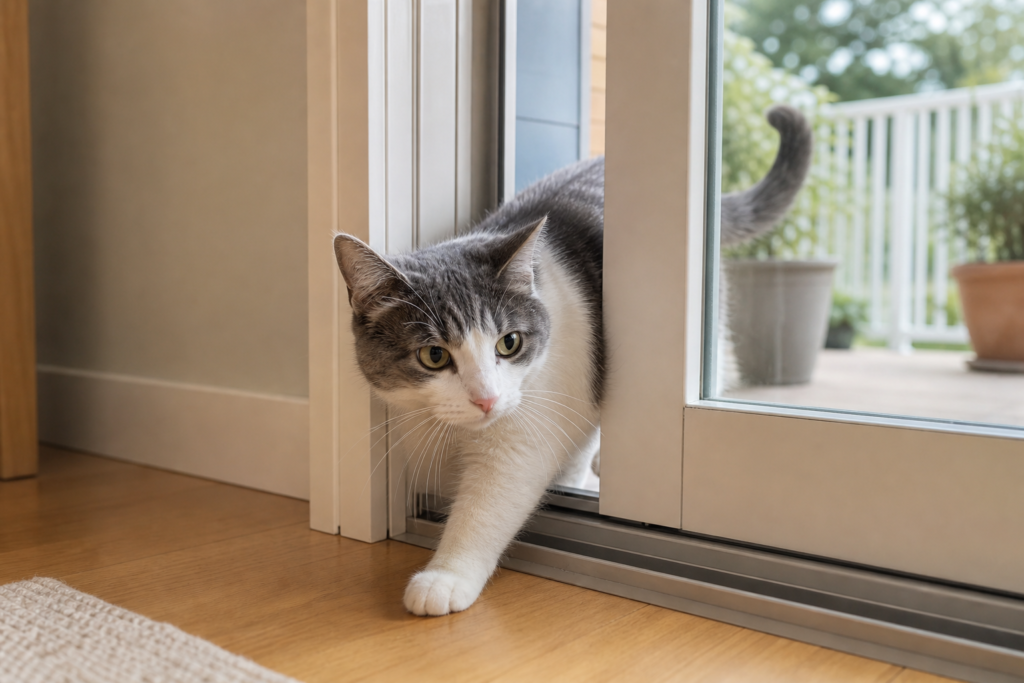
Underneath the joke, though, there is real cat logic hiding in the gap. Cats are not choosing routes the way we do. They are reading space through scent, body feel, memory, safety, curiosity, and habit. A route that looks ridiculous to us may still look possible, interesting, or safer to them.
The shortcut can be fake. The reasoning behind it can still be very cat.
Cats Treat Rooms Like Little Maps
Cats often move through a home as if the house is a map only they can see properly. Doorways, chairs, windows, gaps, tables, boxes, shelves, and human legs all become possible paths.
That is why a cat may ignore the simple route and choose the route that looks like it was designed by a tiny chaos engineer. The cat is not always trying to be dramatic. It may be following a path it has used before, checking a scent trail, avoiding a busy space, or testing whether a gap still works the way it did yesterday.
The AAFP and ISFM environmental needs guidelines describe cats as animals who benefit from a home that gives them choice, safe places, and a sense of control over their surroundings. That does not mean every strange route is brilliant. It means choice matters to cats more than we sometimes realise.
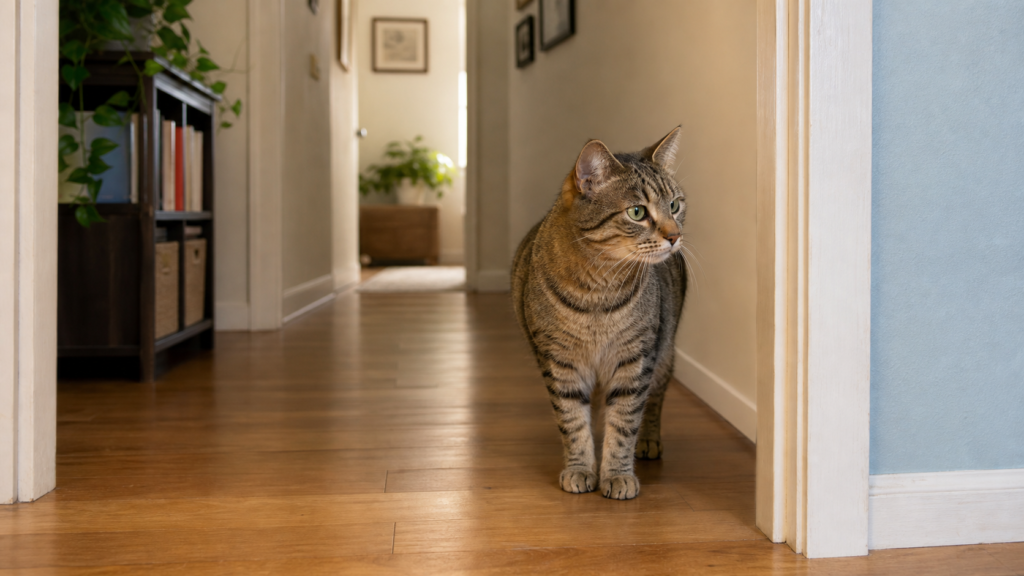
When a cat chooses a shortcut, it may be doing a tiny version of route planning: where can I go, what feels safe, what can I squeeze through, and what gets me there without walking through the obvious human-approved path?
Small Spaces Can Feel Safer Than Open Ones
One reason cats love small spaces is that small spaces can feel protective. A box, a gap, the space under a chair, the corner behind a curtain, or a narrow doorway can offer cover. It can reduce the number of directions something can approach from. It can make the cat feel less exposed.
This is why a tight-looking shortcut might not feel silly to the cat. It may feel like a controlled path. The cat can press its body against edges, peek through first, and decide whether the other side is worth entering.
Of course, the body still has to fit. That is the part where CloudyAww gets involved.
Watch the Short: The Shortcut Was Fake
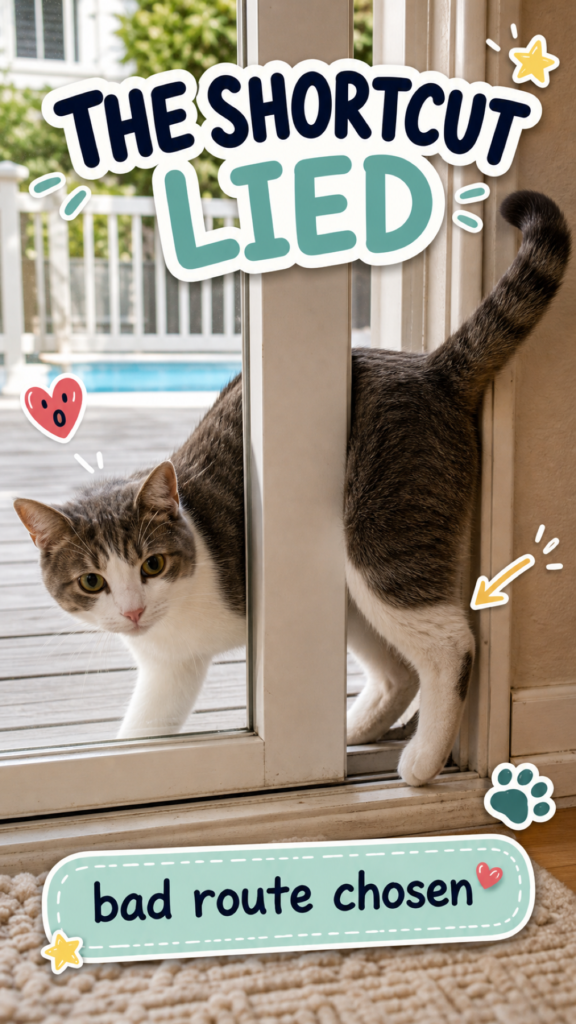
In the Short, the funny part is not only that the route is awkward. It is that the cat seems to believe the plan is still valid while the sliding door is quietly proving otherwise. That little mismatch between confidence and physics is exactly the kind of pet moment people understand immediately.
Curiosity Can Beat Common Sense
Cats are built to investigate. A new gap, a half-open door, a moved chair, a cardboard box, a suitcase, a bag, or a slightly changed room layout can become a small mystery. The cat does not need a big reason. Sometimes the reason is simply: this was not like this before.
Curiosity is useful for animals. It helps them learn routes, find resources, notice changes, and understand what is safe. But curiosity does not always come with perfect judgment. A cat can be smart and still make a deeply questionable spatial decision.
That is why shortcut videos work so well. The viewer can see the problem before the cat appears to accept it. The gap is too weird. The angle is wrong. The route is suspicious. But the cat is already committed.
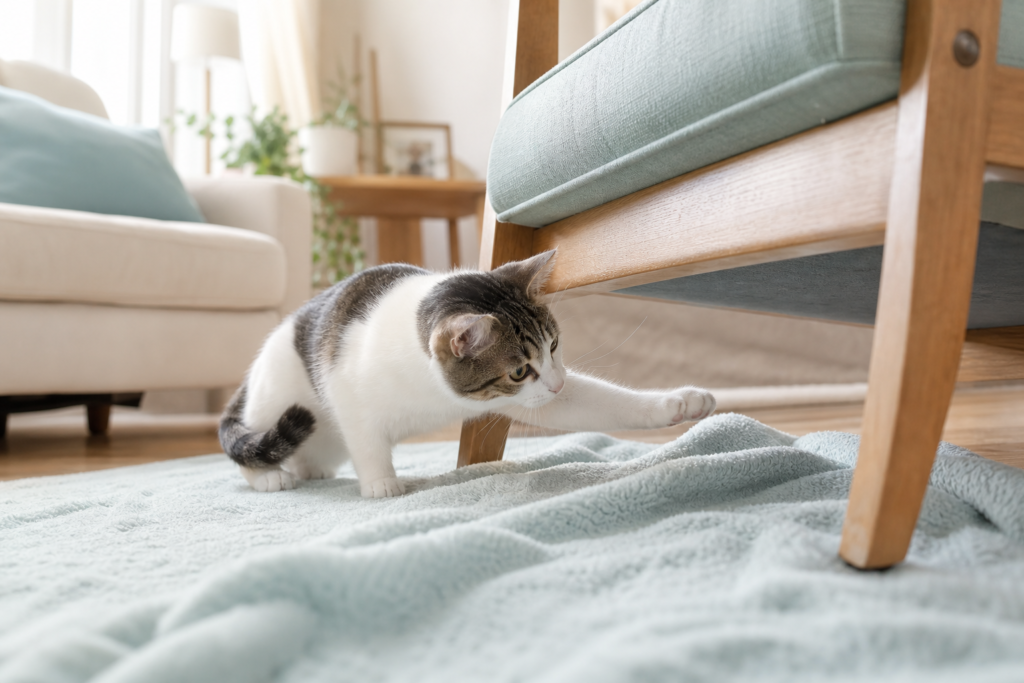
From the cat’s point of view, the experiment may still be worth running. From the human point of view, the experiment is already an episode.
Doors And Thresholds Become Tiny Missions
Doors are especially interesting to cats because they control access. A door changes what is available, what can be smelled, what can be watched, and where the humans are going.
A sliding door adds even more drama because the gap can look like an invitation. It is not fully closed. It is not fully open. It is a narrow little maybe. For a cat, that can be enough.
Thresholds also create decisions. Stay inside or go out? Follow the human or wait? Push through now or inspect first? If the cat has squeezed through a similar space before, it may assume this one will work too. The problem is that small differences matter: angle, width, body position, tail, paws, confidence level, and whether the door quietly says absolutely not.
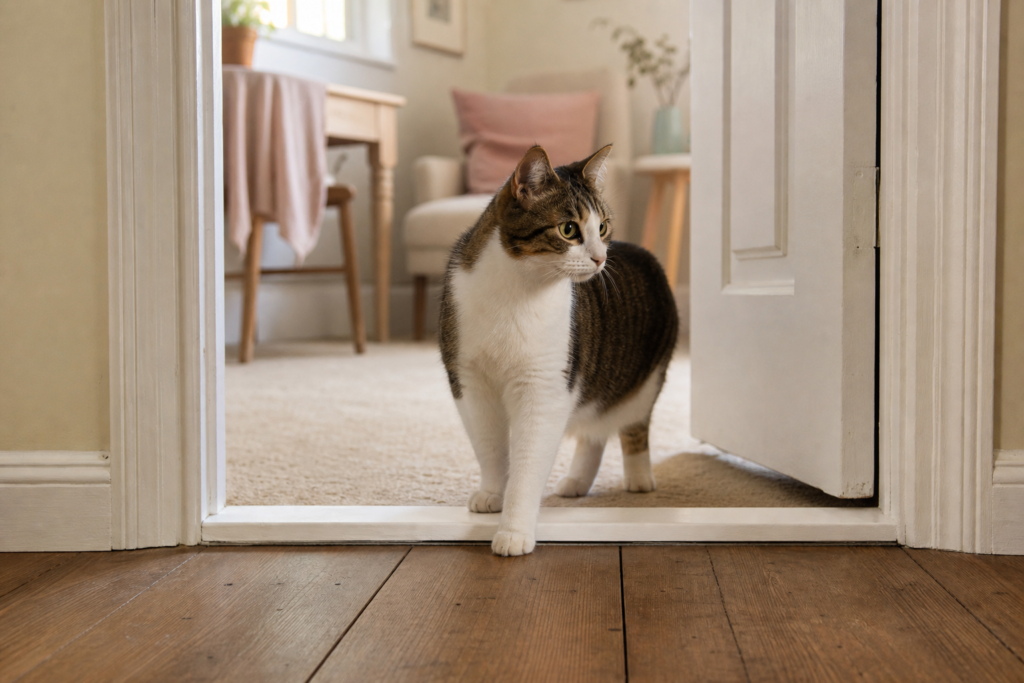
This is where the joke becomes so human-readable. We have all trusted a shortcut that was not actually a shortcut. The cat simply did it with more whiskers.
When The Shortcut Needs A Safety Check
Most funny shortcut moments are harmless: a cat pauses, backs up, tries again, or looks offended by the laws of space. But some small gaps and household shortcuts are not safe.
Be careful with gaps near closing doors, windows, recliners, appliances, balcony doors, heavy furniture, cords, breakable objects, or places where a cat could get trapped. Cornell Feline Health Center’s safety guidance around toys and household objects is a useful reminder that small parts, strings, cords, and loose pieces can become risky when pets investigate them.
The goal is not to stop a cat from being curious. Curiosity is part of being a cat. The goal is to make sure the available curiosities are not quietly dangerous.
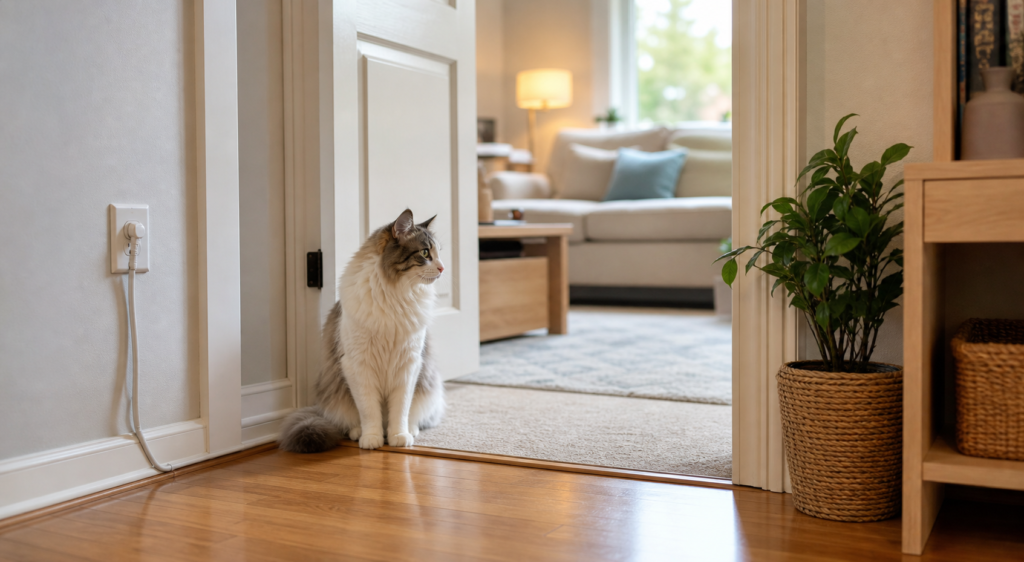
If a cat suddenly starts hiding, squeezing into places it never used before, avoiding normal routes, or acting distressed, that can mean something more than a funny shortcut. Stress, pain, fear, or changes in the household can affect how cats move through space. In that case, it is worth slowing down, checking the environment, and contacting a vet or qualified behaviour professional if the behaviour seems unusual or worrying.
Give The Shortcut Artist Better Options
If a cat keeps choosing awkward routes, it may help to give it better legal shortcuts.
That can be simple. A cardboard box near a calm corner. A cat tree near a window. A tunnel toy. A clear path to a favourite resting spot. A safe hideout where nobody bothers them. A perch where they can watch the room without standing in the middle of traffic.
International Cat Care’s play guidance points toward giving cats opportunities to stalk, chase, pounce, and complete safe hunting-style behaviours. The same principle applies to spaces: when cats have approved places to explore, hide, climb, and observe, the forbidden weird route may become less important.
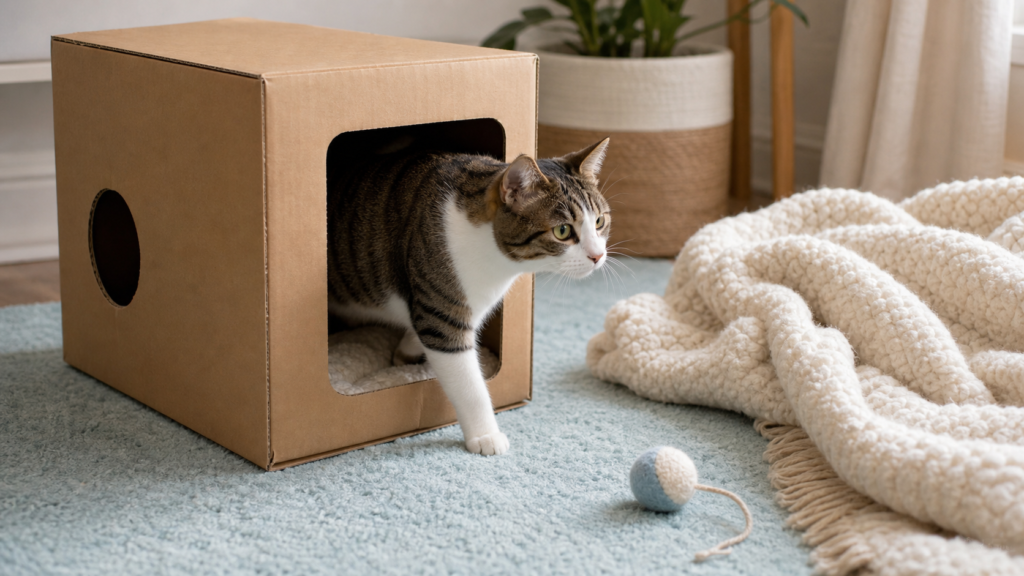
You do not need to build a full obstacle course. You just need to notice what the cat is trying to solve. Is it trying to get away? Get closer? Watch something? Avoid the dog? Follow the human? Reach a sunny patch? The better answer usually starts there.
More Tiny Pet Logic on CloudyAww
The best CloudyAww moments are funny because they look like tiny mistakes, but they often come from a real little system. Pets read the house differently. They notice objects we ignore. They treat gaps, doors, bags, windows, boxes, chairs, and human routines as part of their world.
That does not make every choice wise. It just makes the moment more interesting.
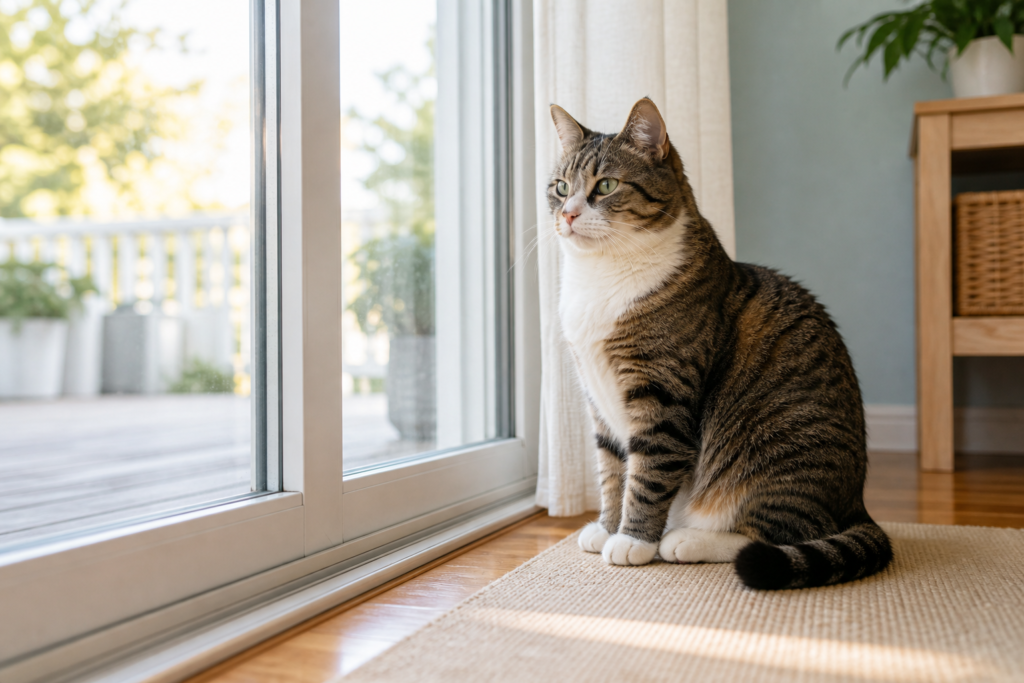
So when a cat chooses the worst shortcut, the answer is probably not just “cats are weird.” It is more specific than that. The cat saw a route, trusted the route, tested the route, and learned something very important about sliding doors.
The shortcut was fake. The cat logic was real.
Keep following the behaviour trail with Why Cats Knock Things Off Tables, What to Do When Your Cat Scratches the Sofa, and Tiny Guide To Cat Night Zoomies. More warm, practical pet explainers live in Aww Articles.