
The Tiny Product Tester Was Not Completely Wrong
There is something instantly funny about a pet trying to use a human thing. A button becomes an official job. A tablet becomes a glowing puzzle. A remote becomes evidence. The whole room suddenly feels like it has been handed over to a very small quality-control department.
But underneath the joke, the behaviour makes sense. Pets do not see our objects as “human technology” in the way we do. They see scent, movement, texture, sound, routine, and attention. If an object keeps making humans react, light up, laugh, speak, move, or offer snacks, it becomes worth investigating.
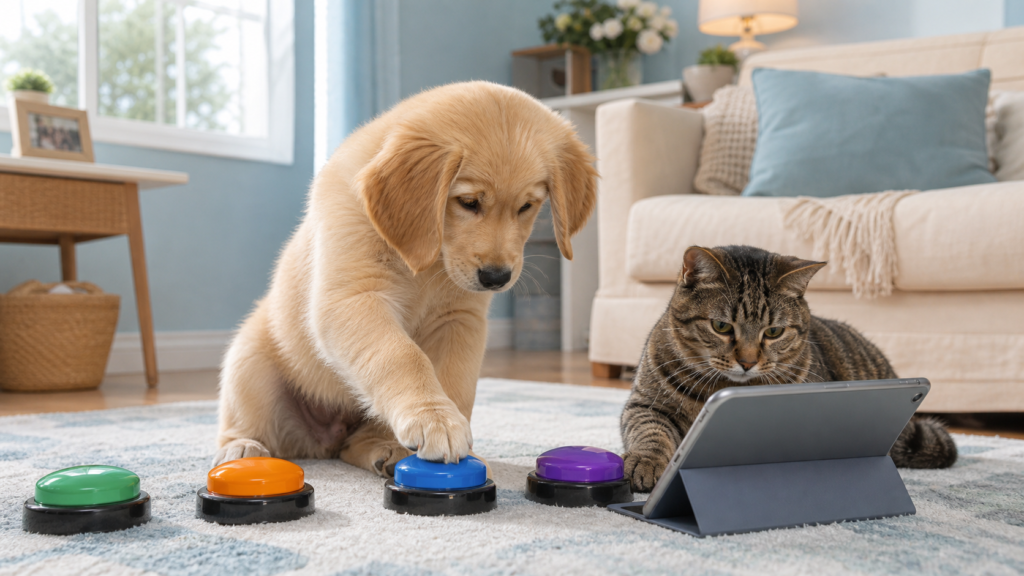
The CloudyAww Short “Pets Who Tried to Use Human Things” works because the joke is clear in the first second: these pets are not just near human objects. They are treating them like serious little assignments. And that is where the real pet logic begins.
Buttons Turn Objects Into Tiny Puzzles
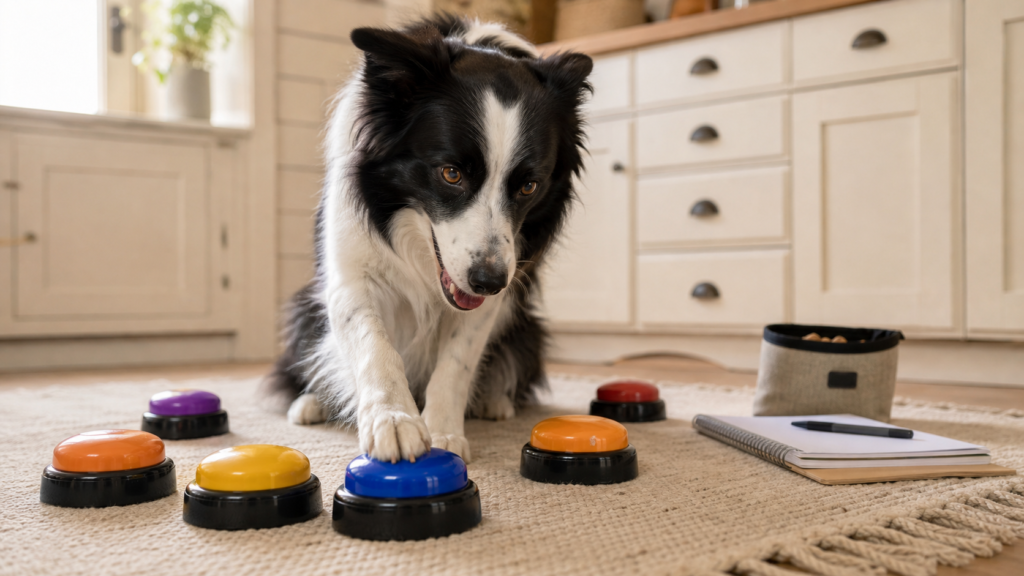
Buttons are almost unfairly interesting to pets. They are simple, visible, and dramatic. One paw movement can create a sound, a human reaction, or a little burst of attention. For a curious dog, that can feel less like a random object and more like a tiny puzzle with a clear result.
This is why button videos are so satisfying to watch. The pet does one small thing, the world responds, and suddenly the animal looks like it has discovered a department nobody told us about. It may not understand the button in a human-language way, but it can still notice cause and effect.
Good enrichment often works on that same principle: safe object, simple action, interesting result. The ASPCA’s enrichment guidance points toward giving dogs appropriate ways to problem-solve and use their senses, which is exactly why safe puzzle toys, scent games, and simple reward-based activities can be more useful than letting a pet investigate every forbidden object in the house.
Watch the Short: Pets Who Tried to Use Human Things
Tablets And Screens Are Moving Clues
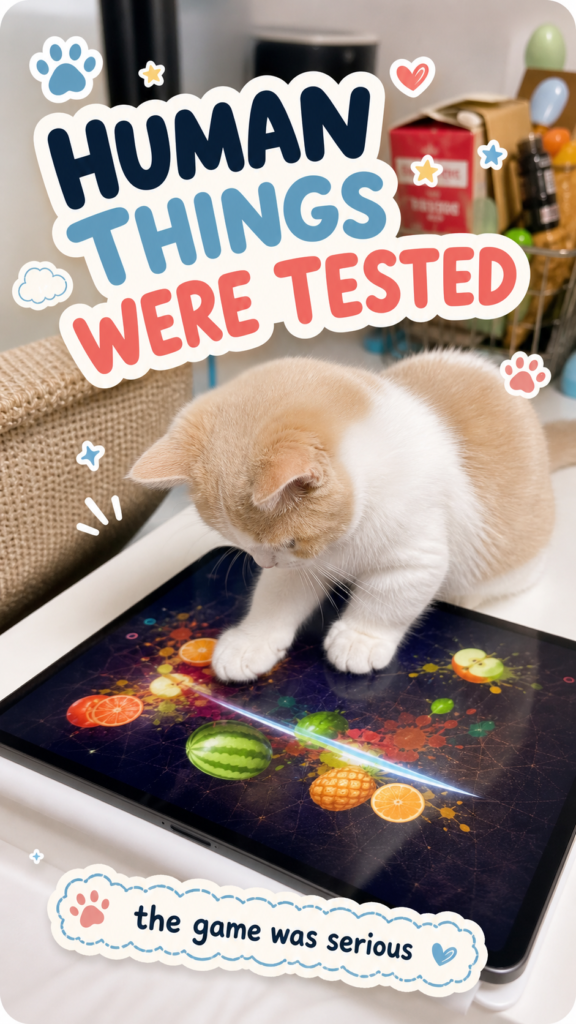
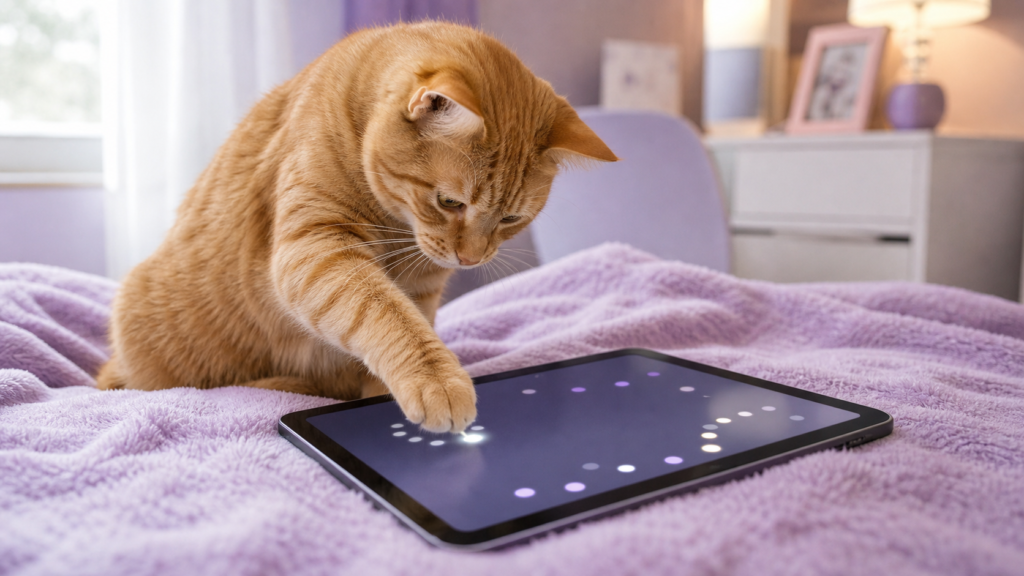
A tablet is not just a flat rectangle to a cat. It can be light, movement, tiny sounds, warmth, and human attention all in one place. If something moves across the screen, a cat may read it as a target to investigate, especially if the motion is small, quick, and unpredictable.
That does not mean every screen game is automatically good play. Cats still need real hunting-style play that lets them stalk, chase, pounce, and “catch” something safely. International Cat Care explains play as an important outlet for natural cat behaviour, especially when it uses safe toys and lets the cat complete a satisfying sequence.
So the funny tablet-tapping moment is best understood as curiosity plus motion, not a replacement for real play. A screen can get attention, but a wand toy, soft ball, puzzle feeder, or safe chase game gives the body more of what it was built to do.
Phones And Remotes Smell Like People
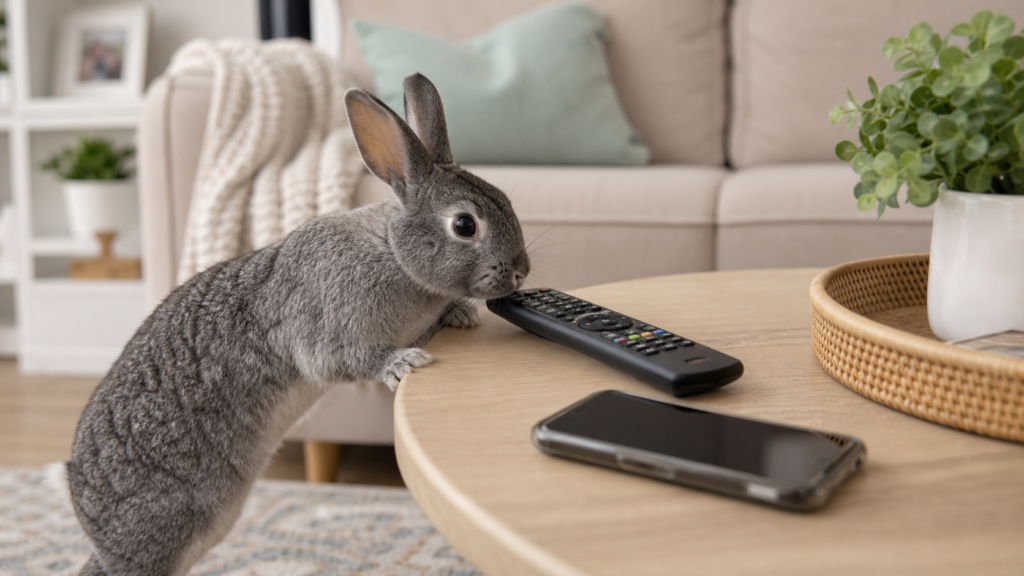
Phones, remotes, bags, keyboards, and controllers all have one unfair advantage: they smell like us. They sit in our hands, pockets, beds, bags, and favourite spots. To a pet, that can make them far more interesting than a clean toy sitting politely in the corner.
A dog sniffing a remote or a rabbit inspecting a phone is not necessarily trying to “use” it. Sometimes the object is just carrying a lot of household information. Who touched it? Where has it been? Why does everyone keep looking at it? Why does it seem to control the room?
That is the funny part. The pet does not need to understand the remote to understand that the remote matters.
Attention Can Accidentally Train The Joke
Pets are excellent at noticing what gets a reaction. If a cat taps a tablet and everyone laughs, looks over, speaks, or starts filming, the tablet moment becomes more rewarding. If a dog presses a button and the room reacts, the button gets promoted from “object” to “activity.”
That does not make the pet manipulative in a dramatic way. It just means attention is information. Many pets learn which actions make humans respond, and some human objects become part of that little feedback loop.
This is why the best CloudyAww moments often feel like the pet has a job. The animal is not doing a full human task. It is reading the room, testing cause and effect, and accidentally looking like it has been hired.
The Safety Line Matters
The cute version is a pet tapping a safe button or watching a tablet under supervision. The risky version is chewing chargers, swallowing small pieces, knocking over heavy objects, or getting access to batteries, cords, cleaners, sharp edges, or breakable items.
Cornell Feline Health Center’s toy safety guidance is a useful reminder here: even play objects should be checked for parts that could be swallowed, strings that could be dangerous, or pieces that can come loose. The same logic applies to human objects. If it is small, sharp, chewable, toxic, breakable, electrical, or easy to swallow, it should not be part of the investigation.
The goal is not to stop curiosity. The goal is to redirect it before the “tiny product tester” becomes a tiny emergency department.
Give Them Something Better To Investigate
If a pet keeps trying to join in with human things, it may be asking for a better assignment. Not in words, obviously. More in the “this object looks important, so I am now involved” way.
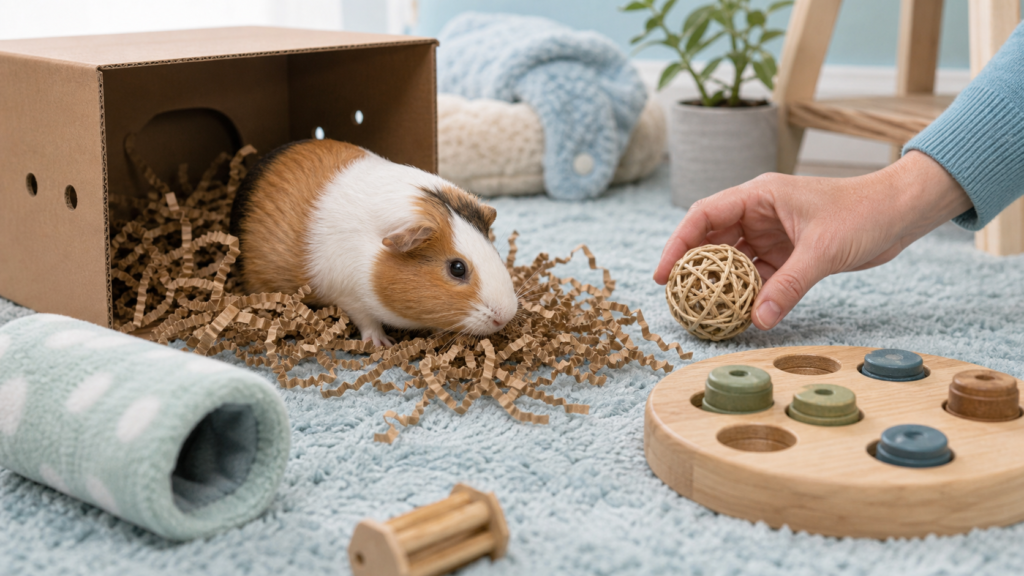
A safe alternative can be simple: a puzzle feeder, snuffle mat, cardboard box, crinkle paper, lick mat, food-dispensing toy, scent game, soft toy rotation, or supervised training button. For cats, short play sessions that imitate hunting can be more satisfying than letting them paw at screens. For dogs, scent and puzzle work can turn busy energy into something calmer and more useful.
The best replacement is not always the fanciest toy. It is the one that gives the pet a job it is allowed to finish.
More Tiny Pet Logic on CloudyAww
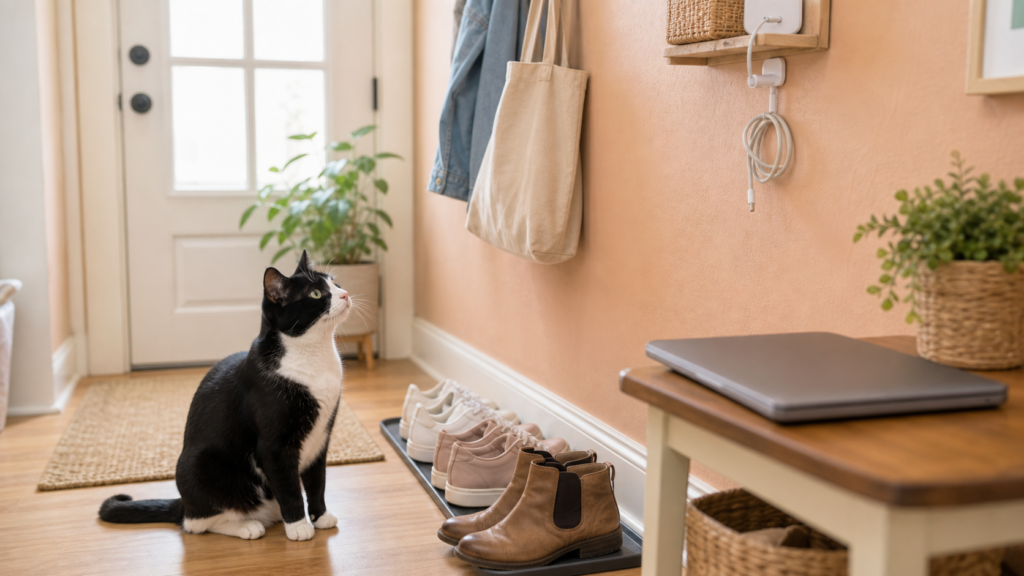
If your pet has ever inspected a laptop, supervised a suitcase, judged a grocery bag, or acted like a remote control required official approval, you are already living in the CloudyAww world.
Daily Awws keeps the tiny moments close to the videos, while Aww Articles turns them into warm, useful little explanations. The point is not to over-seriously explain every funny thing a pet does. It is to notice that the funny thing often has a little logic behind it: curiosity, scent, routine, attention, play, and the very serious business of being included.
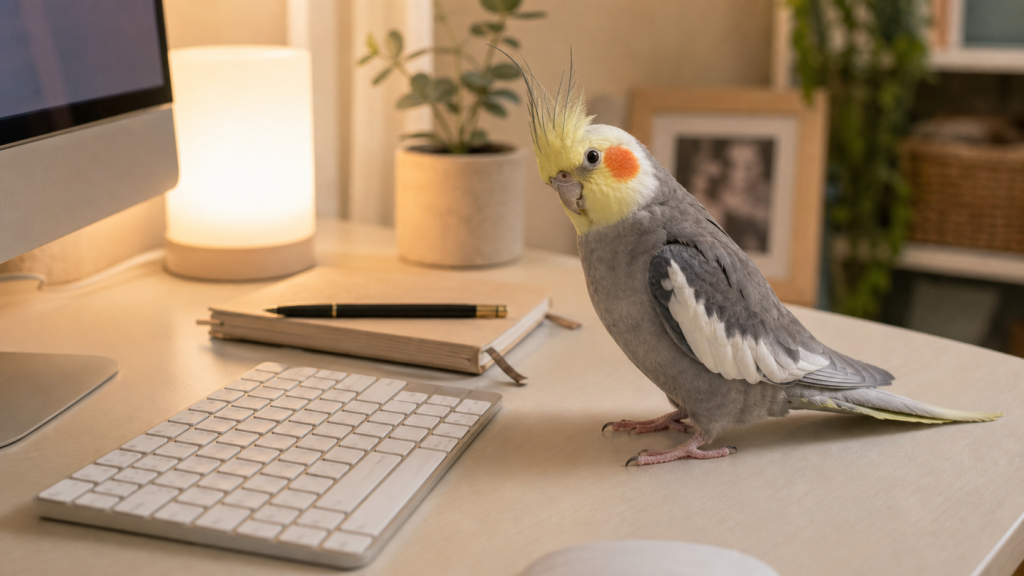
So when a pet tries to use a human thing, the best answer is probably not “they think they are people.” It is softer than that. They know the object matters to you, they know it changes the room, and they would very much like to be part of the test.
Keep following the behaviour trail with Why Do Pets Misunderstand What We Want?, Why Do Pets Turn Small Moments Into Big Drama?, and What Your Pet May Be Telling You During Inspection Time. More warm, practical pet explainers live in Aww Articles.