

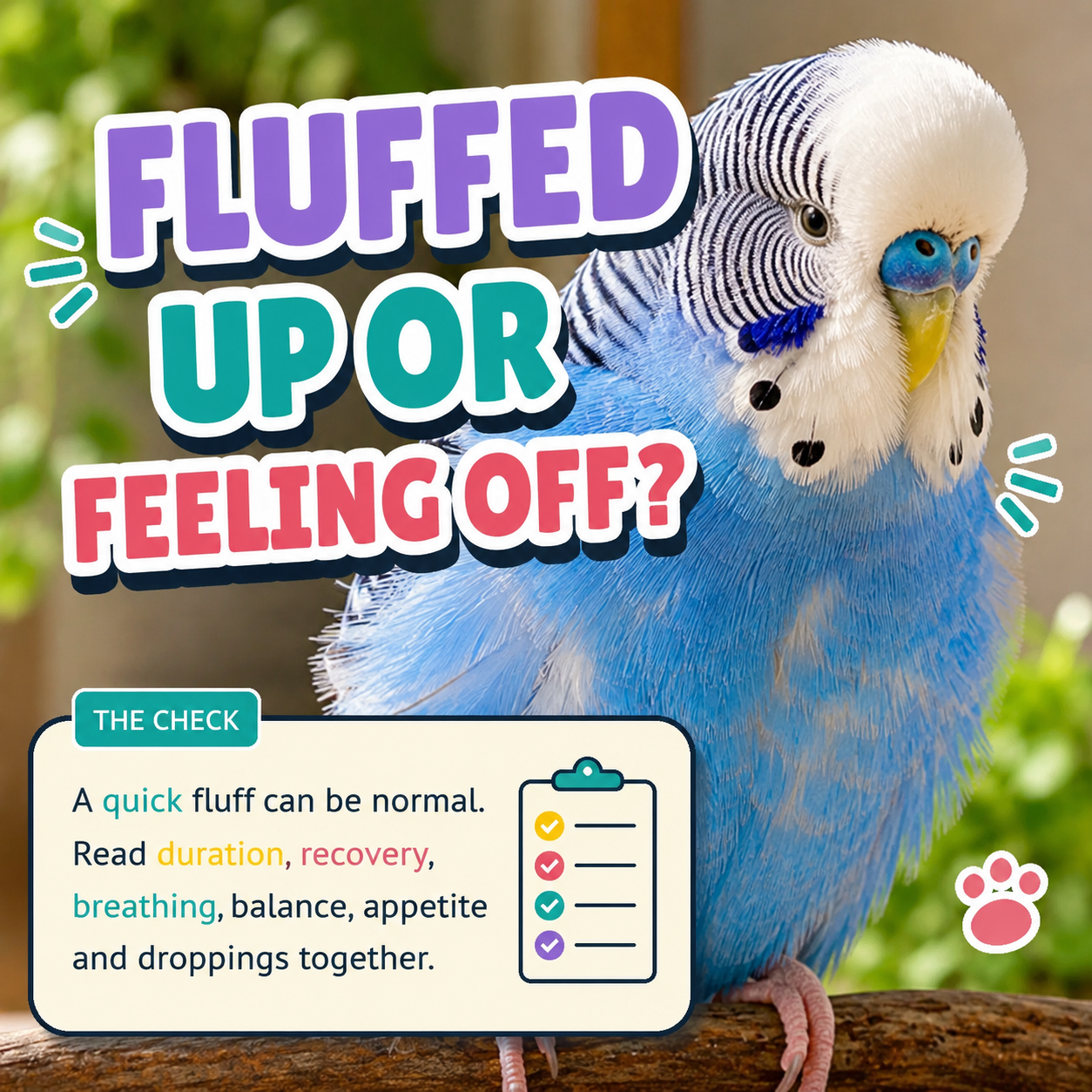
A pet bird can expand from sleek comma to feathered pom-pom in seconds. Sometimes the fluff is a brief comfort adjustment. Sometimes a bird stays puffed up because they are unwell. The outline looks similar; the surrounding evidence does not.
That is why ‘fluffed feathers’ should never be read alone. Duration, activity, breathing, balance, appetite, droppings and the bird’s normal daily pattern all matter. A quick shake-and-settle is a different event from hours of quiet puffing with half-closed eyes.
Read the feathers, then read the whole bird.
The Quick Fluff
Birds can lift their feathers to trap a layer of warm air close to the body. MSD Veterinary Manual describes fluffing in cooler conditions as part of staying warm. Birds also loosen and rearrange feathers during preening, and a brief fluff may appear while settling or relaxing.
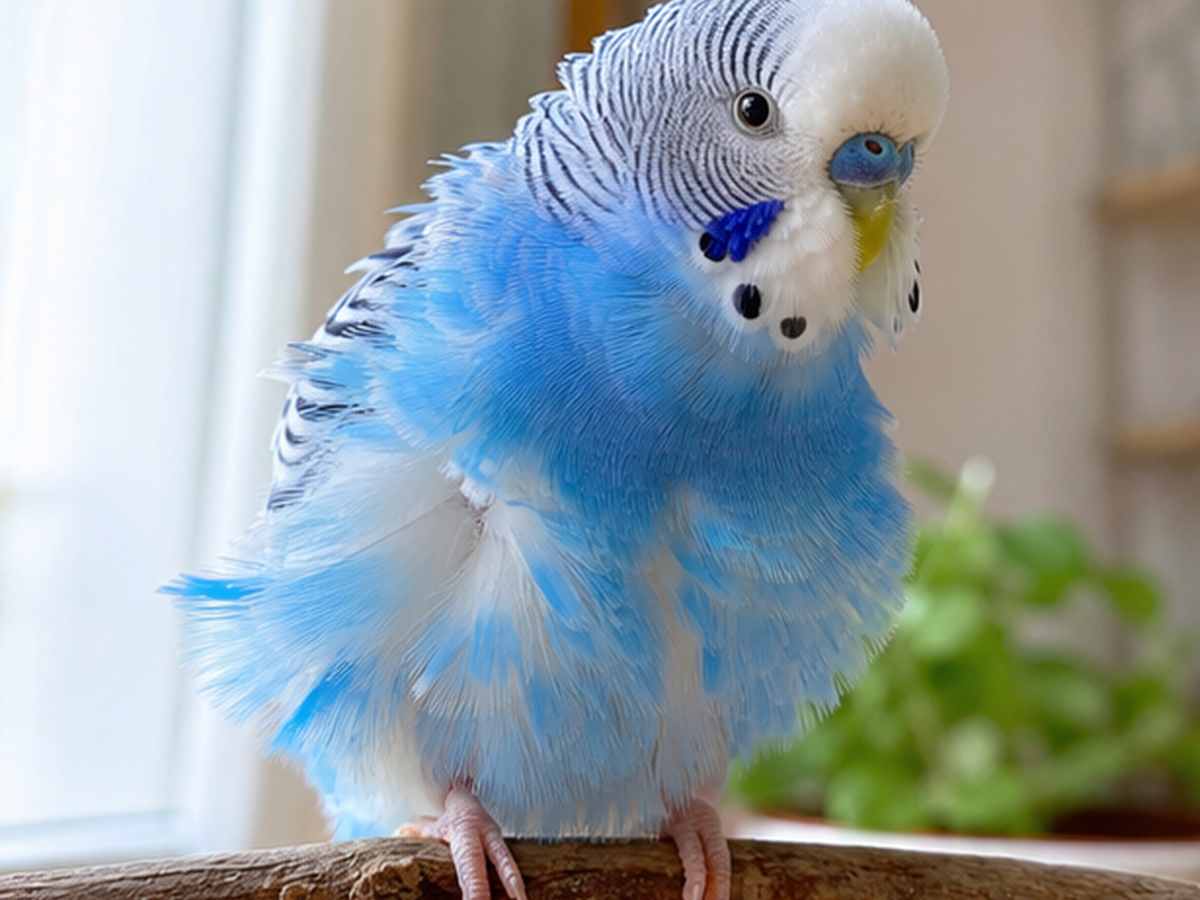
A normal quick fluff usually ends. The bird returns to a coordinated posture, remains alert, moves around, eats, vocalises or resumes ordinary preening. The useful feature is not only the round shape; it is the clean recovery into normal bird business.
Species and individual habits vary. Learn what your bird looks like after waking, during a nap, before a bath and in different room temperatures. A baseline makes a real change easier to notice.
The Whole-Bird Check
Start with energy and posture. Is the bird balanced on the perch with a normal grip, or sitting low and moving less? Are the eyes bright during active periods, or repeatedly closing? Does the bird respond normally to familiar sounds and people?
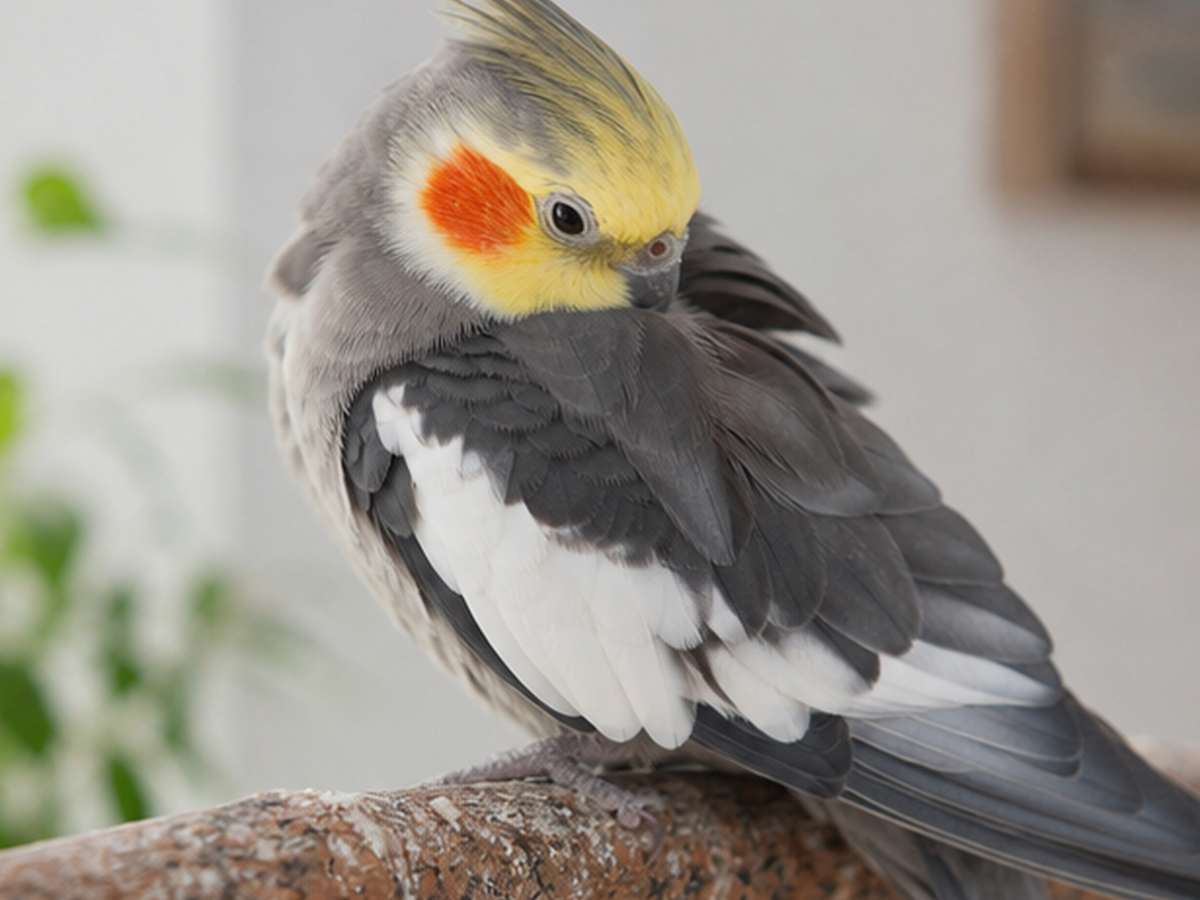
Then check routine. Food and water intake, droppings, vocal behaviour, grooming and sleep can all shift when a bird is unwell. Because birds may hide illness until a problem is advanced, small whole-bird changes deserve more weight than a single dramatic feather moment.
Head movement can be normal too, but context remains essential. CloudyAww’s guide to why some pet birds bob their heads uses the same principle: look at timing, repetition and the rest of the body.
Watch Breathing, Balance, Appetite and Droppings
Contact an avian vet promptly if persistent fluffing appears with breathing difficulty, open-mouth breathing, pronounced tail bobbing, weakness, falling, vomiting, marked droppings changes, reduced appetite or a clear reduction in activity.
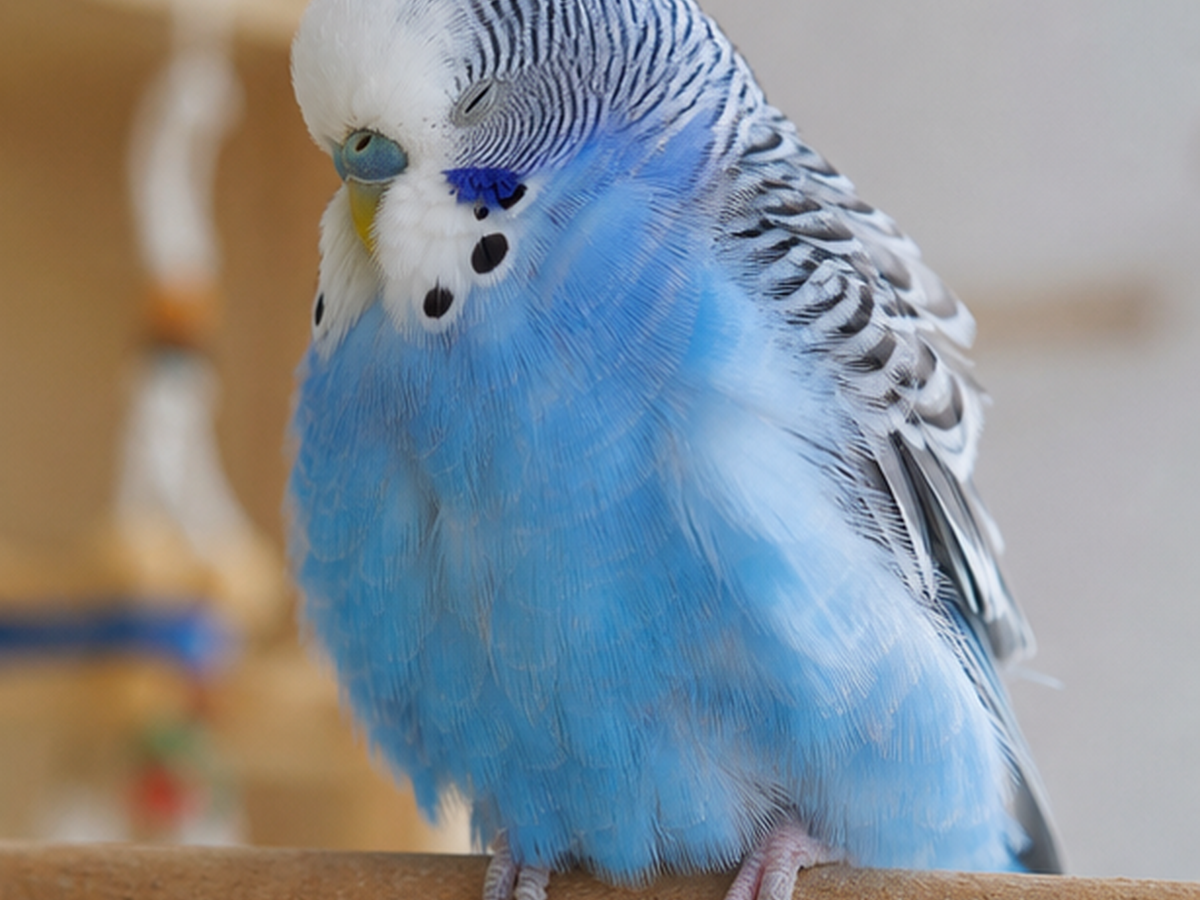
A bird sitting on the cage floor, unable to perch normally or becoming unusually unresponsive needs urgent professional advice. Keep the environment calm and warm enough for the species while arranging care, but do not delay treatment to try a collection of home remedies.
Do not force food, give human medicine or repeatedly handle a bird who is struggling to breathe unless an avian vet directs you. Stress and restraint can make breathing harder.
Make Normal Easier to Notice
Consistency helps observation. Keep the cage and feeding area clean enough that changes in droppings and food use are visible. Weigh the bird regularly on an appropriate gram scale if your avian vet recommends it, and record the result rather than trusting visual impressions through feathers.
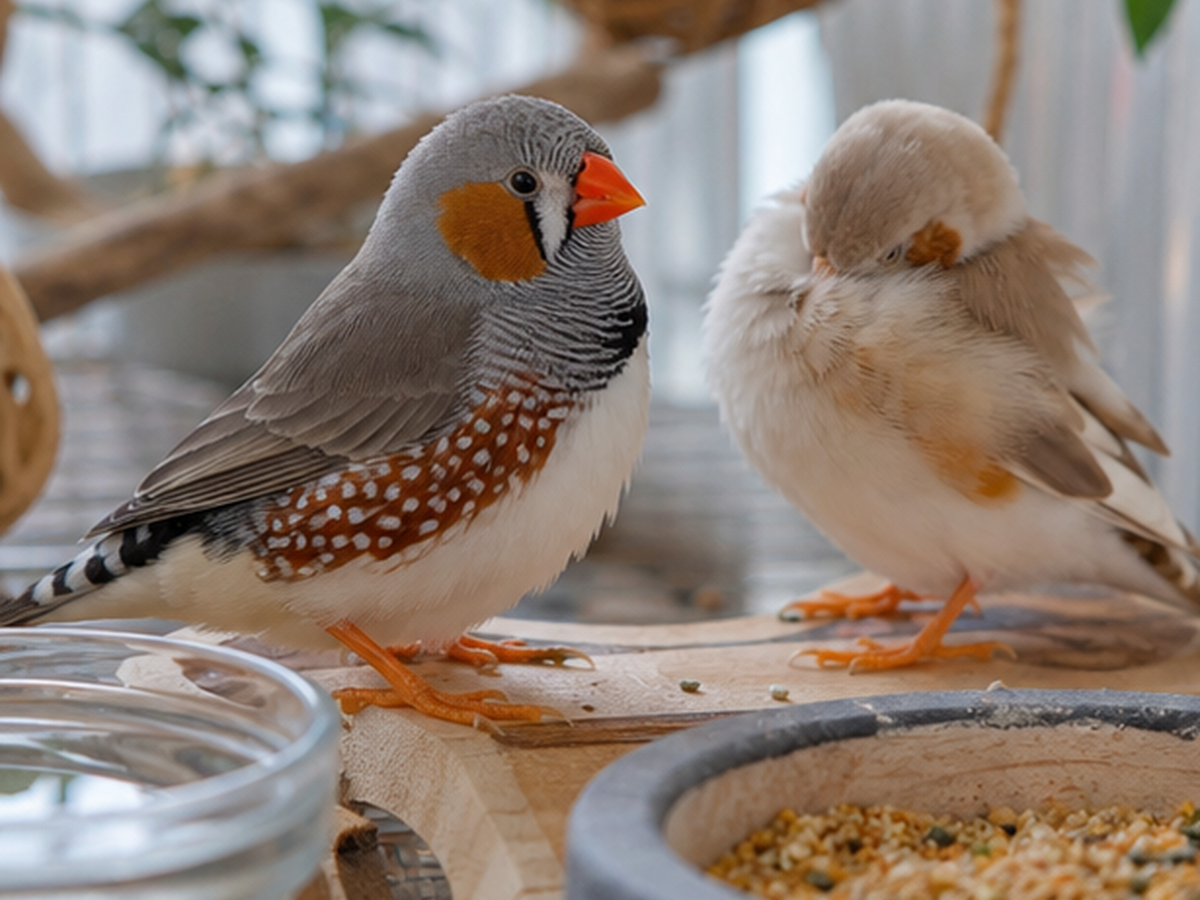
Provide species-appropriate space, perches, bathing opportunities, social contact and sleep. Avoid drafts, smoke, aerosols and sudden temperature swings. Normal behaviour is easier to recognise when the daily environment is predictable and the bird has genuine choices.
Household sounds can become part of that routine too. Our guide to birds copying household sounds explains why repetition can be ordinary while a sudden loss of normal vocal behaviour still matters.
When to Call an Avian Vet
If your bird remains fluffed for an unusual length of time, looks quieter than normal or shows any additional health change, contact an avian vet. Birds can deteriorate quickly, and early advice is safer than waiting for a textbook collection of symptoms.
Record a short video from a respectful distance and note when the change began, room temperature, recent diet or environment changes, appetite and droppings. Bring the information to the vet rather than trying to recreate the behaviour through handling.
A temporary comfortable fluff is allowed to be cute. A persistent change deserves action. The difference lives in duration, recovery and the whole-bird pattern.
The CloudyAww Read
Feathers are excellent insulation and terrible standalone translators.
If a bird briefly puffs, rearranges everything and returns to bright, balanced, ordinary life, the moment may simply belong to warmth, preening or rest. Notice it, then notice the recovery.
If the fluff stays and the bird’s breathing, energy, balance, appetite or droppings change, call an avian vet promptly. The outline catches your eye. The whole bird makes the decision useful.
Sources and Further Reading
- MSD Veterinary Manual: Introduction to birds
- MSD Veterinary Manual: Illness in pet birds
- VCA Animal Hospitals: Recognizing illness in pet birds
- RSPCA: Bird behaviour
- MSD Veterinary Manual: Skin and feather disorders of pet birds
- U.S. Fish and Wildlife Service: How birds keep warm