

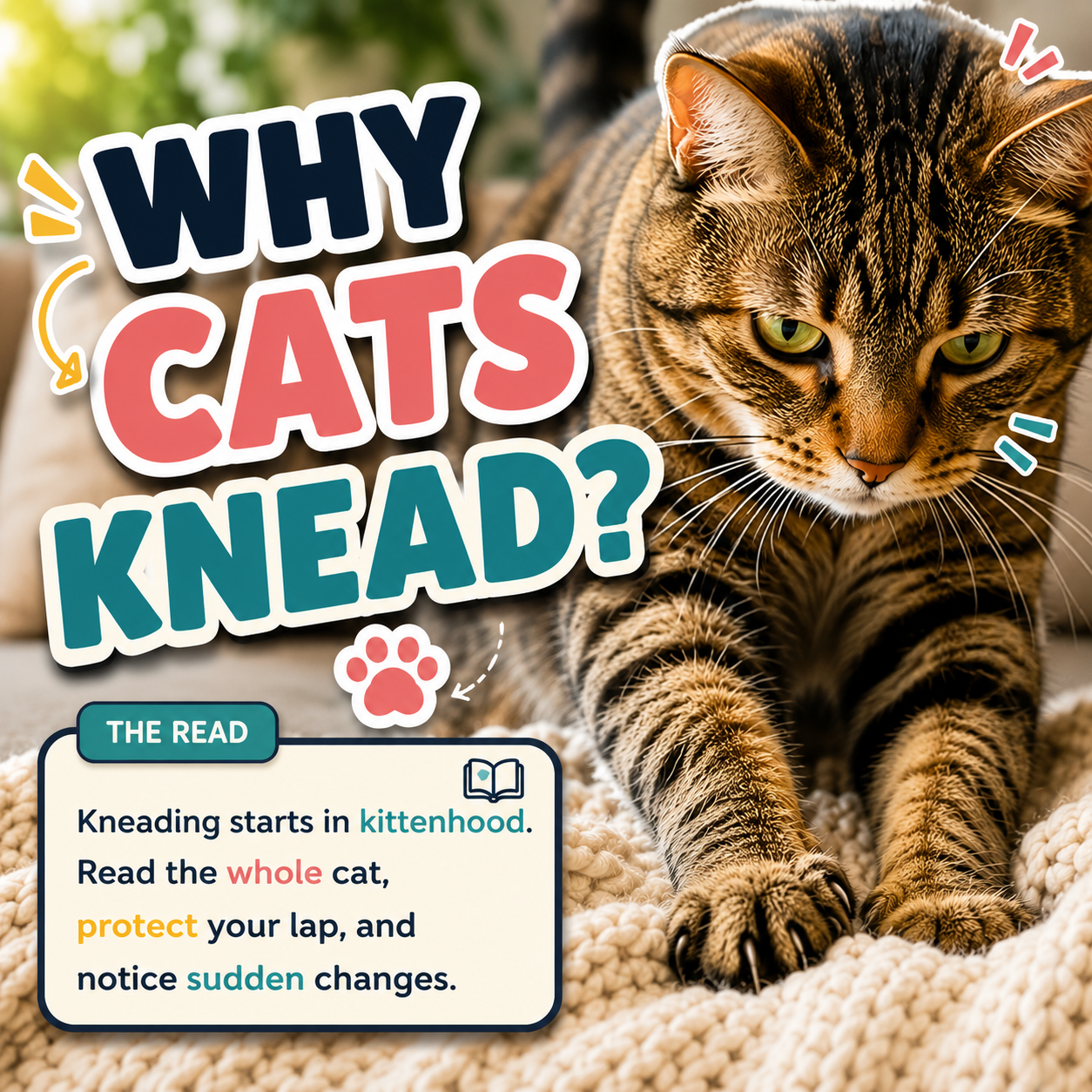
A cat settles onto a blanket, places both front paws carefully, and begins pressing left, right, left, right as if the household has been waiting on an urgent order of invisible bread.
That alternating paw movement is commonly called kneading or making biscuits. It is familiar, often wonderfully cozy and still not a one-line translation of a cat’s feelings. Many cats knead when relaxed, but the useful read includes the surface, posture, timing and what the cat does next.
Enjoy the tiny bakery. Just read the baker too.
The Kitten Memory That Stayed
Kittens knead around their mother’s mammary glands while nursing. Adult kneading may preserve part of that early motor pattern, even though the cat is no longer asking a blanket to provide lunch.
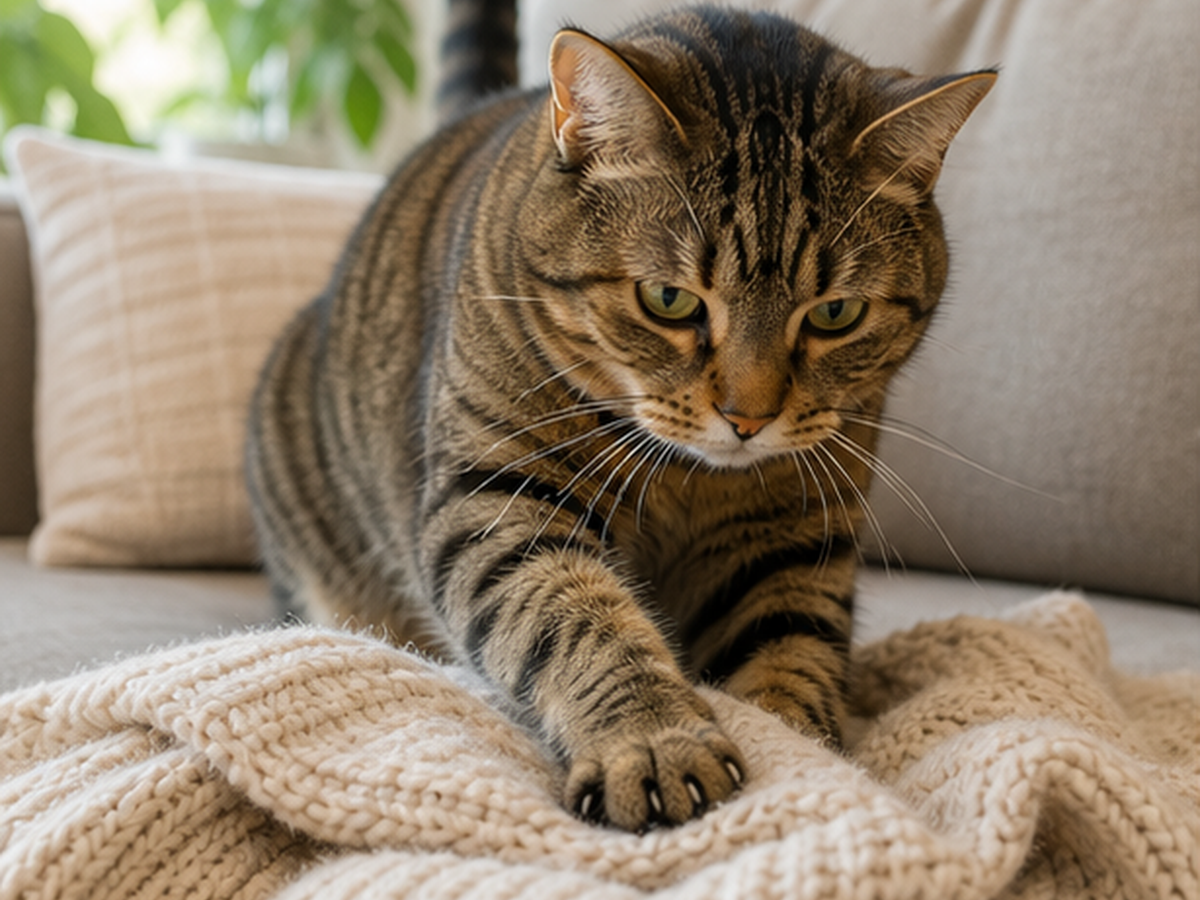
Animal-welfare sources agree on the kitten origin, while the precise adult meaning is less certain. Comfort is a common and sensible interpretation when kneading appears with a loose body, soft eyes and settling behaviour. It is better described as a pattern that may accompany comfort than as proof of one exact emotion.
Some cats purr, drool or circle before lying down. Others knead for ten seconds and move on. Individual style matters, and the absence of kneading is not evidence that a cat feels less attached or secure.
Comfort Is Likely, Certainty Is Not
Look at the whole moment. A comfortable cat may hold the tail and body loosely, keep the ears neutral, blink slowly, settle after kneading or choose to remain close. CloudyAww’s guide to the cat slow blink explains why one soft signal is most useful when it fits the rest of the body.
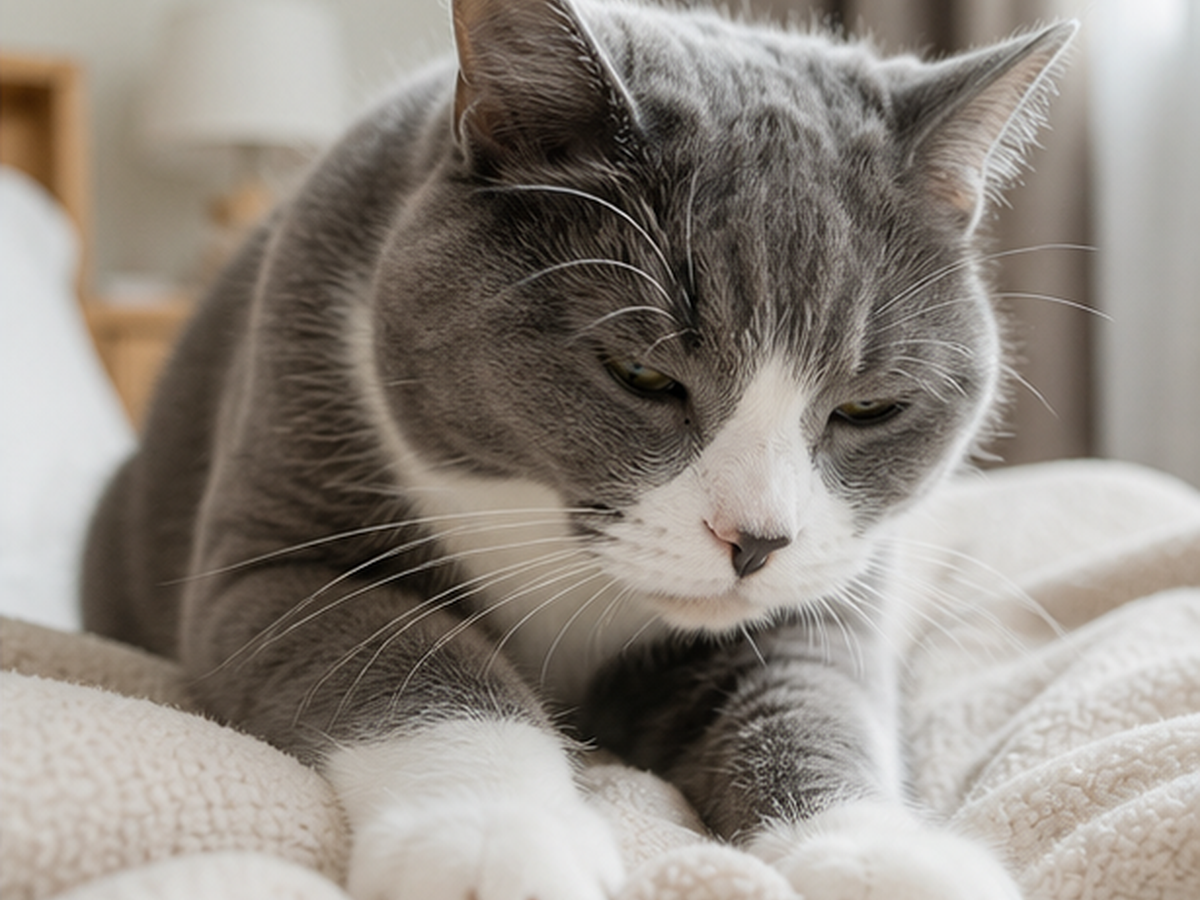
Theories about adult kneading also include preparing a resting surface and leaving scent from glands around the paws. Those ideas are plausible, but a single kneading session cannot tell us which mechanism is doing the most work. Avoid turning a warm observation into false certainty.
Ask a simpler question: does this movement sit inside an ordinary, coordinated, comfortable cat moment? If yes, there is usually no need to grade the biscuits.
Read the Cat Around the Paws
Notice the face, ears and choice. Can the cat leave? Do they remain because they want to? Are the paws alternating rhythmically, or is the cat tense, repeatedly repositioning and unable to settle? What happens when the surface changes or the interaction pauses?
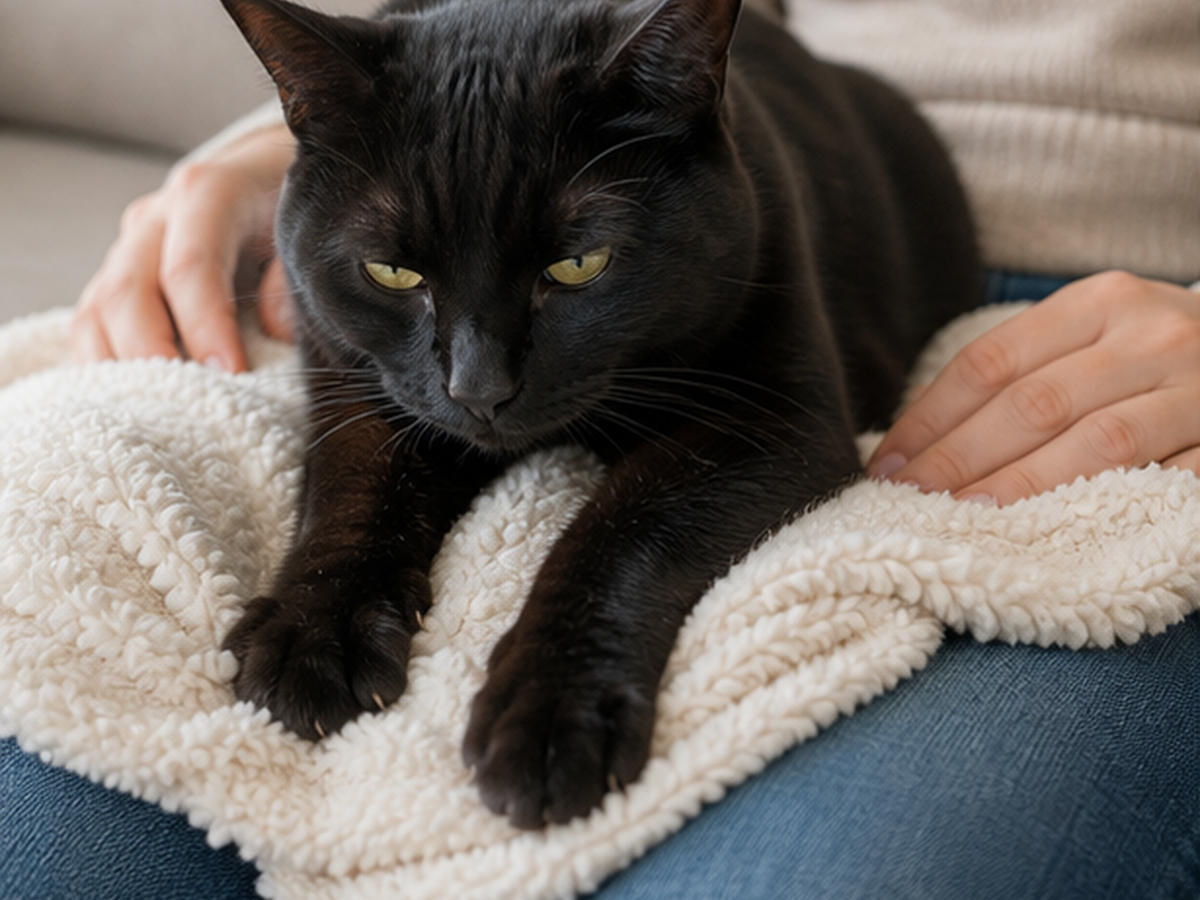
Kneading on your lap does not automatically grant permission for restraint or endless petting. Let the cat choose contact. If they turn away, flatten their ears, twitch sharply, bite, swat or leave, allow the conversation to end.
Play and environmental choice can support the wider comfort picture. A short interactive session, a safe climbing route and a good window spot give indoor cats more useful ways to decide how their day works.
Save Your Lap Without Closing the Bakery
Claws can make a loving kneading session feel surprisingly administrative. Put a thick folded blanket between the paws and your skin rather than pushing the cat away for doing normal cat behaviour. Blue Cross specifically suggests a thick blanket when kneading becomes uncomfortable.
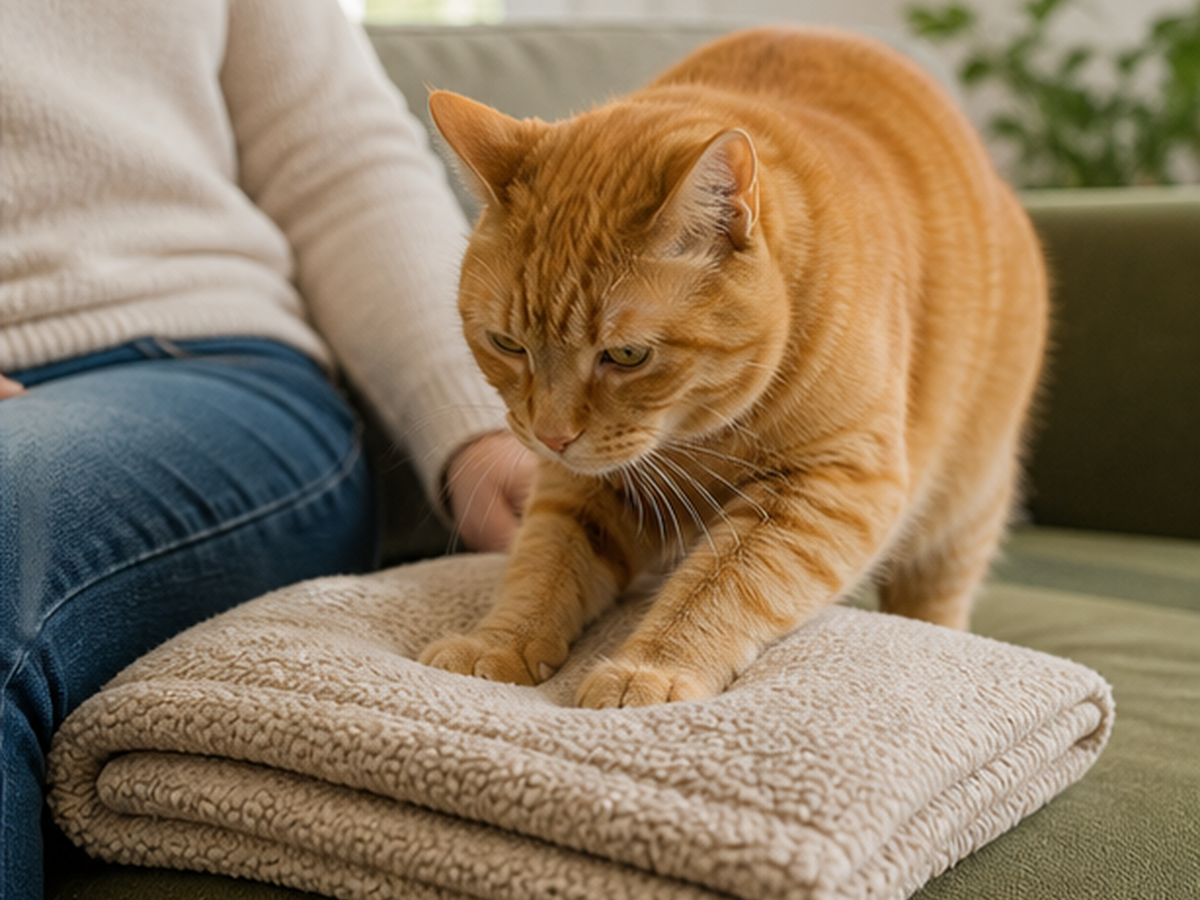
Keep nails appropriately maintained with guidance from your vet or groomer, and never punish the movement. If your cat has a favourite washable blanket, leave it somewhere stable and inviting. A surface that slips, bunches or catches claws can interrupt the comfort you were trying to protect.
If you need to move, lure the cat towards the designated blanket or offer another comfortable resting place. The goal is not to close the bakery. It is to improve the health-and-safety paperwork.
When the Pattern Changes
A familiar kneading habit is usually just part of that cat’s normal repertoire. A sudden increase, restless repetitive kneading, inability to settle, hiding, reduced appetite, sensitivity to touch or another behaviour change deserves attention.
Pain and illness can change how cats move, rest and interact, and cats are skilled at making problems look smaller than they are. Contact your vet if the pattern is new, persistent or paired with wider changes. Do not rely on kneading alone to decide that a cat is fine.
A short video and a note of when the behaviour began can help. Record naturally; do not repeatedly trigger the movement to collect better evidence.
The CloudyAww Read
Kneading is one of the gentlest examples of kitten machinery continuing to work in an adult-sized household.
When it appears inside a loose, voluntary, settled moment, let the blanket receive its invisible order. Protect your lap, keep the surface stable and let the cat decide how long the shift lasts.
If the kneading changes suddenly or arrives with pain, hiding, appetite changes or difficulty settling, call the vet. The paws provide the rhythm. The whole cat provides the meaning.
Sources and Further Reading
- Cats Protection: Why do cats knead?
- Blue Cross: Why do cats knead?
- VCA Animal Hospitals: Do cats knead?
- VCA Animal Hospitals: How pain affects behaviour in cats