

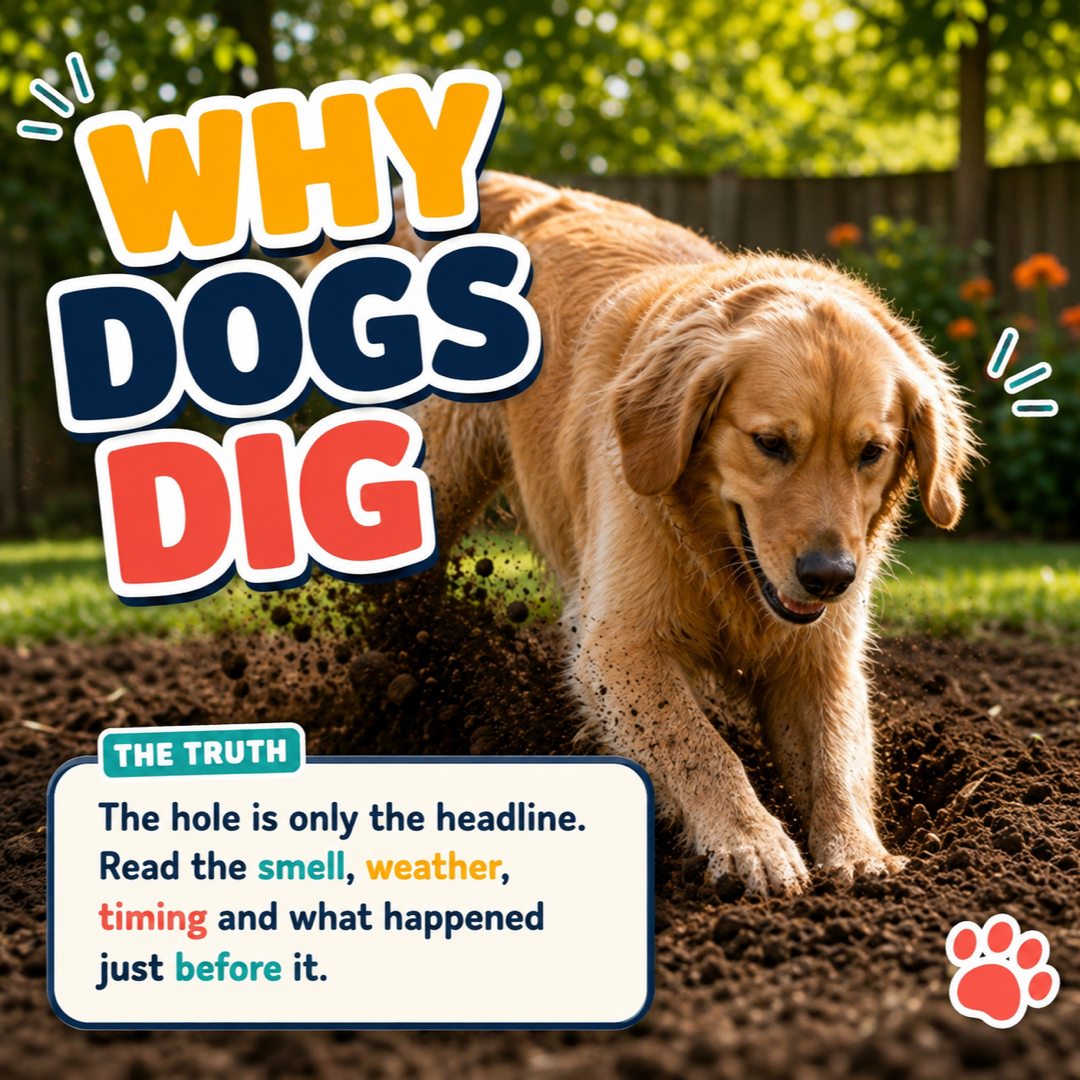
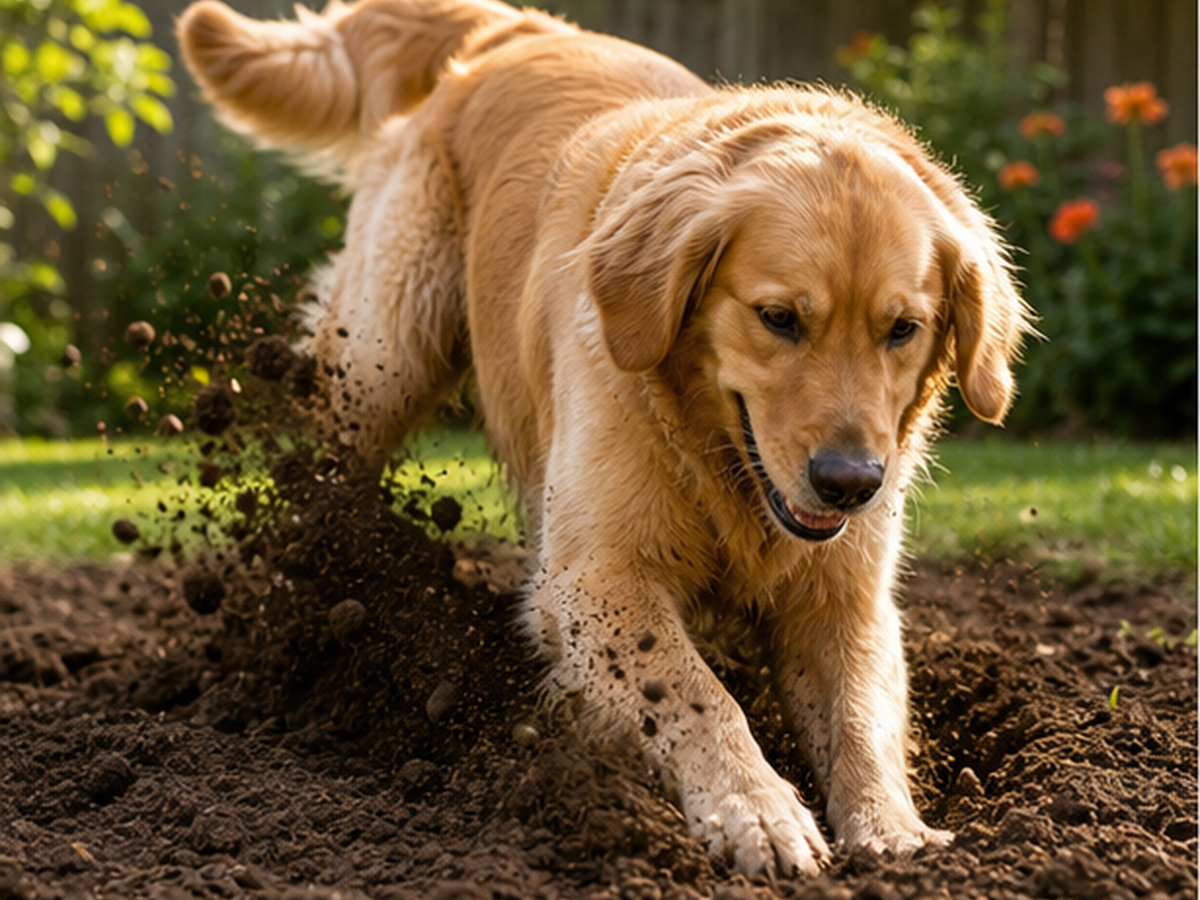
A dog can turn one quiet patch of lawn into an archaeological emergency before you have found the other gardening glove. Soil flies. A nose disappears. Someone emerges looking enormously pleased with the new basement.
Digging is normal dog behaviour, not a personal review of your landscaping. The useful question is not simply how to stop it. It is what this particular hole was doing for this particular dog. Location, weather, scent, timing and what happened just before the first paw hit the soil can all change the answer.
That makes the hole a clue. Read the scene first, then decide whether your dog needs a better outlet, a safer garden, more support, or a health check.
Start With What Happened Before
Watch the minute before the digging rather than only the crater afterwards. Did your dog follow a smell to one exact spot? Were they hot and trying to reach cooler ground? Had a toy or chew just disappeared under the soil? Were they left alone, pacing the boundary, or exploding with energy after a quiet day?
A scent-led dig often looks focused: nose down, repeated checking and careful work in one place. An energetic dig may arrive with running, play bows and fast, messy excavation. A dog trying to create a cool resting hollow may scrape in shade and then lie in the spot. The paws look similar, but the job is different.
If you want a better read of the rest of the body, CloudyAww’s guide to dog body language is a useful companion. Loose movement, easy pauses and voluntary re-engagement tell a different story from tension, repeated escape attempts or frantic persistence.
A Cooler Bed, a Better Smell, a Buried Treasure
Dogs Trust notes that dogs may dig because a scent is interesting, to make a resting place, to bury something, or simply because digging itself is rewarding. Breed history and individual habit can affect how strongly the behaviour appears, but no breed label explains every hole.
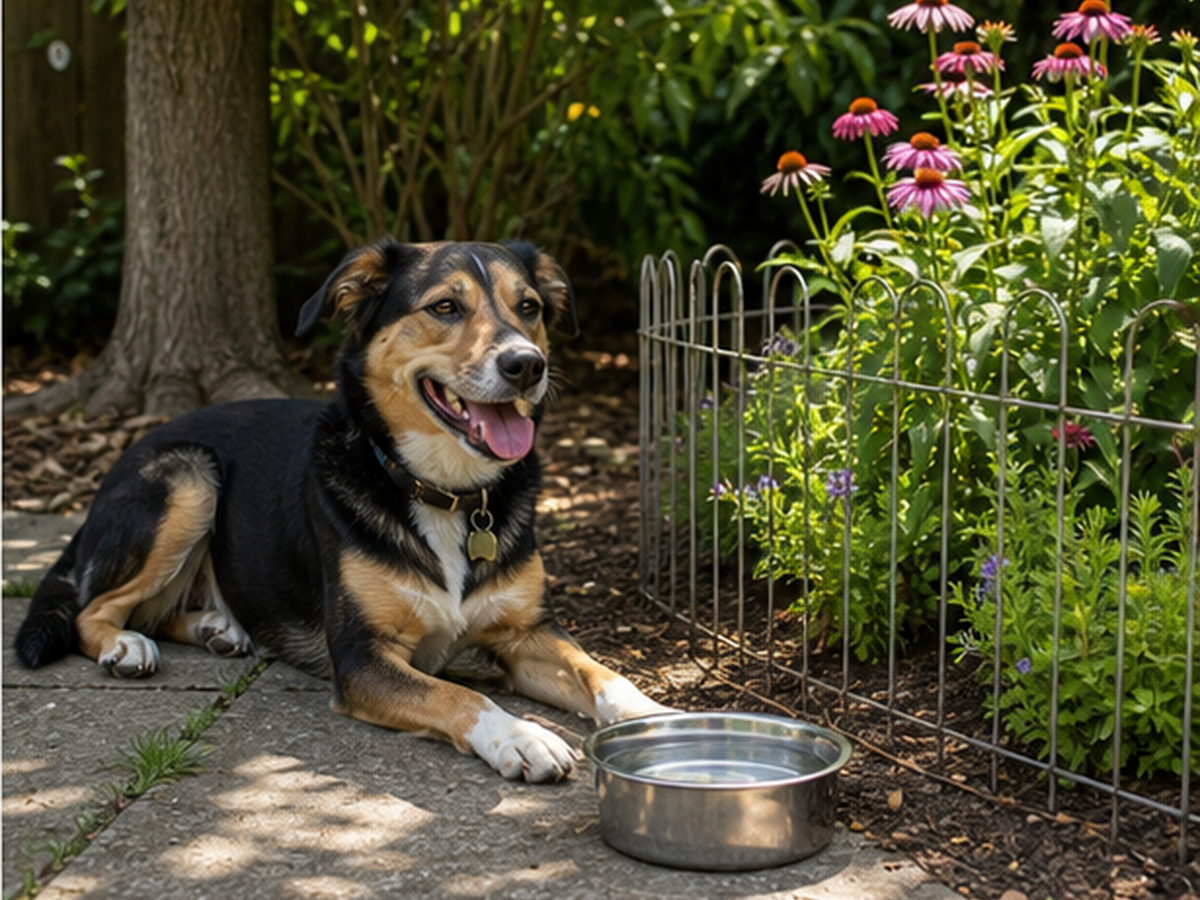
Weather matters. In warm conditions, bare soil below the surface can feel cooler than sun-heated ground. Shade, reliable fresh water and a comfortable resting place should therefore be part of the answer, not an afterthought. A dog repeatedly excavating beside a fence may instead be following activity beyond it or trying to extend the available route.
Sniffing can satisfy some of the same investigative appetite without requiring your lawn to surrender. A slower sniff-led dog walk, scattered food search or safe scent trail can add useful choice to the day.
Give Digging a Legal Address
If digging is safe and your dog enjoys it, a designated dig area is often kinder and more realistic than declaring the entire activity illegal. Use a sturdy sandpit, large soil box or clearly defined corner with safe, diggable material. Keep it away from treated plants, sharp edges, cables and anything toxic.
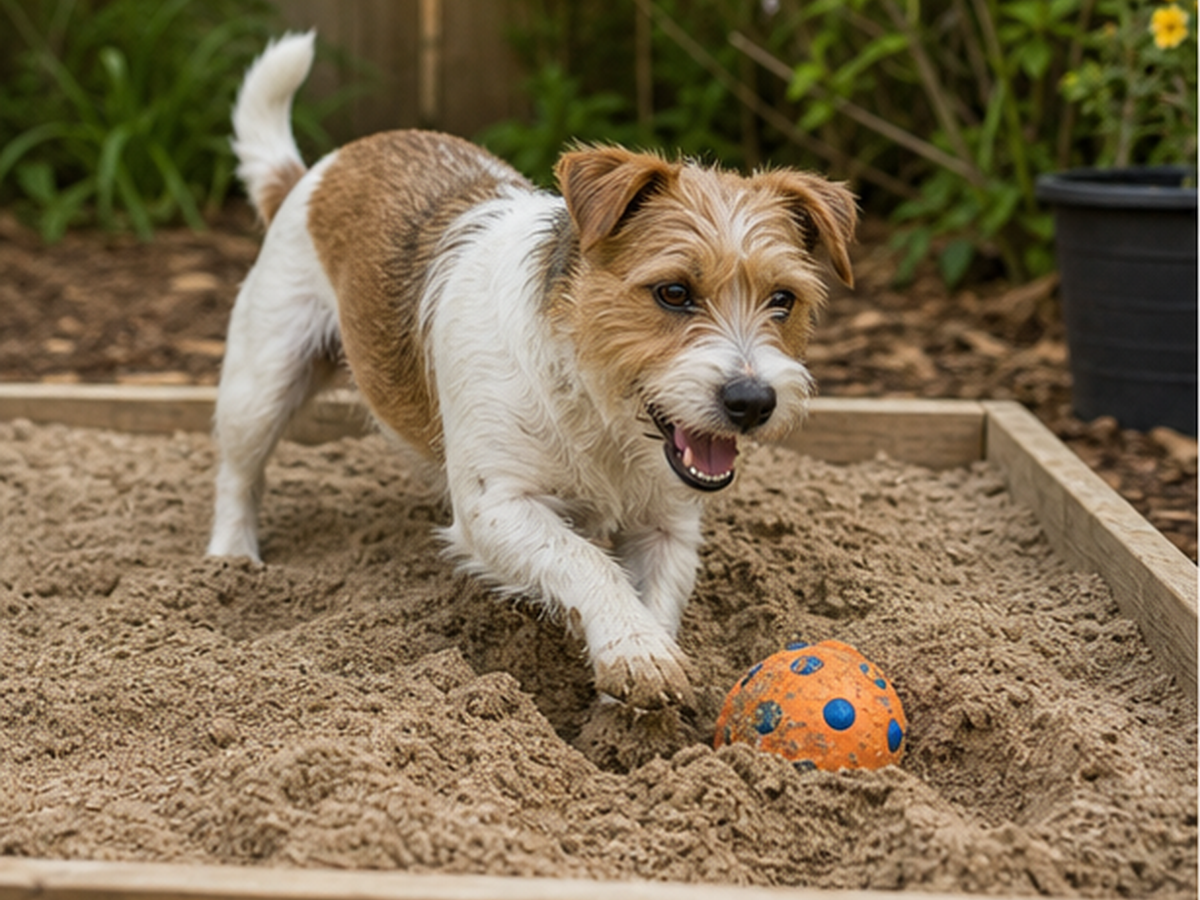
Make the legal address more interesting than the flower bed. Hide a robust toy or a little food near the surface, show your dog where to investigate, and reward them for choosing that spot. Keep the first successes easy. The aim is not to trick the dog into a difficult puzzle; it is to make the right place immediately worthwhile.
Supervise until you know how your dog uses the area. Replace contaminated material, check for splinters or broken toys, and do not leave edible chews buried long enough to spoil. Dig boxes are enrichment, not unattended storage.
Protect the Garden Without Starting a War
Management is allowed to do some of the work. Fence off new planting, cover access to bulbs and chemicals, secure compost, and block gaps before they become escape projects. Give your dog a clear route through the garden instead of asking them to navigate a maze of fragile borders.
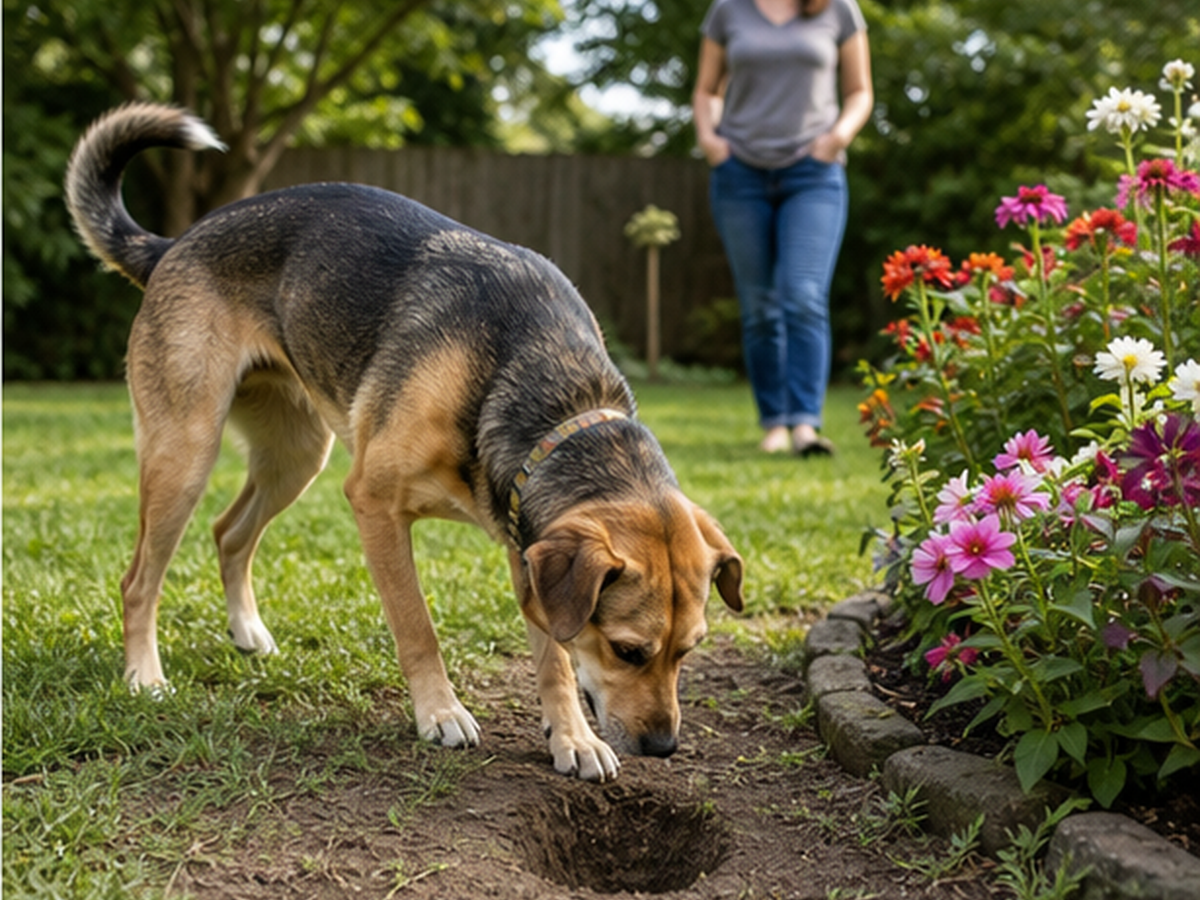
Avoid punishment after the event. A dog cannot connect a later scolding with the exact paw movement that created yesterday’s hole, and fear does not explain what need the digging served. Interrupt calmly when necessary, move the dog to a safe alternative, and reward the behaviour you want to see.
The best plan often combines three things: prevent access to the risky location, add a legal outlet, and improve the part of the day that made digging especially valuable.
When Digging Points Beyond the Lawn
A sudden or intense change deserves more curiosity. Contact your vet if digging arrives with pain, restlessness, sleep disruption, appetite changes, confusion, compulsive repetition, damaged paws, or a wider change in behaviour. Medical discomfort can alter behaviour, and a sofa diagnosis cannot separate all the possibilities.
Repeated escape digging, panic when left alone, or behaviour that remains frantic despite appropriate exercise and enrichment may need qualified behaviour support. Start with your vet so health is considered, then ask for a suitably accredited professional if needed.
Do not wait for the garden to become a perfect behaviour chart. A short video, the time of day, where the hole appears and what happened before and after are useful notes to bring to the conversation.
The CloudyAww Read
The backyard did not lose an argument. Your dog found a job with excellent sensory feedback and very poor planning permission.
Read the hole, weather and whole dog. Protect the risky places, offer a better legal digging address, and make the rest of the day rich enough that the flower bed is not carrying the entire entertainment department.
If the pattern changes suddenly, becomes frantic or arrives with pain or other health changes, call the vet. The goal is not a dog who never touches soil. It is a dog whose normal behaviour has somewhere safe and sensible to land.
Sources and Further Reading
- Dogs Trust: Keeping your garden dog-friendly
- Dogs Trust: Destructive behaviour in dogs
- Dogs Trust: Make your own dig box
- RSPCA Australia: Why dogs dig
- VCA Animal Hospitals: Dogs and destructive digging
- Merck Veterinary Manual: Behaviour problems of dogs