

Some cats watch a window like it is a quiet nature documentary. Others treat it as neighbourhood surveillance with extremely serious whiskers.
The tempting human response is to buy a fluffy perch, place it beside the brightest glass and declare the cinema open. But the best window spot is not necessarily the cutest one. It is the place your cat can reach easily, sit on securely, leave whenever they choose and use without becoming too hot or wound up by what is outside.
That is the useful answer early: build the lookout around the cat, not around the photograph you hope to take of it.
A good window spot can add height, observation and a comfortable place to pause. It does not replace play, hiding places, scratching choices or the rest of an interesting indoor life. Think of it as one lovely room in the house, not the entire house.
Start With The Cat, Not The Cushion

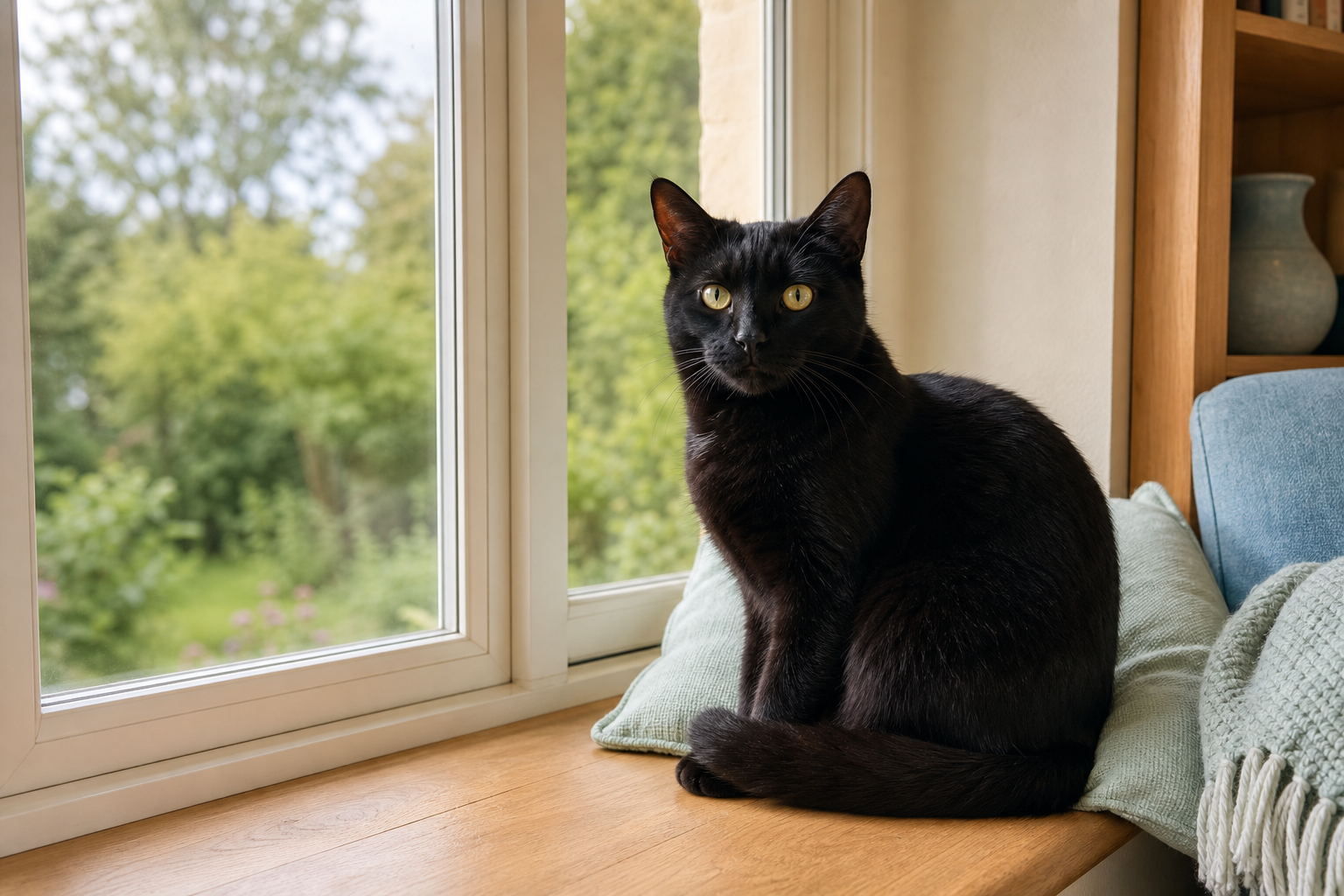
Before moving furniture, watch the places your cat already chooses.
Do they sit low with their paws tucked under them, stretch long along the sill, or stand with the front feet raised to see over the frame? Do they prefer morning light, a quiet upstairs view or the window nearest the household action? Do they stay for twenty minutes, visit for thirty seconds, or avoid that part of the room completely?
Those details tell you more than a product page can.
A broad, relaxed cat needs enough landing space to turn and settle without balancing along an edge. A cautious cat may prefer a lookout with a wall, curtain or covered side nearby. A very social cat may enjoy a perch in the room where people spend time. Another cat may use the window only when the room is empty.
The goal is not to persuade every cat to become a full-time bird commentator. It is to make a useful option and let the cat decide whether it belongs in their routine.
Make The Route Easy

The window itself can be perfect while the route to it is not.
A young athletic cat may jump from the floor without hesitation. A senior cat, a cat with arthritis, a recovering cat or one who simply dislikes uncertain landings may need a chair, low shelf, stable box, ramp or series of small steps. International Cat Care recommends thinking about reliable access to preferred resting and observation places, including non-slip ramps or steps when mobility changes.
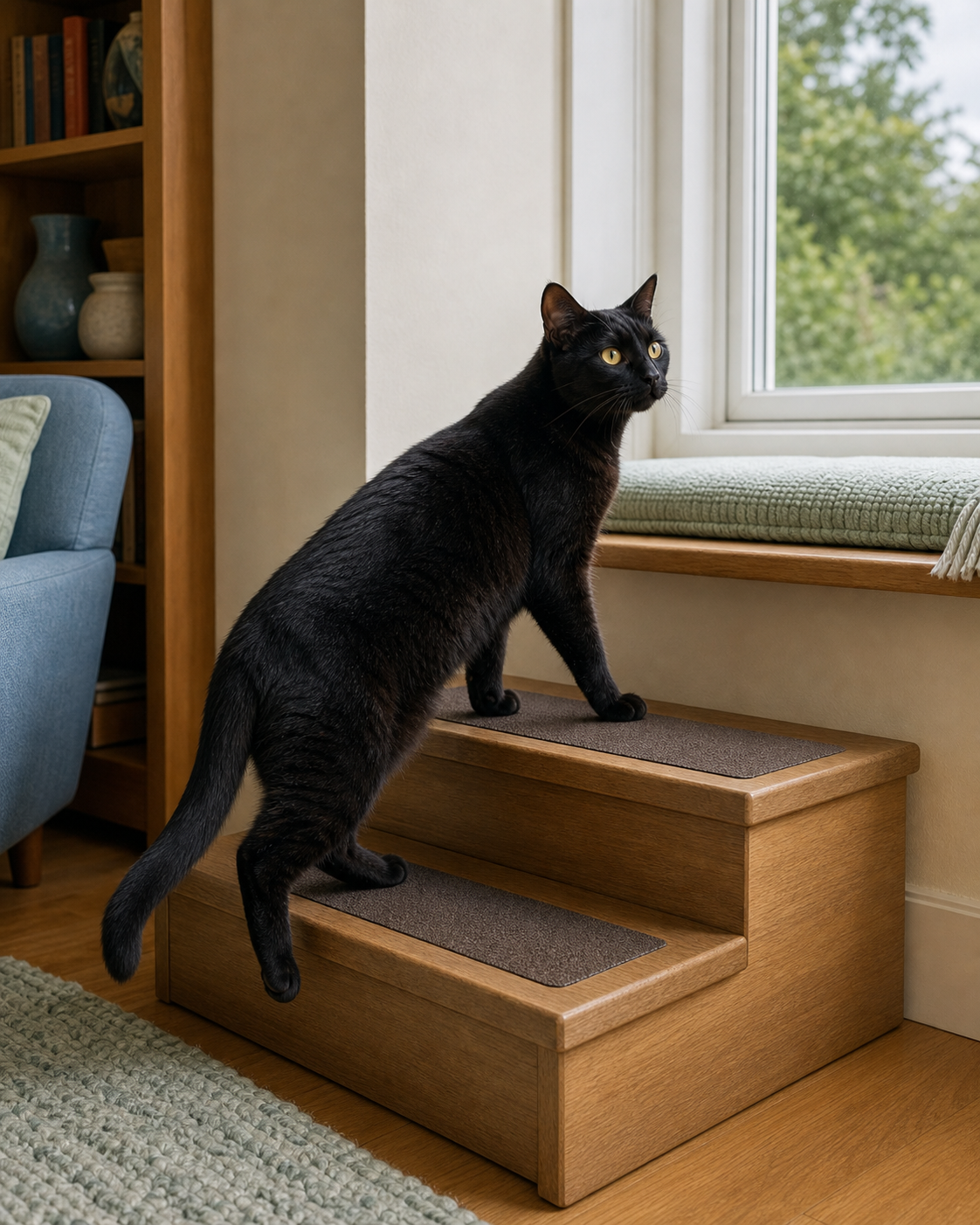
Look at the complete journey:
- Is there a wide, predictable take-off point?
- Does anything slide when the cat lands?
- Is the jump blocked by a lamp, plant or trailing cable?
- Can the cat climb down without making one large drop?
- Could another pet or person trap the route?
Add grip where paws land. Keep the route clear. If you use furniture as a step, make sure it cannot tip or roll. A tiny staircase that feels secure will be used more confidently than an impressive wall shelf reached by one heroic leap.
If evening energy is part of the reason you are improving the room, our tiny guide to cat night zoomies has more ways to add movement and predictable activity without turning the hallway into a racetrack.
Stable Beats Fancy

Cats do not care whether a perch matches the sofa. They care whether it moves underneath them.
Test the surface with more pressure than your cat is likely to apply. Check brackets, suction cups, fabric seams and the furniture underneath. The platform should remain level when the cat steps onto the front edge, turns around or launches away. It should also be wide enough for the cat’s usual resting shape rather than only their neatest sitting pose.
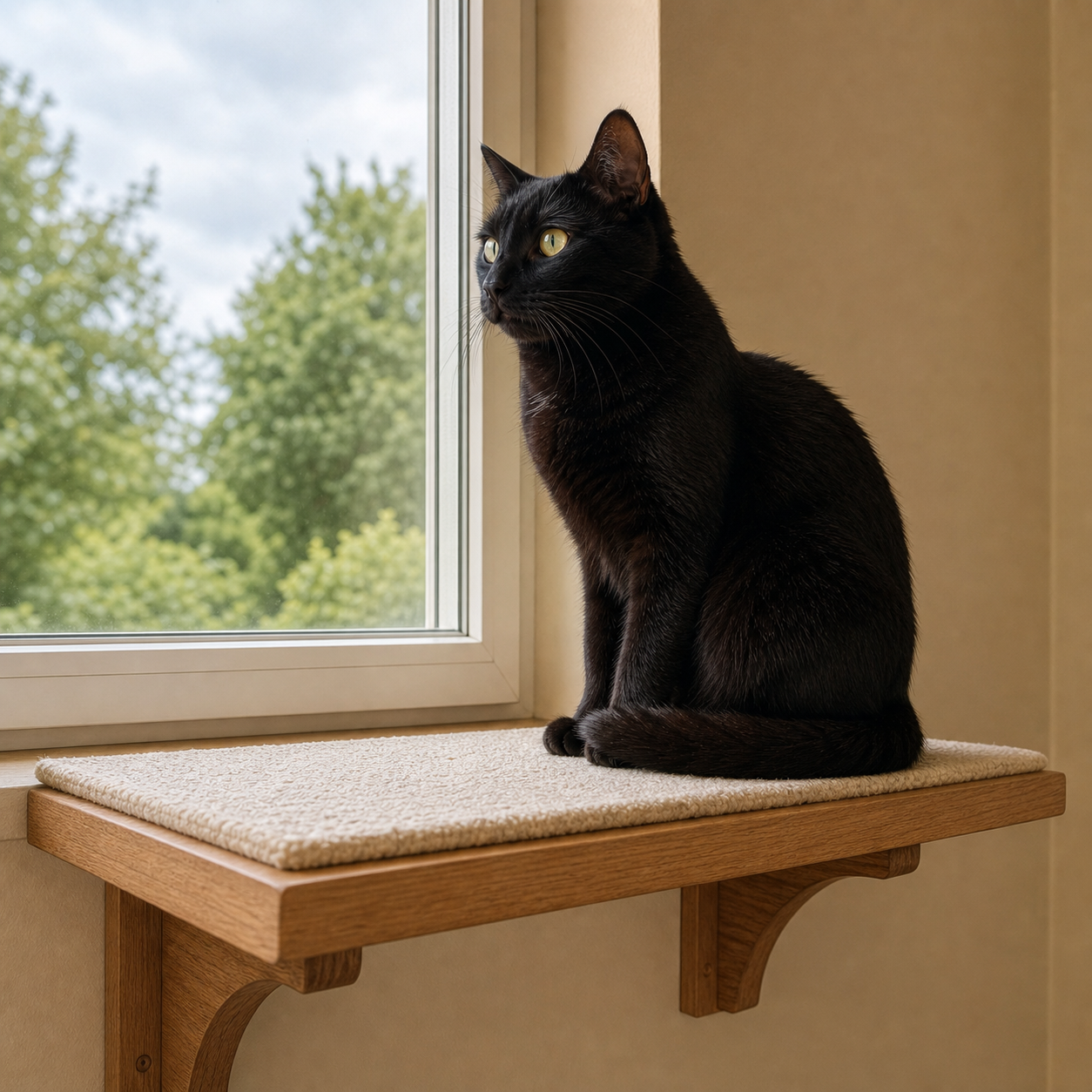
Comfort matters, but softness should not create instability. A thin washable mat with good grip can be more useful than a deep cushion that bunches, slides or leaves the cat standing on a slope. If your cat runs warm or prefers hard surfaces, leave part of the platform uncovered so they can choose.
Keep blind cords, curtain loops and dangling decorations away from the perch. Move breakable objects, toxic plants and hot radiators out of the landing zone. Never assume an ordinary insect screen will safely hold a determined cat; use a properly secured cat-safe screen or grille where an open window could create an escape or fall risk.
Tilt-and-turn windows deserve special care. Cats Protection warns that a cat can become trapped in the narrowing V-shaped gap. Close them when the cat is unsupervised or fit an appropriate safety solution designed for that window.
Give The View An Exit

A good lookout is a choice, not a tiny observation post with no way out.
The cat should be able to step down, turn away or move to another resting place without squeezing past a person, child or other pet. In a multi-cat home, avoid a setup where one cat can block the only route. Two access directions, a nearby alternative perch or a lower step can make the area feel much less socially expensive.
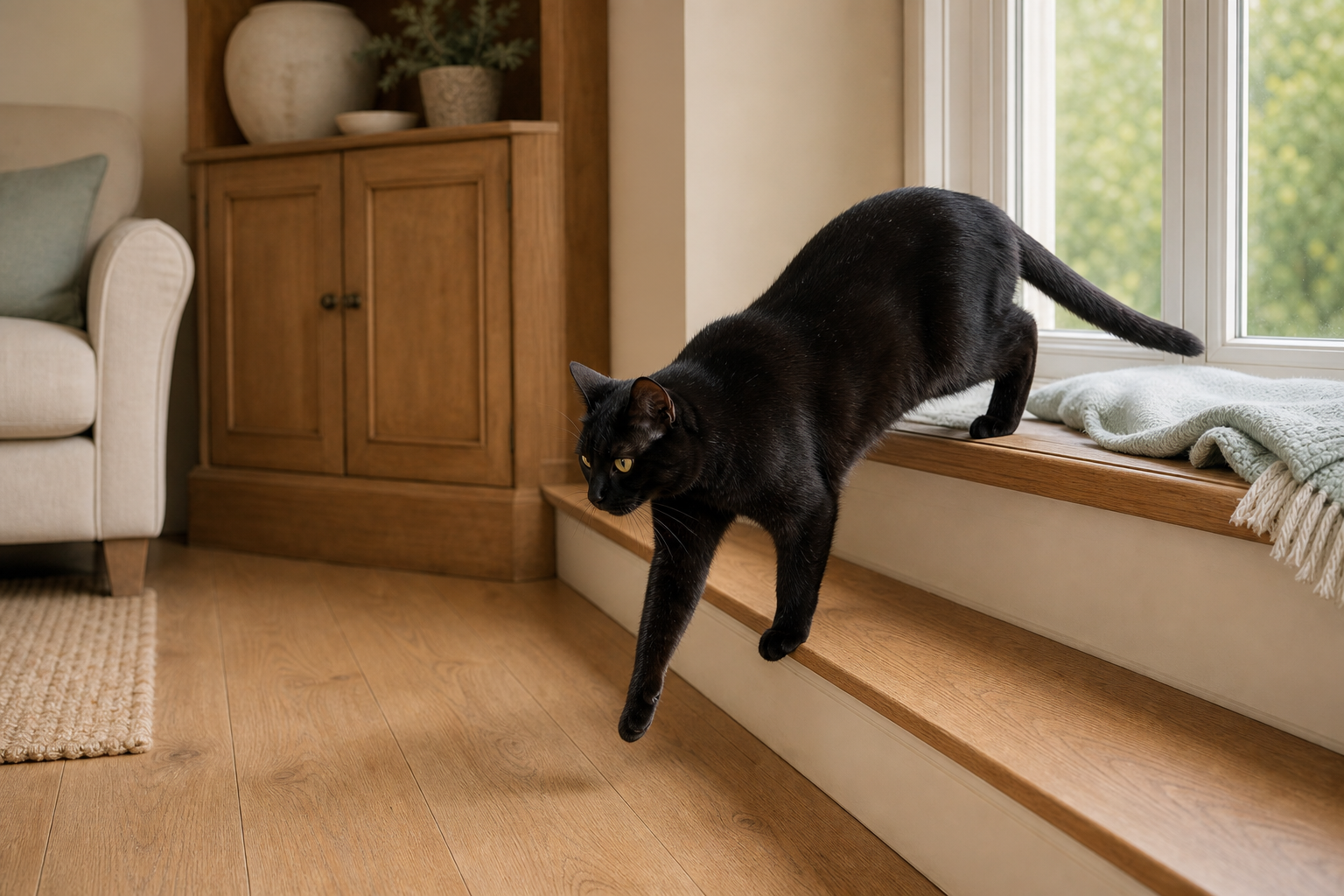
This matters even when everyone usually gets along. A cat concentrating on movement outside may startle when approached from behind. Another cat arriving on the same narrow sill can turn a peaceful watch into a negotiation neither cat requested.
Let sleeping cats sleep. Do not repeatedly carry a cat onto the perch for photographs or hold them there to “show” them the view. Place the option, make it safe and allow discovery to happen at cat speed.
When “Cat TV” Turns Into Conflict

Birds, leaves, pedestrians and distant activity can be interesting. A neighbouring cat sitting directly outside can be different.
Some cats watch another cat and remain loose, quiet and able to disengage. Others crouch tightly, stare for long periods, swish or thump the tail, vocalise, scratch or spray near the window, redirect onto another pet, or keep returning to patrol after the visitor has gone. One behaviour alone does not give a complete emotional diagnosis, but a repeating cluster tells you the view may not be relaxing.
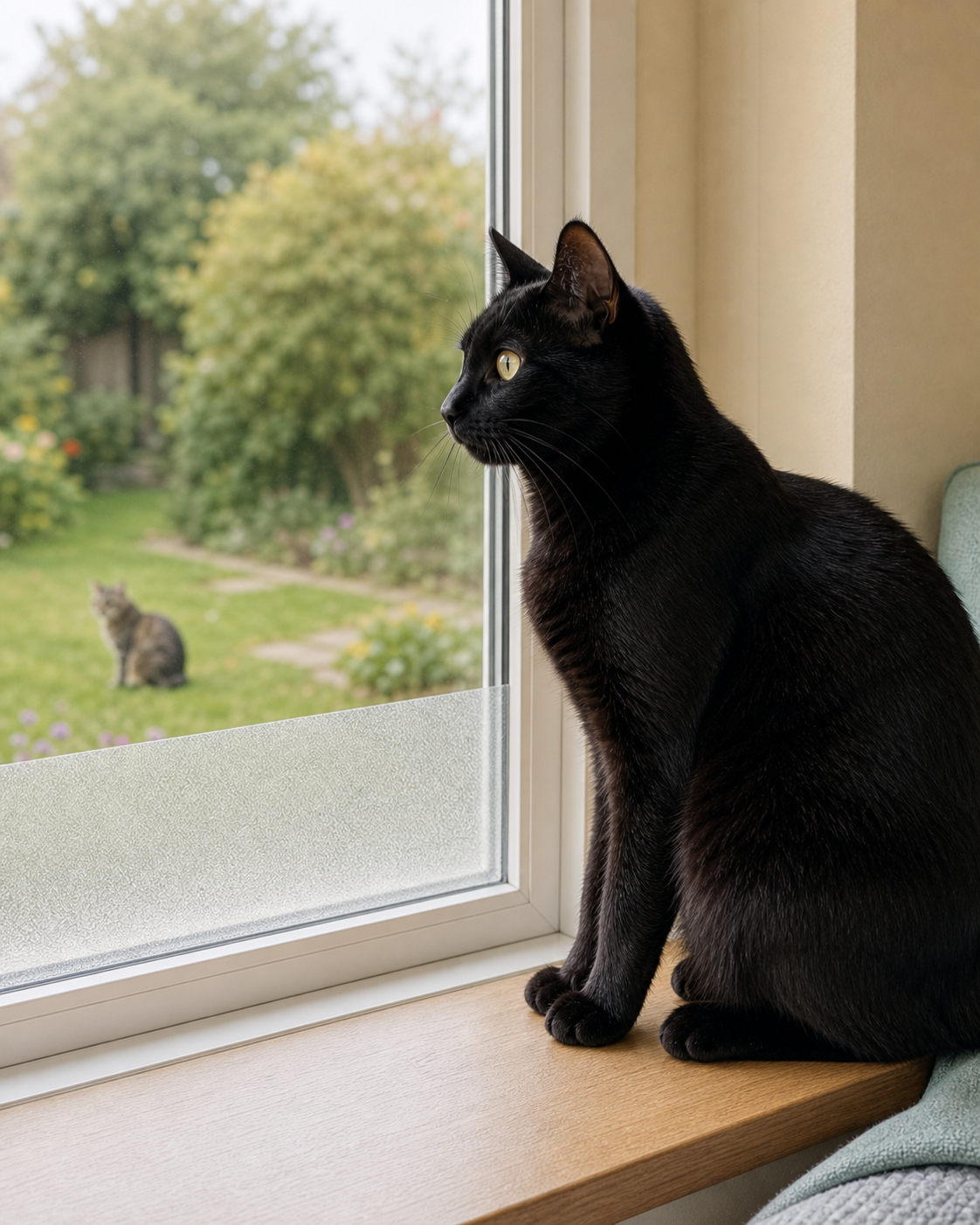
If the lower window repeatedly frames an unwanted feline visitor, try privacy film, paper or another removable visual barrier across the lower portion while preserving light and a higher neutral view. Move food, litter trays and important resting places away from a conflict-heavy window. Provide another perch elsewhere rather than removing every lookout at once.
Then watch what changes. Does the cat settle sooner? Patrol less? Use the room more normally? The answer should come from the cat’s recovery, not from whether the window still looks good in your house.
If tension is persistent, intense, sudden or spreading into fights, house-soiling, hiding or appetite changes, speak with your vet. Pain and illness can change tolerance, and a qualified feline behaviour professional can help with a wider plan.
Watch The Sun And Temperature

A warm patch of sun can be glorious. A perch that becomes an oven by mid-afternoon is not.
Check the spot at the hottest time of day, not only when you first set it up. Feel the platform and nearby glass. Make sure the cat can move into shade without leaving the entire room, and keep fresh water available elsewhere. Be particularly thoughtful with older cats, kittens, flat-faced cats and cats with health conditions that may make heat harder to manage.
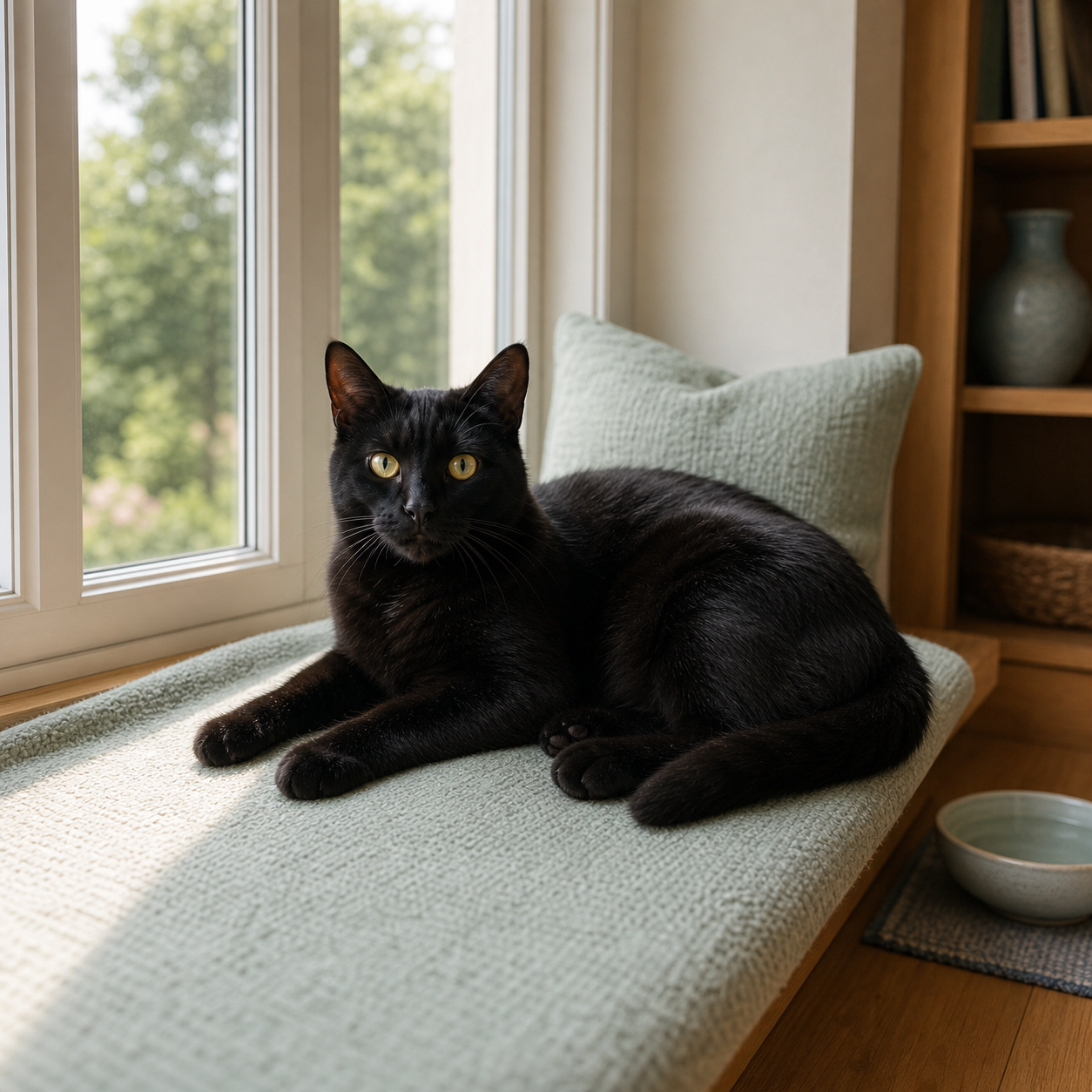
Cold glass, draughts and radiators can also change whether the spot remains comfortable. A washable mat, a little distance from the pane or a second cooler surface gives the cat more control than one fixed texture.
Do not read “the cat stayed there” as proof that the temperature is ideal. Cats may be absorbed by the view or reluctant to abandon a preferred location. Choice works best when the alternatives are obvious and easy to reach.
Change One Small Thing At A Time

The fastest way to make a cat ignore a favourite place is sometimes to improve every part of it at once.
Keep something familiar: the old mat, the chair underneath, the usual route or the same window. Add one stable step before replacing the whole platform. Move the perch a few centimetres before moving it across the room. If you add privacy film, start with the conflict-heavy lower section rather than covering the entire view.
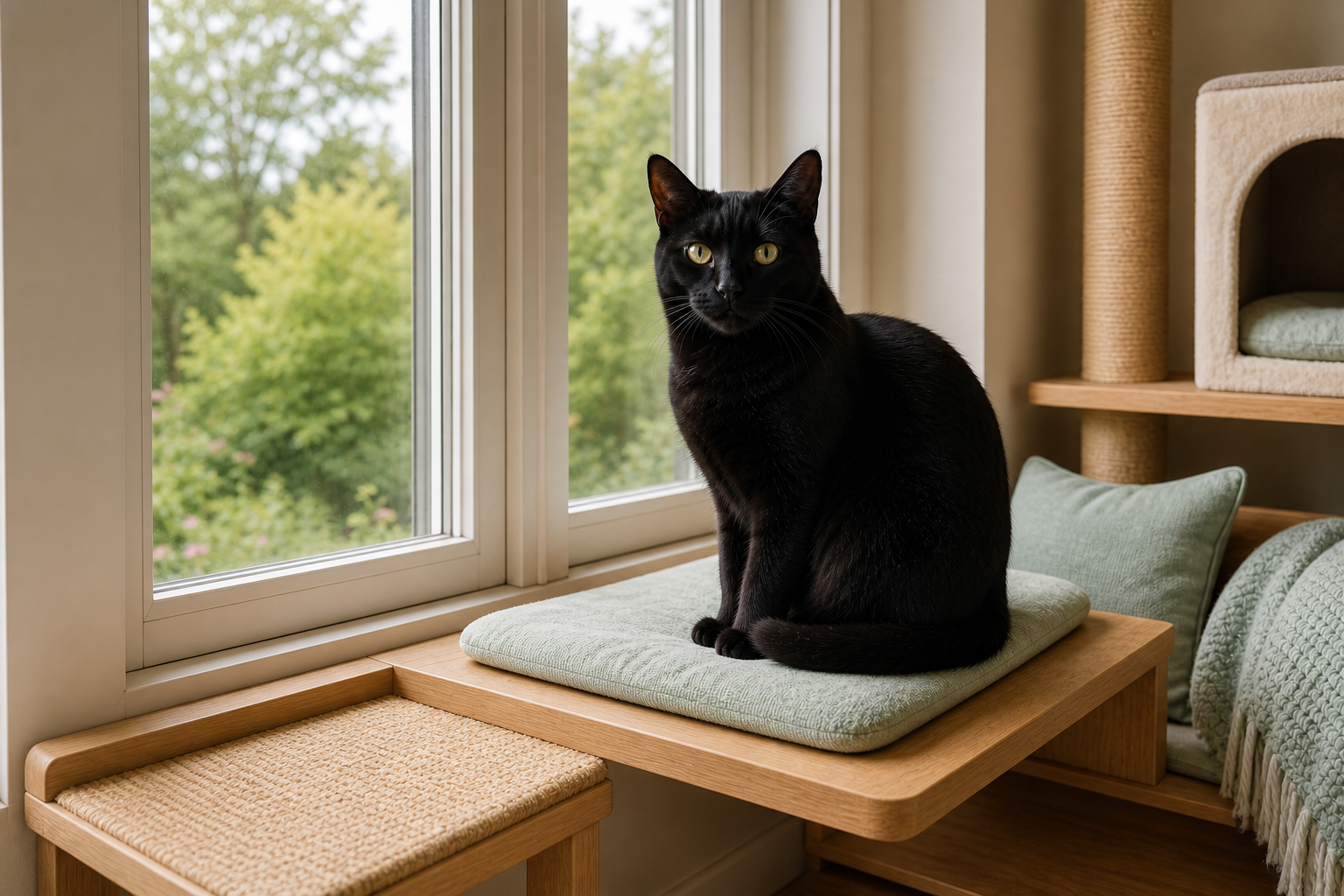
Small changes make it easier to see what helped.
You can also refresh the area without constant redesign. Open a curtain at a different safe window for part of the day. Place a scratcher near—but not blocking—the route. Add a short interactive play session away from the glass, then finish with a catch and a calm reset. Our guide to the play session your indoor cat is actually waiting for explains how to give that hunt a beginning and a satisfying end.
If the cat stops using the perch, do not immediately add more decoration. Check access, stability, temperature, changes outside and whether another animal has started controlling the route.
The CloudyAww Window Check

Before calling the lookout finished, use this tiny check:
- Reach: Can this cat get up and down without a risky leap?
- Rest: Is the surface stable, wide enough and comfortable in more than one position?
- Retreat: Can the cat leave without passing through a social bottleneck?
- View: Is what they see interesting—or repeatedly upsetting?
- Weather: Does sun, cold glass or a radiator change the spot during the day?
- Safety: Are the window, screen, cords, plants and landing area genuinely secure?
- Choice: Is there another place to hide, climb, scratch, play and rest?
If those seven answers look good, you do not need a designer cat tower or an elaborate renovation. A steady chair beside a secured window can be more valuable than a beautiful perch nobody trusts.
The best “Cat TV” has a comfortable seat, an easy exit and a remote control operated entirely by paws.
More Tiny Pet Logic on CloudyAww
- The Play Session Your Indoor Cat Is Actually Waiting For
- What to Do When Your Cat Scratches the Sofa
- Tiny Guide to Cat Night Zoomies
- Browse all Aww Articles
Sources and Further Reading
- International Cat Care: Cat Caregiver Guide to Home Modifications
- Feline Veterinary Medical Association: Meeting the Needs of Owned Indoor Cats
- Cats Protection: Guide to Indoor Cats
- Cats Protection: Window Perches and Boredom Busters