

The sofa may have accidentally become the best scratching station
Some cat problems feel personal because the evidence is sitting right there on the arm of the sofa. One small cat, one very determined paw, and suddenly the living room has been given texture.
It can look like bad manners. It can look like revenge. It can look like your cat reviewed the furniture budget and made a bold creative decision.
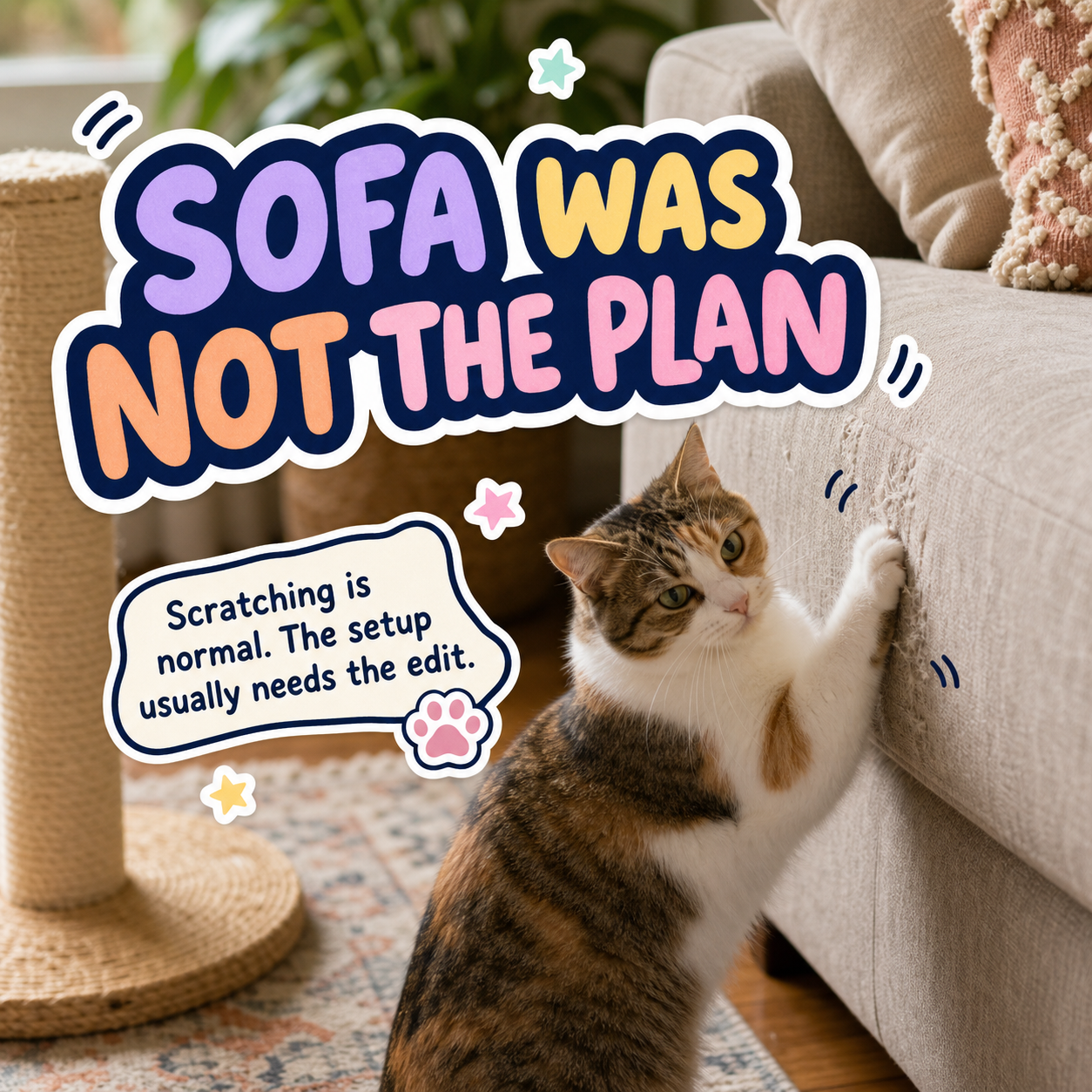
Most of the time, scratching is not spite. It is normal cat behaviour landing in the wrong place. Cats scratch to stretch, condition their claws, leave scent and visible marks, release energy, and interact with the spaces they use every day.
The useful question is not “how do I stop my cat being a cat?” The better question is: how do I make the right scratching place easier, more satisfying, and more obvious than the sofa?
Scratching is normal cat equipment
Cats come with claws, shoulders, scent glands, opinions, and an impressive ability to locate the one piece of furniture you were hoping would stay respectable.
Scratching helps a cat stretch the body and flex the feet. It can remove the old outer layer of the claw. It can also leave scent from glands in the paws, along with a visible mark that says, in very small cat handwriting, “I use this area.”
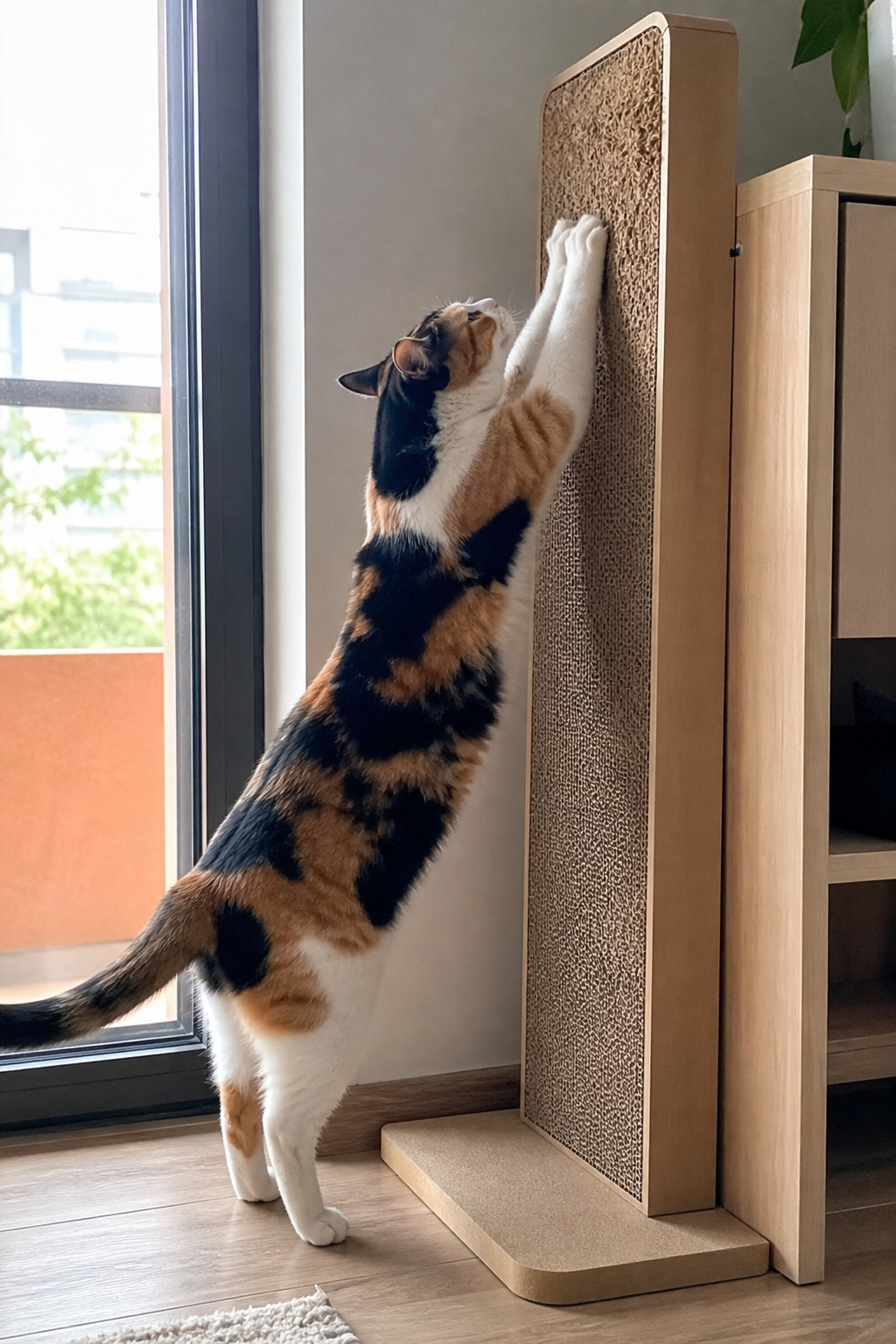
The ASPCA describes scratching as normal behaviour that can become a household problem when cats choose furniture, curtains, or carpet instead of appropriate scratchers. Cats Protection also explains that scratching is natural and gives cats a way to mark territory, exercise muscles, and keep claws in condition.
That matters because punishment usually misses the point. If a behaviour is normal and useful to the cat, the fix needs to provide a better outlet, not just remove the sound of claws from the room.
Why the sofa keeps winning
Your sofa may be accidentally perfect.
It is stable. It is tall enough for a good stretch. It has texture. It sits in a social part of the home. It smells like the household. It may be near a doorway, window, sleeping spot, or favourite route. To a cat, that can make it more interesting than a tiny wobbly scratcher hidden in a corner where nobody goes.
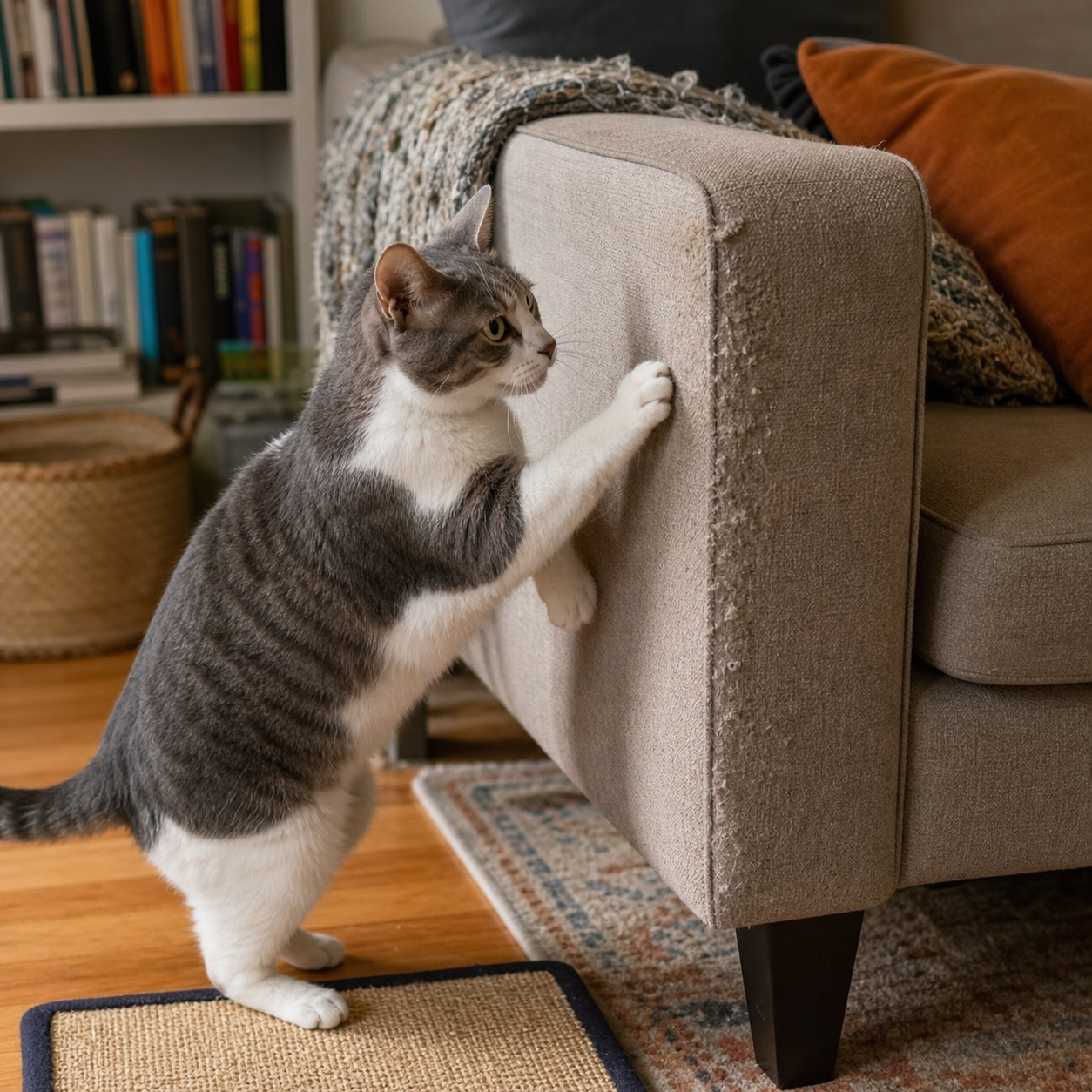
Sometimes the sofa also wins because it already worked once. The cat scratched, the claws felt good, the human reacted, and the location became more important. That does not mean the cat is plotting against the upholstery. It means the behaviour has history.
Look at the exact spot your cat chooses. Is it the sofa arm near the doorway? The back corner beside a window? The carpet strip near the stairs? The location usually tells you what kind of replacement will have a chance.
Give the better option a fighting chance
A scratcher has to compete with the sofa, so it cannot be an afterthought.
Choose a scratcher that is sturdy enough not to wobble, tall enough for a full stretch, and made from a texture your cat actually likes. Some cats prefer sisal rope. Some prefer cardboard. Some like carpet, wood, or a horizontal scratch pad. Many homes need more than one option because one cat may want a vertical stretch while another wants a flat cardboard scratch.
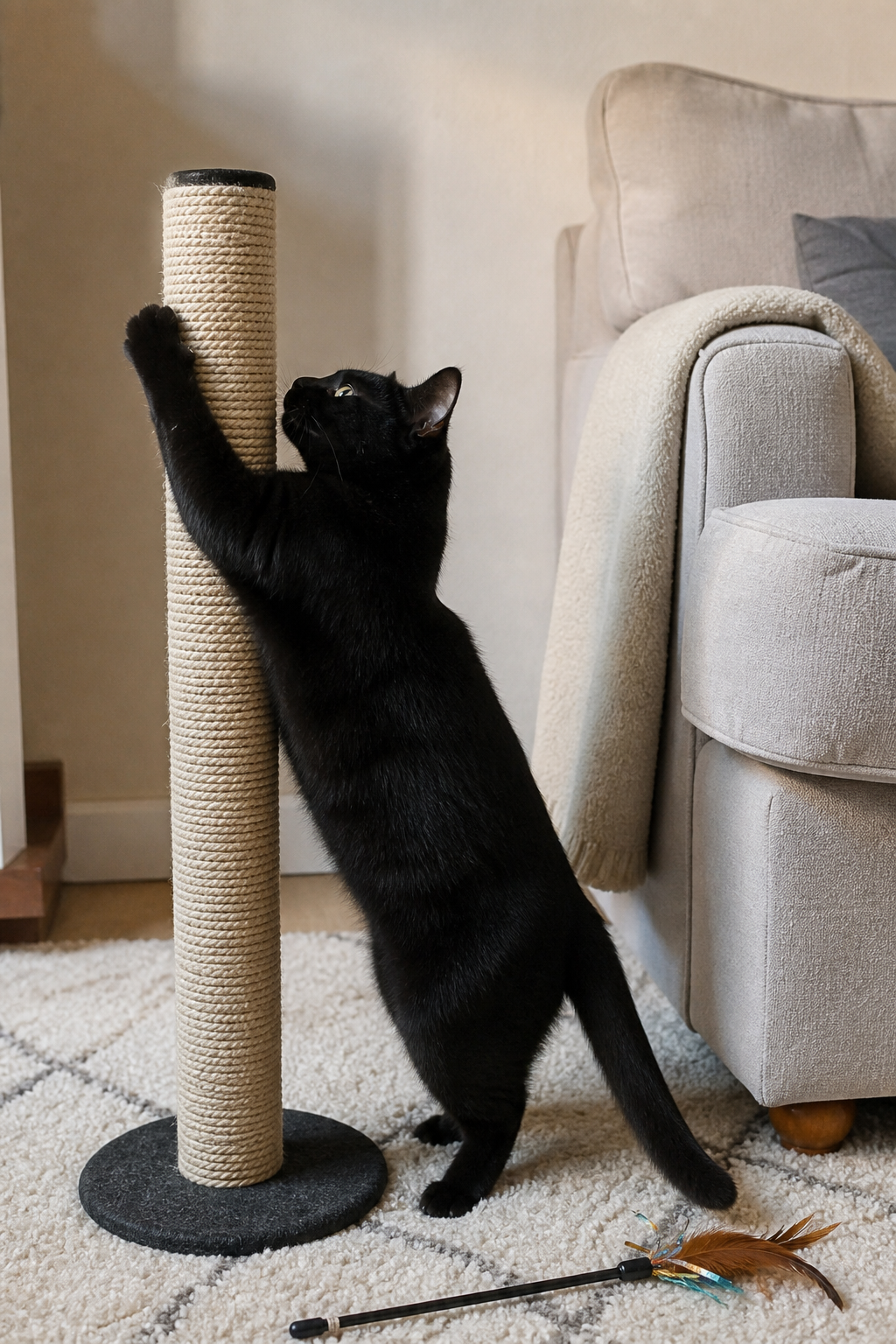
Placement is the quiet trick. Put the new scratcher right beside the sofa spot at first. If your cat scratches after waking, place one near a sleeping area. If your cat scratches by the door, put one near the route. If your cat scratches while excited, place one where the excitement happens.
Once the cat is using the new option reliably, you can slowly shift it to a more convenient position if needed. Move it too far too fast and the sofa may get rehired.
Make the sofa less useful without making the cat scared
The goal is not to make your cat frightened of the room. The goal is to make the sofa less satisfying while the better option becomes more rewarding.
Temporary covers, washable throws, furniture guards, cat-safe sticky tape, or a protective fabric can help reduce the payoff on the usual scratching spot. Keep the setup safe and avoid anything that could trap claws, damage skin, or create panic.
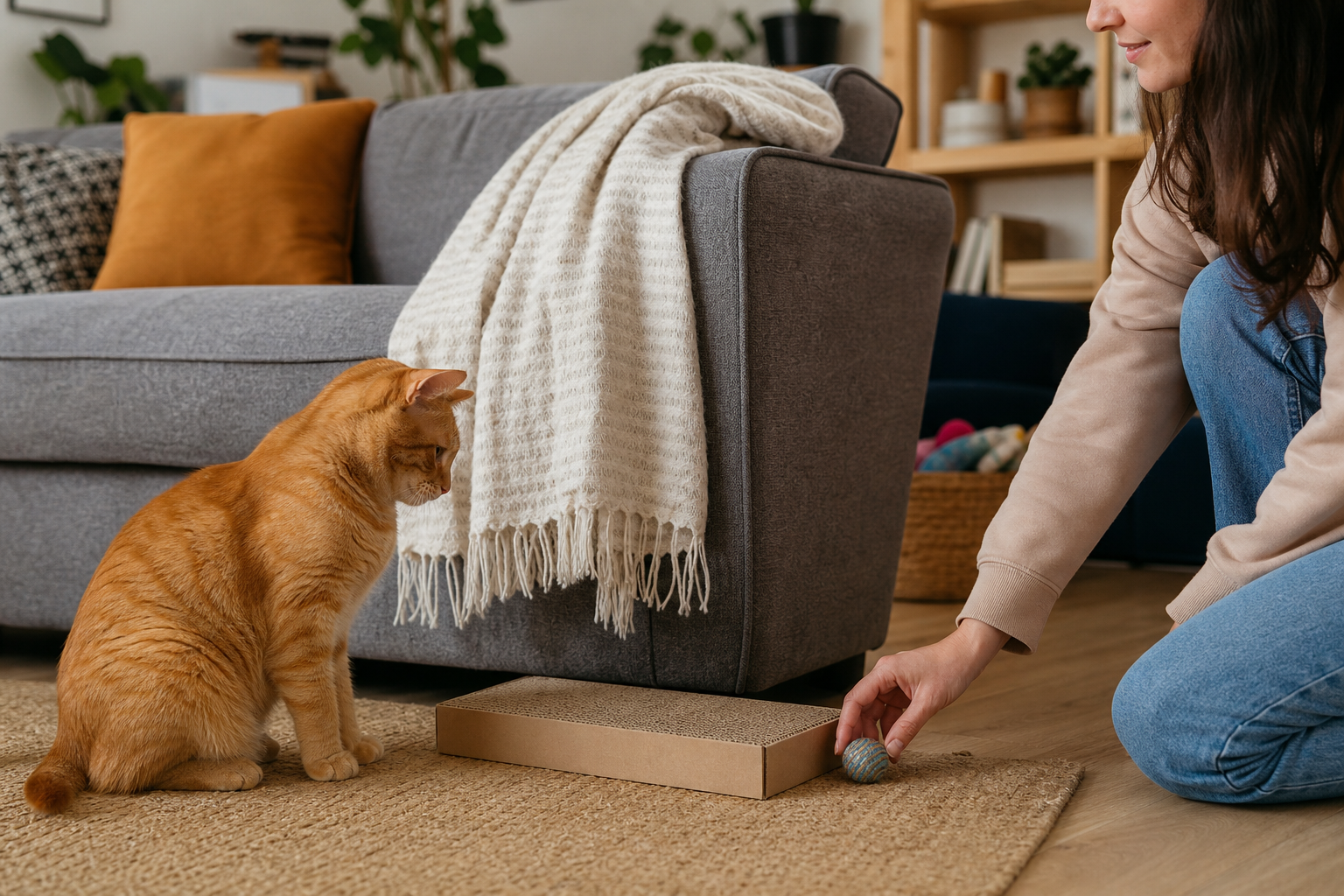
At the same time, make the scratcher more interesting. Use a toy near it. Try catnip or silver vine if your cat enjoys them. Reward your cat when they investigate or scratch the approved surface. Keep the mood calm. You are not trying to stage a sofa courtroom. You are trying to make the obvious choice easier.
Avoid yelling, spraying water, chasing, or grabbing paws and forcing them onto the post. Those can make the human feel more like part of the problem, and they still do not teach the cat which surface is better.
Reward the moment you want
Cats often learn best when the good option quietly pays.
If your cat approaches the scratcher, praise softly, offer a treat, or start a tiny play session. If they scratch it, make that moment worthwhile. If they head toward the sofa, redirect early with a toy, a treat toss, or a cheerful move toward the scratcher before the claws arrive.
You do not need to hover over the cat like a furniture security guard. You need consistent little repetitions. Better surface, better location, better reward, fewer sofa payoffs.
If your cat only scratches the sofa when you are out, management matters more. Cover the target area, block access if that is realistic, add more appealing scratchers, and make sure the room has enough play, climbing, resting, and watching options.
Nails and energy are part of the picture
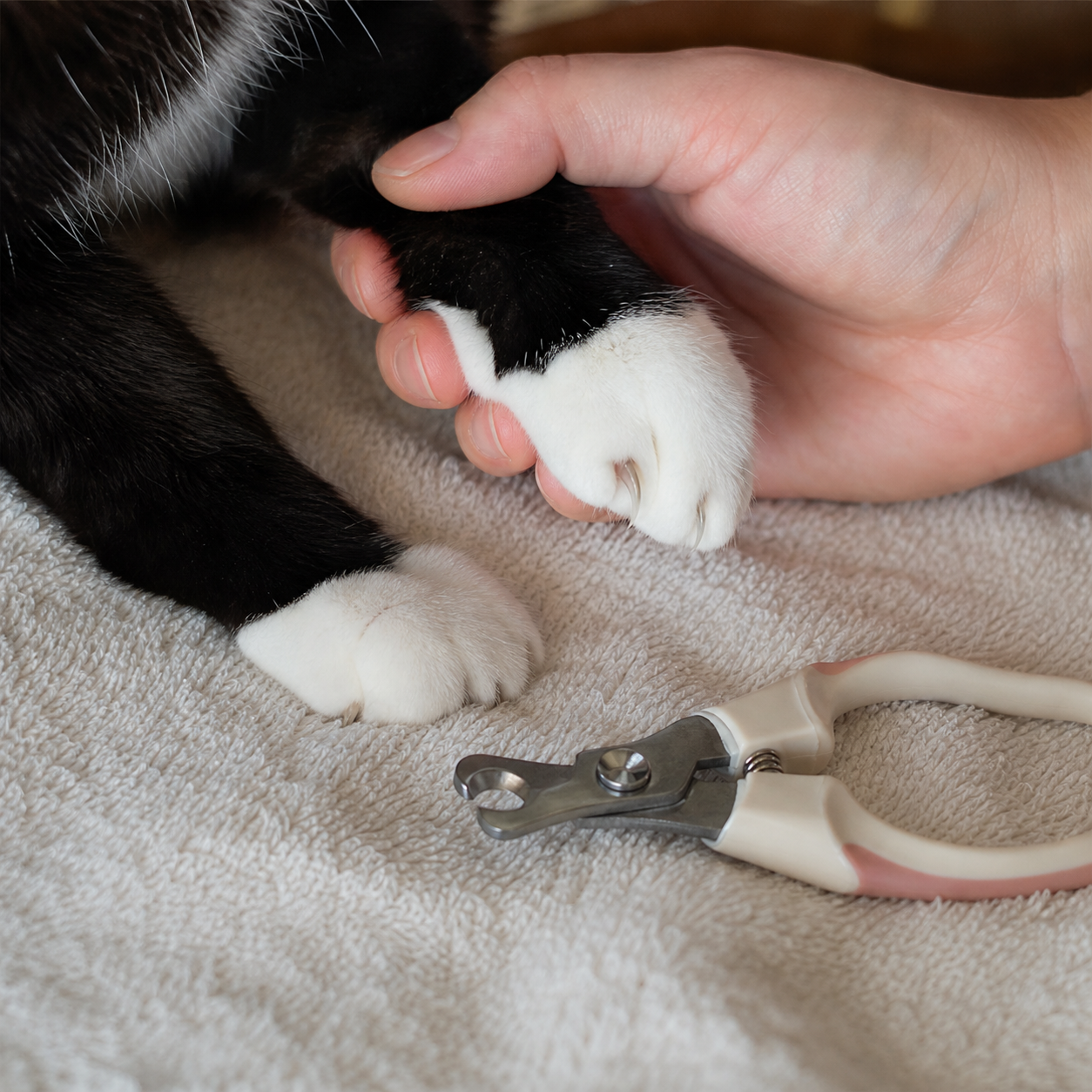
Long nails can make scratching more noticeable and can catch on fabric. Regular nail care may help, but it should be calm and safe. If you are not confident trimming your cat’s nails, ask a vet team or groomer to show you.
International Cat Care notes that cats need appropriate opportunities to scratch, and welfare groups commonly recommend environmental changes instead of punishment. The AVMA also frames declawing as a serious procedure rather than a simple furniture fix, and recommends considering alternatives first.
Daily play can help too. A bored, frustrated, or highly charged cat may put more energy into furniture, especially if the sofa is the most exciting object available. Wand toys, food puzzles, climbing spaces, window watching, and predictable routines can all reduce the pressure on one unlucky armrest.
The CloudyAww version: if the sofa is the only gym, noticeboard, stretching wall, and drama outlet in the room, the sofa is going to have a difficult career.
When scratching needs extra support
Most scratching is normal. A sudden change is different.
Ask a vet or qualified behaviour professional if scratching suddenly escalates, appears alongside hiding, aggression, overgrooming, appetite changes, litter tray changes, sore paws, broken claws, limping, skin irritation, or signs of stress. Pain, anxiety, conflict with other pets, or changes in the home can all alter behaviour.

Also get help if the household is stuck in a loop: the cat scratches, everyone reacts, the cat avoids people, and the sofa still loses. A good plan should protect the furniture and the relationship.
Support is not overreacting. It is much easier to redirect a normal habit early than to wait until the sofa has become a family legend.
The tiny sofa-saving plan
Do not treat scratching as a moral failure. Treat it as information.
Find the exact place your cat likes. Put a sturdy, satisfying scratcher there. Match the direction and texture your cat seems to prefer. Make the sofa less rewarding for a while. Reward the approved surface. Add play, enrichment, and sensible nail care. Watch for sudden behaviour changes that might need a vet.
Your cat does not need to stop being a cat for your sofa to survive.
The best version is simple: give the claws a better job before the sofa gets promoted again.
More tiny pet logic lives across CloudyAww, where the funniest animal moments usually have a small real reason hiding underneath them.
Keep following the behaviour trail with Tiny Guide To Cat Night Zoomies, Why Cats Knock Things Off Tables, and What It Means When Cats Choose the Worst Shortcut. More warm, practical pet explainers live in Aww Articles.
Sources and Further Reading
- ASPCA: Destructive scratching
- Cats Protection: Scratching
- Humane World for Animals: How to stop destructive scratching
- AVMA: Declawing of domestic cats
- Cats Protection: Stress in cats