
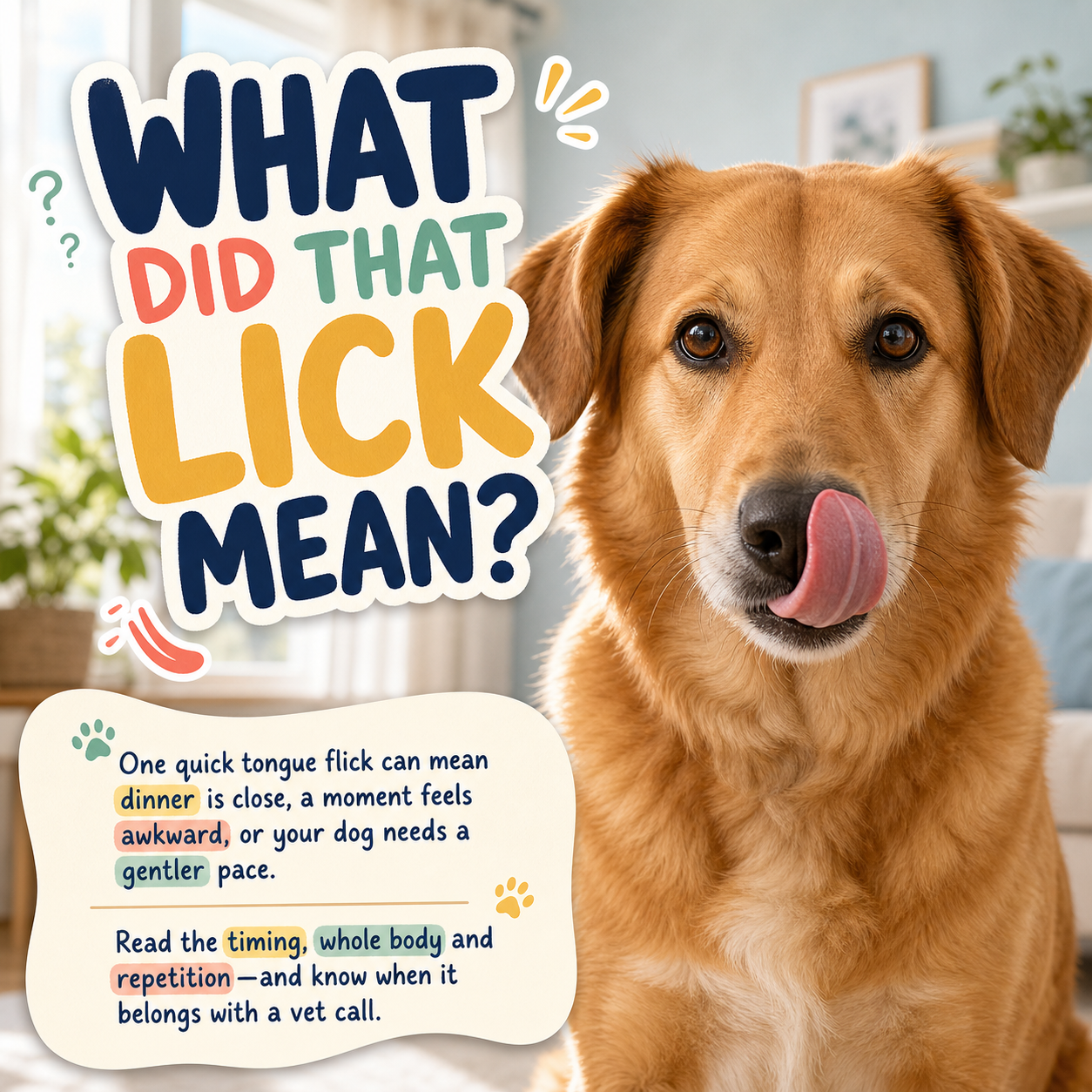
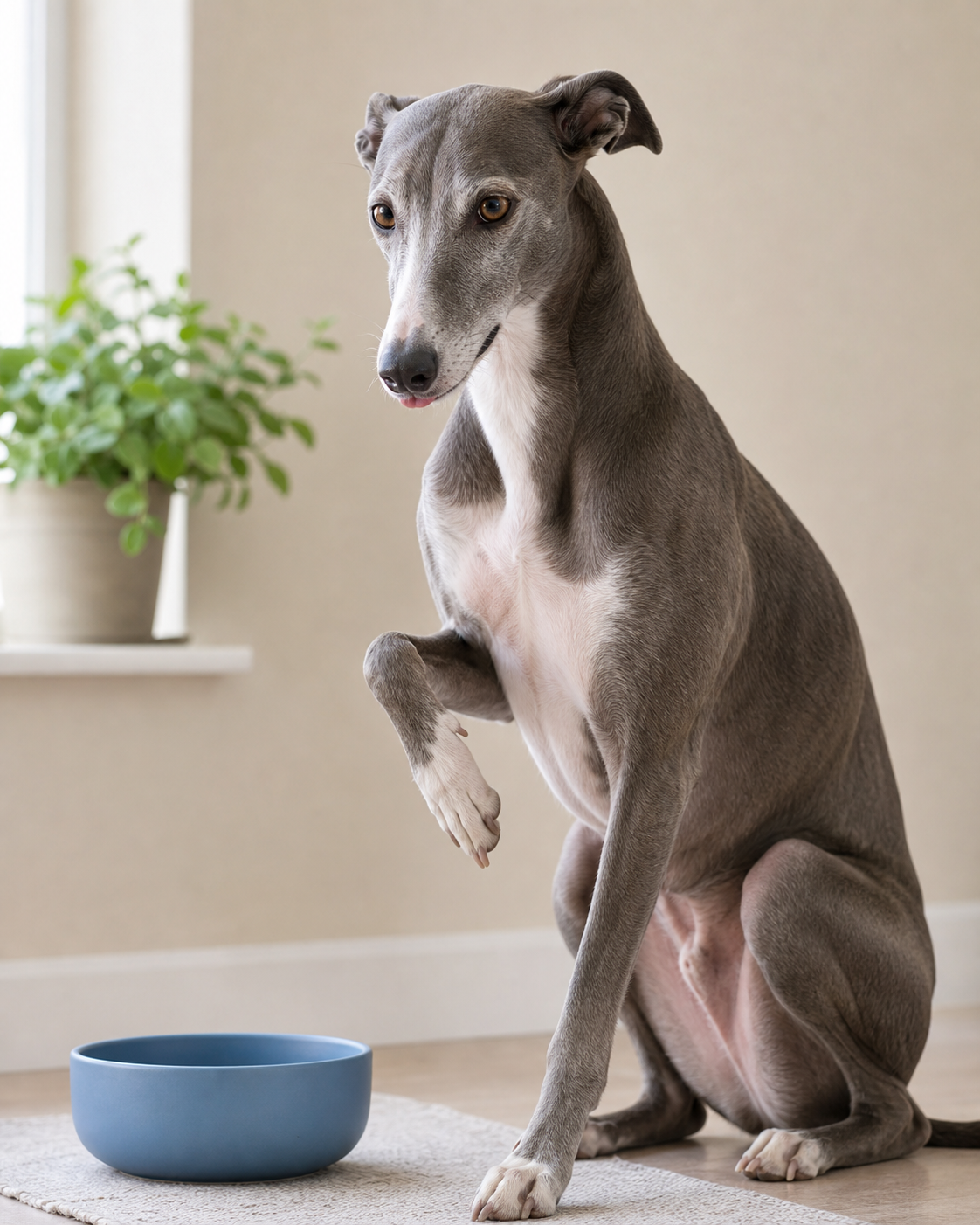
There it is: one tiny pink tongue, in and out so quickly that you could miss it while reaching for the treat bag.
Sometimes the reason is charmingly obvious. Dinner is being assembled, cheese has entered the room, or somebody has opened a packet with the unmistakable sound of possible dog business. At other times, the same little lip lick appears while a visitor leans closer, a hand reaches over the head, the car begins to move or the vet prepares to examine an ear.
The movement looks the same. The situation does not.
That is the useful answer early: lip licking is a clue, not a complete translation. It can sit beside food anticipation, uncertainty, nausea, mouth discomfort or several other perfectly different experiences. Rather than deciding what one tongue flick “means,” look at what happened just before it, what the rest of the dog is doing and whether the pattern stops or keeps returning.
One Lick Is Not A Verdict
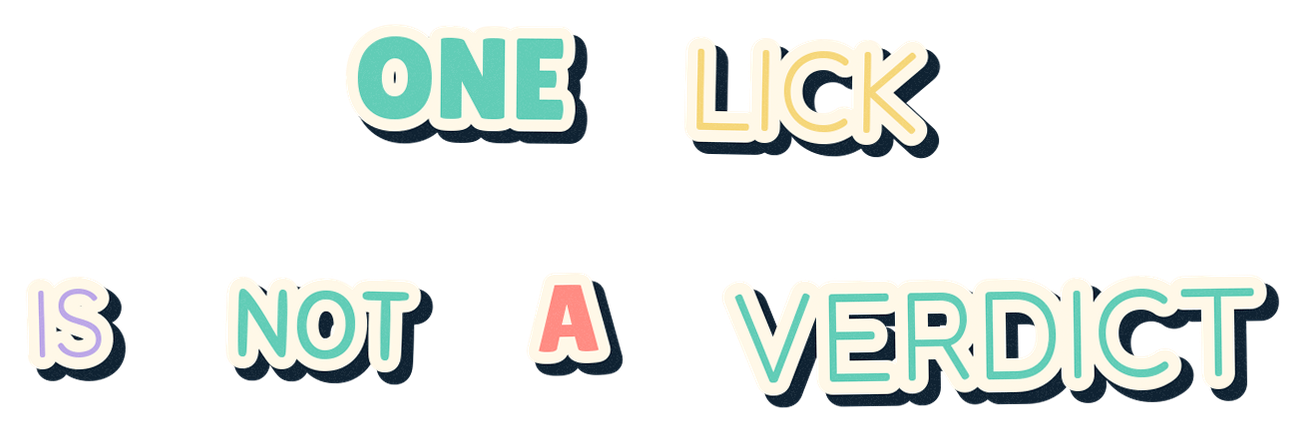
Dogs lick their lips for ordinary physical reasons. They clear moisture or crumbs, respond to interesting smells and get ready for food. A dog watching dinner preparation with a loose body, bright eyes and a very committed position beside the kitchen counter is not presenting a mysterious behavioural puzzle. The snack department is simply open.
Lip licking can also appear when a dog feels uncertain or wants an interaction to become less intense. But even then, it should not be pulled away from the rest of the body and turned into a one-signal diagnosis. The same quick tongue movement can occur in very different emotional and physical states.
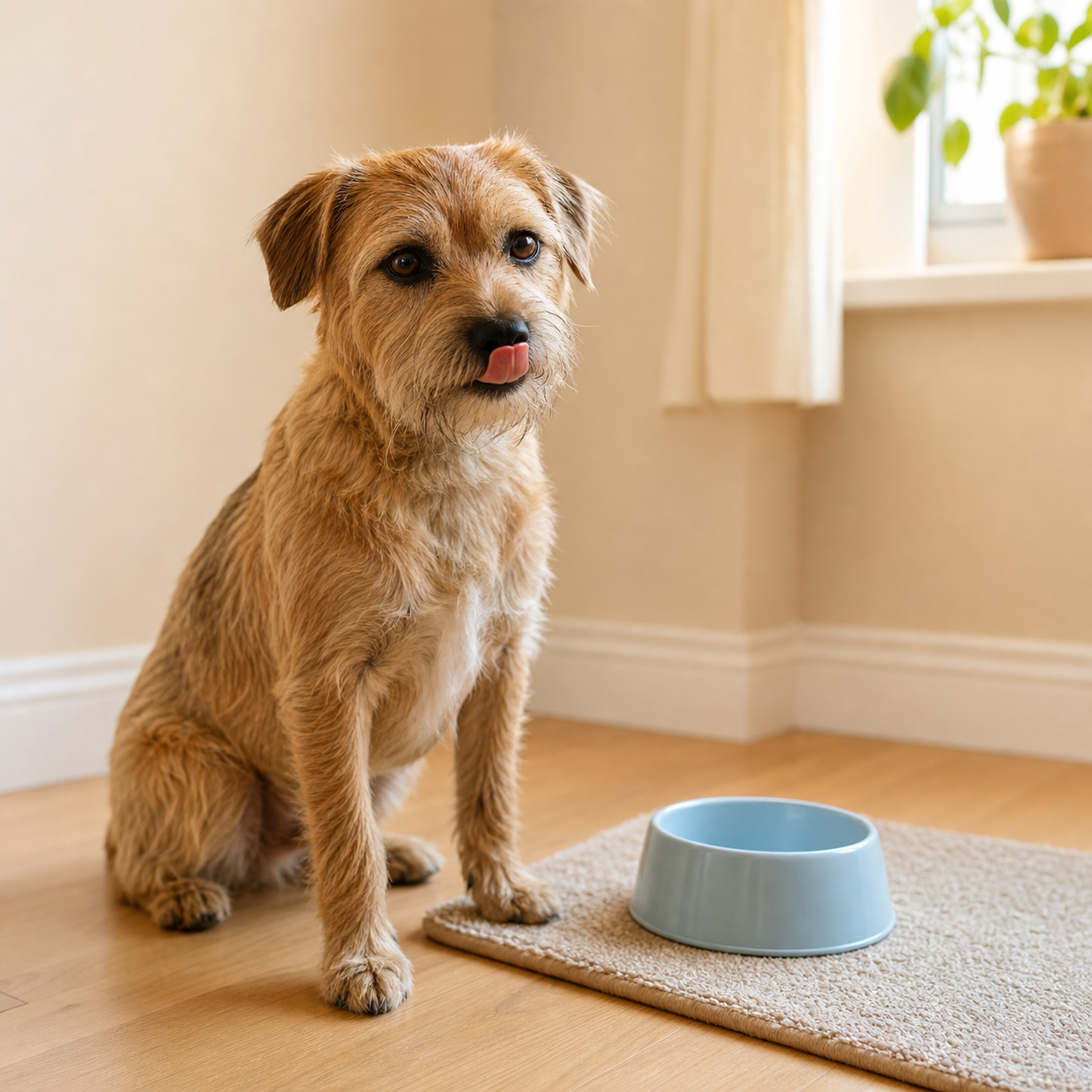
The kinder habit is to observe before interpreting. You do not need to become a canine courtroom expert every time a tongue appears. You only need to notice enough context to choose a safe response.
If you want the wider version of that skill, our tiny guide to dog body language explains why tails, ears, eyes, posture, movement and pauses make more sense together.
Start With What Happened Just Before

Timing is often the cleanest clue.
Did someone begin preparing food? Did a child lean over the dog? Did a stranger reach out? Did the car start moving? Did the dog pick up a stick, chew a hard treat or suddenly stop eating? Did the licking begin during grooming, handling or a noisy social moment?
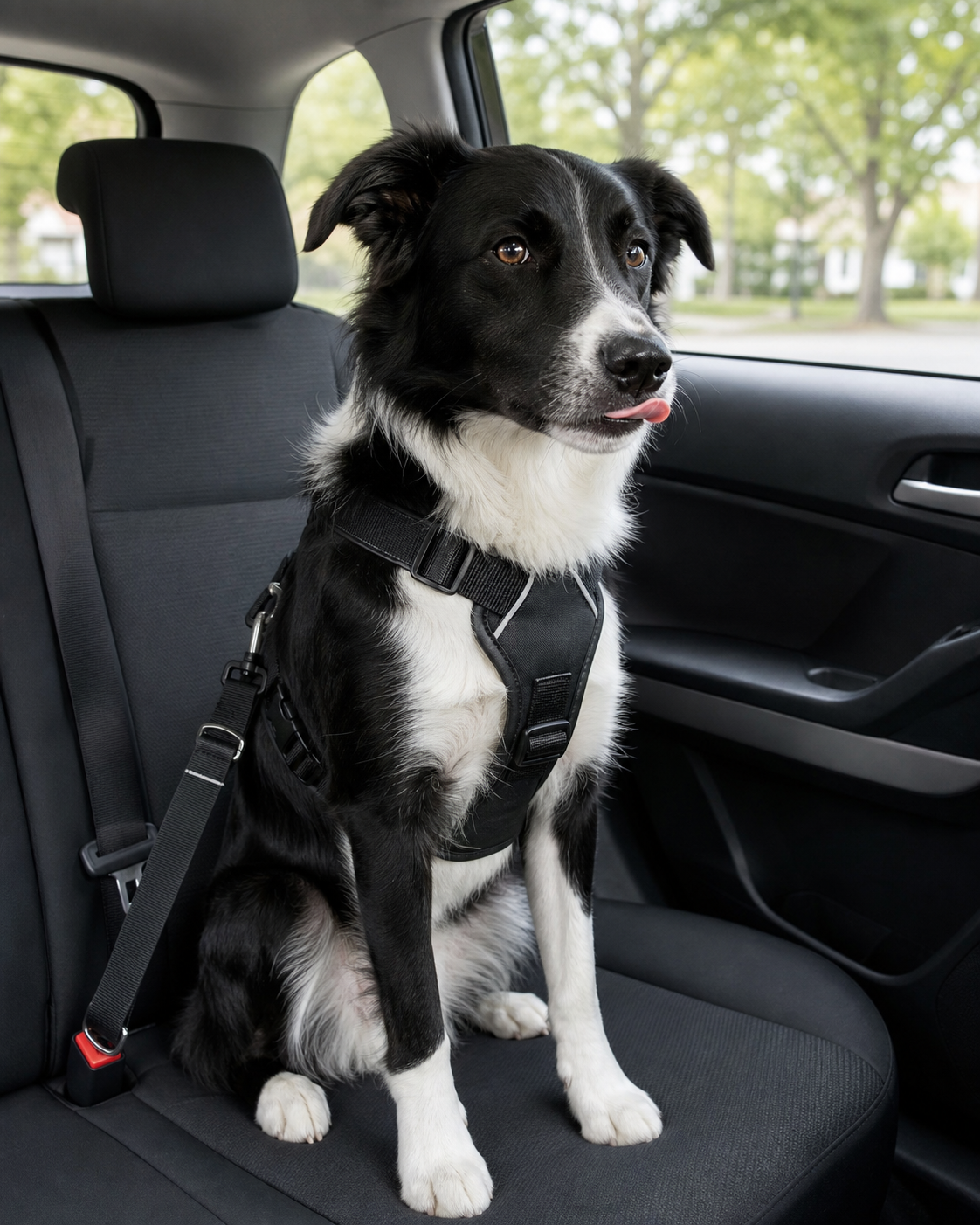
The few seconds before the lick can separate several useful possibilities:
- Food is nearby: the dog may be responding to sight, smell, routine or expectation.
- Social pressure just increased: the dog may be unsure about closeness, touch, staring or being leaned over.
- Movement began: repeated licking with drooling or restlessness in a vehicle can sit with motion sickness.
- Eating changed: licking with pawing at the mouth, dropping food or chewing differently deserves a physical-health lens.
- Nothing obvious changed: repetition, duration and other symptoms become more important.
This is not about finding one perfect cause from the sofa. It is about deciding whether the sensible next move is to continue normally, reduce pressure or ask a vet.
When Dinner Is The Entire Plot

Food-related lip licking usually arrives with a very readable scene. A bowl is moving. A cupboard has opened. The dog is watching the preparation zone with heroic concentration. The body may be loose and forward, the ears naturally interested and the dog able to move, respond and settle when the food event ends.
Dogs Trust uses dinner preparation as a clear example of why context matters: drooling and lip licking around expected food can be a normal bodily response. The key is that the behaviour fits the moment and resolves with it.
That does not mean every lick in a kitchen is automatically about appetite. If the dog is also turning away, becoming still, swallowing repeatedly, refusing food or looking physically uncomfortable, keep reading the whole picture. Kitchens contain dinner, but they also contain slippery floors, loud appliances and humans who occasionally attempt affection while holding a saucepan.
Uncertainty Usually Brings Company

A lip lick that appears during a difficult interaction rarely travels alone. You may also see the dog turn their head, lean back, lower their body, pin the ears, show more white around the eyes, lift a paw, freeze briefly or try to move away.
The cluster matters more than the tongue.
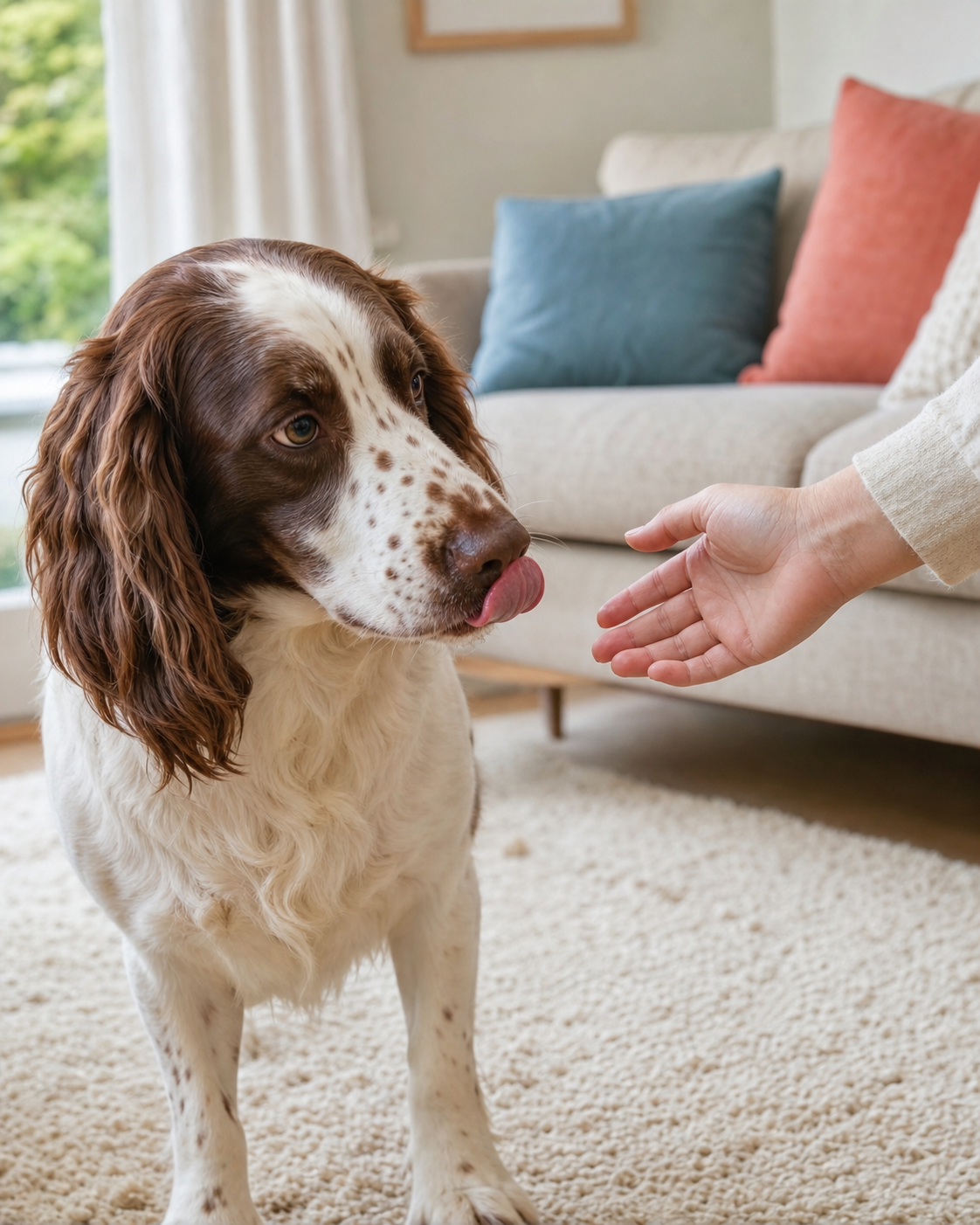
Imagine a dog resting beside a person. A guest approaches, bends from the waist and reaches over the dog’s head. The dog closes their mouth, angles away and flicks their tongue across the nose. Nobody needs to prove the dog’s exact private emotion before making the interaction easier. The practical information is already there: pressure increased and the dog’s body became less comfortable.
This is where the phrase “please slow down” is useful—not as a literal translation, but as a safe human response.
Pause the hand. Soften the angle of your body. Stop leaning over. Let the dog move away. If contact is appropriate, invite it instead of trapping the dog inside it.
Small signals are valuable because they give us a chance to help before a dog feels they need a much louder answer.
Try The Three-Question Read

When you notice lip licking, use three simple questions:
- Before: What changed in the previous few seconds?
- Body: Does the whole dog look loose and able to choose, or tight, still, lowered or pulled away?
- Repeat: Was it one quick lick that resolved, or is it continuing, escalating or appearing with physical symptoms?
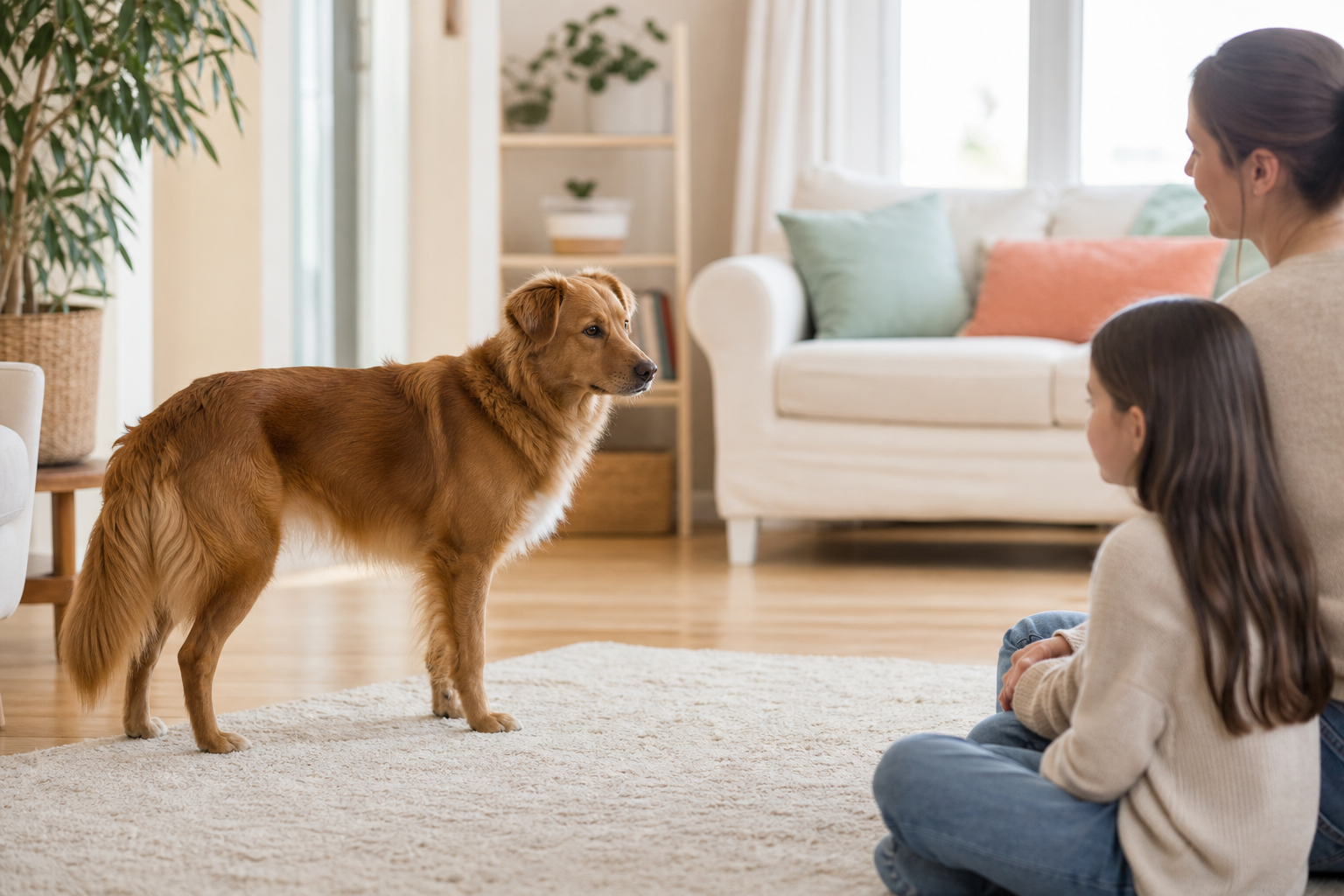
This tiny check prevents two common mistakes. The first is ignoring a worried dog because the signal looks small. The second is announcing that every dog near a biscuit is emotionally overwhelmed.
Context keeps the reading fair.
It also helps to notice recovery. A dog who gets more space, shakes off softly and returns to normal is giving different information from a dog who continues licking, swallowing, pacing, drooling or refusing food after the interaction ends.
“Please slow down” is a response, not a diagnosis. You do not need certainty to reduce pressure. If lip licking appears with turning away, freezing, retreating or a tense face, the low-risk response is usually to make the moment easier.
- Pause touching or handling.
- Add a little distance.
- Turn your body slightly sideways instead of looming directly over the dog.
- Give the dog a clear route away.
- Ask guests or children to wait and let the dog choose whether to approach.
- Avoid repeatedly testing the signal to see whether it happens again.
Our calm visitor plan has a fuller setup for dogs who find greetings intense.
The goal is not to reward fear, punish licking or train the tongue to stay inside. The goal is to notice that the interaction became harder and remove some of the difficulty. A quieter dog is not automatically a comfortable dog; sometimes quiet is the dog trying very politely not to make a scene.
When The Clue May Be Physical
Repeated lip licking is not only a body-language subject. It can appear with nausea, motion sickness, thirst, dental disease, mouth pain or something caught around the teeth or mouth. This is why a sudden change should not be explained away as “just anxiety.”
Look for companions such as:
- repeated swallowing, gulping or drooling;
- vomiting, diarrhoea, reduced appetite or unusual tiredness;
- pawing or rubbing at the face;
- bad breath that is new or much stronger;
- dropping food, chewing on one side or hesitating at the bowl;
- obvious mouth injury, swelling or bleeding;
- licking that starts suddenly after chewing a stick, bone or hard object;
- pacing, whining or sickness during car travel.
If the licking is sudden, persistent, frequent, worsening or paired with any of those changes, contact your vet. Seek prompt advice if your dog appears distressed, cannot eat or drink normally, repeatedly vomits, has trouble breathing or swallowing, collapses, or may have swallowed or lodged something unsafe.
Do not push fingers into a painful mouth or attempt to remove a deeply lodged object yourself. A sore or frightened dog may react defensively, and a veterinarian can examine the mouth safely.
Keep A Tiny Pattern Log
When the cause is not obvious and the dog is otherwise stable, a short record can be surprisingly useful. Note the time, location, what happened immediately before, the rest of the body, how long the licking lasted and what happened next.
A brief video can also help a vet or qualified clinical animal behaviourist see the pattern, provided filming does not mean repeating or prolonging a stressful situation.

After a few entries, you may discover that the tongue appears only when the harness comes out, only during car journeys, only when one visitor bends over the dog, or only late at night with repeated swallowing. Those are very different conversations, and the pattern gives the right professional better information.
This is the same useful principle behind a dog yawn not always being about sleep: familiar actions become clearer when we notice timing, company and recovery rather than assigning one dramatic meaning.
The CloudyAww Read

Dog lip licking is tiny, fast and wonderfully easy to overinterpret. Sometimes it means the cheese has become spiritually important. Sometimes it appears while a dog is asking for a little less closeness. Sometimes the useful clue is not social at all but a stomach, tooth or mouth that needs help.
Read the moment in this order: what happened before, what the whole dog is doing and whether the behaviour resolves or repeats.
If food explains the scene and the dog stays loose, enjoy the extremely serious snack supervision. If the body becomes tense or tries to create distance, pause and make the interaction easier. If the licking is sudden, persistent or paired with physical changes, call the vet instead of trying to decode it from the sofa.
One tongue flick is not a verdict. It is simply an invitation to look at the whole little conversation.
Sources and further reading
- Dogs Trust: How to understand your dog’s body language
- RSPCA: Understanding a dog’s body language
- VCA Animal Hospitals: Why does my dog get motion sickness?
- VCA Animal Hospitals: Dealing with drooling
- PDSA: Mouth pain in dogs
- Albuquerque et al.: Mouth-licking by dogs as a response to emotional stimuli