

The first warm morning can make a rabbit or guinea-pig setup look perfectly sensible. There is shade. The water bottle is full. A hide sits neatly in the corner. The small resident is eating hay and appears to have filed no complaints.
By mid-afternoon, the sun has moved, the hide has become a tiny oven and the water spout has quietly stopped cooperating.
That is why hot-weather care is less about one clever cooling trick and more about checking the whole little climate: shade, airflow, water, cool surfaces and the animal in front of you.
Rabbits and guinea pigs can overheat quickly. Heatstroke can become fatal, so prevention matters—and changes in breathing, movement or alertness deserve urgent attention.
Start With the Temperature Where They Actually Live

The weather app measures a large area. Your pet lives in one particular patch of it.
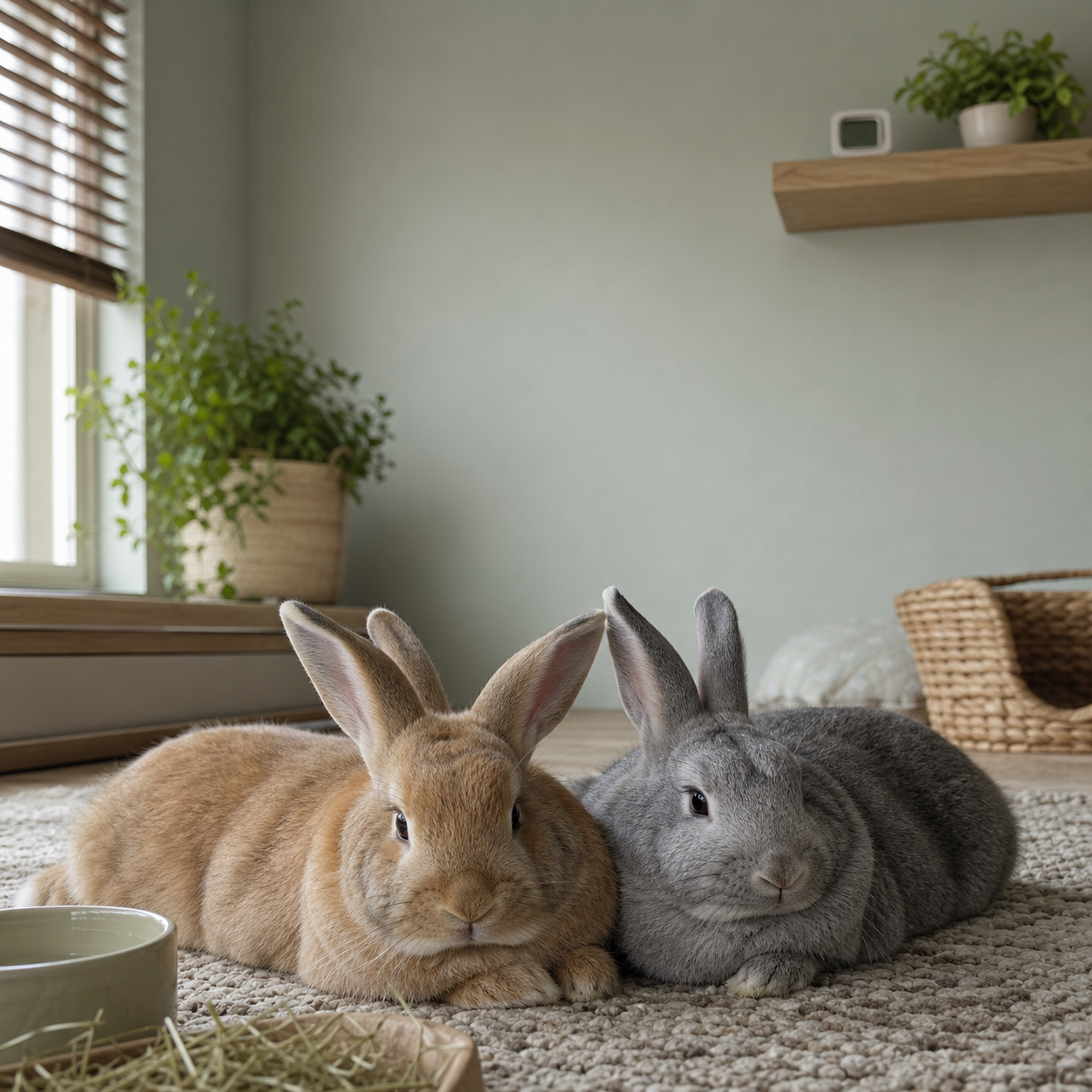
A hutch against a sunny wall, a run under a clear roof, a conservatory, greenhouse, shed or small upstairs room may become much hotter than the forecast suggests. Put a simple digital thermometer where its sensor reflects animal height but the device and wires remain safely outside chewing range, then check it through the hottest part of the day.
The RSPCA recommends 10-20 C for domestic rabbits and notes that they tend to suffer more from excess heat. The Rabbit Welfare Association and Fund advises starting precautions as temperatures enter the low-to-mid twenties, with increased risk around 26 C and above. For guinea pigs, the RSPCA warns that temperatures above 26 C can cause heatstroke.
Those numbers are planning points, not permission slips. Older, very young, overweight, long-haired, flat-faced, pregnant or unwell animals may struggle sooner. Humidity, ventilation and direct sun also change the risk.
If the space is warming faster than you can control, use the cooler backup location you chose before the heat arrived.
Shade Has to Stay Shade

Morning shade can become afternoon sun with impressive administrative efficiency.
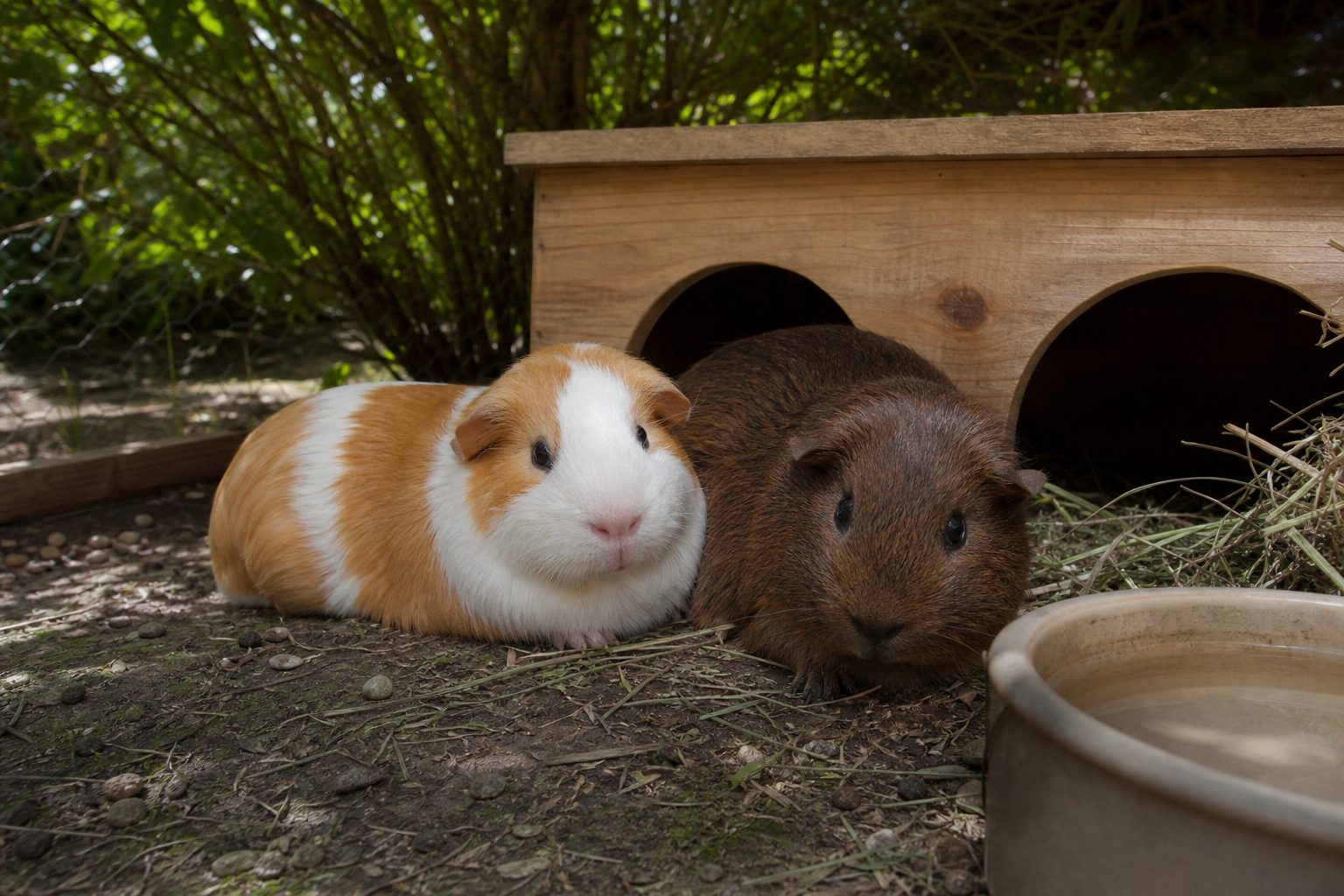
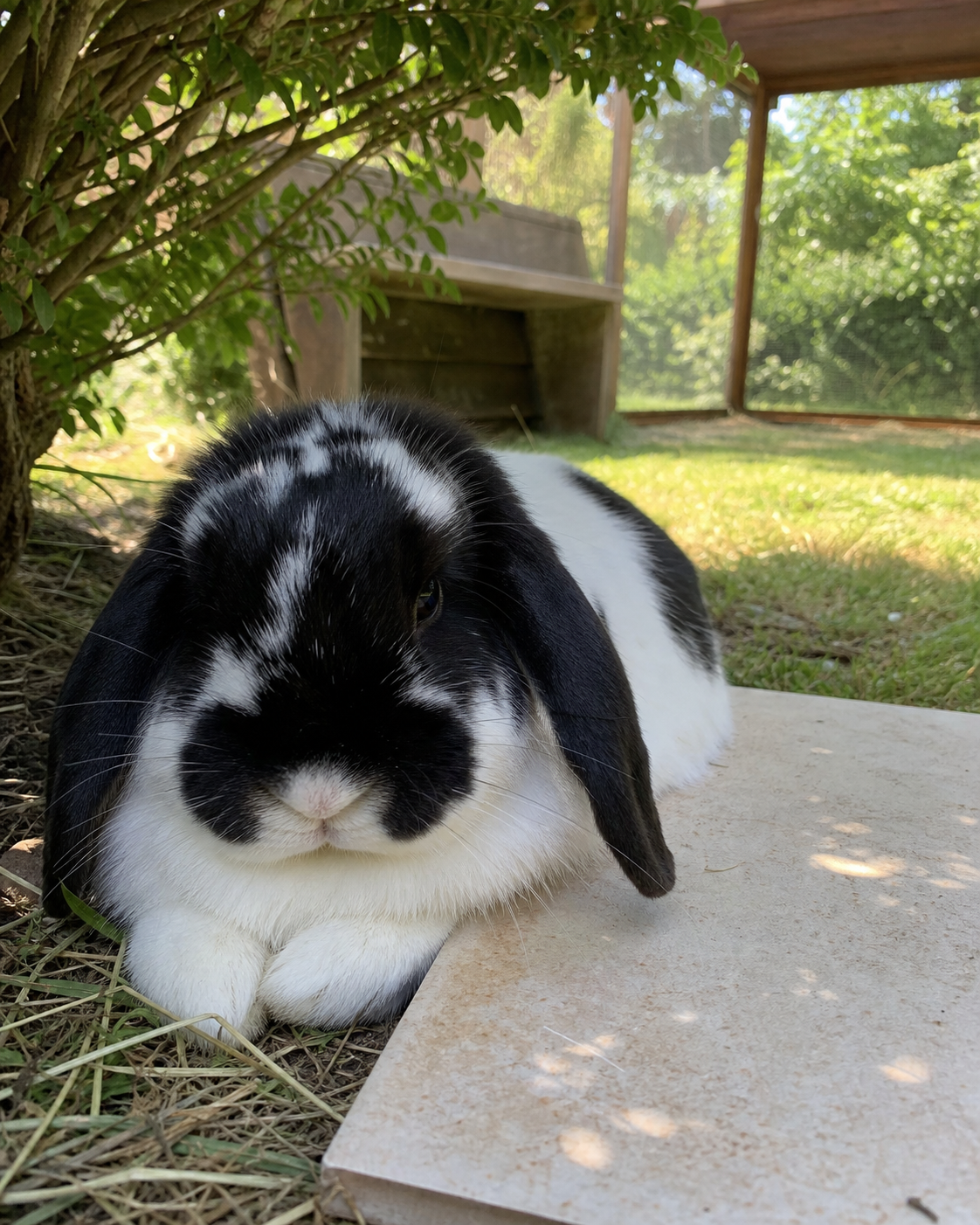
Check the enclosure at the hours when it will be hottest, not only when breakfast arrives. A parasol, sun shade or reflective roof cover may help, but do not wrap the enclosure so completely that warm air becomes trapped inside. Shade and ventilation have to work together.
For indoor pets, block strong sun before it heats the room. A conservatory or glass building is not a cool indoor alternative. Sheds and garages can also become dangerously warm, so measure rather than guess.
Every animal should be able to choose between sheltered, ventilated areas without being forced to share one small cool spot. Keep bonded rabbits together and guinea-pig companions together when moving them, unless a vet tells you otherwise; familiar company can reduce the stress of an already unusual day.
Make Water Boringly Reliable

Hot-weather water should be available all day, not merely present in theory.
Offer fresh, cool water in more than one location. Heavy ceramic bowls can be easier for many rabbits to drink from, while bottles may still suit some setups. If you use bottles, press each spout and confirm water actually appears. Check for leaks, blockages, warm water and bottles sitting in direct sun.
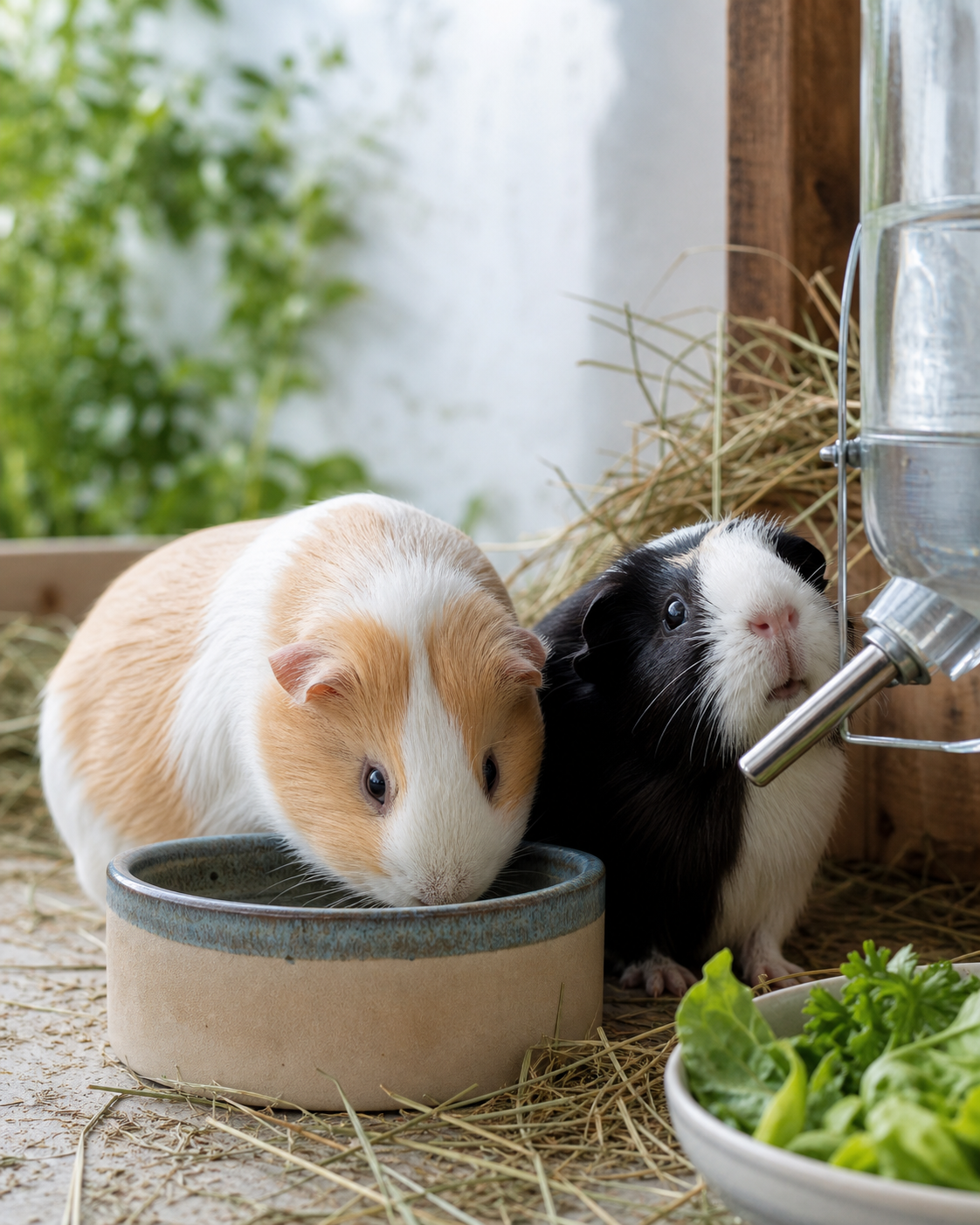
Give each rabbit access to its own drinking point, and make sure guinea pigs cannot guard the only source. Refresh the water several times during very warm weather.
Leafy greens can add moisture when they are already a normal part of the diet, but they do not replace drinking water. Do not make sudden dietary changes, add sugary flavouring to water or put ice cubes in a rabbit’s bowl. Never force a hot or unwell animal to drink.
Offer Cool Choices, Not a Cold Surprise

A useful cooling object gives the animal a choice.
Freeze a partly filled water bottle, wrap it securely in a towel or thick clean sock and place it where a rabbit or guinea pig can lie beside it. Keep it out of cramped shelters where a leak could soak bedding, and replace it as it warms. A cool ceramic or marble tile can provide another resting surface, provided it stays in the shade and cannot tip or create a sharp edge.
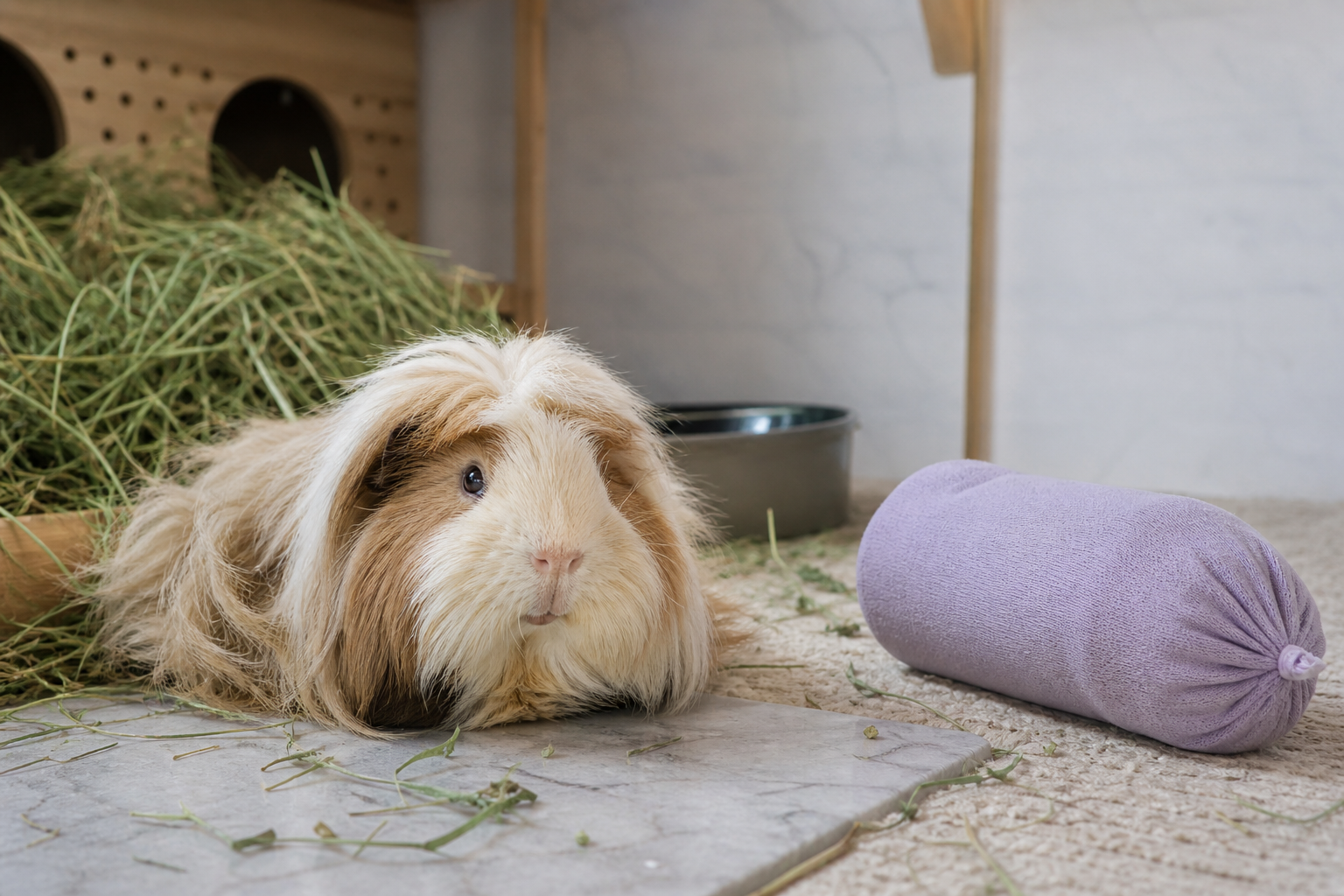
Fans can improve airflow indoors, but do not blast air directly at the animals. Leave space for them to move away, secure chewable wires completely out of reach and remember that a fan moving hot air is not the same as cooling the room.
Do not place an animal directly on unwrapped ice. Do not submerge rabbits or guinea pigs in cold water. A sudden, frightening cold bath is not a safe home remedy.
The goal is a small menu of comfortable options: shady floor, cool tile, wrapped bottle, fresh water and room to choose among them.
Keep the Ordinary Routine Working

Heat can make a small pet quieter, but “it is warm” should not become the automatic explanation for every change.
Rabbits and guinea pigs need to keep eating. Watch the hay, water, droppings and normal movement pattern. Reduced appetite, fewer droppings, unusual stillness or difficulty moving deserves veterinary advice, even if the room is hot.
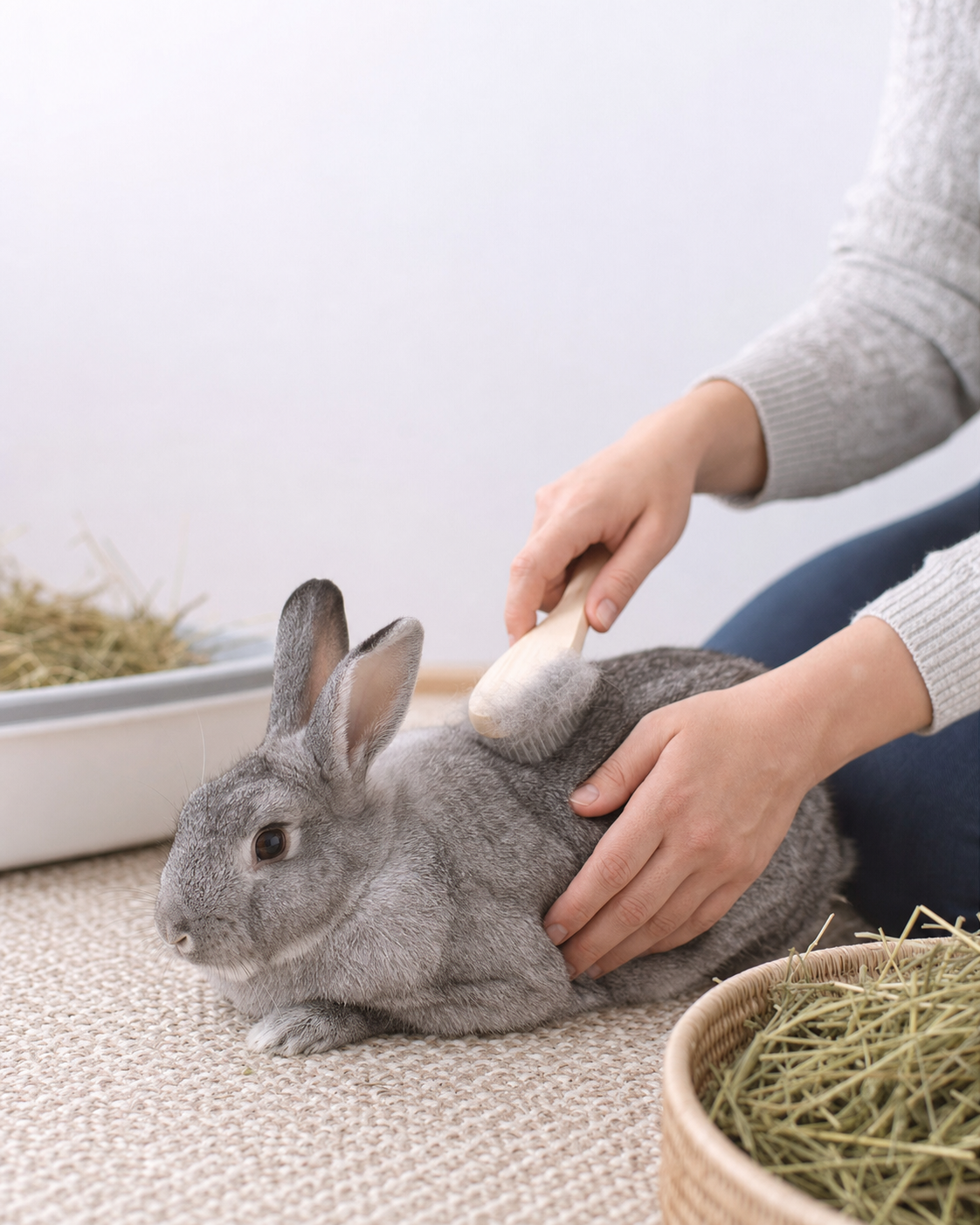
Groom long or dense coats and remove loose fur without shaving or making dramatic coat changes unless a vet or experienced professional advises it. Spot-clean wet bedding daily and keep sleeping areas dry.
Warm weather also raises the risk of flystrike, a painful emergency caused when flies lay eggs that hatch into maggots. Check rabbits at least twice daily around the bottom, tail and damp or soiled fur. Guinea-pig bottoms and bedding need close daily checks too. A dirty bottom, bad smell, wound, eggs or maggots means contact a vet immediately.
This is one of those jobs where “tiny inspection, no drama” is the ideal outcome.
Read the Animal, Not Just the Thermometer

The thermometer tells you about the room. The animal tells you whether the plan is working.
During hot weather, look for a change from that pet’s usual pattern:
- rapid, heavy or difficult breathing;
- open-mouth breathing in a rabbit;
- drooling or unusual wetness around the mouth or nose;
- weakness, wobbliness, confusion or reluctance to move;
- tremors, convulsions or seizures;
- collapse, unconsciousness or lying unresponsive;
- very hot, red ears in a rabbit alongside other signs.
A guinea pig stretched out on a warm day may simply be trying to cool down, but stretching plus unusual breathing, weakness or poor responsiveness is different. Context matters; waiting for every symptom does not.
Suspected Heatstroke: Cool, Call, Go

If you suspect heatstroke, treat it as an emergency.
Move the rabbit or guinea pig immediately into a cool, shaded, well-ventilated place. Phone your vet straight away and say that you suspect heatstroke. Follow their first-aid and transport instructions while arranging to go in.
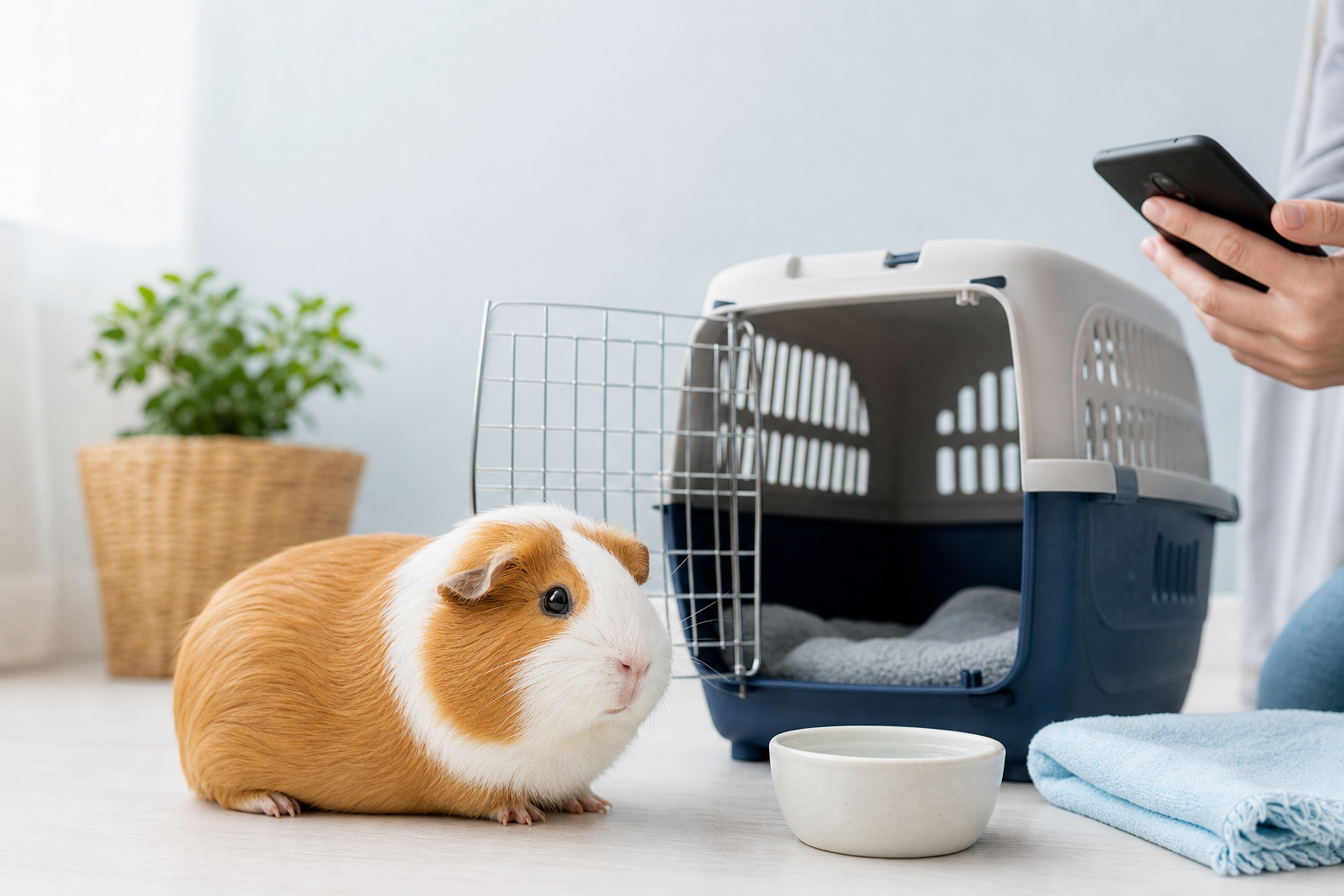
Begin gradual cooling. Current rabbit and guinea-pig welfare guidance supports cool—not freezing—water used carefully, such as dampening a rabbit’s ears or a guinea pig’s fur. Keep water away from the nose and mouth. Do not force drinking, do not use ice-cold immersion and do not wrap a rabbit inside a wet towel; a wet covering can trap heat.
Use a ventilated carrier and an air-conditioned vehicle where possible. Continue to the vet even if the animal appears brighter. Heatstroke can affect internal organs, and visible improvement does not prove the danger has passed.
If you are unsure whether what you are seeing is heatstroke, call the vet anyway. This is not the moment to conduct a lengthy committee meeting beside the thermometer.
The Calm Hot-Weather Check

Before the day warms up:
Measure: put a thermometer where the animals actually spend time.
Shade: check where the sun will be later and protect the space without blocking airflow.
Water: provide more than one fresh source and test every bottle spout.
Cool choices: add a wrapped frozen bottle and a shaded cool tile or surface.
Backup: know which familiar, ventilated room you will use if the enclosure becomes too warm.
Observe: check appetite, droppings, breathing, movement, fur, bottoms and bedding.
Act: unusual breathing, drooling, weakness, confusion, seizures or collapse means cool the animal, phone the vet and go.
A good summer setup does not need to look like a tiny luxury spa. It needs to remain cool enough, ventilated enough and easy enough to inspect that a problem cannot quietly build behind one decorative leaf.
For more small-pet reading, explore why rabbits chew everything and what guinea-pig popcorning may mean, or browse the full Aww Articles library.
Sources & further reading
- RSPCA: Keeping Rabbits and Rodents Cool in Summer
- PDSA: Heatstroke in Rabbits
- Rabbit Welfare Association and Fund: Keeping Rabbits Cool in Hot Weather
- Blue Cross: How to Keep Guinea Pigs Cool in the Summer