
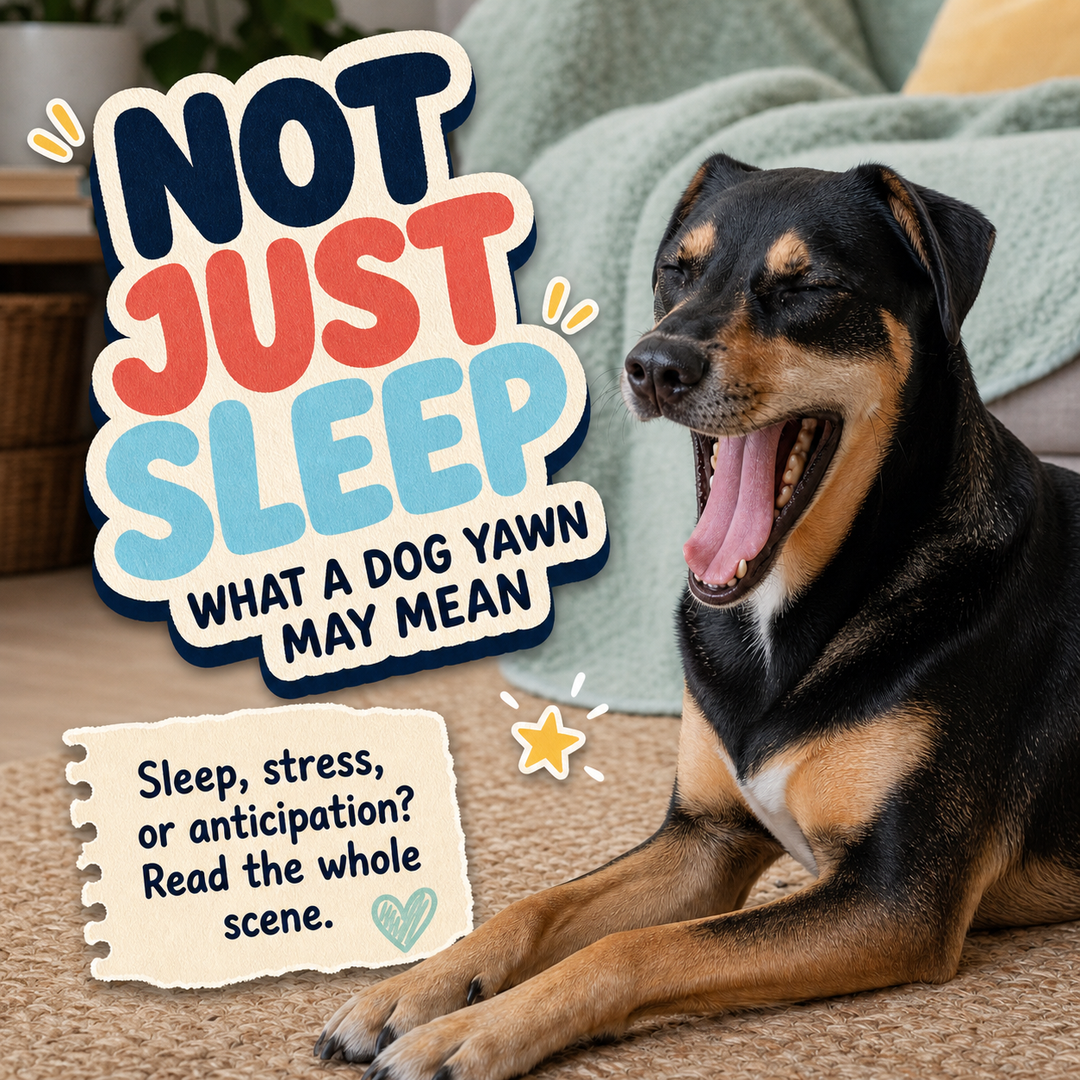
A dog yawn can look wonderfully uncomplicated. Mouth opens. Tongue curls. Eyes squeeze shut. The dog briefly resembles someone who has just discovered Monday.
Sometimes the explanation really is sleep. Your dog has woken from a nap, settled into a warm bed or reached the soft, floppy end of the evening.
But dogs also yawn around uncertainty, anticipation and social pressure. That does not turn every yawn into an emergency message. It means the useful question is not simply, “Why do dogs yawn?” It is: what was happening before the yawn, what did the rest of the dog look like, and what happened next?
One yawn is a clue. The whole scene is the answer.
The Yawn Needs a Scene
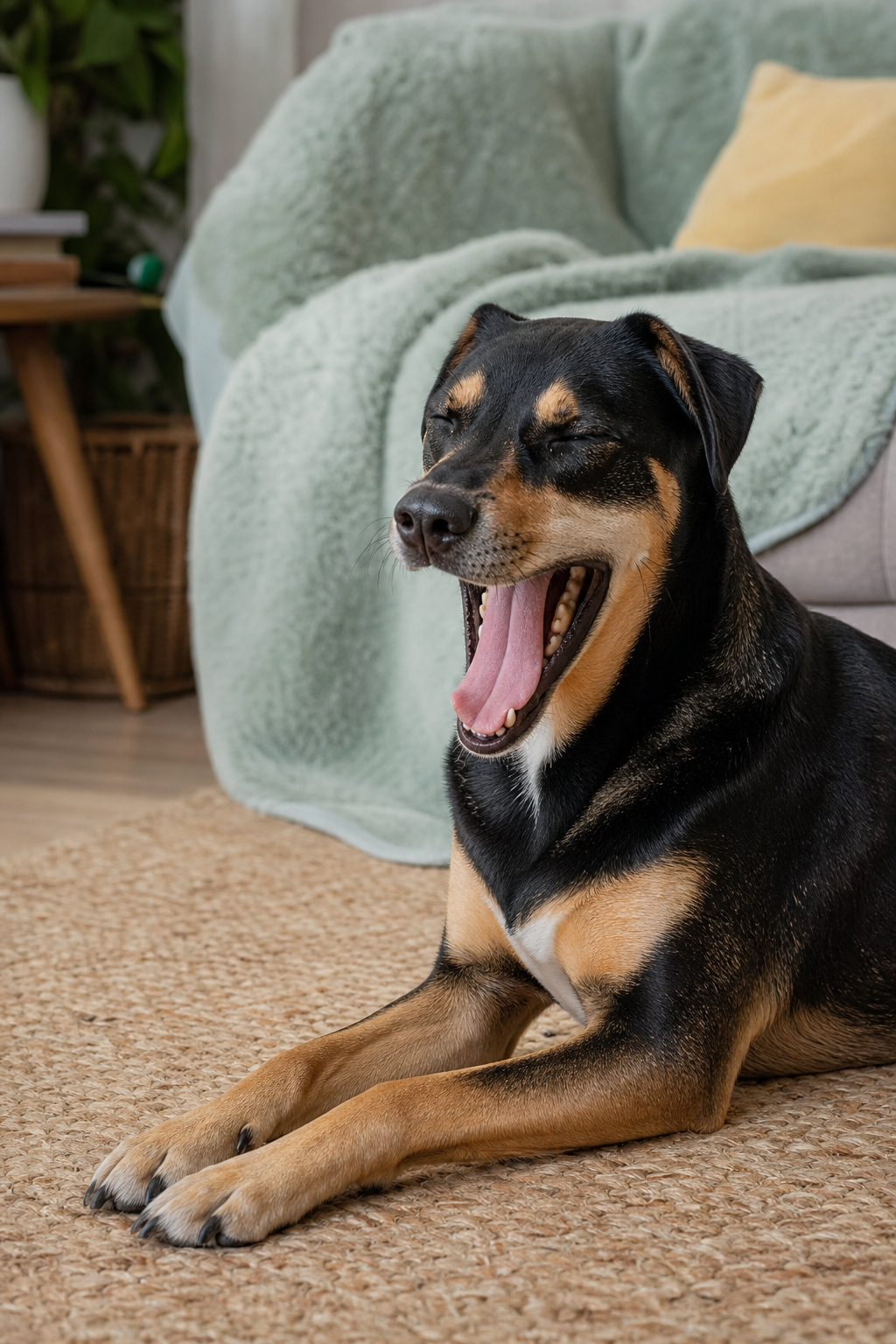
Dog body language does not work like a row of labelled buttons. A yawn does not always translate to one fixed sentence, just as a wagging tail does not automatically mean “please approach.”
Dogs Trust recommends reading the whole body and the context, because the same behaviour can appear for different reasons in different situations. A dog licking their lips while dinner is prepared may be responding to food. The same quick lick while being lifted into a car may sit inside a worried pattern.
Yawning needs the same careful read.
Start with three questions:
- Timing: Did the yawn happen after waking, while settling, before an exciting routine or during a difficult interaction?
- Company: Is the dog loose and comfortable, or are there other signals such as leaning away, lip-licking, pinned ears, lowered posture or attempts to leave?
- Recovery: Does the dog settle and carry on normally, or do the yawns repeat while the body becomes more tense?
This small pause prevents two common mistakes: missing a dog who needs space, and treating a perfectly ordinary sleepy yawn like a tiny behavioural fire alarm.
Sleepy Yawns Usually Fit the Moment

The easiest yawn to read is the one surrounded by sleep.
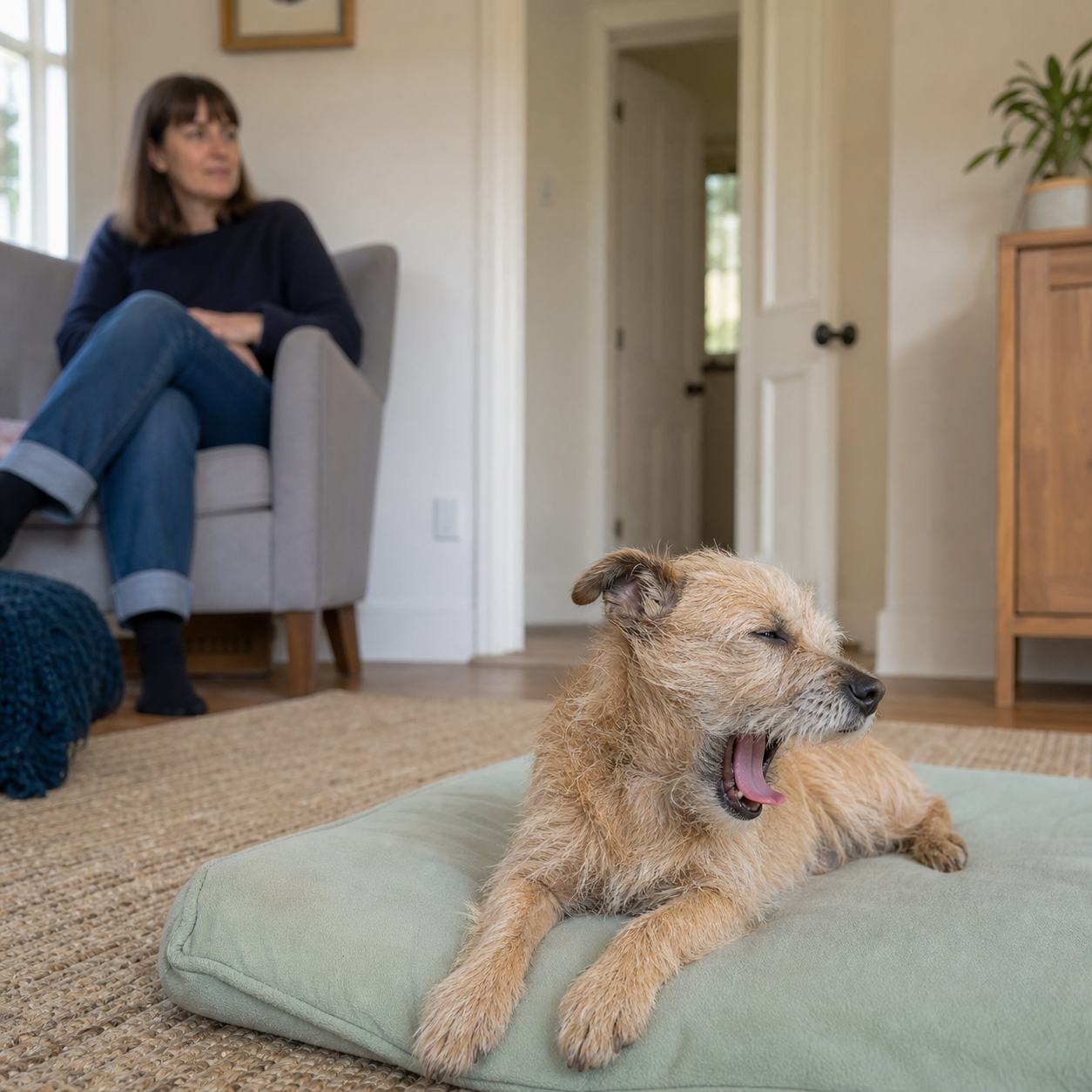
A dog wakes, stretches, yawns and walks toward the kitchen. A puppy circles a bed, gives one enormous yawn and collapses into the blanket. An older dog yawns during the quiet part of the evening, then rests with a loose face and relaxed body.
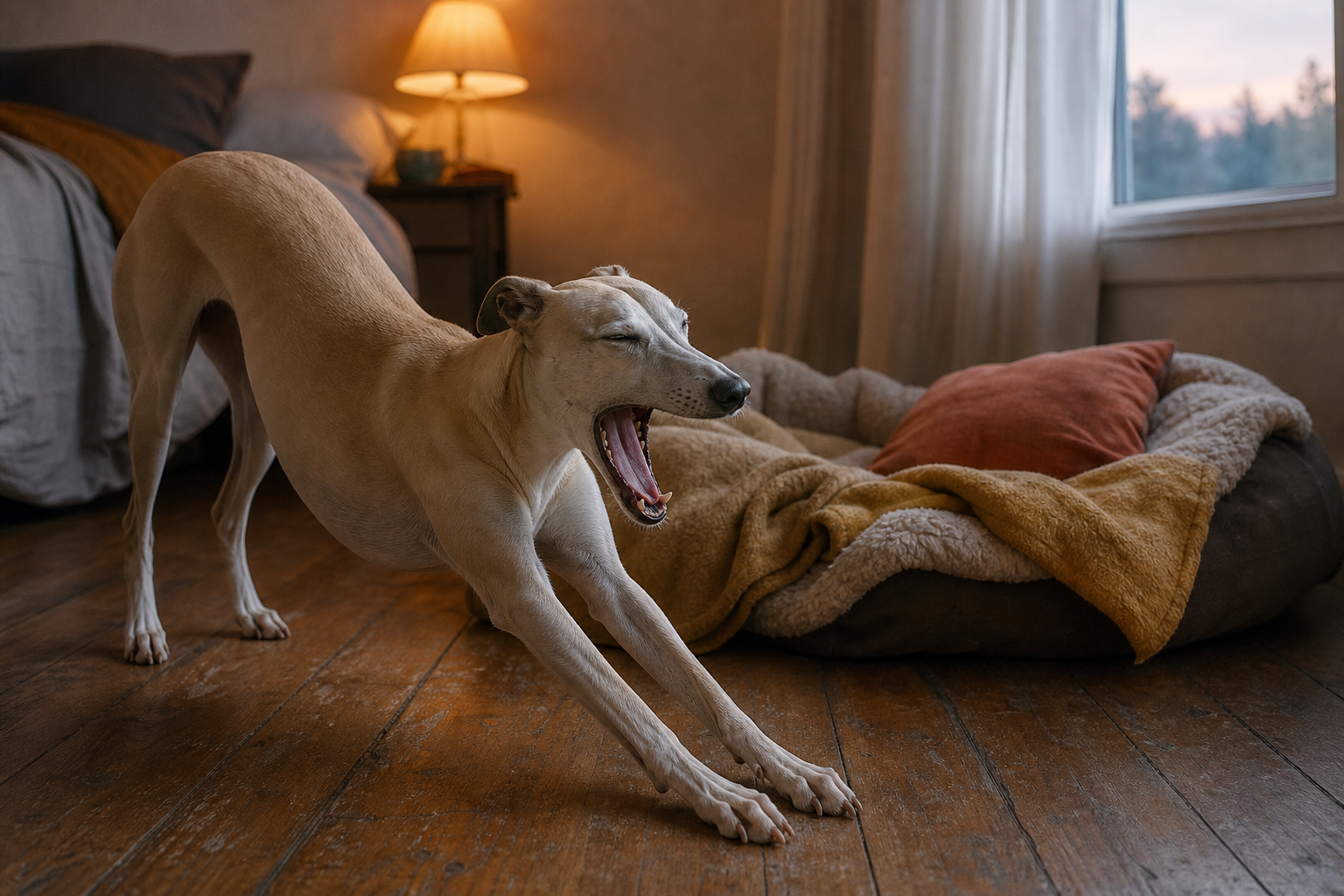
The scene makes sense. The body is soft. Nothing appears to be pressing the dog into an interaction. The yawn arrives as one part of waking, settling or low-energy downtime.
VCA’s veterinary behaviour guidance notes that dogs commonly yawn when waking, falling asleep or lying down. It also explains that yawning can occur in emotional situations, which is why the clock alone cannot settle every case.
Some dogs also yawn around anticipation: the lead appears, the car door opens, dinner preparation begins or the training mat comes out. Excitement and uncertainty can both raise arousal. Rather than deciding the dog is “happy” or “anxious” from the yawn, notice whether the rest of the sequence stays loose, voluntary and easy to recover from.
The CloudyAww rule: if the yawn arrives with a blanket, a stretch and the emotional urgency of a potato, sleep remains a very strong candidate.
Sometimes the Yawn Says Space
A yawn can appear when a dog feels uncomfortable, conflicted or socially pressured.
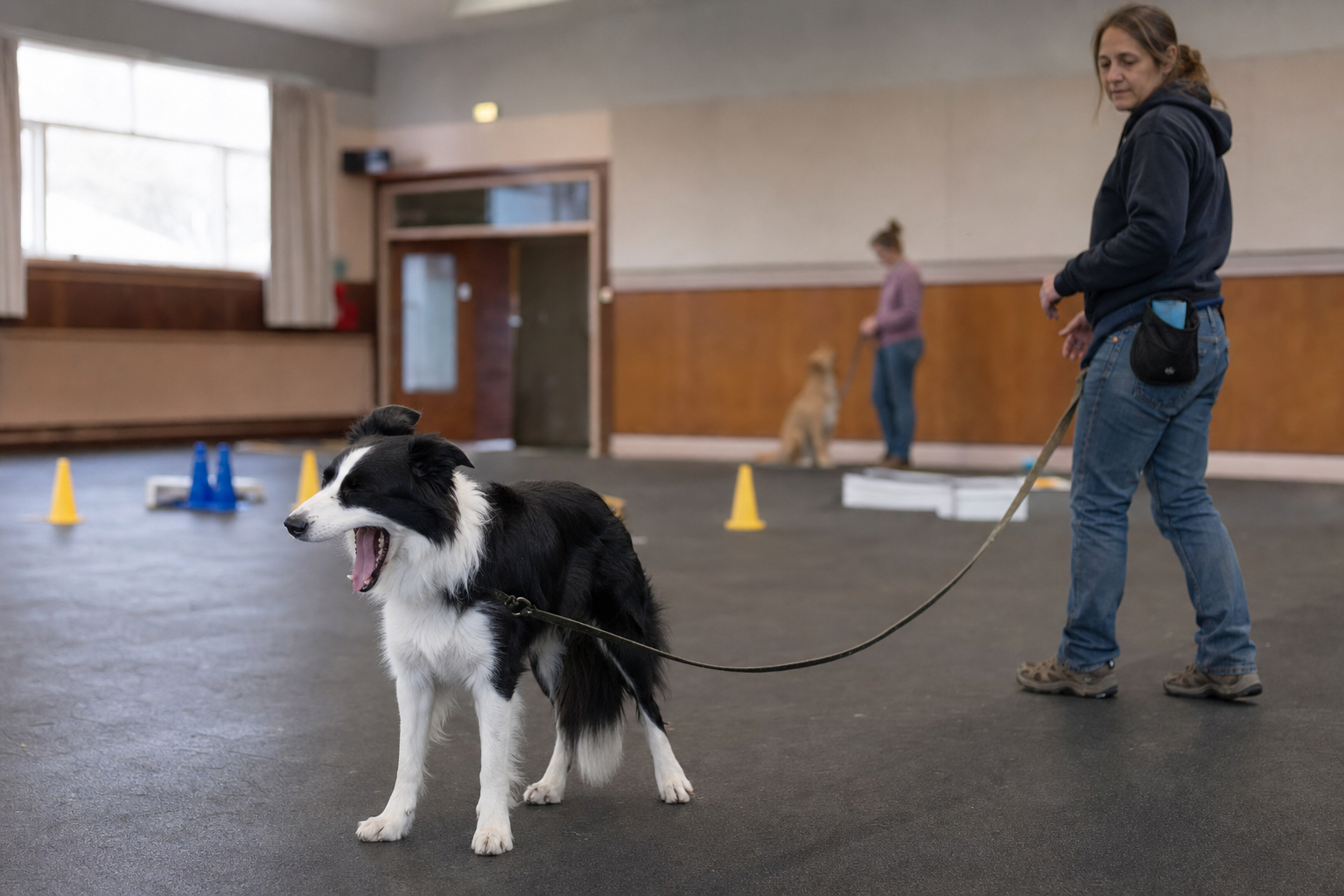
Common moments include a stranger leaning over them, a child hugging them, a camera moving close to their face, a veterinary waiting room, a busy training class or a person repeatedly asking for something the dog does not understand.
The RSPCA’s dog body-language guide includes yawning among the signals that may appear in a worried dog, especially alongside a lowered head, tucked tail, ears back or avoidance of eye contact. Dogs Trust also lists yawning that is not explained by tiredness among possible signs of anxiety.
That still does not make a yawn a courtroom verdict. It makes it a reason to look more carefully.
Imagine a dog yawning while lying loose on their own bed after lunch. Now imagine the same dog yawning three times while a visitor holds their collar, the dog turns their head away and their ears flatten. The mouth movement is similar. The scene is not.
When the second pattern appears, the kind response is simple: reduce the pressure before the dog has to make the message louder.
Read the Whole Dog
The body around the yawn matters more than the yawn’s dramatic size.
A sleepy or relaxed dog may have:
- loose muscles and ordinary breathing;
- neutral ears and a soft face;
- a comfortable resting position;
- easy movement toward and away from people;
- quick return to sleep or normal activity.
A worried or uncomfortable pattern may include:
- turning the head or body away;
- leaning back, crouching or trying to leave;
- lip-licking when food is not involved;
- pinned-back ears or a furrowed brow;
- a tucked or unusually still tail;
- freezing, pacing, panting or refusing familiar treats;
- repeated yawning while the situation continues.
Look for clusters, not a checklist score. Dogs have different bodies, faces, histories and habits. A short-coated dog with upright ears will not look identical to a long-eared dog with a heavy coat. Your dog’s ordinary baseline is part of the evidence.
Also watch what happens after the pressure changes. If you turn sideways, stop reaching and give the dog room, do they soften, sniff, move away or settle? Recovery can tell you more than replaying the interaction to see whether another yawn appears.
Lower the Pressure, Don’t Test the Yawn
If a yawn may sit inside a worried pattern, you do not need to prove it.
Pause the interaction. Let the dog move away. Ask other people to stop reaching, staring or crowding. Create more distance from the dog, person, sound or object that may be difficult. If the dog is on lead, avoid using the lead to hold them close to the problem.
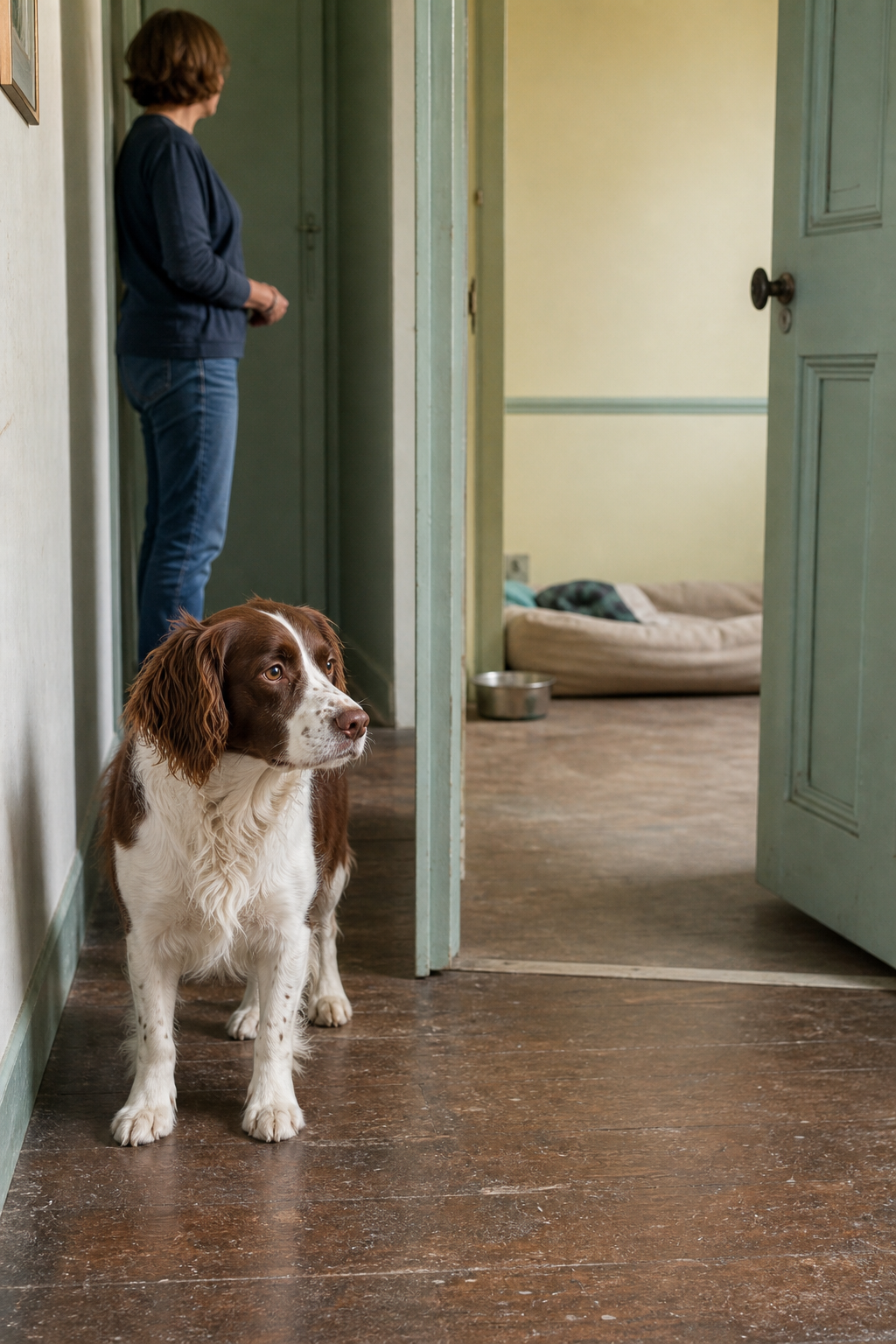
Then make the next moment easier:
- invite the visitor to sit sideways and ignore the dog;
- move a handling task to a quieter place;
- break training into a smaller step;
- offer a familiar retreat with an open route;
- end the activity if the dog cannot settle or choose freely.
Do not deliberately repeat a hug, collar hold or close approach just to check whether the yawn happens again. A subtle request for relief should not have to pass an exam.
This is not about removing every challenge from a dog’s life. It is about keeping the dog below the point where learning and safe communication become difficult. If the same situation repeatedly creates tension, a qualified, force-free behaviour professional can help you build a gradual individual plan.
The Handling and Training Check
Yawning during grooming, harness fitting, veterinary care or training deserves a practical pause.
Ask what changed immediately before it. Did a hand reach over the dog’s head? Did the brush catch a knot? Did the dog lose the option to step away? Did the training request become harder, faster or more repetitive?
For everyday handling, work in tiny pieces. Show the brush, reward calm investigation and put it away. Touch briefly, then stop before the dog needs to escape. Let the dog re-approach when possible. Cooperative-care training can make necessary handling more predictable, but pain or a sudden sensitivity needs veterinary assessment rather than extra practice.
During training, a yawn can be a useful signal that the session needs adjustment. Lower the difficulty, give the dog a sniff break, change the environment or finish on an easy success. More cues delivered more loudly are rarely the missing ingredient.
The goal is not a dog who never yawns. It is a dog whose quiet signals change what happens next.
For a wider view of ears, tails, pauses and posture, CloudyAww’s tiny guide to dog body language gives the yawn some useful company.
Cute, Not a Bond Test
Dogs sometimes yawn after seeing or hearing a human yawn. Yes, this is adorable. No, it is not a reliable home test of whether your dog loves you.
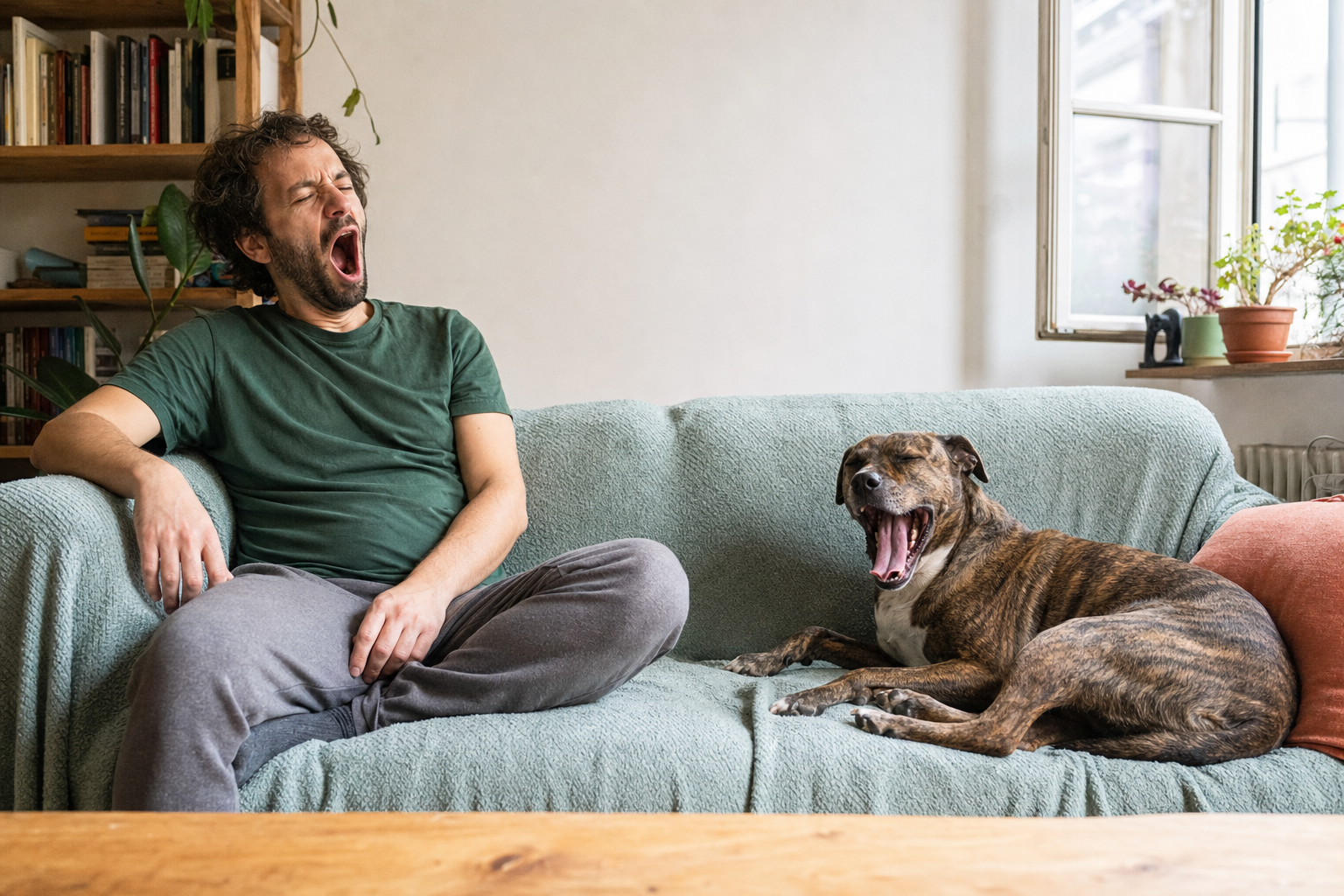
Studies have found evidence of contagious yawning in some dogs, but results and explanations vary. A peer-reviewed review and experimental paper on contagious yawning in dogs found no reliable familiarity or prosociality biases and warned that contagious yawning should not be treated as a diagnostic signal of empathy.
Attention, arousal, individual differences and the experimental setup may all matter. A dog who does not copy your yawn has not failed the relationship.
Enjoy the shared moment if it happens. Just do not turn the living room into a love laboratory where you fake-yawn at the dog for forty minutes and become offended by the results.
When the Pattern Changes
An occasional yawn in a sensible context is usually ordinary. A sudden or repeated change deserves a closer look.
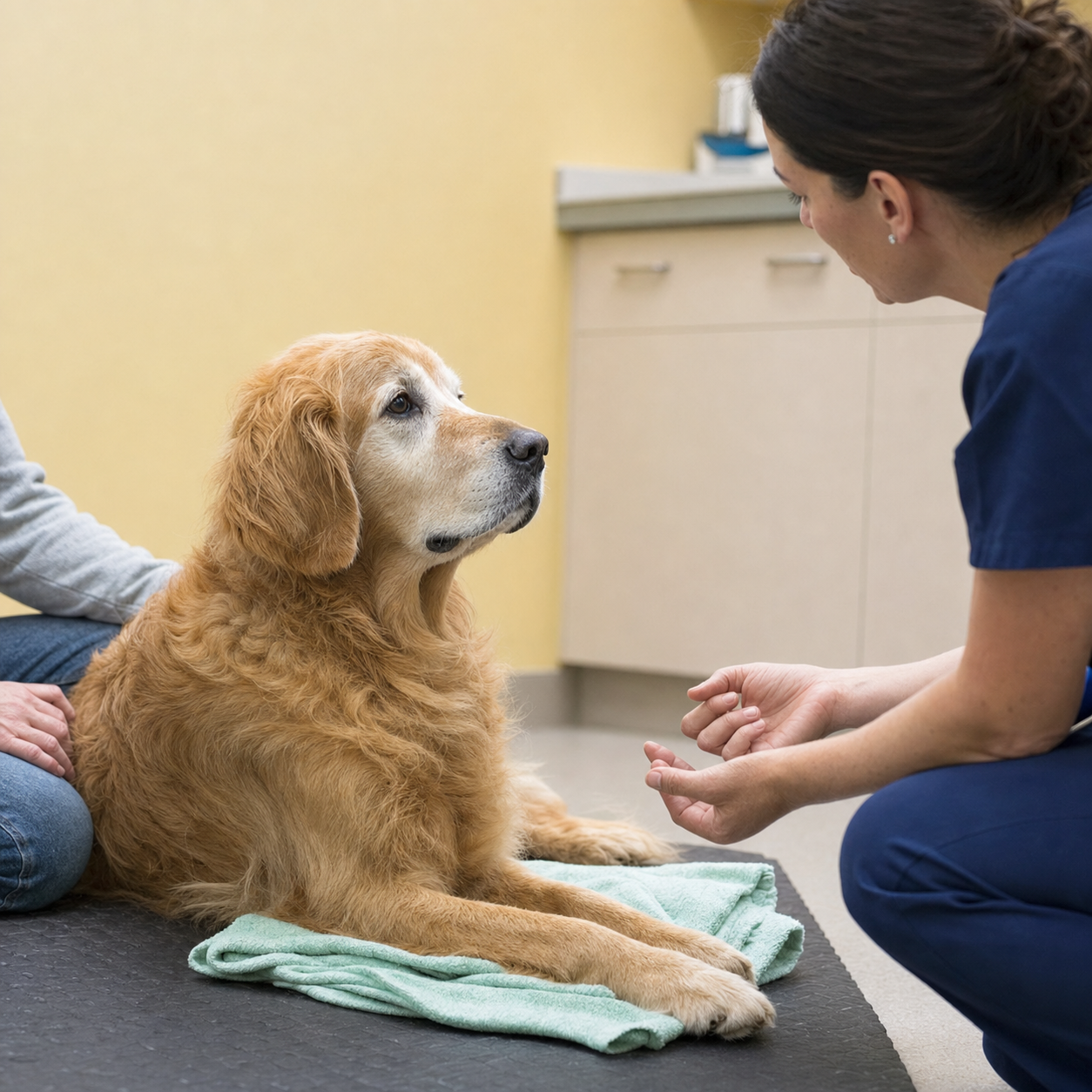
Contact your vet if yawning becomes much more frequent than normal for your dog, appears intense or difficult, or arrives with other changes such as:
- reduced appetite or trouble eating;
- drooling, pawing at the mouth or an unusual smell;
- coughing, breathing difficulty or unusual panting;
- low energy, restlessness or sleep changes;
- sensitivity to touch, limping or other possible pain;
- a noticeable change in mood or behaviour.
Yawning alone cannot tell you whether a medical issue is present. The change from your dog’s baseline—and the other signs around it—is what makes veterinary advice useful.
For persistent fear, handling distress or situations where the dog freezes, lunges, snaps or cannot recover, speak to your vet and ask about a qualified reward-based behaviour professional. Safety plans should be individual, especially around children or bite risk.
The tiny yawn read is this:
Sleep — does the timing and loose body fit rest?
Space — did the yawn appear while social or handling pressure increased?
Context — what did the whole dog do before, during and after?
Sometimes the yawn means bedtime. Sometimes it means the room became a little too much. Sometimes it is simply one dog-shaped mystery passing through an otherwise normal day.
You do not have to translate it perfectly. Notice the scene, respect the quiet request and respond to the pattern in front of you.
If your dog communicates with their paws as well as their face, read what your dog may be saying with a paw. For another behaviour that makes more sense when you look at what happened just before it, explore why dogs shake off when they are not wet, or browse more warm pet logic in the Aww Articles library.
Sources and Further Reading
- Dogs Trust: Understanding dog body language
- VCA: Why do dogs yawn?
- RSPCA: Understanding dog body language
- Dogs Trust: Signs your dog may be stressed
- Peer-reviewed study: Contagious yawning in dogs