
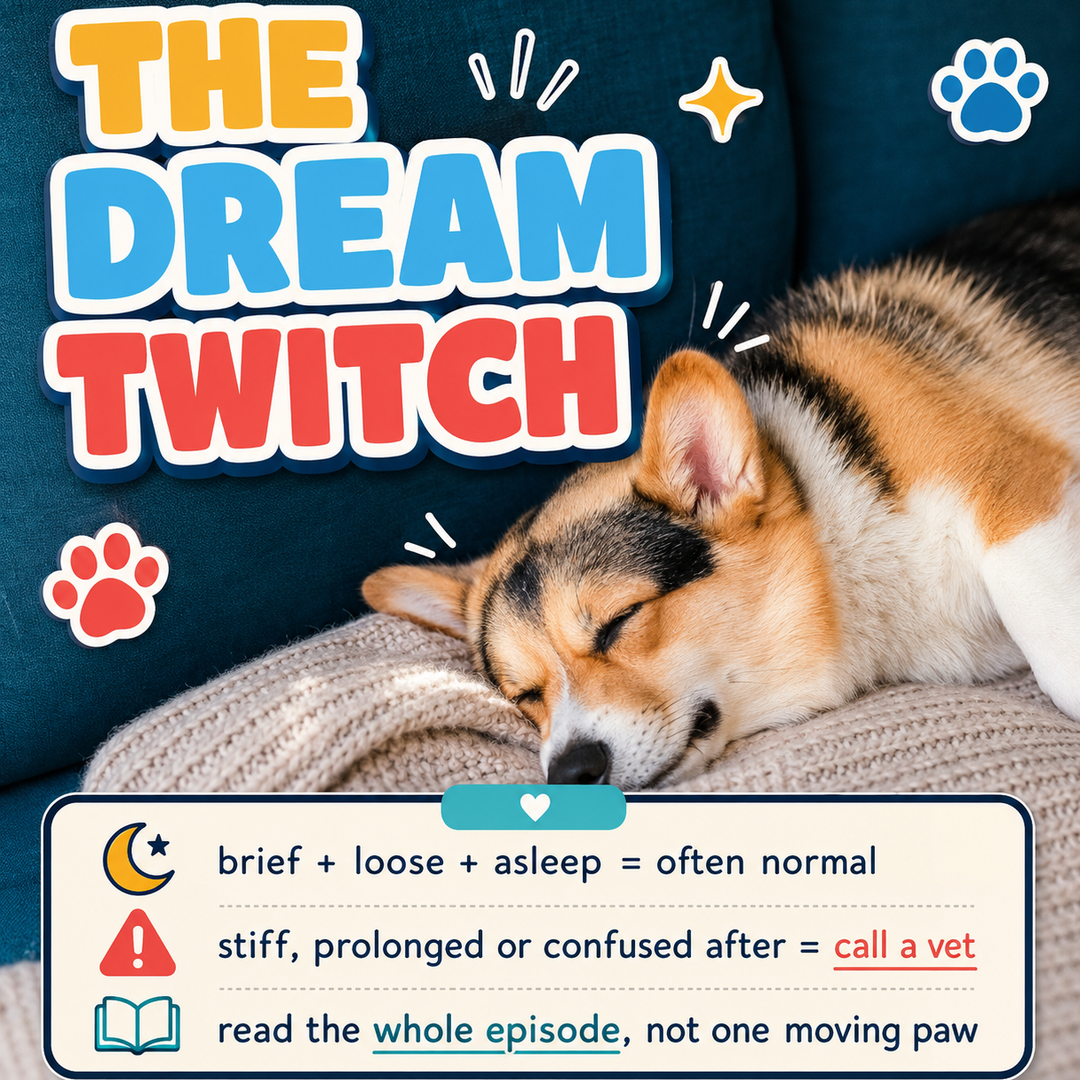
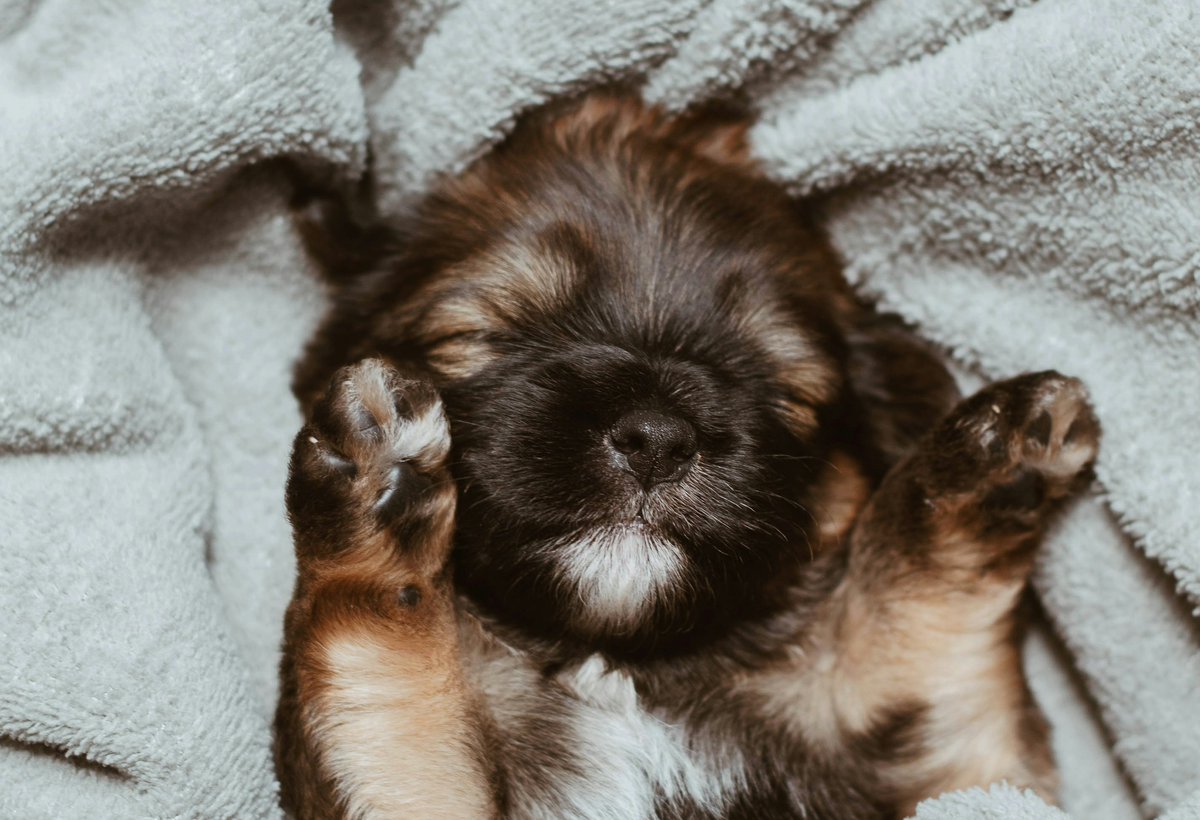
A sleeping dog can be perfectly still and then begin running a very small race without leaving the blanket.
One paw taps. The whiskers move. An ear flicks towards an appointment happening somewhere inside the dream. There may be a muffled woof from a mouth that remains mostly closed. Then the dog settles again, apparently satisfied with whatever invisible business was just completed.
Brief, loose twitching during sleep can fit normal rapid-eye-movement sleep, the stage most closely associated with vivid dreaming. But not every movement during rest belongs in the same harmless folder. The useful read includes the whole episode: how the body looks, how long it lasts, whether breathing stays comfortable and what the dog is like afterwards.
Enjoy the tiny dream chase. Just read the sleeper too.
The Tiny Movement Inside Sleep
Dogs move through recognisable sleep stages, including rapid-eye-movement, or REM, sleep. During REM, the brain is active while the body is largely relaxed. Eyes may move beneath closed lids, breathing can become less regular and small movements may appear in the paws, face, ears or tail.
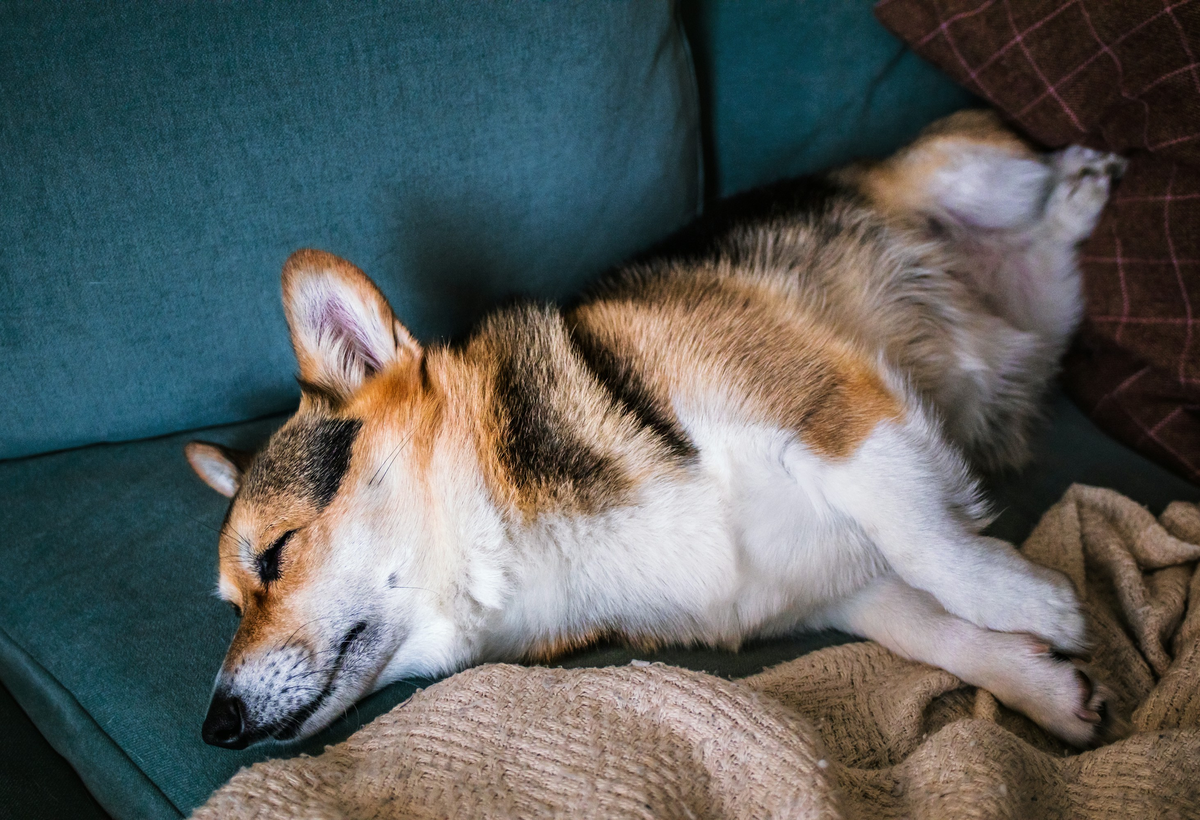
A large caregiver survey in a peer-reviewed review of canine sleep found that twitching or vocalising as if dreaming was commonly reported. That supports a reassuring point: small sleep movements are not unusual dog machinery.
It does not tell us the exact content of a dog’s dream. A paw movement may look like running, but we cannot know whether the dog is chasing a ball, reviewing breakfast or completing paperwork for the neighbourhood squirrel department. The honest explanation stops at the pattern: REM sleep can include brief movement and sound.
What Normal Dreaming Often Looks Like
Normal-looking dream movement is usually brief, loose and clearly linked to sleep. A paw may paddle for a few seconds. The nose or whiskers may quiver. The dog might make a quiet yip, sigh or muffled bark, then return to calmer sleep without distress.
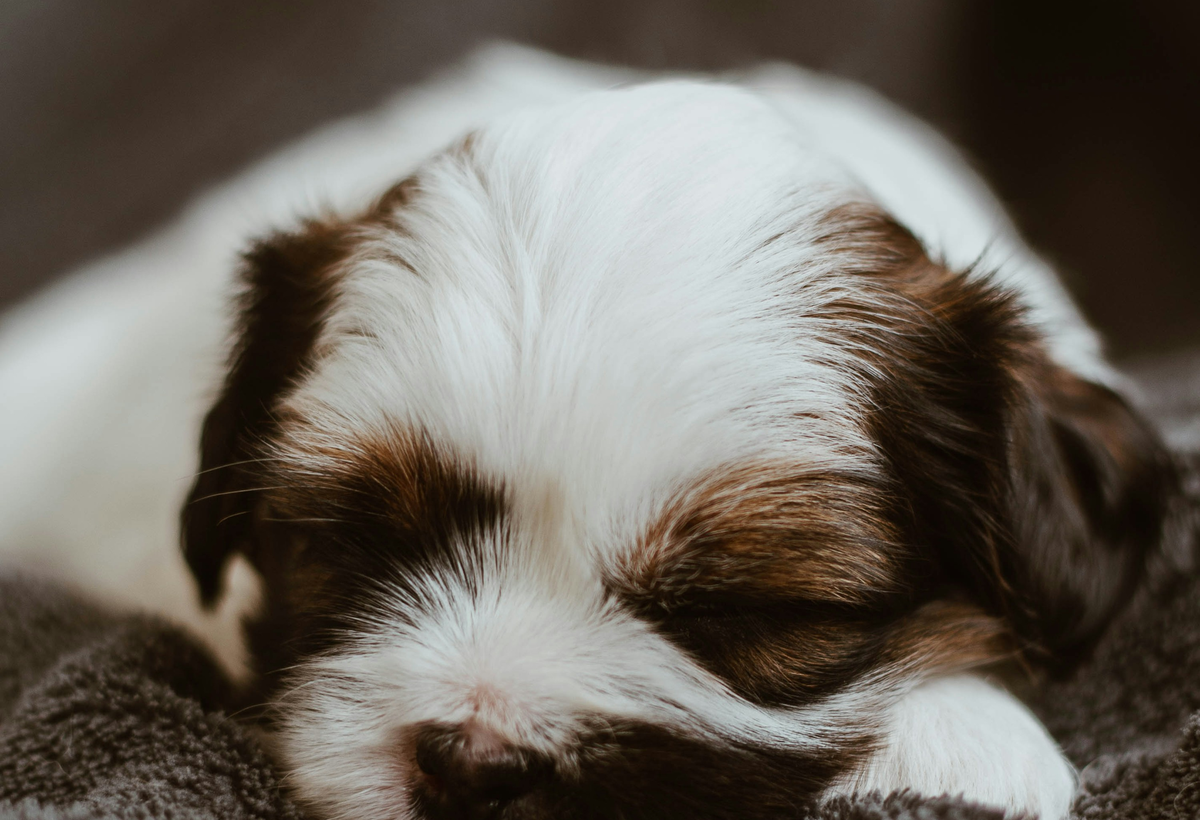
Look at the body around the twitch. The dog remains in an ordinary sleeping position. The muscles do not look rigid. Breathing continues without obvious struggle. The movement stops on its own, and the dog later wakes and behaves normally.
Puppies may seem especially busy in sleep, while individual adult dogs vary enormously. One dog performs a complete silent action film. Another offers one toe flick and considers the shift finished. The size of the performance is less useful than the combination of looseness, brevity and normal recovery.
Let the Dream Finish
If the movement is mild and your dog appears comfortable, the kindest response is usually to let them sleep. Both Blue Cross and VCA advise against startling a dreaming dog awake. A dog pulled suddenly from deep sleep may be confused or frightened, even when they are normally gentle.
Keep children and visitors from touching or leaning over a sleeping dog. If you genuinely need to wake them, call their name softly from a little distance and give them time to orient themselves. Do not put your face close to theirs or grab a moving paw.
Sleep is not empty time. Dogs need a quiet place where ordinary rest can finish without the household repeatedly pressing the reset button. CloudyAww’s guide to why dogs yawn uses the same whole-dog rule: one familiar action makes more sense when you read the moment around it.
When the Movement Changes the Story
Some episodes deserve veterinary advice rather than a dream interpretation. Contact your vet if sleep movements are new, increasingly frequent, violent, prolonged or clearly different from your dog’s usual pattern.
More concerning signs can include a stiff body, strong repetitive jerking, heavy drooling, loss of bladder or bowel control, injury, difficulty breathing, or confusion and unusual behaviour after the episode. Movements that also happen while the dog is awake need a separate veterinary assessment.
Seizures do not all look identical. MSD Veterinary Manual notes that generalised seizures may include limb movement, salivation and loss of bladder or bowel control, while focal seizures can involve twitching in one area. That is why a home label based on one visible detail is not reliable enough.
If an episode is ongoing, repeats in a cluster, affects breathing or leaves your dog unable to recover normally, contact an emergency veterinary service. Follow their instructions rather than trying to hold the dog still or place anything in their mouth.
Record the Pattern, Not a Re-creation
If it is safe, record a short video from a respectful distance. Include the whole body rather than zooming only onto one paw. Note the time, approximate duration, whether the dog was definitely asleep, what breathing looked like and how they behaved before and after.
Do not repeatedly wake the dog or try to trigger another episode for better evidence. A natural video plus a simple timeline gives your vet more useful information than a dramatic description recreated from memory.
VCA also recommends video when unusual sleep behaviour is hard to separate from a seizure. The aim is not to diagnose the episode yourself. It is to bring the clearest possible pattern to the professional who can examine the dog.
Build a Better Sleep Spot
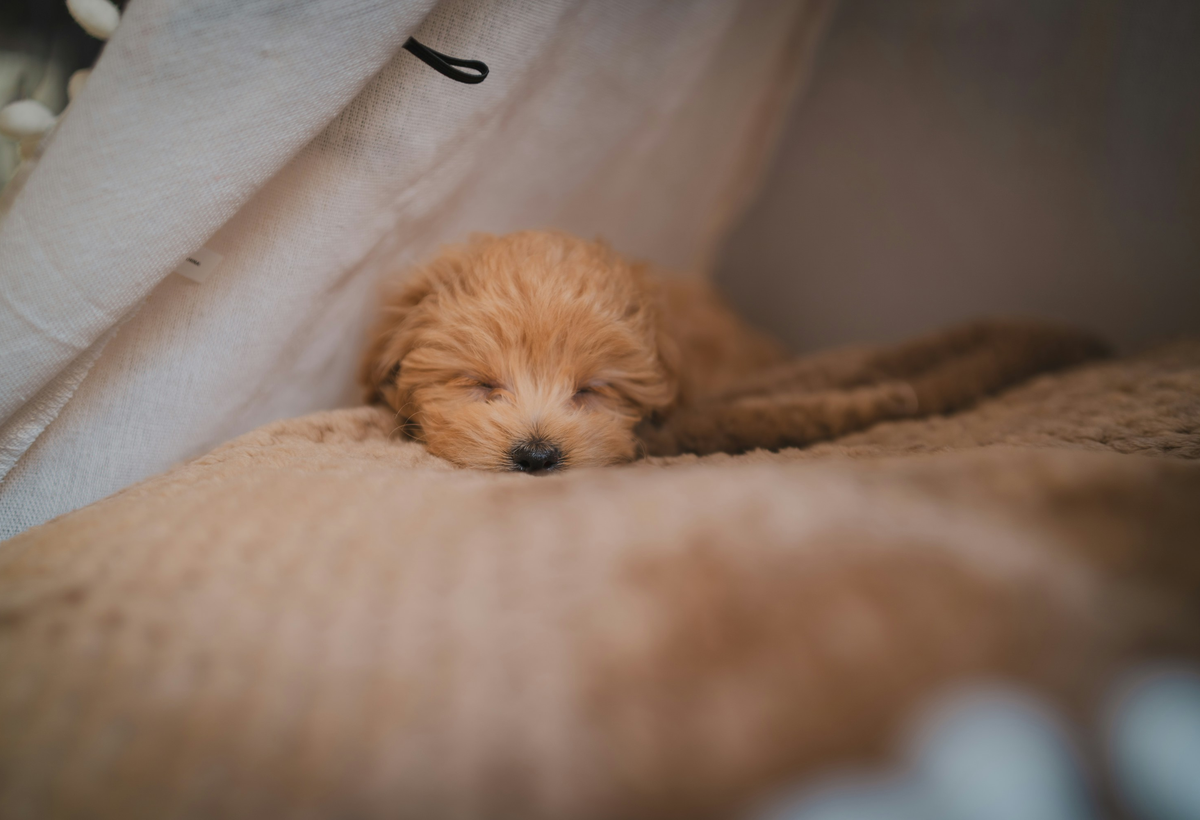
A good dog bed is large enough for the dog to use natural sleeping positions and placed somewhere dry, comfortable and away from constant traffic. The RSPCA recommends a quiet resting area where a dog can remain undisturbed, while Dogs Trust advises making a safe space that the dog can enter and leave freely.
Keep the route clear of unstable objects, trailing wires and anything a moving paw could pull down. A non-slip base helps the bed stay put when the dream chase becomes briefly ambitious. If your dog prefers a crate or covered corner, keep it comfortable and never use that rest space as punishment.
Notice normal sleep before you need to assess a worrying change. Where does your dog usually lie? How often do they twitch? What sounds do they make? How do they wake? Familiarity is not a medical test, but it makes a real departure from baseline easier to recognise.
And if your dog rises, stretches and performs a full-body reset, CloudyAww’s guide to why dogs shake off when they are not wet explains why the scene before and after the shake matters too.
The CloudyAww Read
A brief sleep twitch is often the smallest visible edge of a very active brain.
Let the dog finish the dream when the body stays loose, breathing remains comfortable and the movement stops naturally. Give them a quiet bed, keep hands and faces out of the wake-up zone, and enjoy the tiny paws reporting for an imaginary shift.
If the episode is stiff, prolonged, violent, new or followed by confusion, incontinence, breathing trouble or another clear change, call your vet. Do not force a perfect answer from one moving paw. The whole episode, recovery and dog make the decision useful.
Browse more warm, practical pet logic in the Aww Articles library.
Sources and Further Reading
- Canine sleep characteristics: a review of caregiver reports and research
- VCA: Why do puppies twitch in their sleep?
- VCA: Unusual pet sleep behaviours to watch for
- MSD Veterinary Manual: Epilepsy in small animals
- Blue Cross: Do dogs dream?
- RSPCA: Choosing and placing a dog bed
- Dogs Trust: Creating a safe space for your dog