
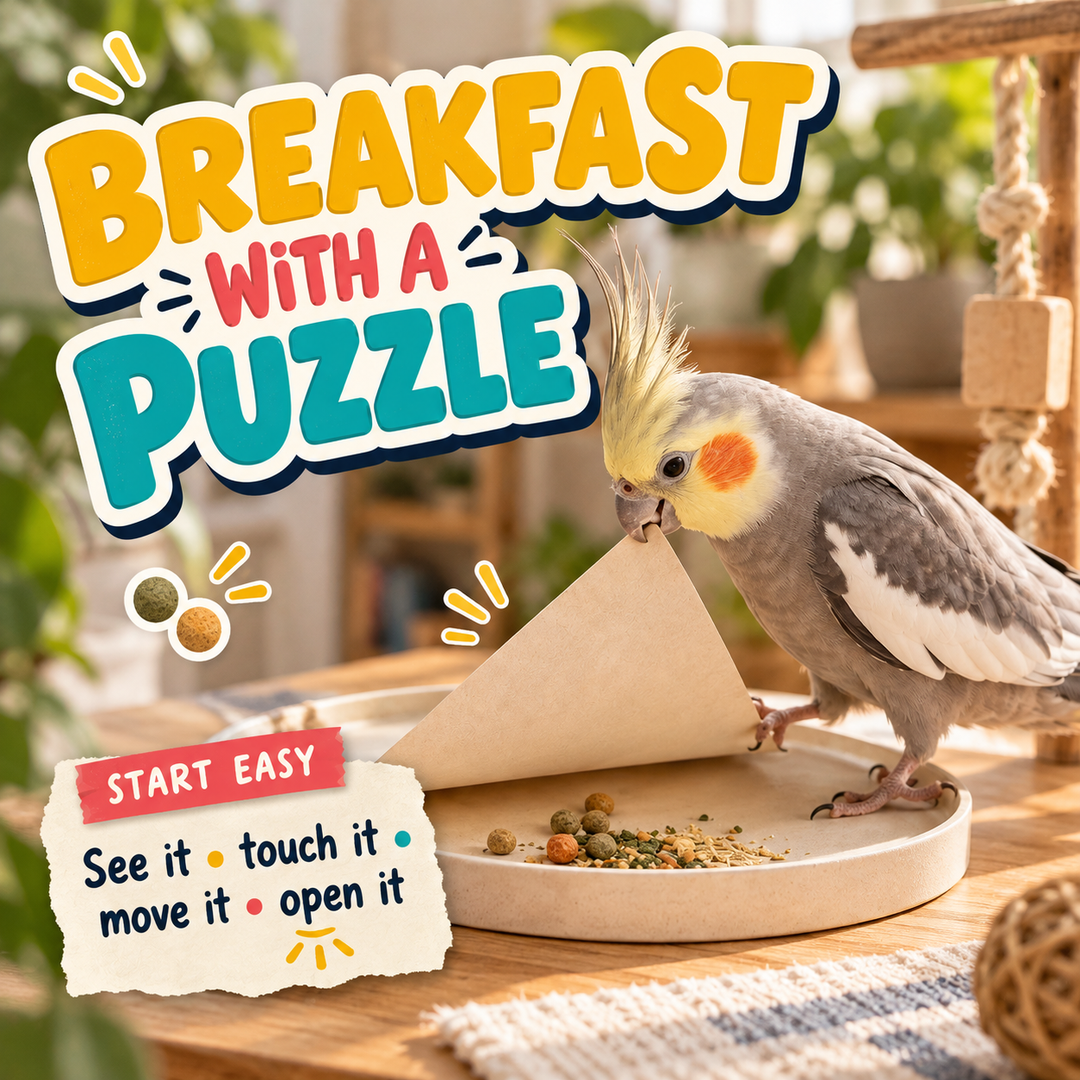
Breakfast arrives. The bowl is familiar, the food is visible and the bird knows exactly where the morning administration department has placed everything. Then one pellet appears beneath a loose piece of paper, and an ordinary meal develops a tiny plot.
Foraging means searching for, obtaining and processing food. For a companion bird, it can add movement, choice and problem-solving to the day. It does not have to begin with an expensive puzzle that appears to require an engineering degree and a written appeal.
The best introduction starts where the bird can succeed. Use part of the normal ration, keep the first task obvious, watch the response and make only one small change at a time. This guide offers a gentle progression for parrots and other companion birds, but it is not a species-specific diet plan. Your avian veterinarian remains the right person for individual nutrition and health advice.
Foraging Is More Than a Toy
The Association of Avian Veterinarians includes foraging opportunities, safe toys, training and social interaction among ways to provide mental and physical stimulation. Its enrichment guidance describes two broad parts of foraging: searching for and obtaining food, then manipulating and eating it.
That distinction is useful. A bird does not need to open a complicated drawer for an activity to count. Walking across a clean tray to choose scattered pellets adds a search. Lifting a light paper flap adds an action. Tearing a safe paper cup to reach familiar food adds processing.
Foraging is one part of a full life. Birds also need appropriate space, flight or other suitable exercise, social opportunity, rest and a balanced diet. A puzzle cannot compensate for a day with no room to move.
Begin With Food in Full View
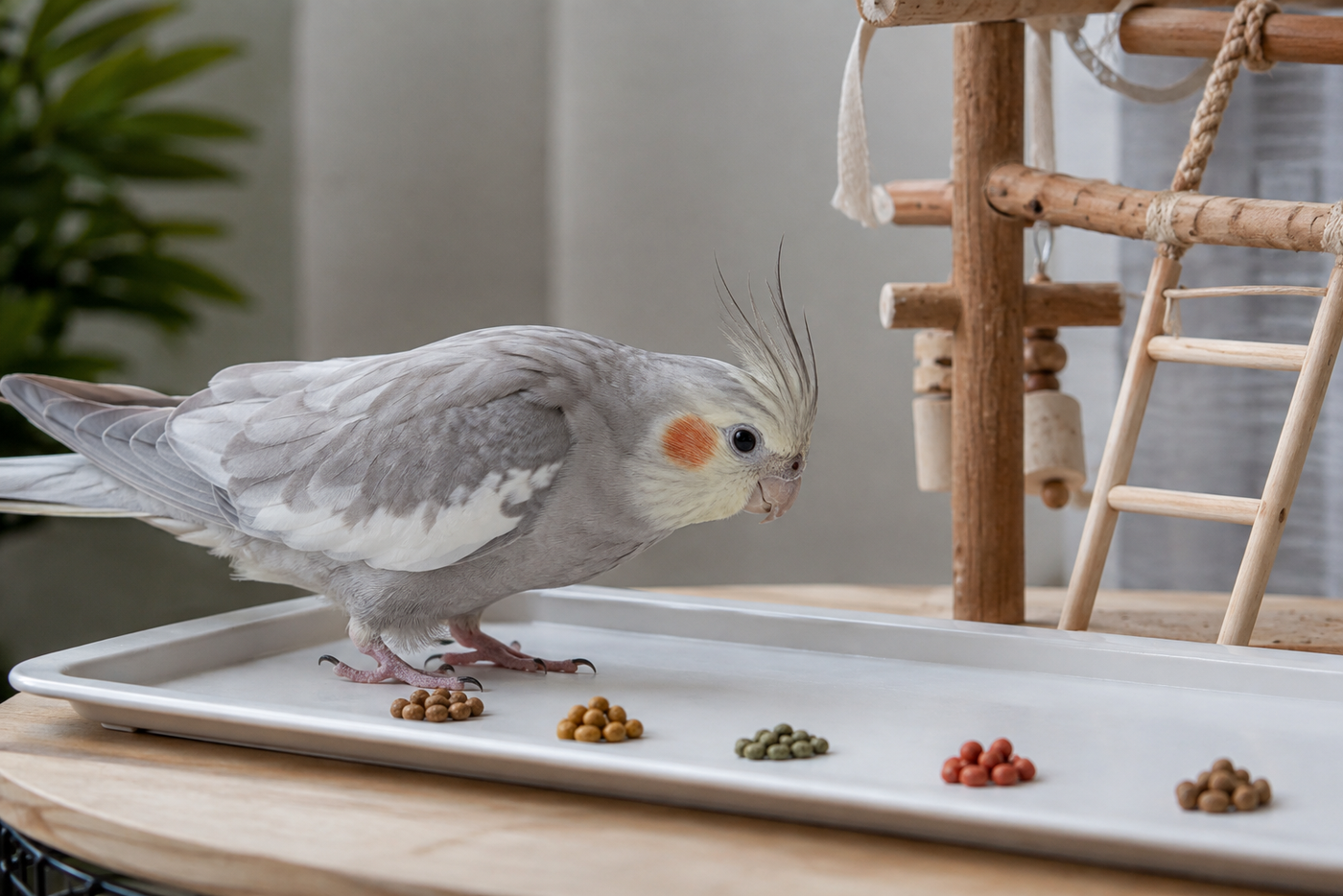
Choose a calm time when your bird is awake and interested. Put a small portion of a familiar food on a clean, shallow tray. Spread the pieces far enough apart that the bird takes a few steps and makes choices, but do not hide anything yet.
This first stage tells you whether the surface, location and activity feel safe. Some birds investigate immediately. Others watch from a distance, stretch the neck, move away and return later. Hesitation is not disobedience. It is information about novelty.
Keep ordinary food and fresh water available as advised for your bird. Do not make the bird solve a new problem to avoid going hungry. The lesson is “food can be interesting,” not “breakfast has been taken hostage.”
Add One Easy Action
When the open tray is familiar, place one piece of food beside a loose strip of plain paper. Later, let the paper overlap the food slightly while part remains visible. The next step might be food in an uncovered paper cup laid on its side.
Change only one feature. If you move the puzzle, change its colour, cover the food and introduce a new treat at the same time, you will not know which part made the bird cautious.
The AAV’s Foraging Made Easy guidance makes the same reassuring point: enrichment does not need to require a huge amount of time or training. A simple change can create a new action.
Let the Bird Set the Pace
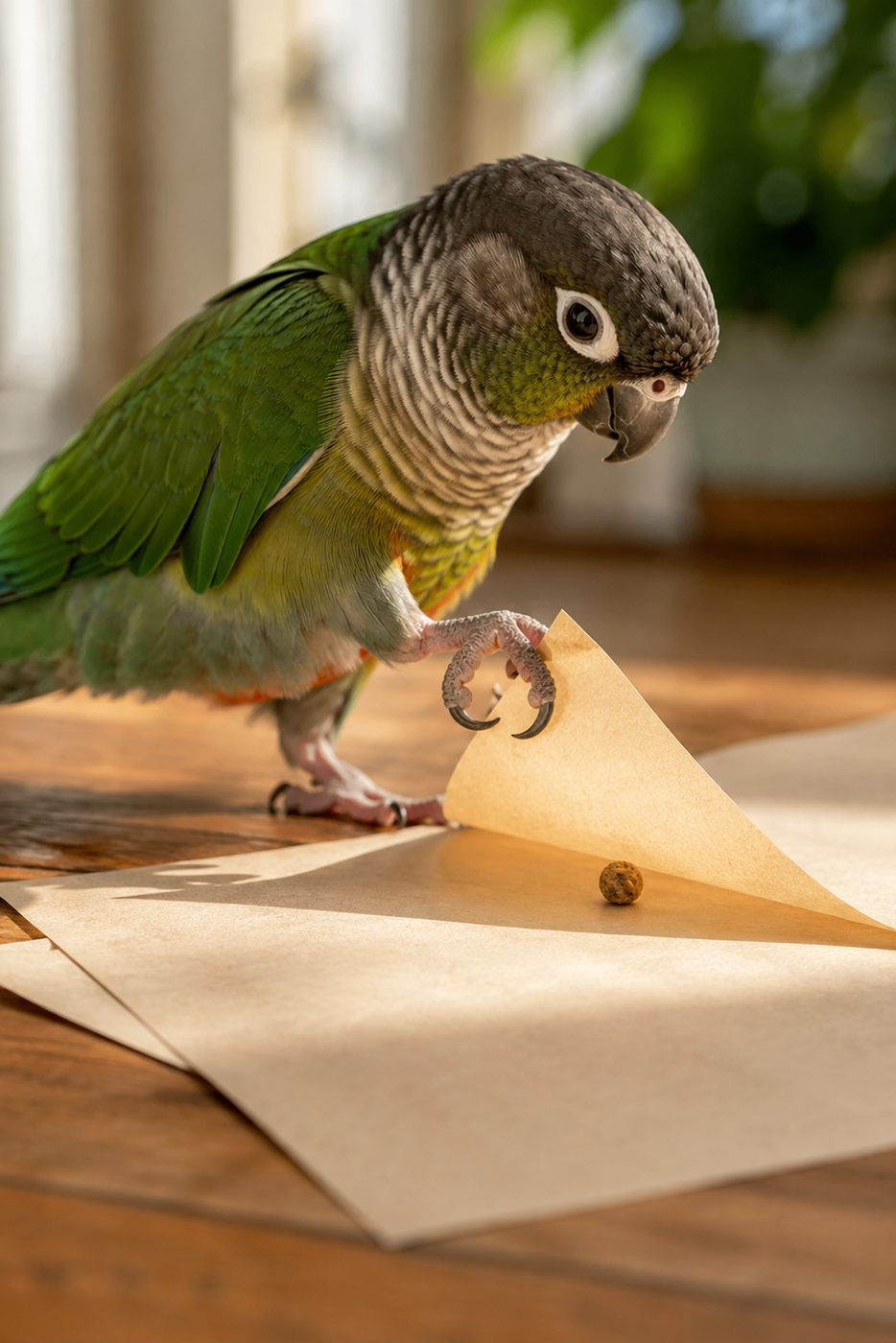
Watch posture and movement. A comfortable bird may approach, look from different angles, touch the material, step away and return. A worried bird may become very still, lean away, flee repeatedly, alarm-call or refuse to approach the usual feeding area.
If concern increases, move the activity farther from the bird’s main space or return to the previous easy stage. You can demonstrate by placing food openly near the object, but do not push the bird toward it or hold them beside it.
Our guide to birds copying household sounds shows how carefully birds notice patterns in the home. New objects join that map too. Give the puzzle time to become furniture before asking it to become work.
Build a See–Touch–Open Ladder
Use a simple four-step progression:
- See it: familiar food sits beside the new object.
- Touch it: food rests on or at the open edge of the object.
- Move it: one loose flap or piece of paper shifts easily.
- Open it: a lightly folded cup or simple device requires one clear action.
Repeat a stage until the bird approaches comfortably and solves it without frantic effort. Then increase difficulty a little. If success disappears, step back. Progress is not measured by how baffled the bird can become.
Different birds enjoy different parts. One may love tearing paper; another may prefer walking a search route or manipulating a sturdy foot toy. Individual preference gets a vote.
Choose Materials That Survive Inspection
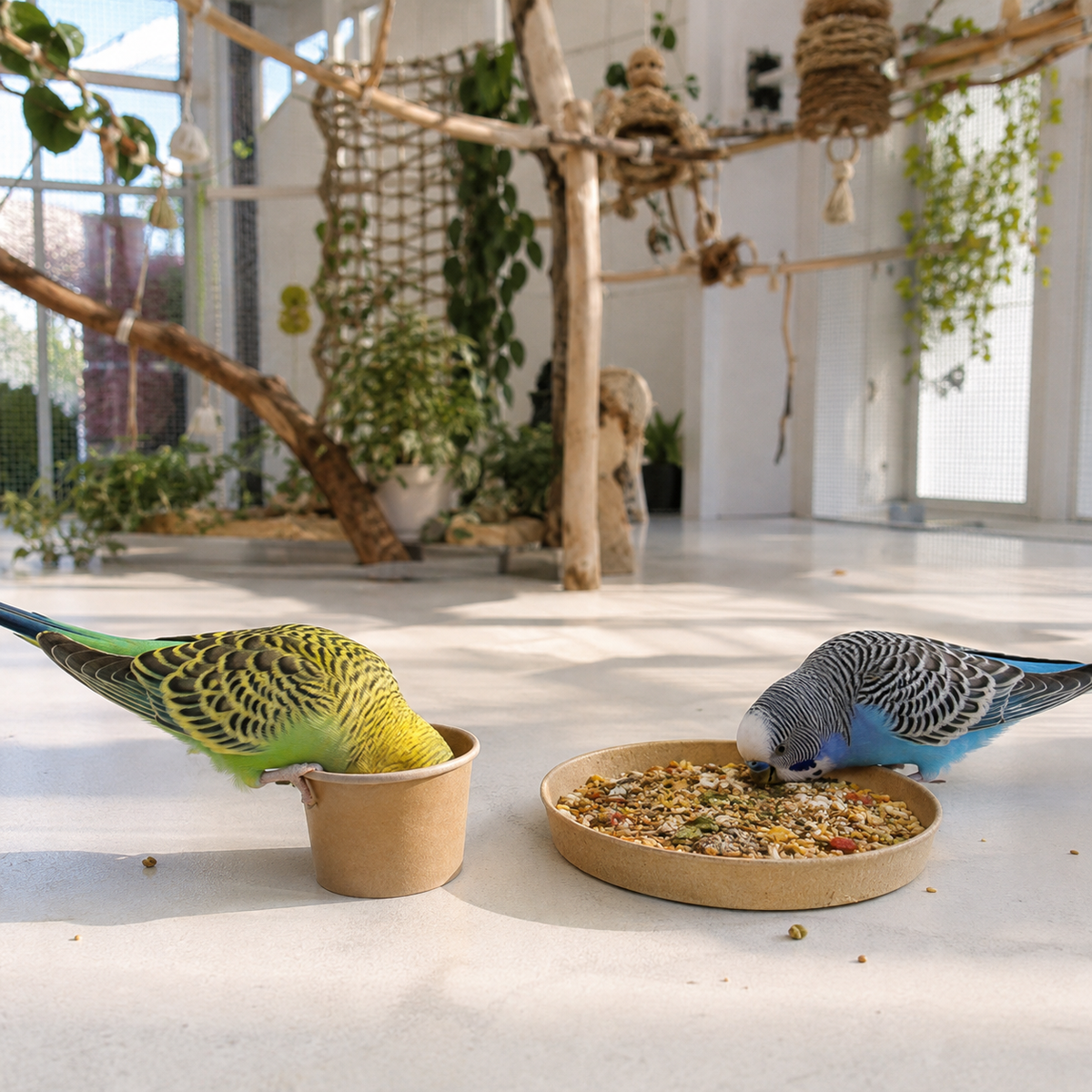
Use bird-safe, non-toxic materials appropriate to the species and the way that individual plays. Plain paper, untreated cardboard and purpose-made foraging toys can be useful when they are clean, correctly sized and supervised. Avoid staples, adhesive tape, loose threads, fraying rope, sharp wire, flaking paint and small parts that can be swallowed.
The RSPCA recommends safe toys and notes that paper and cardboard can be used in homemade foraging activities. It also warns against overcrowding the living space and introducing new toys too suddenly.
Placement matters. A hanging puzzle should not block flight, trap a foot, swing into a sleeping perch or sit where droppings can contaminate food. Tabletop activities need a stable, clean surface away from kitchens, open water, hot items, fans, windows and other household hazards.
Keep Nutrition Separate From Difficulty
Foraging changes how food is found, not what a balanced diet contains. Use measured portions from the normal ration or an avian-vet-approved food. Treats can motivate, but they should not quietly become the entire menu because the puzzle is adorable.
If you scatter food, count it as part of the day’s intake. Remove fresh food before it spoils, and do not hide moist food in material that cannot be washed or replaced. Check that each bird in a shared home can access food without being displaced by a faster or more confident companion.
Weighing a bird safely and consistently can help reveal change, but ask your avian veterinarian how often and what variation matters for the individual. A puzzle should never be used to explain away weight loss or reduced eating.
Inspect, Clean and Retire
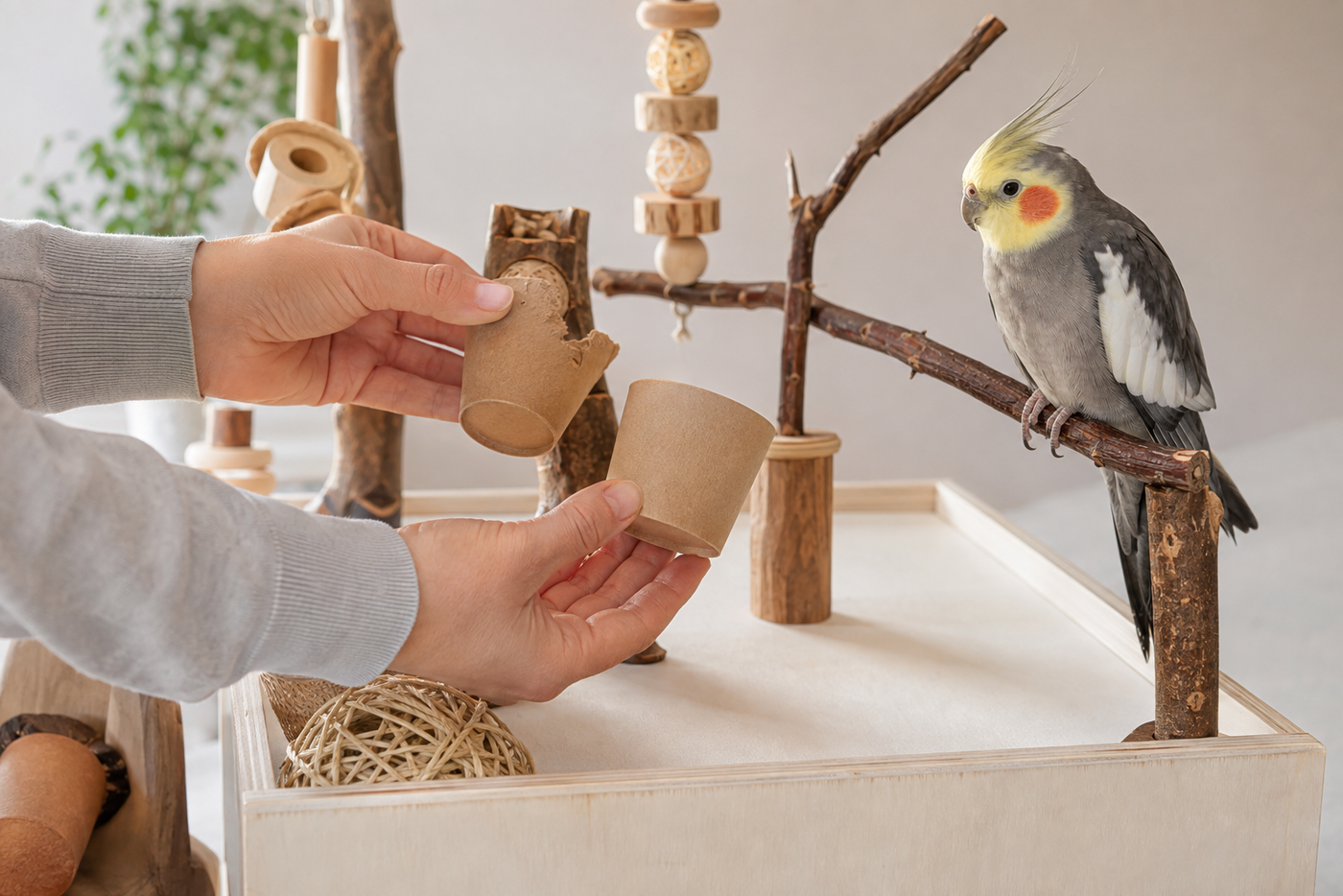
Before each use, check the object like a bird with a very small safety clipboard. Are any fibres loose? Has a hole become large enough to trap the head or foot? Is cardboard wet, dirty or heavily chewed? Are clips and fastenings secure?
Wash reusable items according to their material and let them dry fully. Replace paper and cardboard when damp or soiled. Remove damaged items immediately; “favourite” does not make a frayed toy safer.
Rotate activities rather than filling every available space. A clear flight and climbing route is more important than displaying the complete puzzle collection at once.
Read the Rest of the Bird
Foraging interest will vary with time of day, familiarity and mood. What matters is the whole pattern. A bird who ignores one new paper cup but eats normally, vocalises and moves as usual is different from a bird who withdraws from all food and activity.
Our guide to fluffed feathers in pet birds explains why duration, posture and the rest of the routine matter more than one shape. Use the same context rule here.
Stop the session and simplify if the bird is repeatedly frightened, frustrated or unable to disengage. The bird is not failing the toy. The setup is asking too much today.
When to Ask an Avian Vet
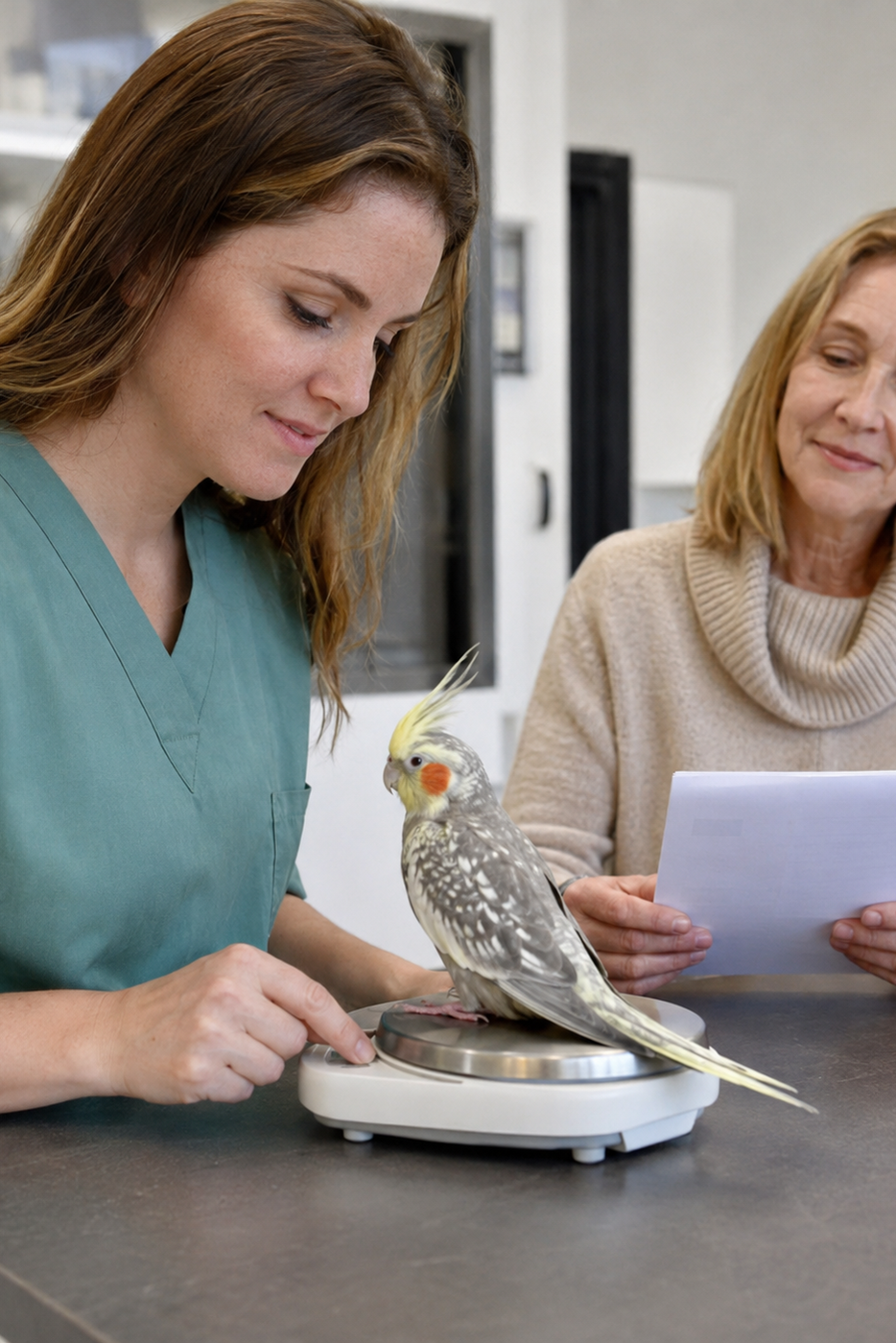
Contact an avian veterinarian if your bird eats less, loses weight, becomes weak or unusually quiet, changes droppings, vomits, shows new regurgitation, breathes differently or has a clear change in normal behaviour. Seek urgent advice for breathing difficulty, collapse, significant bleeding, suspected toxin exposure or inability to perch safely.
If a beak, foot or nail is caught or injured, do not keep testing the puzzle to understand what happened. Remove the hazard if you can do so without causing more injury and call the clinic.
Ask the vet about species-specific diet and foraging choices for birds with medical conditions, limited mobility, sight changes or a history of swallowing non-food material.
The Five-Minute Beginner Setup
Try this first activity:
- Put part of the normal dry ration on a clean shallow tray.
- Leave most pieces uncovered and place one beneath a loose paper edge.
- Set the tray near a familiar play area without blocking the bird’s route.
- Watch quietly; do not move the bird toward it.
- Finish while the activity is still easy, then inspect and clean the tray.
The next session can repeat exactly. Novelty is optional. Confidence comes from being able to predict enough of the game to participate.
Let Breakfast Become a Small Adventure
Good foraging looks less like an exam and more like a question the bird is pleased to answer. The food is familiar. The first action is obvious. The materials are safe. The bird can approach, leave and try again.
Start with seeing. Then touching. Then one easy opening. Build complexity only when the bird’s confidence arrives first.
Breakfast still happens. It just has a little more plot.
Trusted Sources
- Association of Avian Veterinarians: Basic Care for Companion Birds
- Association of Avian Veterinarians: Foraging Made Easy
- Association of Avian Veterinarians: Enrichment Tips—Foraging
- RSPCA: Enrichment for Pet Birds