
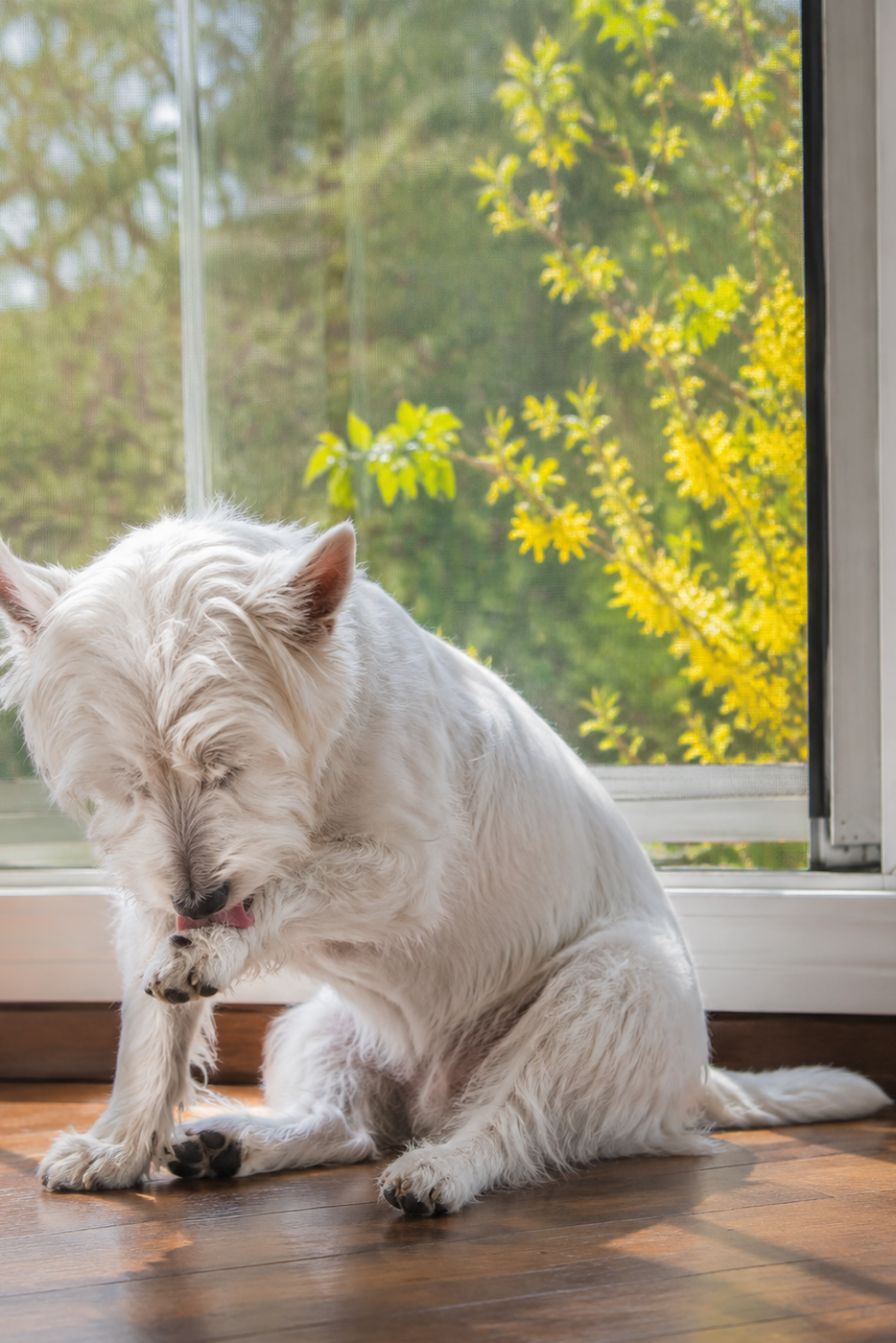
A dog gives one paw a quick lick after coming inside. Fair enough: the pavement was wet, the grass was interesting and apparently somebody has been appointed to quality-control every toe. Then the licking happens again. And again. Soon the soundtrack from the corner of the room has become suspiciously repetitive.

Dogs lick their paws for more than one reason. A brief clean-up can be ordinary; repeated licking can accompany itch, irritation, a trapped object, a damaged nail, pain, infection or another problem that needs veterinary attention. The licking itself can also keep skin damp and sore.
The useful question is not, “What does paw licking mean?” It is, “What pattern am I seeing, what else changed and can I check safely without making the paw more uncomfortable?” This guide helps you do exactly that. It is not a diagnosis, and the paw has declined to complete an online symptom quiz.
Start With the Pattern
Notice when the licking happens and how long it lasts. One quick session after a damp walk is different from a dog repeatedly returning to the same foot throughout the evening. A dog licking several paws during one season presents a different pattern again.
Count the paws. Is it always the front left, both front feet or all four? Note whether the dog also scratches the ears, rubs the face, chews elsewhere or has a change in skin, coat or smell. Merck Veterinary Manual describes itching as a sign rather than a diagnosis and notes that dogs with itch may scratch, bite or lick; the feet and face can be prominent areas when secondary yeast or bacterial infection is present.
Keep the observation neutral. “Left front paw, three sessions after the walk, one minute each” is more useful to a vet than “probably bored.”
Look Before You Touch
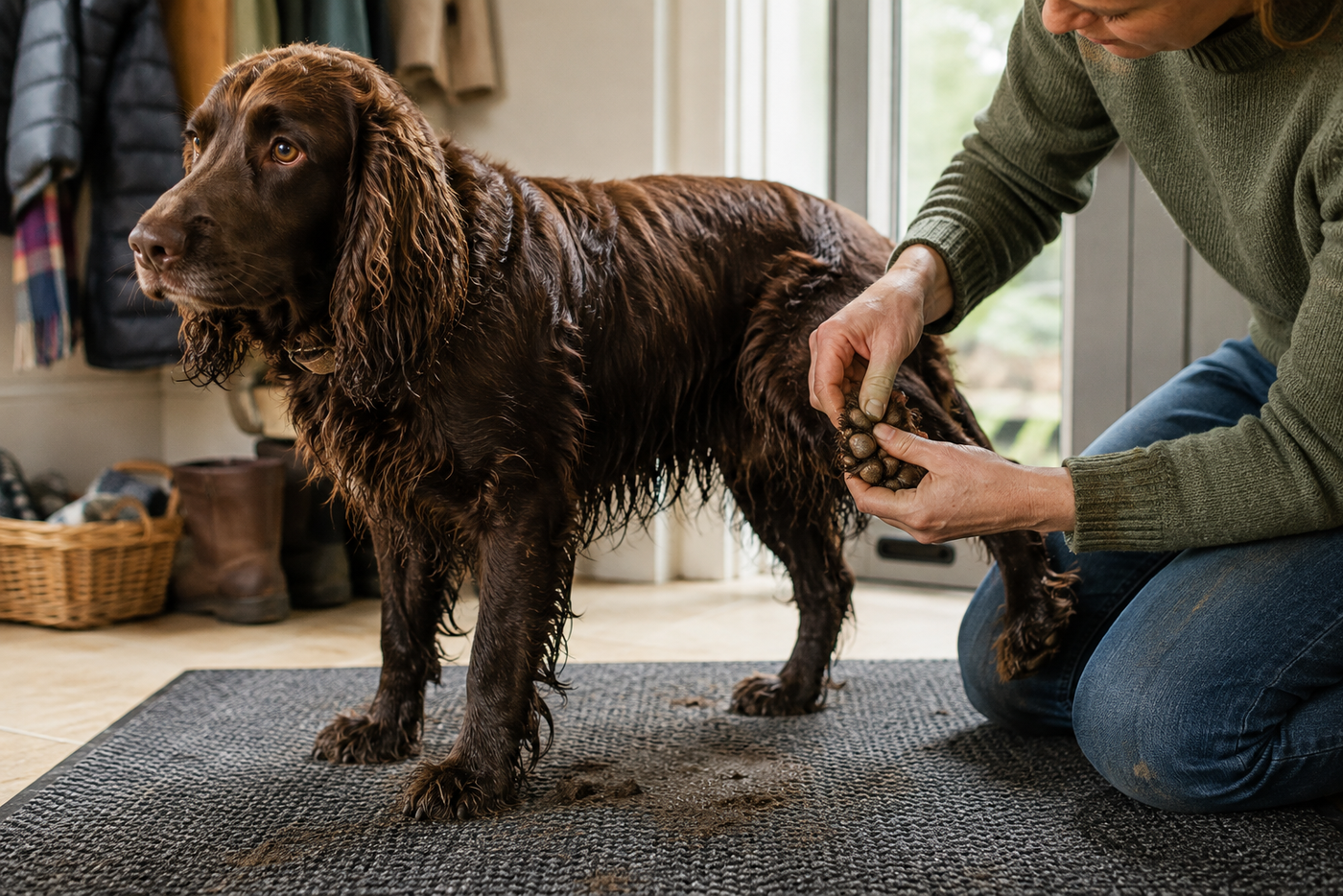
Move to good light and watch the dog stand and walk. Is weight shared evenly? Is one foot held up? Is the stride shorter on one side? Do they hesitate on a surface they normally cross without thinking?
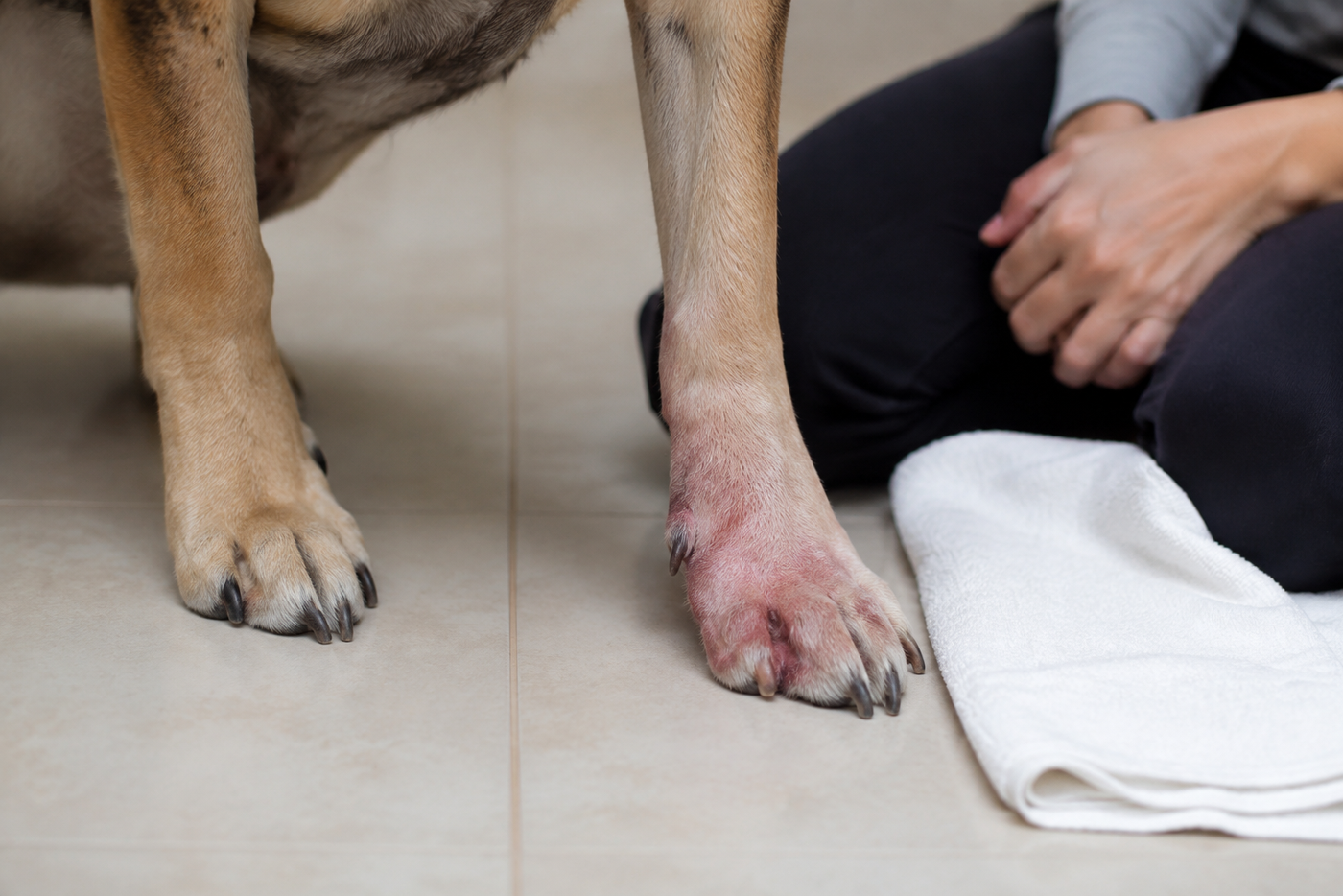
If your dog is comfortable with handling, look at the top and underside of the paw, around each nail and gently between the toes. You are checking for something obvious: a small stone, grass seed, burr, cracked nail, cut, swelling, redness or sticky material. Do not dig into the skin, squeeze a sore toe or keep holding a paw when the dog tries to withdraw.
Our tiny guide to dog body language is useful here. A turned head, suddenly closed mouth, tense body or repeated attempt to leave can be a request to stop even before a growl appears.
One Paw and Four Paws Tell Different Stories
A single suddenly targeted paw makes a local problem worth checking first: debris, a nail injury, a sting, a small wound or pain higher in the limb. Several affected paws may fit a broader itch pattern, although only a veterinary examination can sort out the cause.
That distinction is not a home diagnosis. It is a way to give the clinic better information. Tell them which paws are involved, when the change began, whether it is seasonal, what surfaces the dog has crossed and whether ears, belly, face or other skin areas are affected.
Avoid announcing a food allergy because the internet recognised one foot. Merck explains that parasites, infections and allergies are common causes of itch and that diagnosis requires a proper history, examination and sometimes testing. A methodical work-up is much more useful than a cupboard full of theories.
Notice the Environment
Think about the hours before the licking began. Was the grass recently cut? Were pavements salted? Did the dog run through mud, sand or rough vegetation? Was a new floor cleaner used? Did the feet stay wet for a long time?
This does not mean every environmental detail caused the problem. It gives you a timeline. Rinse only when your veterinarian or a reliable product instruction says that is appropriate for the exposure, and dry gently. Do not apply essential oils, human creams, disinfectants or pain-relief gels. A product that is ordinary in a bathroom cabinet may be unsafe when licked.
Hot surfaces can injure paws too. Our guide to helping dogs stay cool on hot days includes route and timing choices that reduce heat exposure before the paws have to file a complaint.
Watch the Gait, Not Just the Tongue
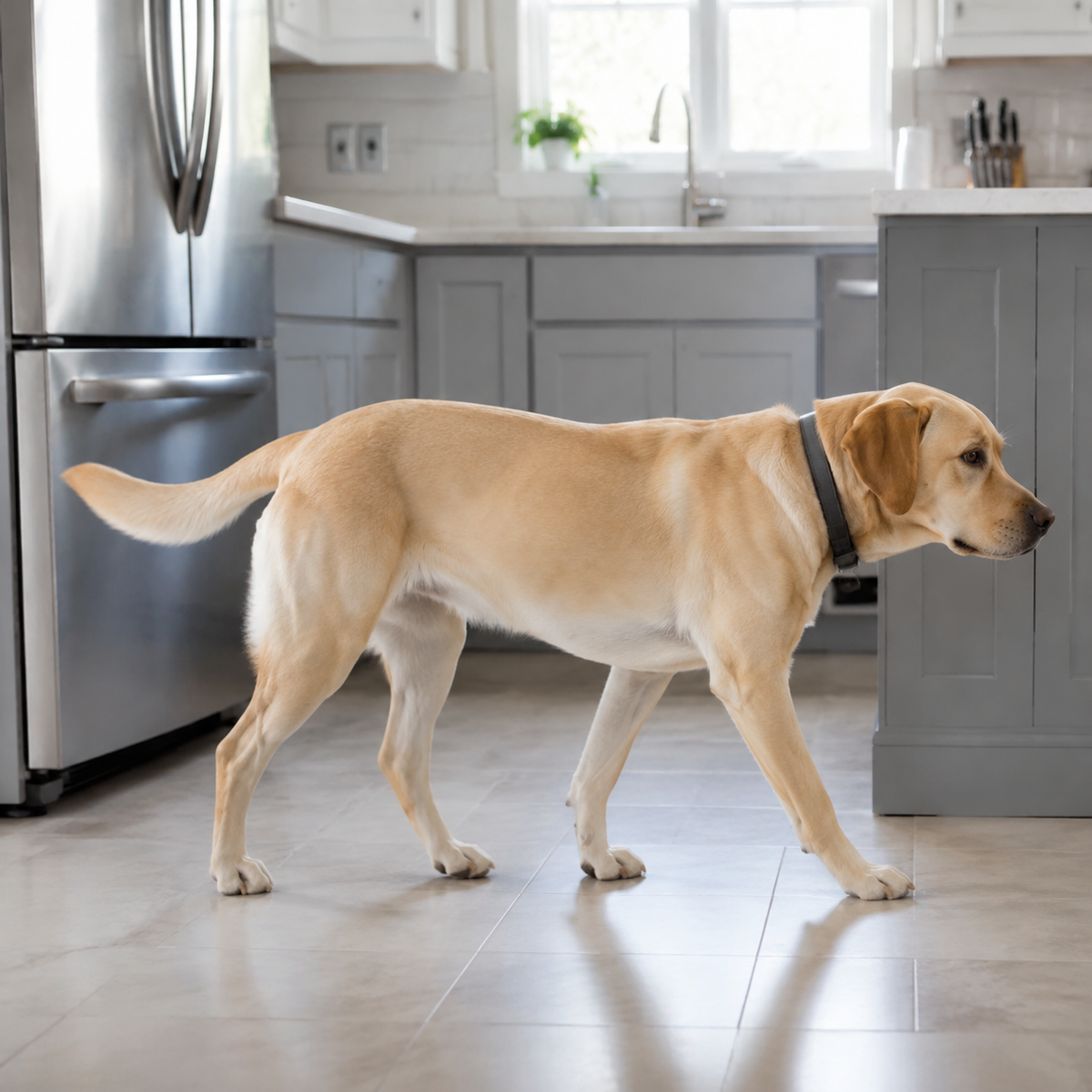
Some dogs lick because a place hurts. The source may be visible on the paw, or it may not. Watch the dog rise from rest, turn, use stairs and walk at a normal pace. Look for limping, shortened steps, stiffness, reluctance to place weight or a new change in activity.
Do not repeatedly make the dog walk for a demonstration if movement looks painful. A short natural side-on video can help the vet see what happens at home, provided recording does not delay care.
Smooth floors can exaggerate hesitation when feet or joints are uncomfortable. If traction is part of the picture, our smooth-floor guide explains how to create a safer route without forcing practice on the slippery section.
Protect Sore Skin From More Licking
Persistent licking can irritate skin further, and an existing sore or wound may be made worse. If you can see broken skin, discharge, marked redness or swelling, contact your vet rather than experimenting with bandages or household products.
The clinic may recommend a properly fitted protective collar, boot or dressing for a particular problem. These are not interchangeable. A damp improvised sock can trap moisture; a tight wrap can affect circulation; a dog can chew and swallow loose material. Ask what to use, how to fit it and how often to inspect the area.
Supervise any temporary protection until you know the dog cannot remove, chew or become caught in it. The goal is not to win a battle with the tongue. It is to prevent extra damage while the cause is addressed.
Skip the Home-Remedy Roulette
Online paw advice can quickly become a potion cupboard: vinegar, salts, oils, creams, antihistamines and surprise diet changes. The difficulty is that the same visible behaviour can come from very different problems, and some products are irritating or toxic when absorbed or swallowed.
Do not give human medication unless your veterinarian has prescribed it for this dog. Do not begin a restrictive diet trial on your own. A proper food-allergy investigation is controlled and complete; removing random ingredients can muddy the evidence and unbalance the diet.
What you can do safely is keep the dog from rehearsing painful handling, record the pattern, preserve any obvious foreign material for identification and call the clinic with clear information.
Make a Useful Paw Record
For two or three days—or sooner if the signs are concerning—note:
- which paw or paws are licked
- when the licking starts and how long it lasts
- recent walks, surfaces, weather and grooming products
- redness, swelling, smell, discharge, hair loss or skin damage
- changes in gait, sleep, appetite, play or touch tolerance
A photograph taken in the same light can show whether redness or swelling is changing. Keep the record brief. The dog does not need a documentary crew following every footstep.
When to Call the Vet
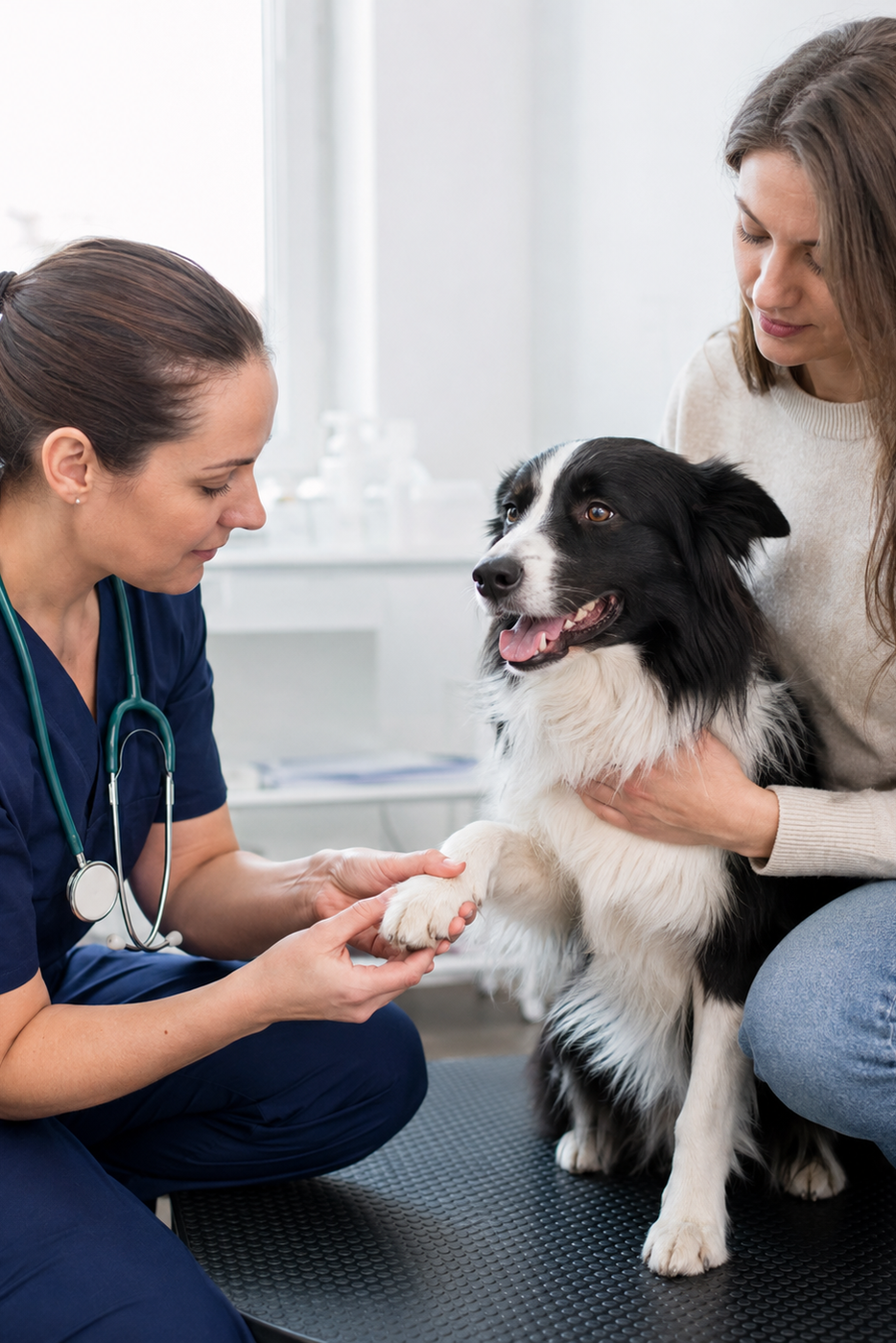
Arrange veterinary advice when licking is persistent, intense, waking the dog, damaging the skin or returning after it seemed to settle. Call sooner for limping, pain, swelling, heat, discharge, odour, a broken nail, a puncture, a suspected grass seed or foreign body, or a paw the dog will not place on the ground.
Also mention changes beyond the feet: ear irritation, widespread scratching, facial rubbing, vomiting, diarrhoea, reduced appetite, unusual tiredness or behaviour change. VCA notes that injury and behavioural factors are possible, but itch—and commonly allergy—can be important in paw licking. That is precisely why one sign should not be used to choose a treatment without an examination.
Seek urgent help for heavy bleeding, severe pain, major trauma, sudden collapse, breathing difficulty or rapidly increasing facial or limb swelling.
The Two-Minute Paw Check
Use five questions:
- Count: Is this one paw, two paws or all four?
- Look: Is there debris, redness, swelling, discharge, odour or a damaged nail?
- Move: Is the gait and weight-bearing normal?
- Context: What happened before the licking, and is the pattern new?
- Escalate: Is the dog painful, damaging the skin or repeatedly returning to the paw?
If your dog resists the check, stop. That response is useful information, not a handling challenge.
Let the Pattern Do the Talking
A quick paw lick can be maintenance. A loop deserves attention. The safest response is calm and pleasantly unglamorous: count the paws, look in good light, watch the gait, note the context and call the vet when the pattern persists or the dog seems uncomfortable.
You do not need to identify the culprit from the sofa. You only need to notice that one paw has become a full-time project—and give it the right kind of help.
Trusted Sources
- Merck Veterinary Manual: Itching (Pruritus) in Dogs
- VCA Animal Hospitals: Why Is My Dog Licking and Biting Their Paws?
- Blue Cross: Why Do Dogs Lick?
- Blue Cross: How to Cut Your Dog’s Nails