

The bag is not as subtle as we think
Some pets notice a suitcase before the zipper even opens. One minute the room is normal. The next minute there is a bag on the floor, clothes moving around, drawers opening, keys appearing, and the human behaving like a slightly suspicious airport employee.
That is why suitcases can look so dramatic from a pet’s point of view. The suitcase is not just an object. It can be a sign that the household rhythm is changing.
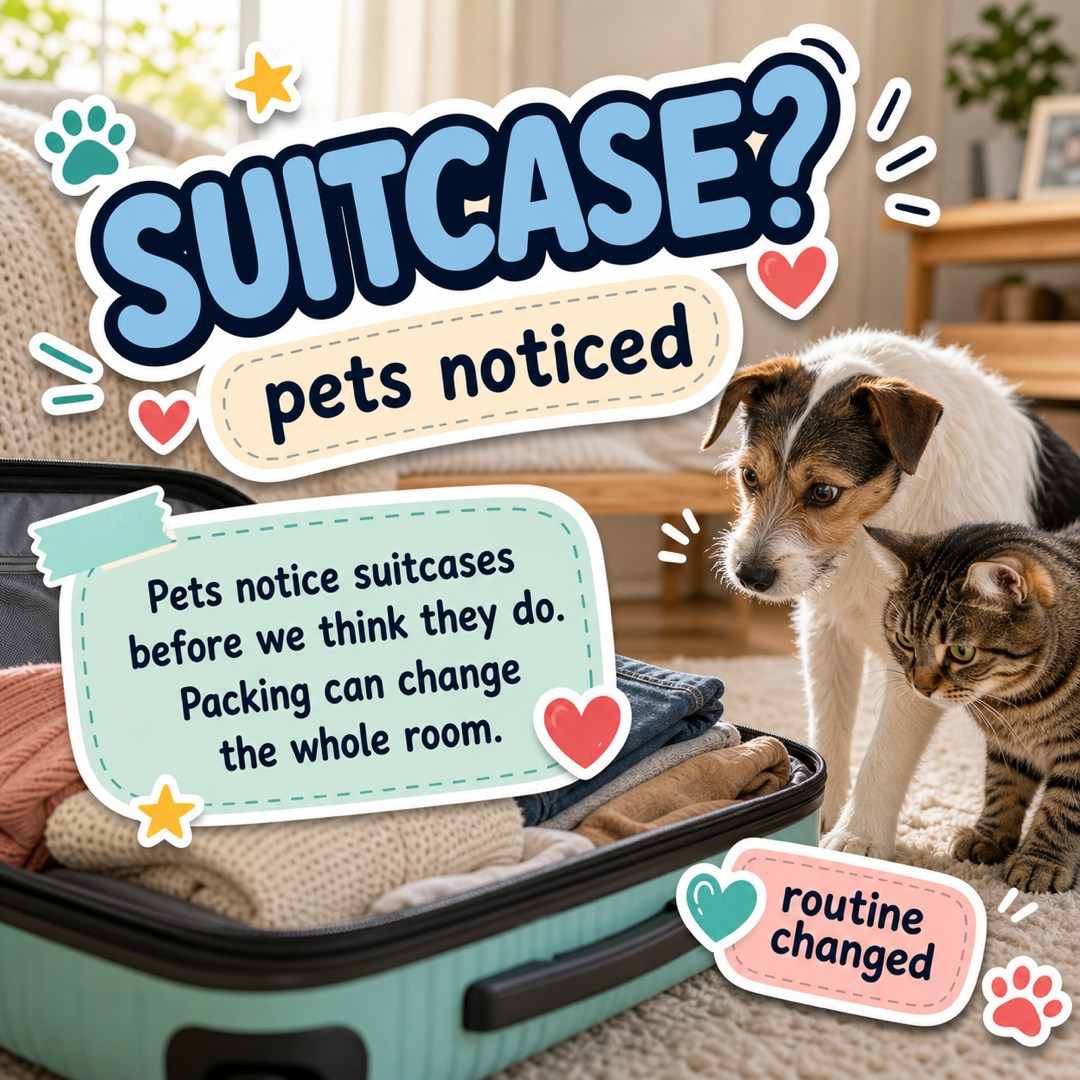
For some pets, that change is simple curiosity. For others, it can mean uncertainty, excitement, stress, or worry about being left behind. The useful question is not “why is my pet being weird about luggage?” It is: what has this suitcase started predicting?
Pets are excellent routine detectives
Animals do not need a calendar to notice patterns. Dogs, cats, birds, rabbits, and other pets learn tiny household sequences because those sequences matter to them.
Shoes by the door may mean a walk. A certain cupboard may mean dinner. A laptop closing may mean attention is coming back. A suitcase can join the same list: suitcase, packing, changed smells, less predictable human movement, maybe a car ride, maybe a visitor, maybe the human leaving.
That does not mean every pet who watches a suitcase has separation anxiety. It means they have noticed a cue. Pets are often very good at noticing cues before we realise we are giving them.
Dogs may be reading the leaving routine
Dogs can become especially alert around departure cues: keys, coats, bags, shoes, doors, rushed energy, or the exact little routine that usually happens before a person leaves.
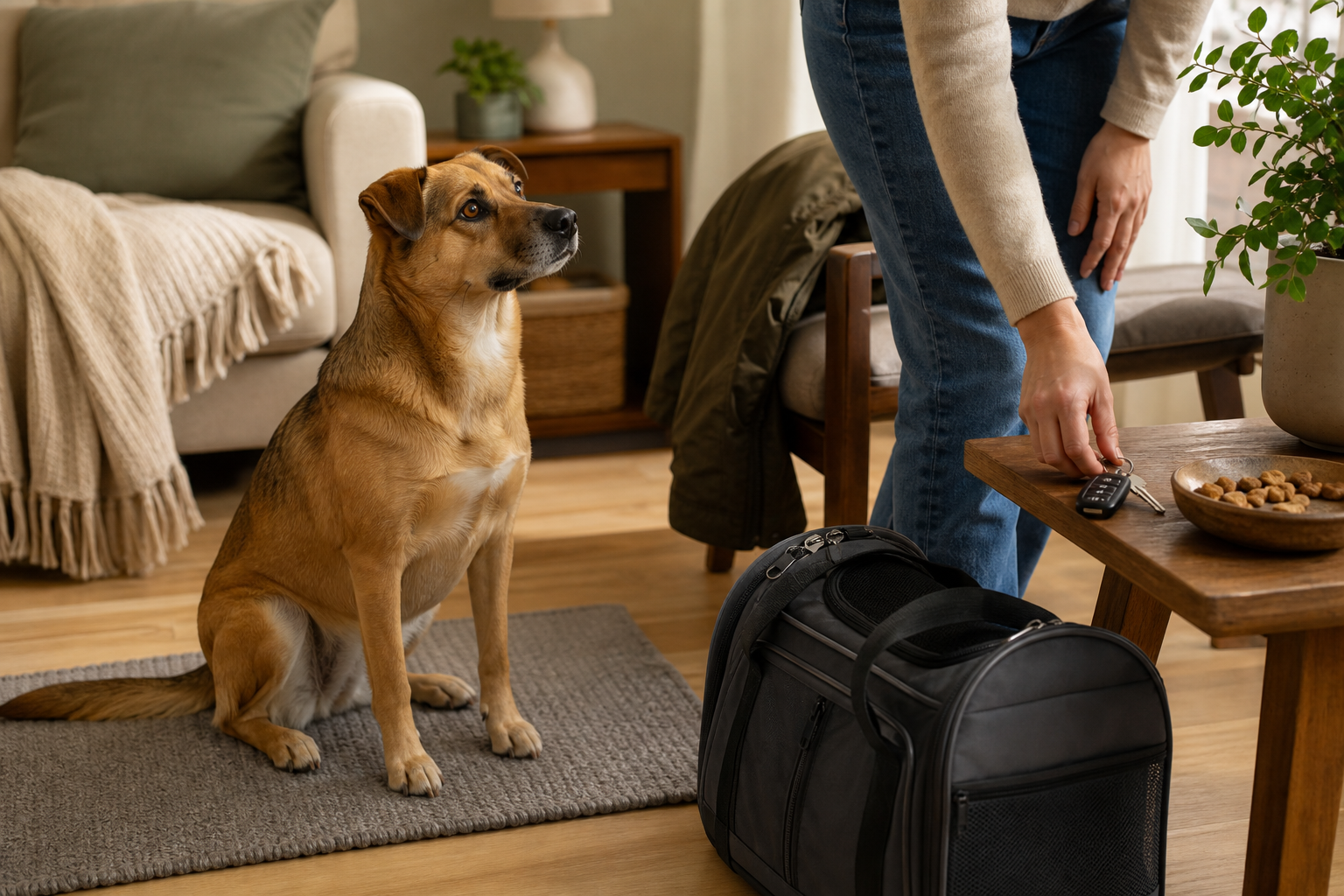
VCA Hospitals describes separation anxiety as distress that can show when a dog is separated from the people they are attached to. ASPCA guidance also notes that some dogs respond strongly to predeparture cues and may show behaviours such as pacing, vocalising, destructive behaviour, house-soiling, or trying to escape when left.
That does not mean a dog staring at a suitcase is automatically in trouble. A dog may simply be curious, excited, hopeful for a trip, or confused by the change. But if suitcase moments come with panic, shaking, drooling, frantic following, barking that does not settle, or damage around doors and windows, the suitcase may be exposing a bigger leaving problem.
Cats may object to the travel math
Cats can notice packing too, but they may show it in a different style. Some watch from the doorway. Some climb into the suitcase as if claiming legal ownership. Some disappear under the bed as soon as the carrier appears.
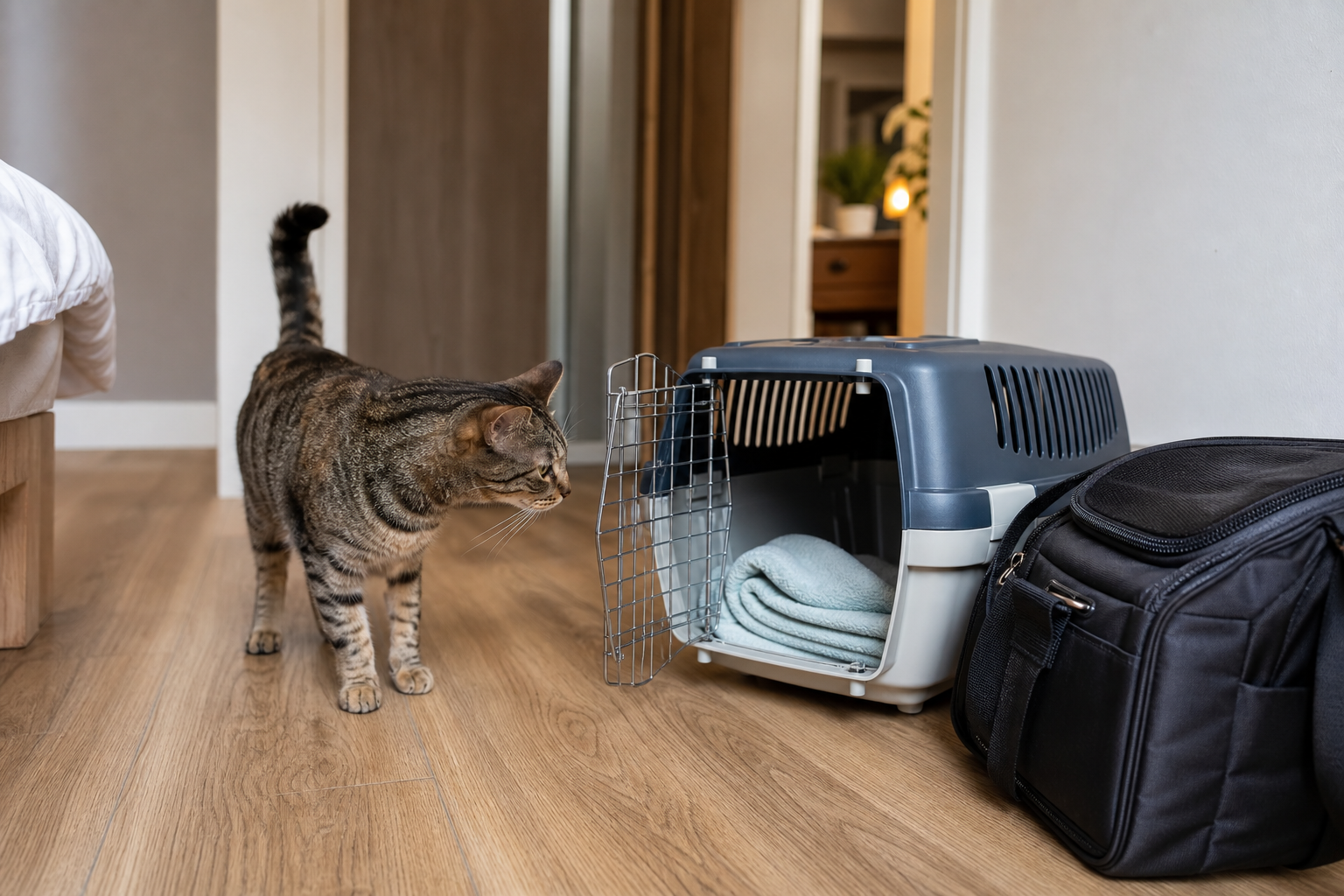
For cats, travel items may connect to the carrier, car rides, vet visits, unfamiliar smells, visitors, or a changed home routine. Even when the trip is not about the cat, the setup can still change the room enough to feel worth monitoring.
The carrier is a big clue. If it only appears for stressful trips, the cat may learn that the carrier is not furniture. It is an announcement. Leaving it out calmly sometimes, adding familiar bedding, and letting the cat explore without being forced can help the carrier become less suspicious over time.
Do not turn packing into a performance
The easiest mistake is accidentally making the suitcase more important than it needs to be. If every packing session comes with rushing, guilt, big emotional goodbyes, chasing the pet away from the bag, or saying “do not worry” twenty-seven times, the pet may learn that this object deserves serious investigation.
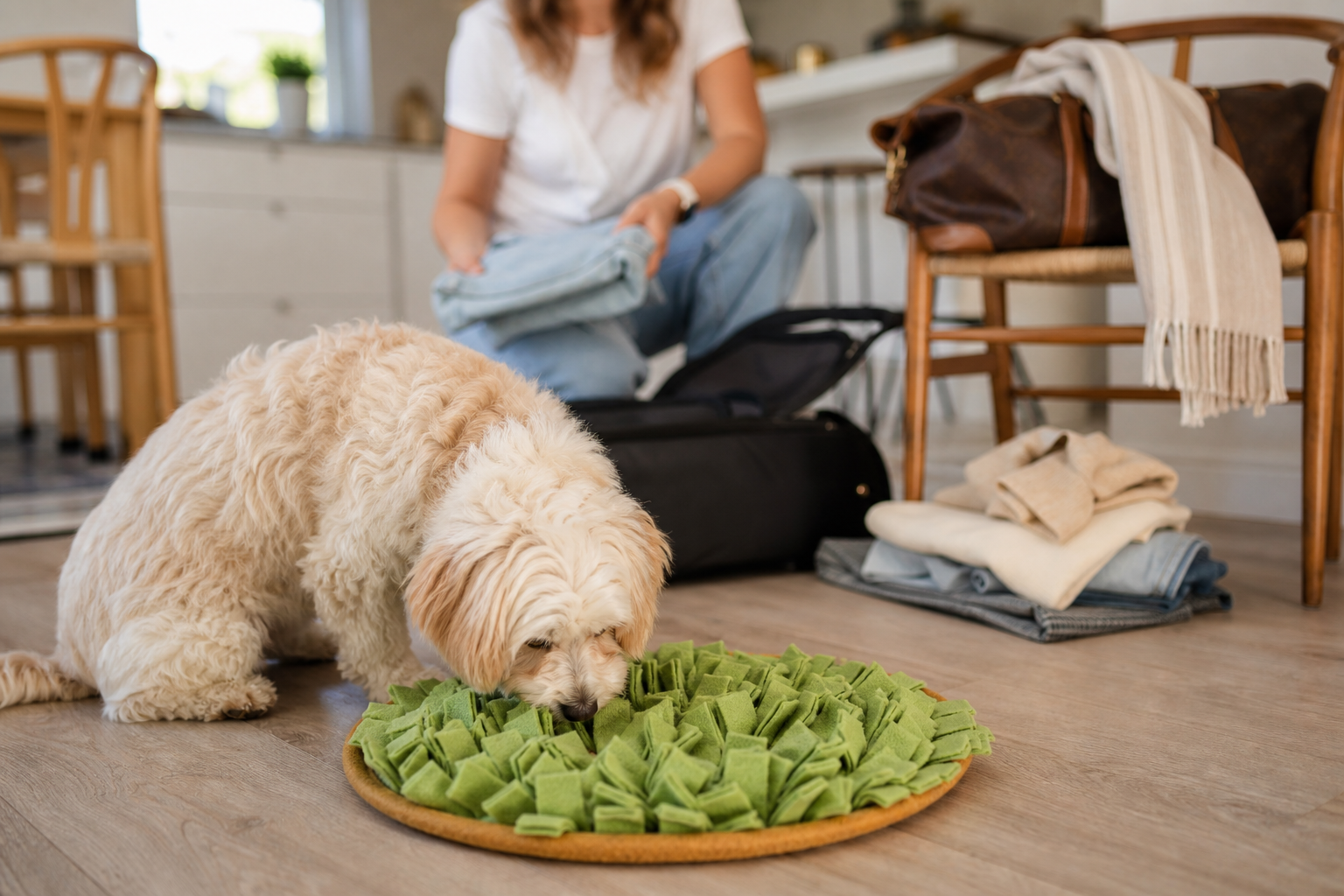
Instead, make the suitcase boring where possible. Put it out before you urgently need it. Let your pet sniff it if that is safe. Reward calm behaviour nearby. Pack a little, then do something normal. Keep your voice ordinary. The goal is not to trick your pet. It is to stop the suitcase from becoming a giant flashing sign.
For dogs who react strongly to departure cues, some behaviour plans use gradual practice with those cues: picking up keys without leaving, touching the bag and then sitting down again, or doing tiny departures that stay below the dog’s panic level. That kind of work should be gentle and realistic, not a sudden test of endurance.
Give the brain a better job
A suspicious pet often needs a job that is easier than worrying. For dogs, that might be a snuffle mat, a safe chew, a scatter of treats, a short scent game, or a settled mat routine while packing happens quietly nearby.
For cats, it may be a familiar resting spot, a calm room away from the packing zone, a carrier with soft bedding left open, or play that ends before the household becomes chaotic. For rabbits and small pets, keep their safe area predictable: hay, water, familiar hiding places, and no sudden rearranging unless it is necessary.
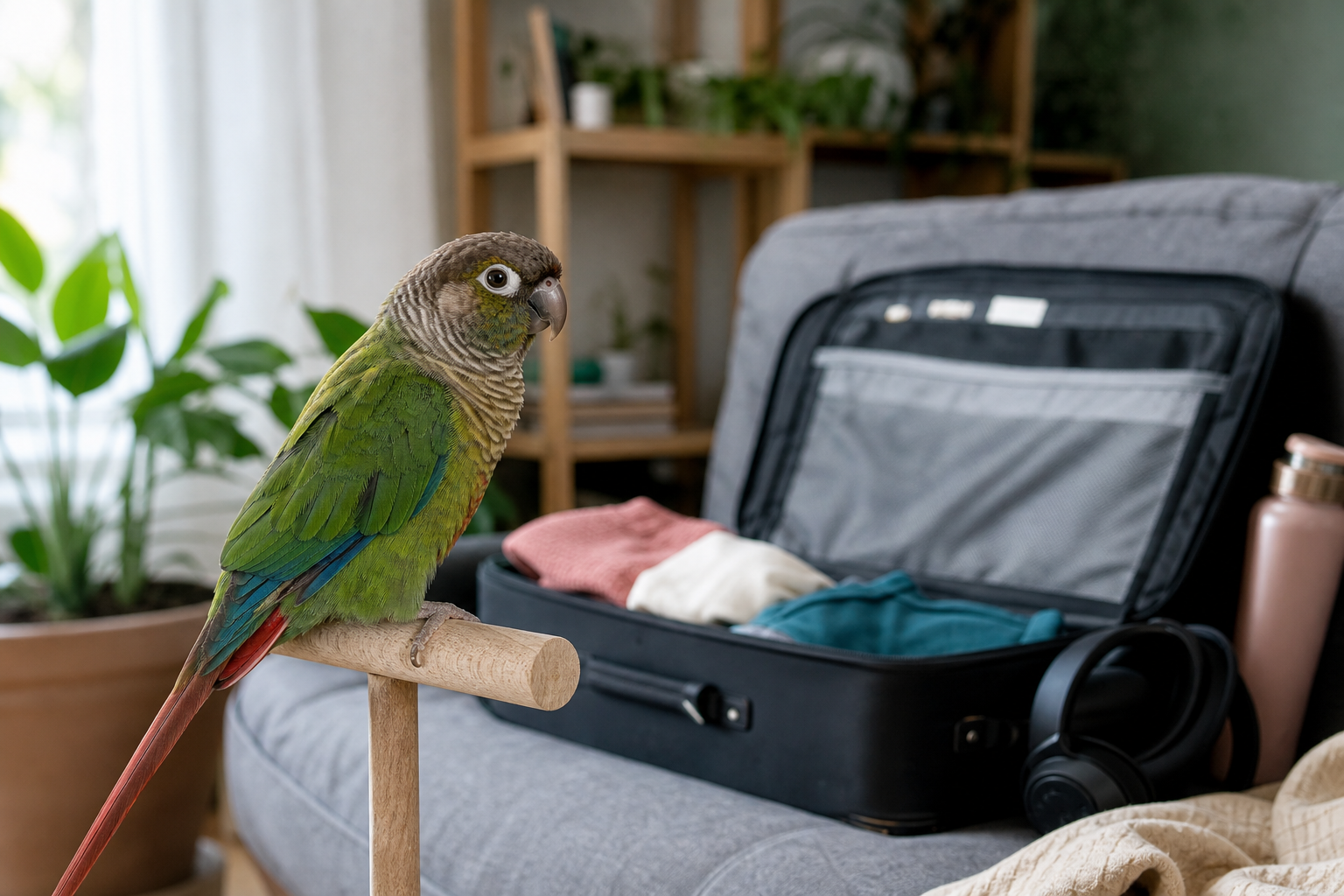
Birds may also react to changed routine, extra movement, visitors, bags, or a different room rhythm. Keeping feeding, lights, sleep, and interaction as steady as possible can matter more than we think.
The point is not to distract every feeling away. It is to make the environment understandable enough that the pet can choose calm behaviour.
Plan the pet-care part early
Some suitcase suspicion is really a question: what happens to me now?
If your pet is travelling with you, the safe plan starts before the travel day. Check carrier, ID, medication, food, water, rest stops, temperature safety, and whether your pet is comfortable with the setup. If your pet is staying home, make the care plan equally predictable: sitter visits, feeding instructions, familiar items, emergency contacts, and a routine that looks as normal as possible.
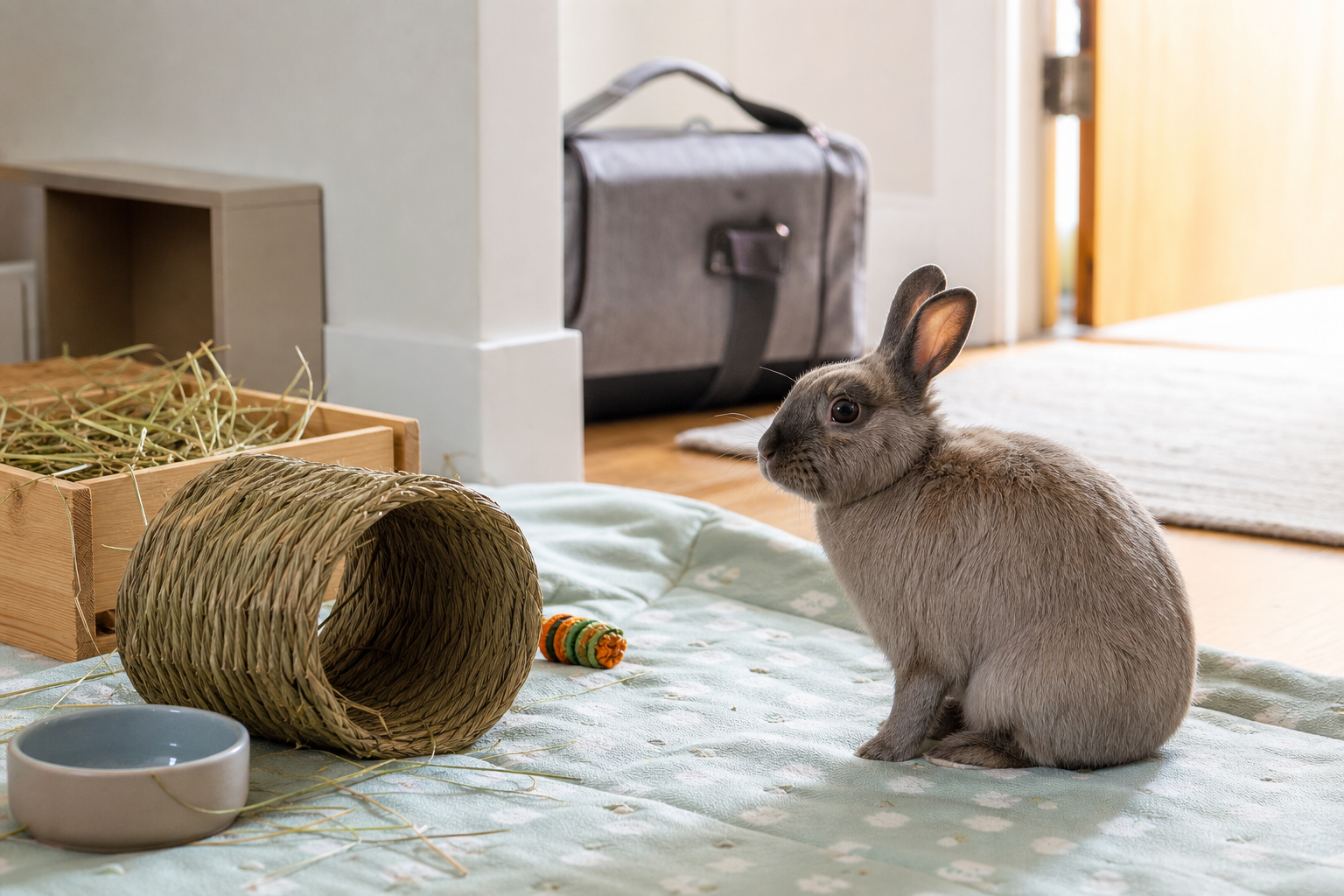
Do not leave the pet-care details until the room is already full of bags and panic. Pets are very good at reading the “everyone is suddenly busy” atmosphere. A calm plan is not only for the human. It changes the whole emotional weather of the house.
When the suitcase reaction needs help
Curiosity is normal. A little watching is normal. Sitting in the suitcase like a tiny travel inspector is probably normal, if everyone is safe.
Ask for help if the reaction is intense, escalating, or paired with distress signs: shaking, drooling, frantic pacing, destructive behaviour, repeated accidents, refusal to eat, hiding that is unusual for that pet, aggression, escape attempts, or panic when the person leaves.
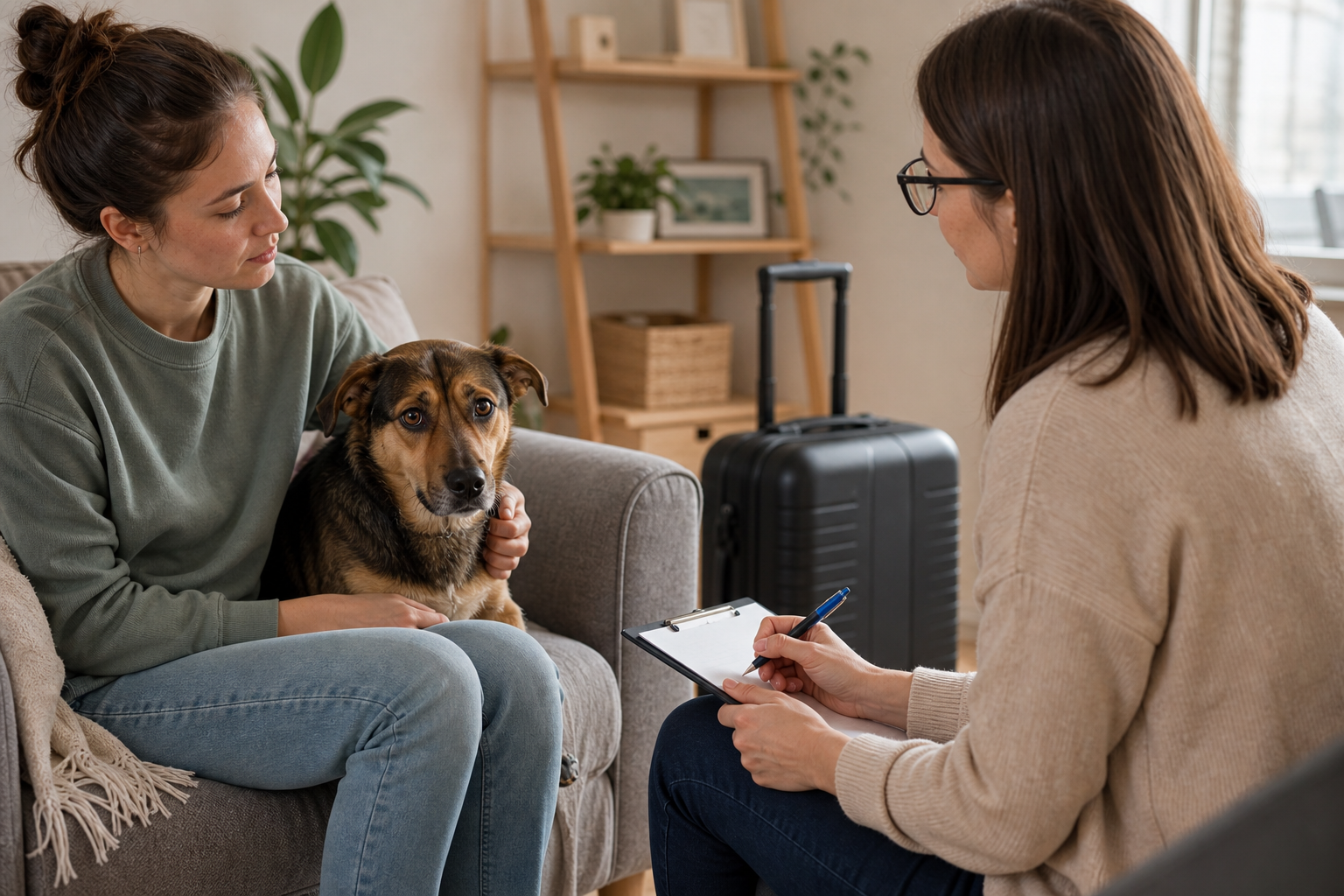
If behaviour changes suddenly, pain or illness can also be part of the story. A pet who becomes clingy, restless, withdrawn, or reactive around routine changes may need a vet check before anyone assumes it is “just drama.”
For true separation-related distress, a vet or qualified behaviour professional can help build a plan that is kinder and safer than repeatedly testing the pet with longer absences.
The CloudyAww read
Suitcases are not neutral to pets. They move through the room like a clue. They smell different, change the floor plan, collect human attention, and often predict that the usual routine is about to wobble.
The sweet version is curiosity. The worried version is a pet trying to understand what happens next.
So if your pet gives the suitcase a long, serious stare, they may not be accusing you of anything. They may simply be doing their job as household pattern analyst.
Make the setup calmer. Keep the important routines steady. Give them something safe to do. And if the suitcase has become a full emotional announcement, get help before the next trip turns into a mystery investigation with paws.
More tiny pet logic lives across CloudyAww, where the funniest household moments usually have a small real reason hiding underneath them.
Keep following the behaviour trail with What Your Pet May Be Telling You During Inspection Time and What It Means When Pets Block Doors, Laptops and Your Favourite Seat. More warm, practical pet explainers live in Aww Articles.
Sources and Further Reading
- VCA Animal Hospitals: Separation anxiety in dogs
- ASPCA: Separation anxiety
- AVMA: Travelling with your pet FAQ
- International Cat Care: Travelling with your cat