

The Tiny Furniture Critic Has Reasons
Rabbits can make a cardboard box look like a legal document that needed shredding immediately. One minute the corner exists. The next minute the corner has been edited by a very focused little mouth.
It is easy to treat rabbit chewing like pure mischief. Sometimes it does look personal, especially when the chosen victim is a skirting board, a charger cable, a book, or the one chair leg that apparently offended the household.
But chewing is not a weird rabbit hobby. It is part of how rabbits explore, manage their teeth, use their environment, and keep busy. The goal is not to stop a rabbit from chewing altogether. That would be like asking a cloud not to drift. The goal is to make the safe chewing easier, the dangerous chewing harder, and the boring moments less chewy in the wrong direction.
Rabbits Are Built To Chew
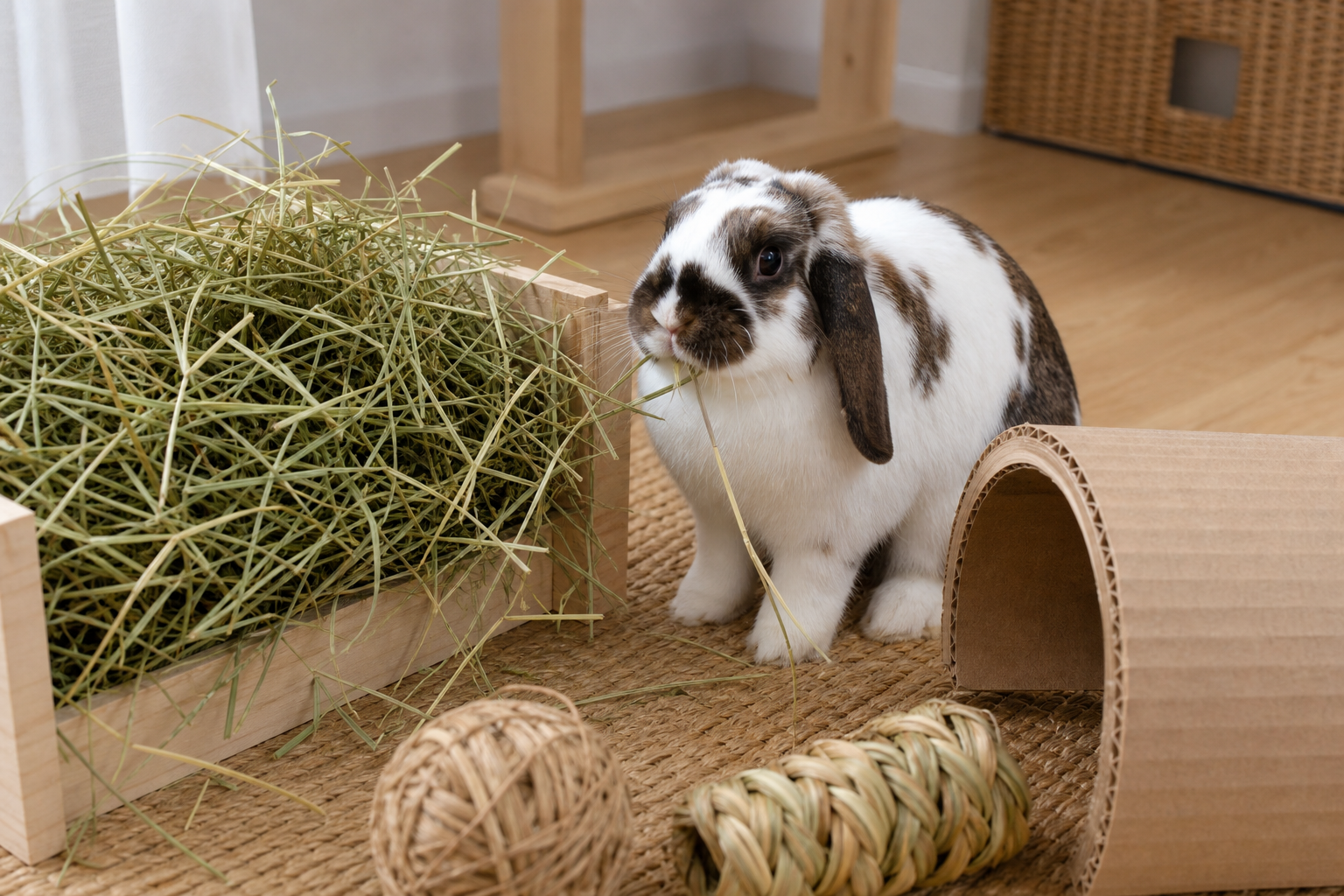
Rabbit teeth grow continuously. That is one reason hay matters so much. Long strands of hay and grass help rabbits use their teeth in a normal grinding motion, while also keeping their digestion moving.
Chewing furniture is not a good dental-care plan, though. A rabbit who is chewing door frames, carpets, baseboards, baskets or books may simply be doing normal rabbit work in the wrong place. They may be curious, under-stimulated, nesting, bored, attention-seeking, or following a texture that feels satisfying.
The useful question is not “how do I make my rabbit never chew?” The better question is: what is this rabbit trying to chew, and what safer option can I make more obvious?
If the safe option is boring and the forbidden option is interesting, the rabbit has already reviewed the evidence.
Hay Is The Boring Hero
Hay is not decoration. For most rabbits, it should be the main event.
A rabbit who has constant access to good hay has something appropriate to chew for long stretches of the day. That does not magically prevent all furniture experiments, but it gives the mouth a sensible job. It also supports normal gut movement and dental wear in a way a chair leg cannot politely offer.
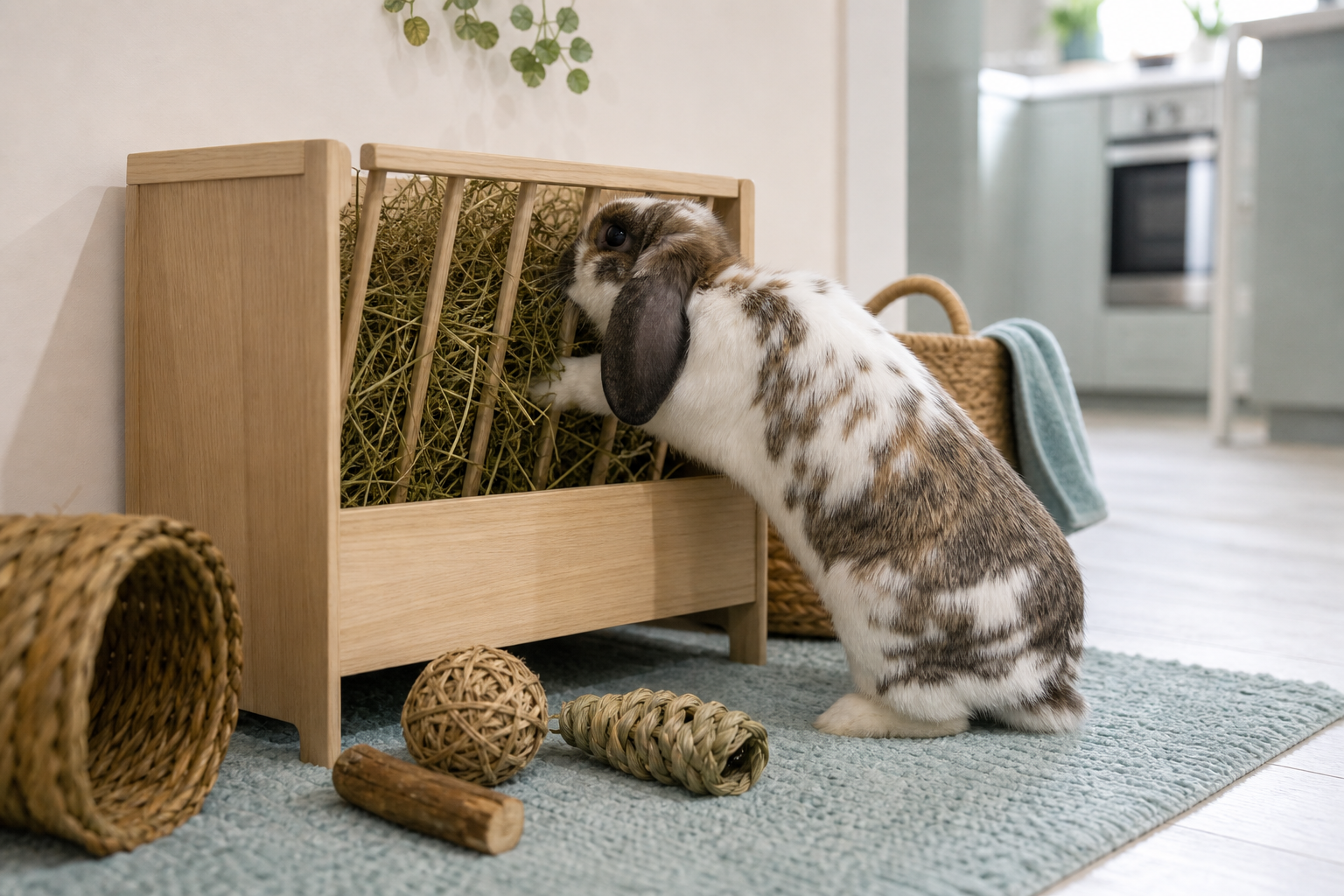
Make hay easy to reach in the places your rabbit actually spends time. A tidy hay corner that the rabbit ignores is less useful than a slightly messy hay setup where the rabbit happily settles, nibbles and forages. You can tuck hay into cardboard tubes, paper bags, hay racks, dig boxes or puzzle-style setups, as long as the materials are safe and supervised where needed.
The CloudyAww read: sometimes the solution is not a dramatic training breakthrough. Sometimes it is giving the tiny shredder a better inbox.
Chewing Can Be Curiosity, Boredom, Or A Job Request
Rabbits investigate with their mouths. A new object may get sniffed, nudged, chinned, scratched, moved, and chewed. That is not the rabbit being rude. That is the rabbit reading the room in rabbit.
Chewing often increases when the environment is too empty or predictable. A rabbit with nothing interesting to do may invent a project. Unfortunately, the project may be carpet archaeology.
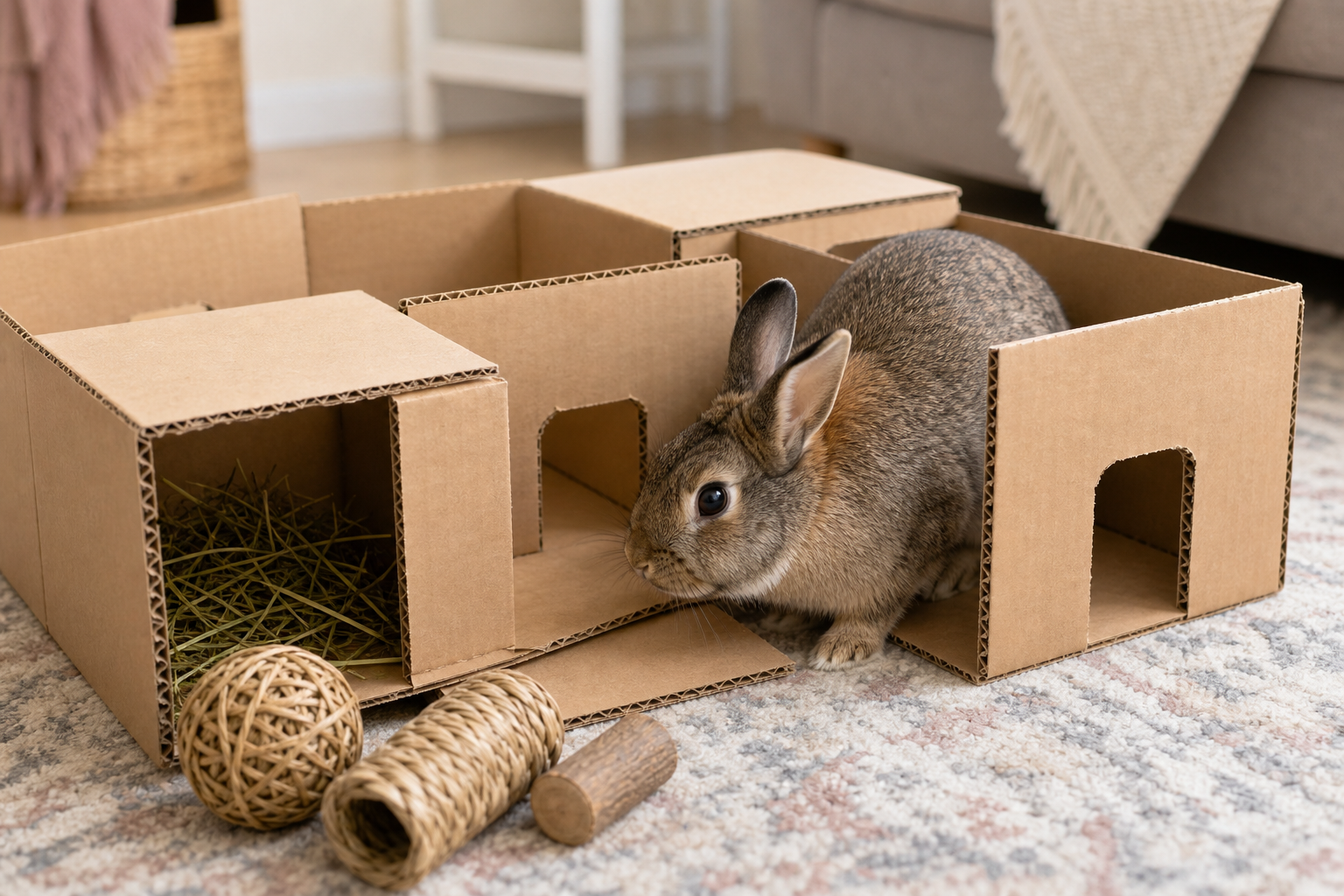
Helpful enrichment does not have to be expensive. Cardboard boxes, tunnels, hay-stuffed tubes, untreated willow, safe wooden chew toys, scatter feeding, digging boxes, and supervised rearranging games can all give the rabbit a more appropriate outlet.
The best enrichment looks slightly lived-in. If a cardboard hideout becomes less square over time, congratulations. It has been approved by management.
Rabbit-Proof The Room Like You Mean It
Rabbit-proofing is not admitting defeat. It is making the safe choice easier than the dangerous one.
Start with the obvious risks: electrical cables, chargers, toxic houseplants, small plastic pieces, rubber, soft foam, medicines, cleaning products, and anything with paint, varnish, glue or unknown treatment. Cables are especially important because chewing them can cause burns, electric shock, or worse.
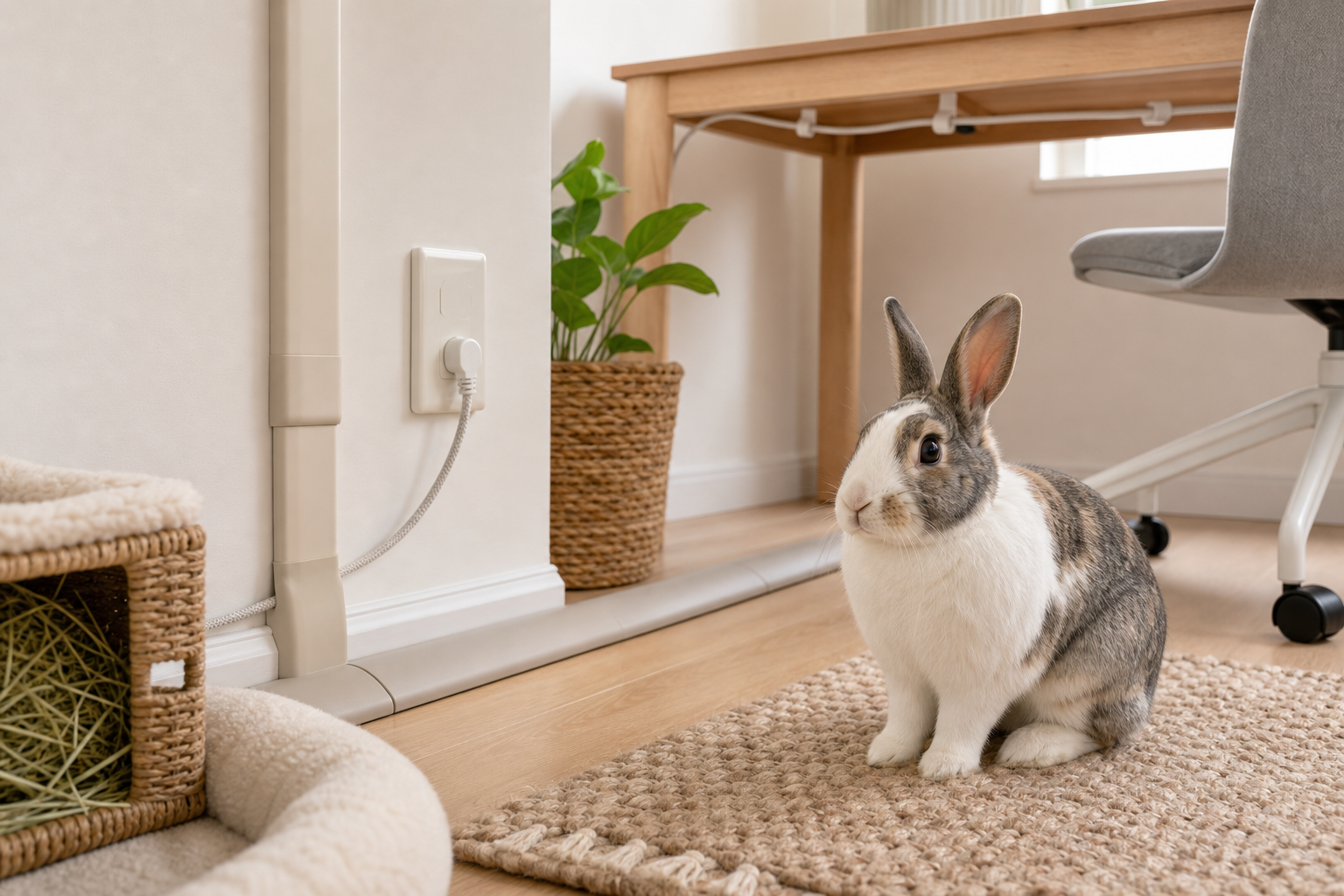
Use cable protectors, cord covers, furniture barriers, pen panels, rugs, washable mats, and blocked-off corners. Move tempting items out of reach before the rabbit rehearses the habit. If a baseboard corner has become the favourite snack counter, protect it and place a better chew station nearby.
Do not rely on one stern “no” to beat a cable with texture, height, novelty and forbidden sparkle. The cable is playing with unfair advantages.
Give The Chew Somewhere Better To Go
The replacement matters. If a rabbit loves chewing flat cardboard, offer flat cardboard. If they love edges, offer boxes with safe edges. If they love pulling fibres, offer safe hay mats or digging materials. If they love tossing things, offer rabbit-safe toss toys.
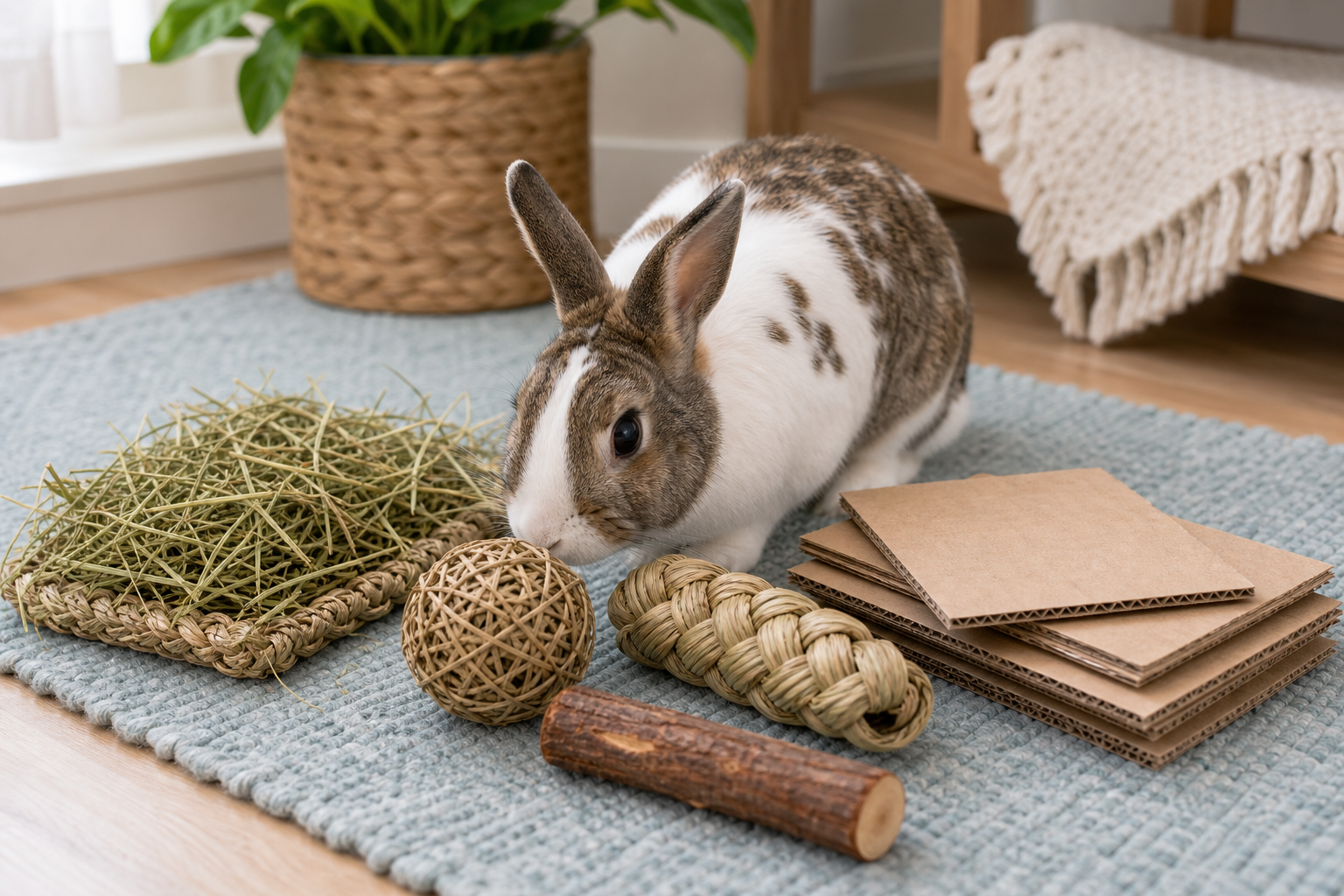
Try different textures: hay and grass-based toys, plain cardboard, untreated willow or apple wood from safe sources, paper bags filled with hay, cardboard tubes stuffed with hay, rabbit-safe digging boxes, and chew mats designed for small pets.
Always check what the item is made from. Avoid treated wood, glossy printed card, plastic pieces that can break off, fabric that frays into long threads, and anything the rabbit eats in chunks instead of just nibbling.
If your rabbit keeps choosing the forbidden object, move the safe option closer to the pattern. A chew toy across the room is not a redirection. It is a suggestion from another postcode.
Do Not Punish The Chewing Out Of The Rabbit
Yelling, chasing, tapping the nose, spraying water, or grabbing the rabbit can make the person scary without teaching the rabbit what to do instead. It may also make the rabbit chew secretly or become more defensive in the space.
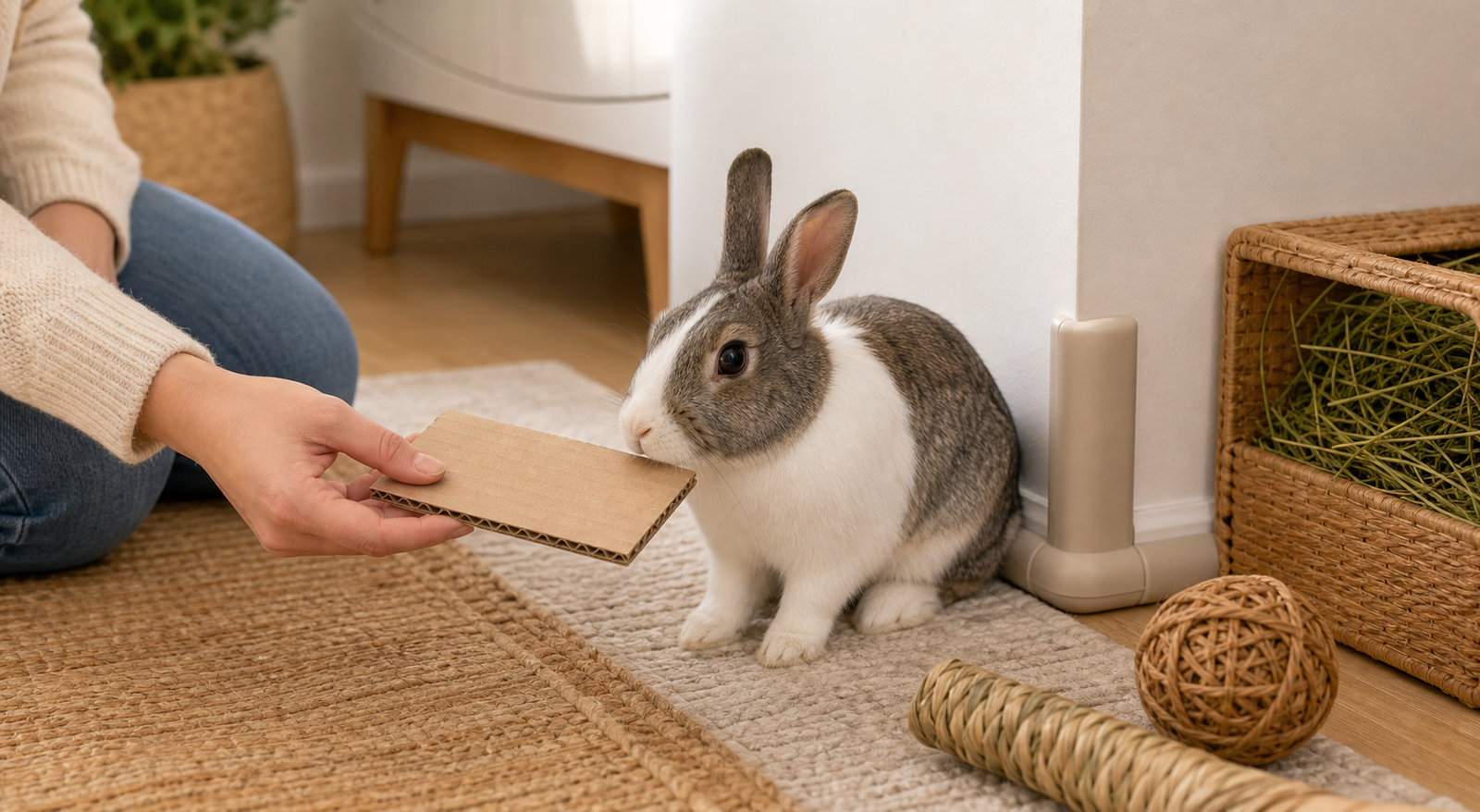
Interrupt gently, block access, redirect to a safe chew, and reward the better choice. If the rabbit starts chewing a forbidden corner, calmly guide them away, cover the corner, and make the legal chew option more interesting.
Consistency matters more than drama. If the rabbit can chew the chair on Monday, gets shouted at on Tuesday, then gets access again on Wednesday, the chair remains part of the approved mystery.
The aim is not to win a debate with a rabbit. The aim is to change the room so the rabbit has fewer bad options and better good ones.
When Chewing Deserves A Vet Check
Normal chewing is steady, curious and directed at objects. But some chewing or mouth behaviour should not be waved away as personality.
Ask a rabbit-savvy vet for advice if your rabbit suddenly changes eating habits, drops food, drools, has a wet chin, loses weight, seems painful, stops eating hay, chews oddly, produces fewer droppings, becomes quiet, or starts chewing in a frantic or unusual way.
Dental problems can become serious in rabbits. So can gut slowdown. If a rabbit stops eating, that is urgent.
This is the line: protect the furniture, yes. But do not miss the rabbit.
The Simple Safe-Chew Plan
If your rabbit chews everything, start with the room, not the rabbit’s character.
Make hay abundant. Add safe chew textures. Block cables and risky corners. Offer cardboard, tunnels, hay-stuffed toys and digging options. Redirect calmly. Watch whether the chewing is normal exploration or a sign that something has changed.
The funny version is easy: the tiny furniture critic has notes.
The useful version is better: chewing is normal rabbit behaviour that needs a safe outlet.
Give that busy little mouth a proper job, and the bookshelf may finally stop receiving performance reviews.
More tiny pet logic lives across CloudyAww, where the funniest animal moments usually have a very practical little reason hiding underneath them.
Keep exploring small-animal logic with the tiny story behind guinea-pig popcorn jumps and why pet birds copy familiar household sounds. More warm, practical pet explainers live in Aww Articles.
Sources and Further Reading
- RSPCA: Rabbit diet
- RSPCA: Rabbit behaviour
- VCA Animal Hospitals: Dental disease in rabbits
- House Rabbit Society: Chewing