
The Bark Is Not Always The Whole Story
Small dogs can make a very big announcement when a larger dog appears. One tiny body, one serious bark, and suddenly the room has a manager.
It is funny when it is safe and harmless. It can also be misunderstood. A small dog barking at a big dog is not automatically “trying to be dominant” or auditioning for household leadership. Barking can be excitement, fear, frustration, habit, a request for space, or a learned way to make the world respond.
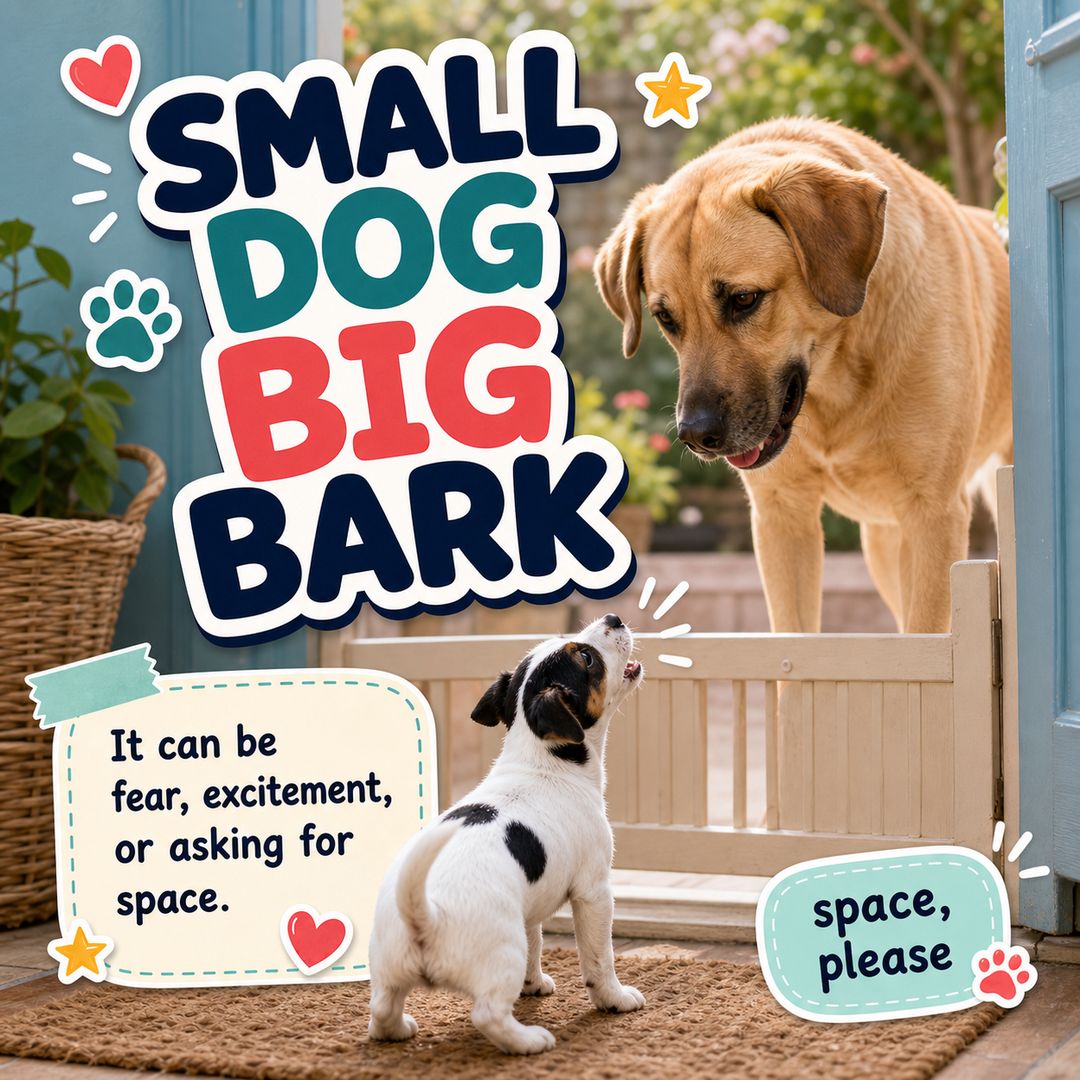
The useful question is not “why does my tiny dog think they are in charge?” The better question is: what is the barking doing for this dog right now?
Sometimes The Small Dog Wants More Space
Size changes how a situation feels. A calm big dog may still look huge to a small dog, especially if the big dog is moving fast, leaning over, staring, crowding a doorway, or arriving suddenly.
A bark can create distance. It may be the small dog’s way of saying, “Please do not come closer yet.” That does not mean the big dog has done anything wrong. It means the small dog may need more room, more time, or a safer setup before they can think clearly.
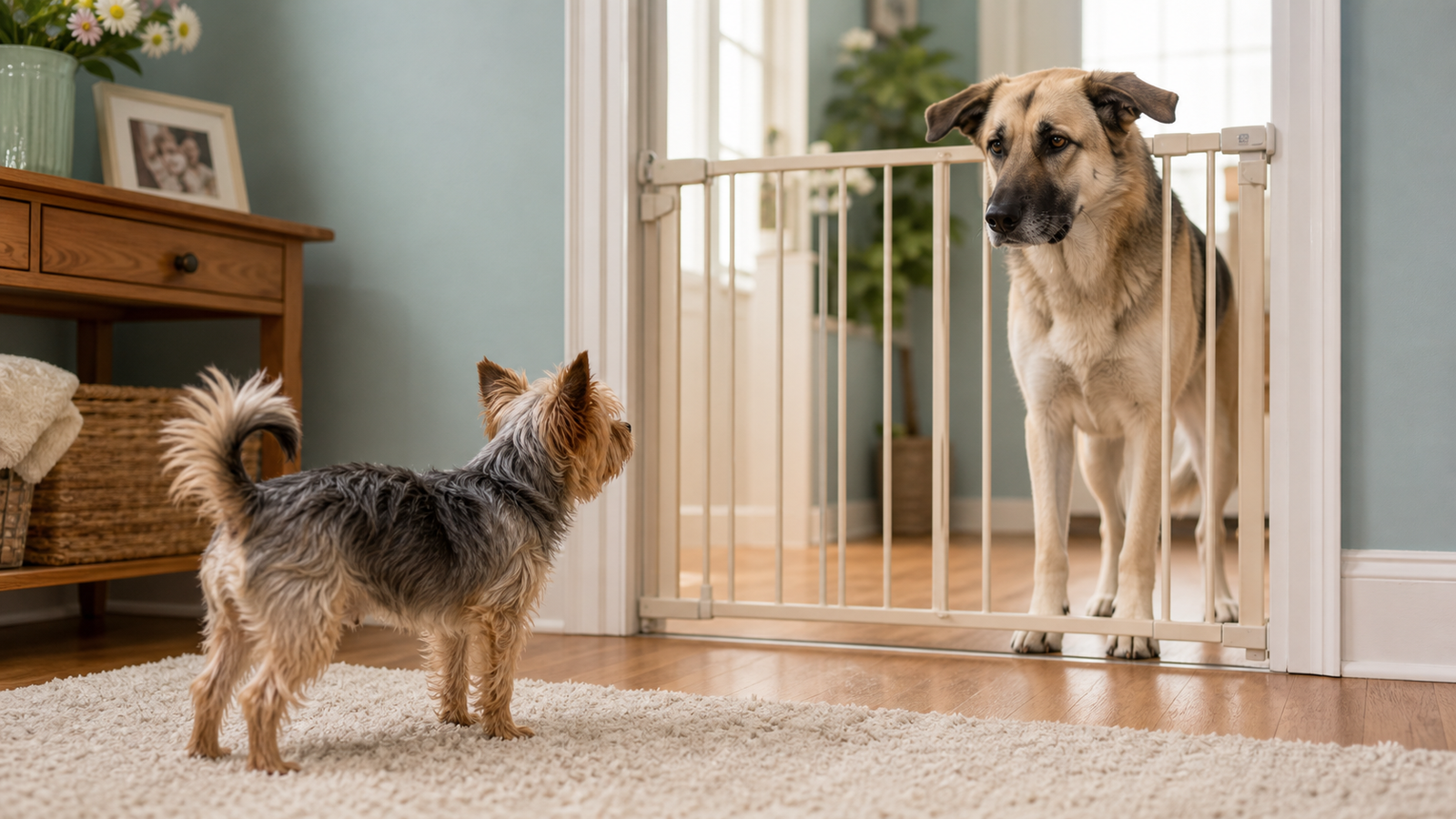
This is why gates, distance, and slow introductions can help. A little space lets both dogs look, sniff the air, process the other dog, and choose calmer behaviour before anyone is nose-to-nose.
If the small dog looks stiff, tucks the tail, freezes, hides behind a person, turns away, or barks while backing up, the bark may be coming from worry rather than confidence.
A Tiny Example From CloudyAww
The CloudyAww Short `Who Put Them In Charge?` shows the funny version of this idea: a much smaller dog making a very official announcement toward a much bigger one. It works because the size difference is obvious, but the same moment is also a neat reminder that a bark can be about space, surprise, confidence, or big feelings.
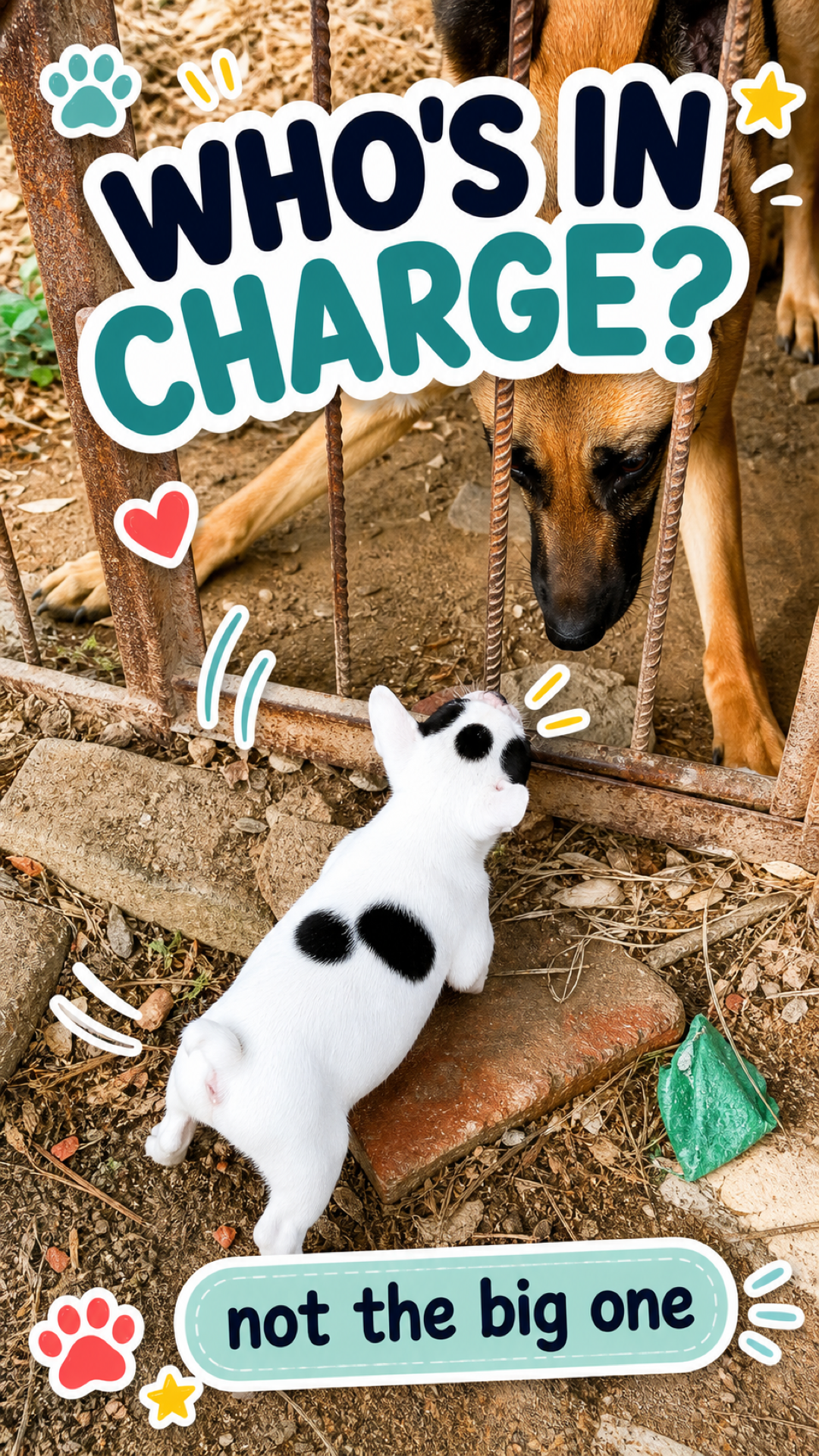
Watch the tiny case study behind this article.
One very small dog, one much bigger audience, and a bark that sounds suspiciously like a staff announcement.
Sometimes It Is Excitement With No Volume Control
Not every bark is fear. Some small dogs bark because they are thrilled, switched on, and full of feelings that have nowhere sensible to go.
Excited barking can happen when a dog wants to greet, play, chase, reach a friend, get a toy, or join the action. The body may look bouncy rather than stiff. The dog may hop, wag loosely, play bow, or keep checking back toward their person.
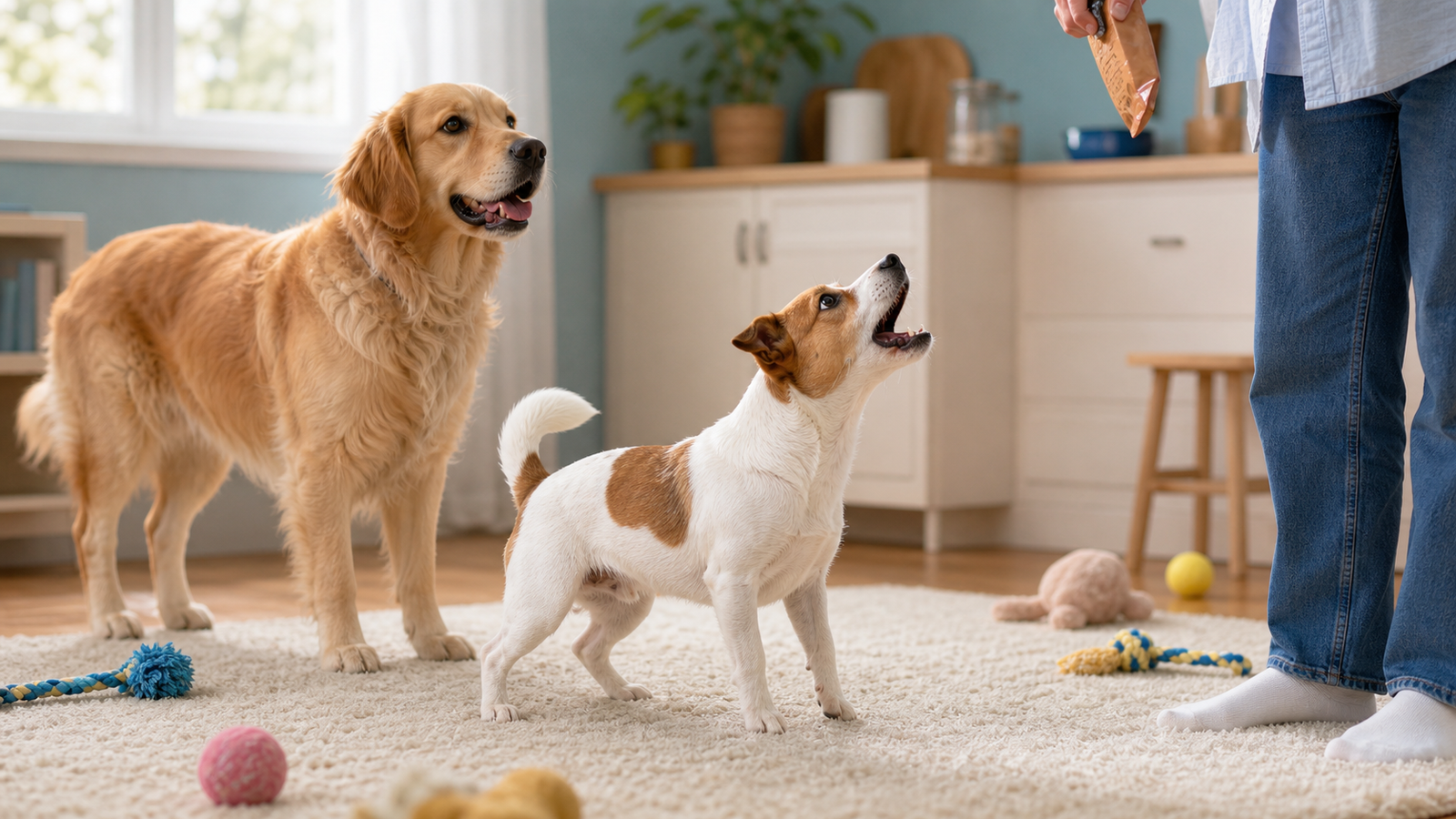
The tricky part is that excitement can still become too much. A small dog who rushes in loudly may overwhelm a larger dog. A large dog who responds with too much energy may overwhelm the small dog. Cute chaos is still chaos if no one can pause.
Calm greetings, breaks, and rewarding quiet looking can turn “I must bark at this immediately” into “I can notice this and still keep my brain installed.”
Barking Can Be A Learned Button
Dogs are excellent little scientists. If barking makes a person look, move, pick them up, open a door, pull another dog away, drop a toy, or start talking, the dog may learn that barking works.
That does not make the dog bad. It means the behaviour has a result. Sometimes the result is helpful, like creating space from something worrying. Sometimes it accidentally teaches the dog that every big-dog moment should come with emergency sound effects.
If the barking is safe but annoying, look at what happens immediately afterward. Does the small dog get picked up every time? Does the big dog get removed? Does everyone laugh, shout, or rush over? Any big reaction can make barking feel more useful.
Big Feelings Can Look Like Bravery
Small dogs often get labelled as bossy when they are really overwhelmed. A dog can bark loudly while feeling unsure. A dog can move forward and still be nervous. A dog can sound confident because barking is the tool they know best.
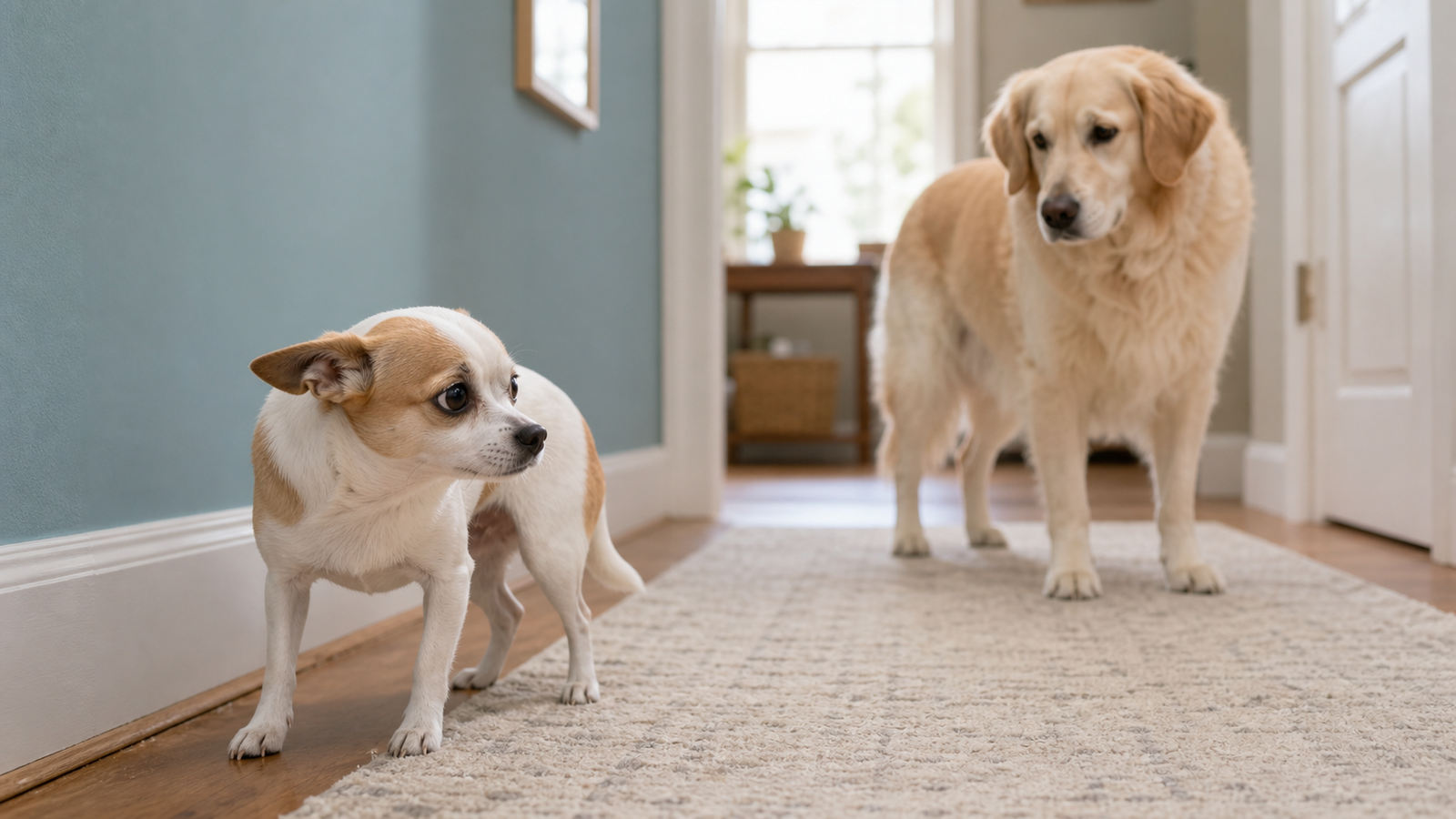
Body language gives better clues than volume. Watch the whole dog: tail, ears, mouth, eyes, posture, movement, and recovery time.
A relaxed small dog usually looks loose and flexible. An unsure dog may look stiff, low, tight, tucked, wide-eyed, frozen, or unable to settle after the other dog leaves. If the barking continues long after the moment is over, the dog may still be carrying stress.
The CloudyAww version: sometimes the tiny security alarm is not overconfident. Sometimes it is simply a very small employee dealing with a very large meeting.
Do Not Force The “Friendly” Moment
One common mistake is trying to prove that two dogs are fine by pushing them closer together. That can make the barking worse, especially if the small dog was already asking for distance.
Instead, make the setup easier. Start farther away. Use a gate, fence, doorway, or parallel walk if that is safe. Reward the small dog for noticing the big dog and staying calmer. Let the dogs disengage. Keep sessions short. End before the little bark becomes the whole presentation.
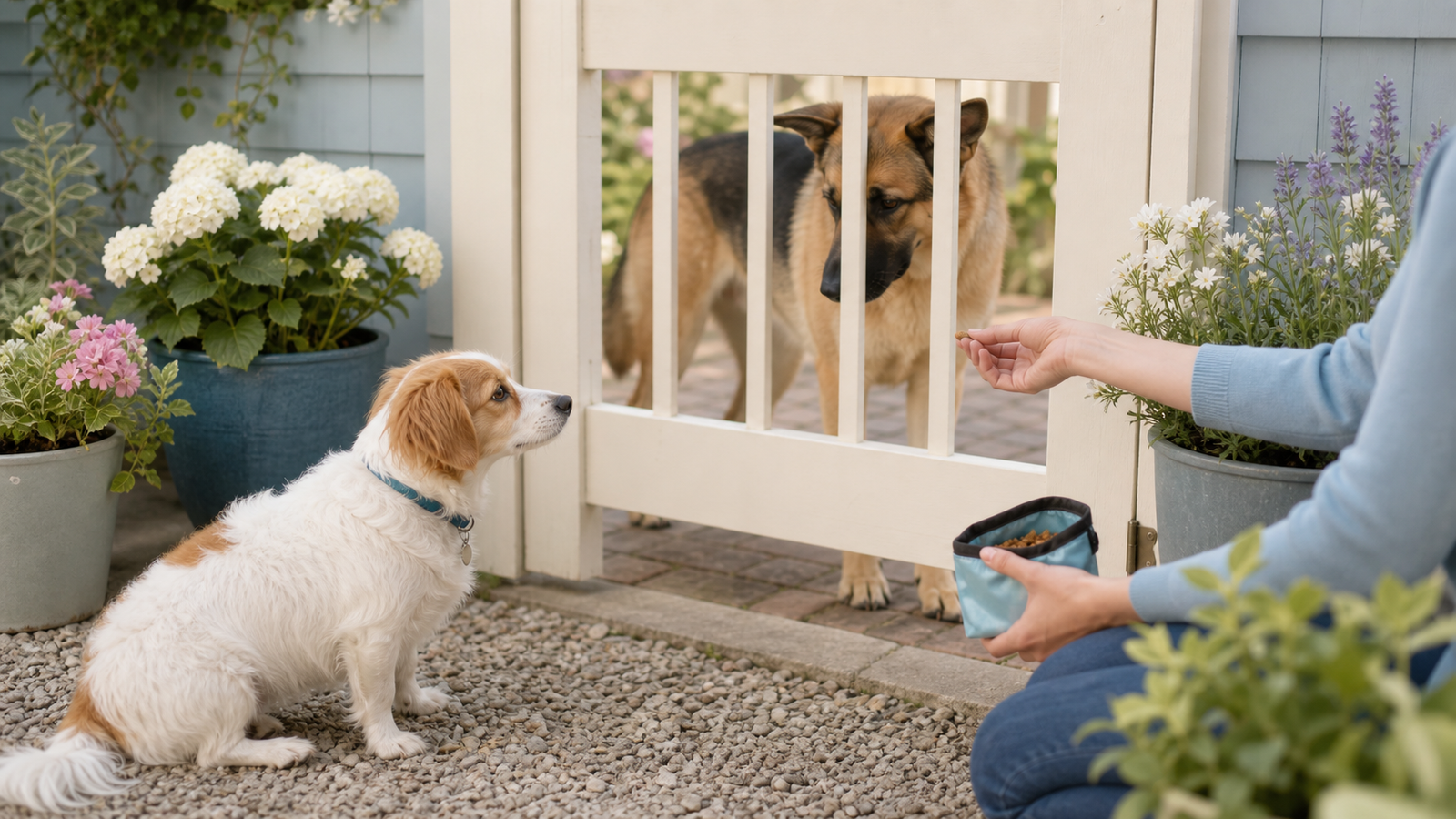
If both dogs can look, sniff, pause, turn away, and recover, that is progress. The goal is not instant friendship. The goal is safe information.
What Usually Helps
Helpful management is boring in the best way.
Give the small dog enough distance to think. Reward calm looking before the barking starts. Teach a simple “come with me” or “find it” game away from the other dog. Let the big dog have a break too. Keep high-value toys and food out of early greetings if they create tension.
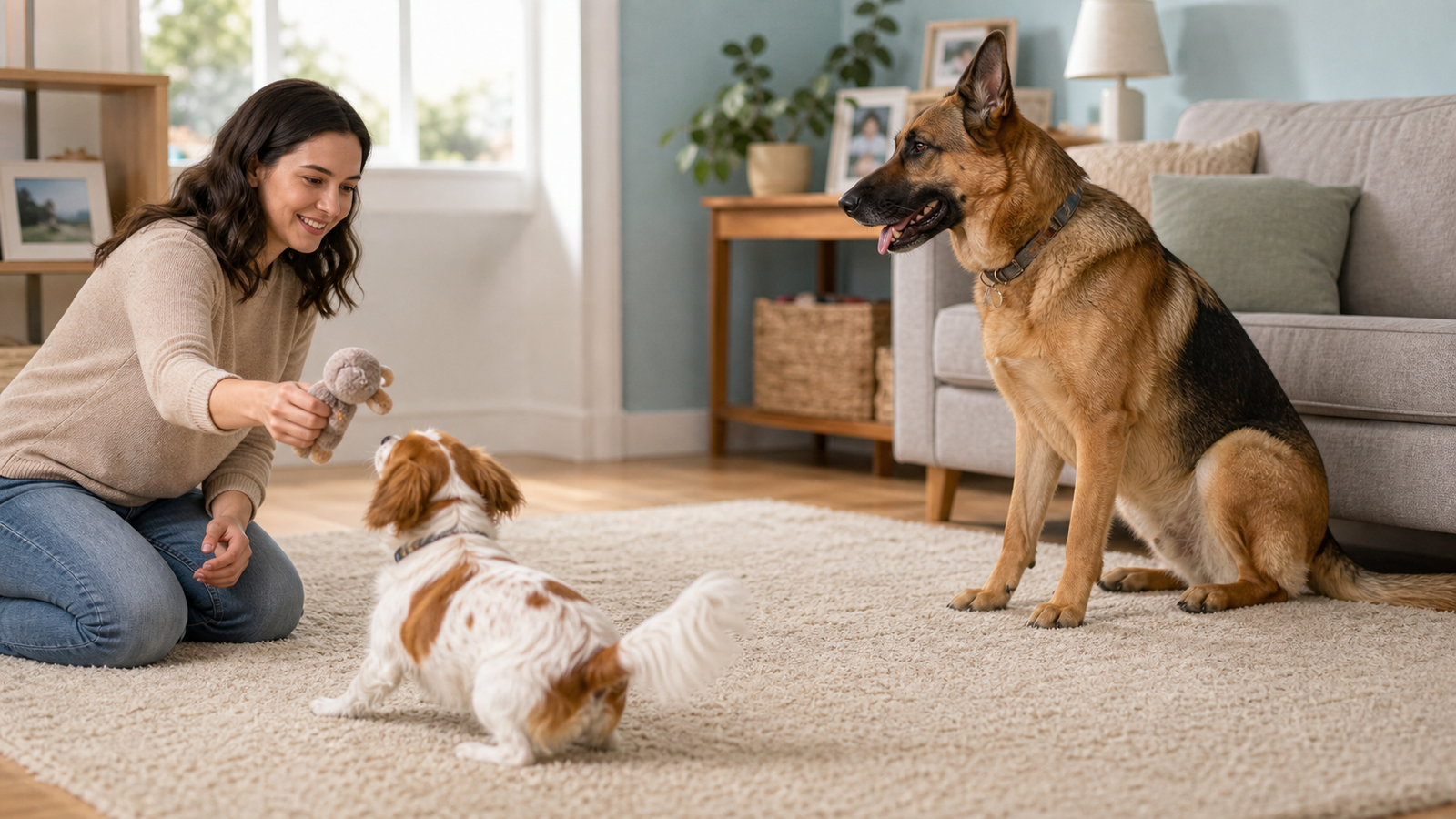
Avoid yelling, leash jerks, forcing greetings, or punishing fear. Those can make the big dog predict trouble instead of safety. If the dog is barking because they are worried, punishment may suppress the sound without changing the feeling underneath.
Small, calm repetitions are usually more useful than one dramatic social test.
When To Ask For Help
Some barking is normal communication. Some barking needs support.
Ask a vet or qualified behaviour professional if the barking is sudden, escalating, intense, hard to interrupt, linked with lunging or snapping, paired with hiding or shaking, or appears alongside pain signs such as limping, stiffness, appetite change, sensitivity to touch, or low energy.
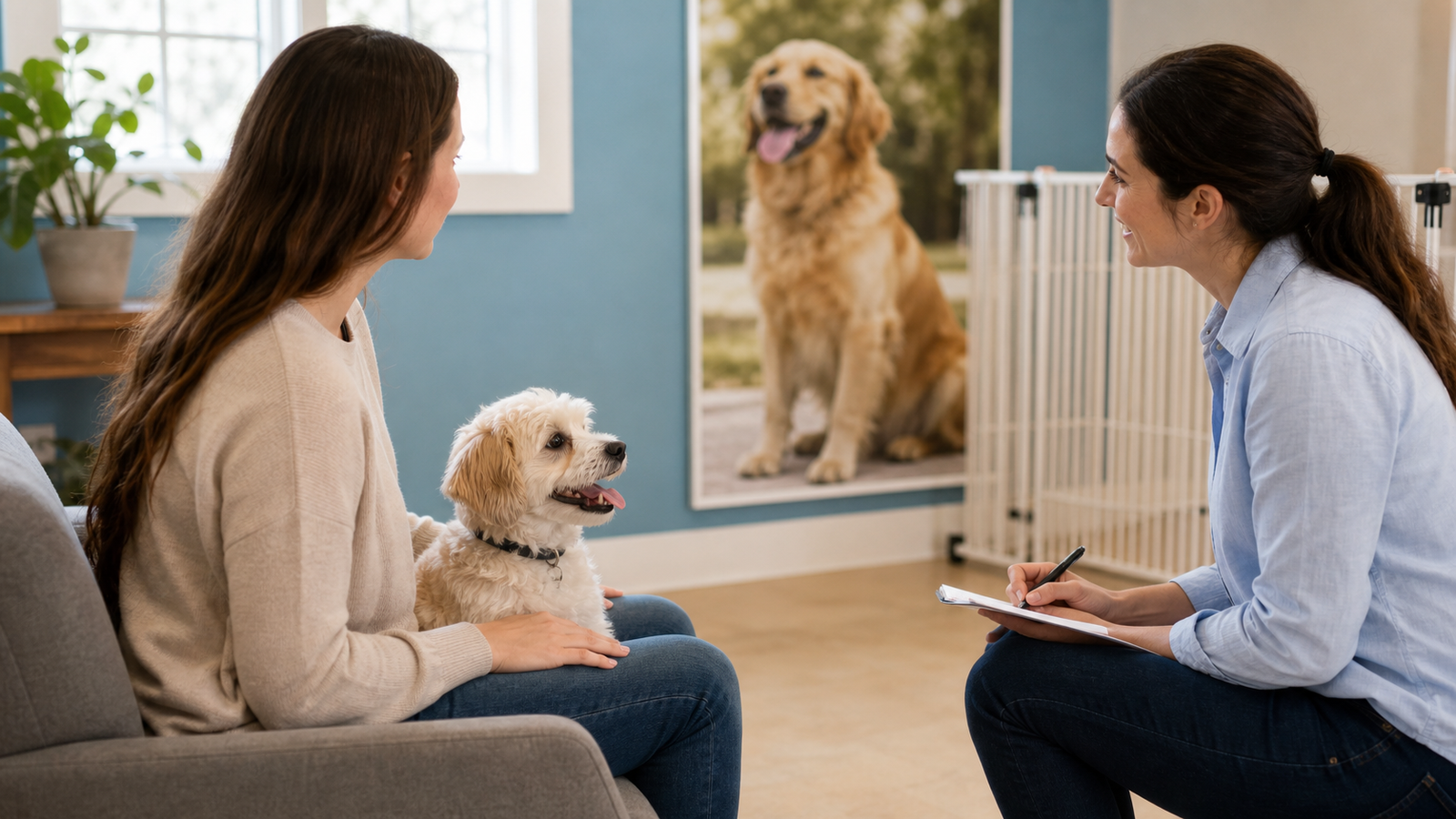
Pain and illness can change behaviour. Fear and frustration can also grow if the dog keeps rehearsing the same stressful setup. Getting help early is not overreacting. It is giving the dog a better plan before the bark becomes the default script.
The CloudyAww Read
Small dogs do not need to be mocked for having big feelings. Sometimes they are excited. Sometimes they are worried. Sometimes they have learned that barking is the fastest way to control distance, attention, or access.
The sweetest version is to respect the little bark without letting it run the whole household. Add space. Reward calm moments. Watch the whole dog. Let both dogs feel safe enough to choose softer behaviour.
And if the smallest dog in the room looks like they have called an emergency staff meeting, yes, it is funny. But underneath the tiny authority speech, there is usually a real feeling worth noticing.
More tiny pet logic lives across CloudyAww, where the funniest animal moments usually have a small real reason hiding underneath them.
Keep following the behaviour trail with Tiny Guide to Dog Body Language: Tail, Ears and Tiny Pauses, Why Dogs Shake Off When They Aren’t Wet, and A Better Dog Walk Starts With Time to Sniff. More warm, practical pet explainers live in Aww Articles.
Sources and Further Reading
- AKC: How to read dog body language
- ASPCA: Barking
- ASPCA: Aggression
- Merck Veterinary Manual: Behaviour problems in dogs