

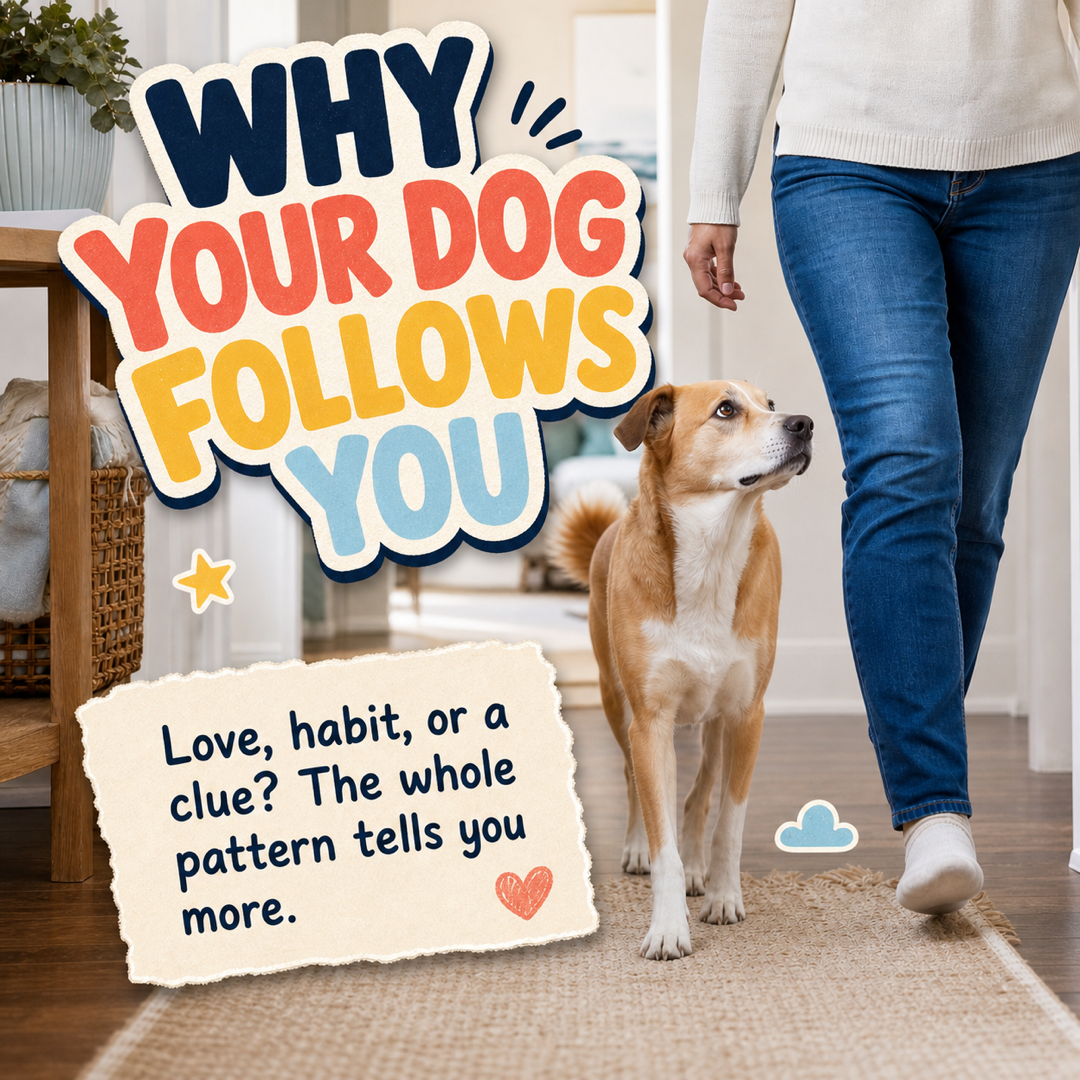
There are homes with a dog in them, and there are homes with a small furry escort service.
You stand up. The dog stands up. You walk to the kitchen. The dog attends the kitchen meeting. You turn toward the bathroom and discover that privacy has been quietly removed from the household plan.
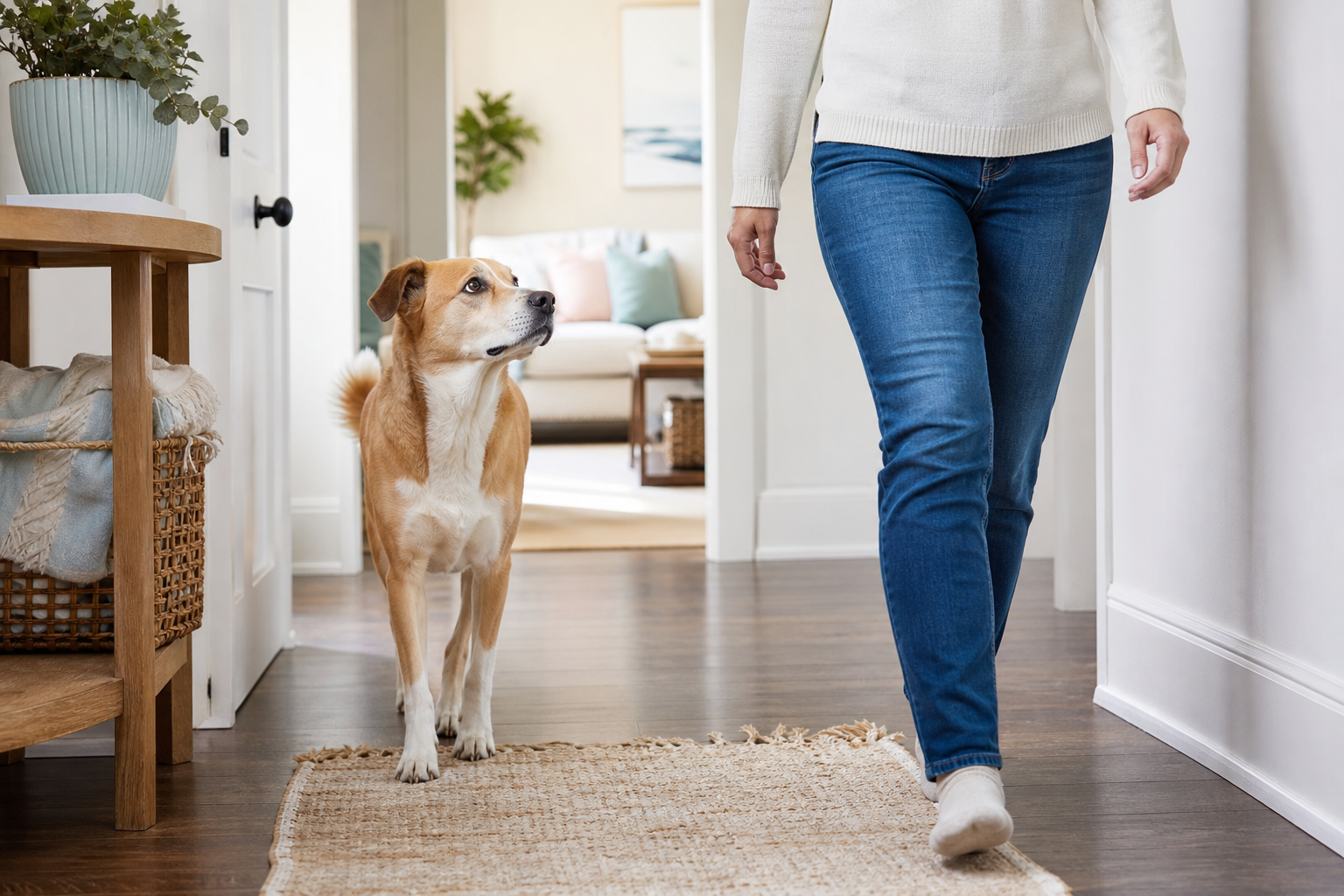
Dogs often follow people from room to room because they are social, observant and very good at learning what human movement predicts. Being close may feel safe. Your footsteps may lead to food, a walk, a door opening or five seconds of excellent ear scratching. Sometimes following has simply become the family routine.
It does not automatically mean your dog has separation anxiety. The better questions are whether they can relax without touching your orbit, what they do when you actually leave, and whether their following has suddenly become more intense.
Why the Shadow Moves

Dogs Trust notes that dogs are social animals and that wanting to be near their people is usually normal. A dog who follows you may feel confident with you, enjoy your company or have built a habit around staying close.
The body language matters. A relaxed room-to-room companion usually moves loosely, pauses to sniff, can stop for a drink or a nap, and does not panic when a door closes briefly. They may follow you into the kitchen, inspect the situation, realise no cheese is involved and return to the sofa with professional disappointment.
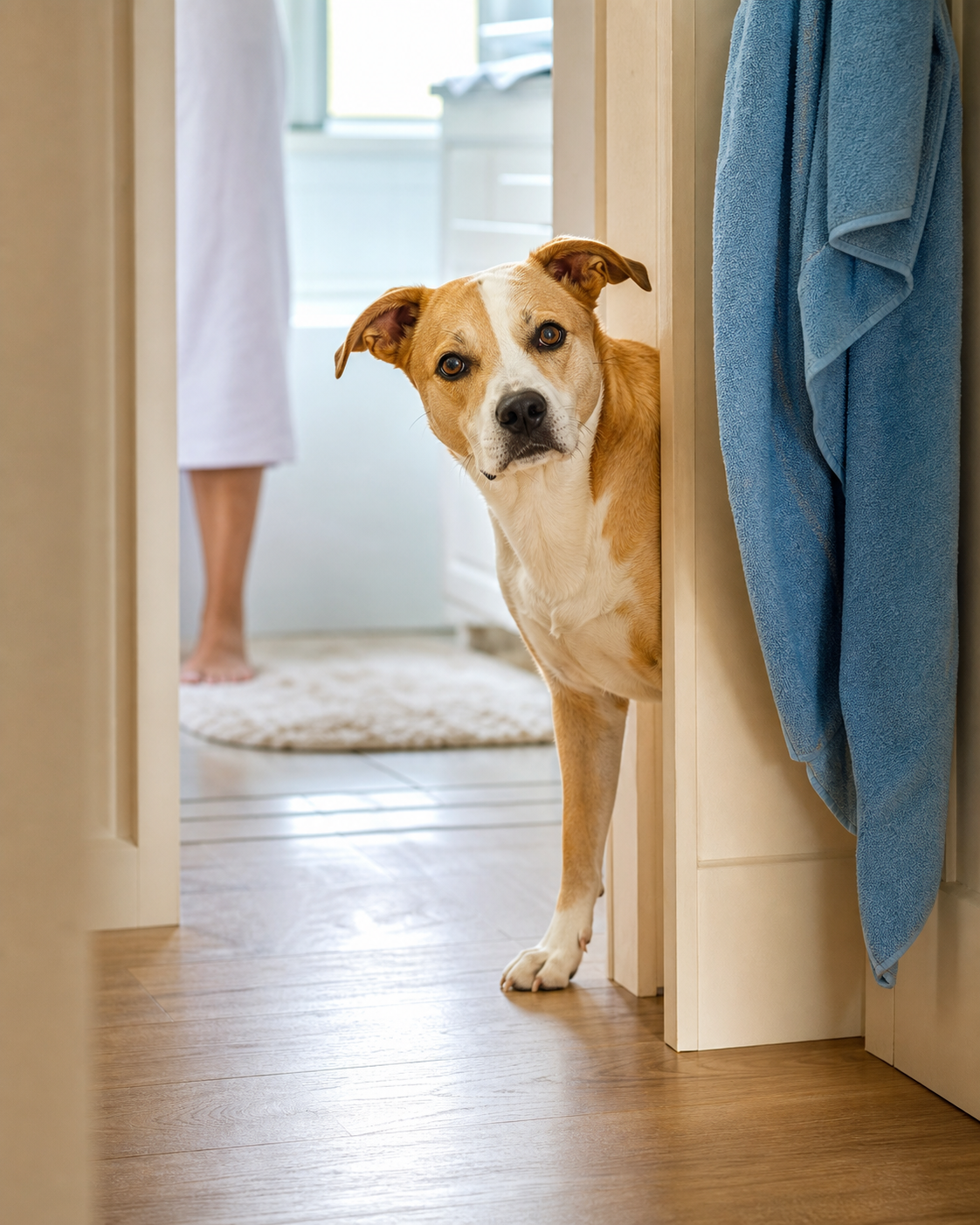
That is different from a dog who cannot settle, becomes frantic when you move away or shows distress around every departure cue.
The CloudyAww read: sometimes the dog is not monitoring your wellbeing. Sometimes the dog simply believes the next room may contain news.
The Room Has Clues

Human movement is full of information.
Walking toward the cupboard may predict breakfast. Picking up a lead may predict a walk. Moving to the desk may predict a long quiet stretch. Heading for the back door may mean toilet access. Even the time of day, the shoes you choose and the object in your hand can become part of the pattern.
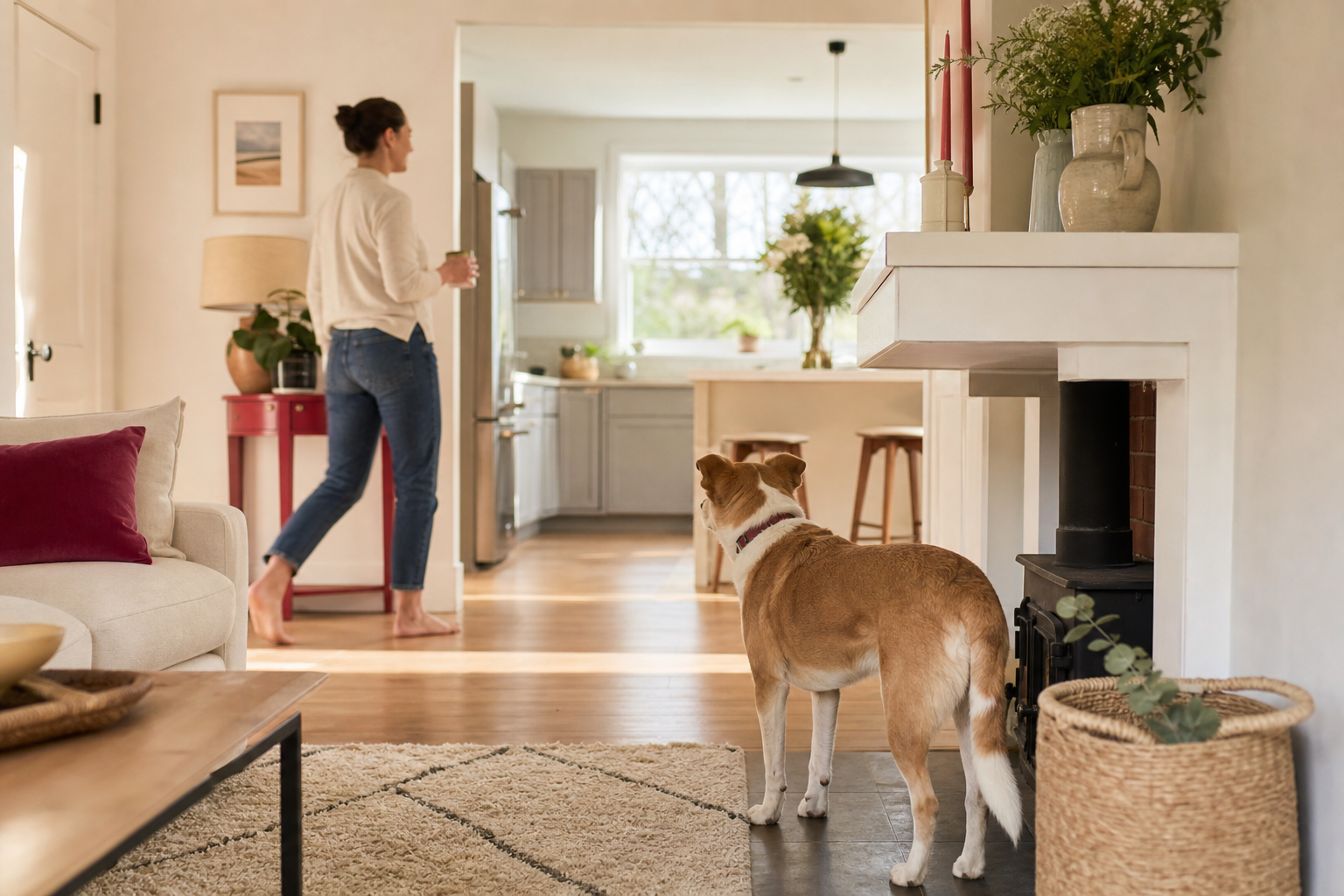
This is ordinary learning, not a mysterious sixth sense. Dogs notice repeated sequences. If following you has often led to something useful or enjoyable, staying close is a sensible strategy.
That is also why the behaviour can seem selective. A dog may ignore one person folding laundry but follow another person carrying a yoghurt pot with complete spiritual commitment.
For more on how dogs read small human signals, see what your dog may be saying with a paw.
Following Can Learn
Sometimes the reward is not food or a walk. It is you.
If a dog follows and receives conversation, touch, play or eye contact every time, following may become a reliable way to start interaction. No manipulation is required. Behaviour that works tends to happen again.
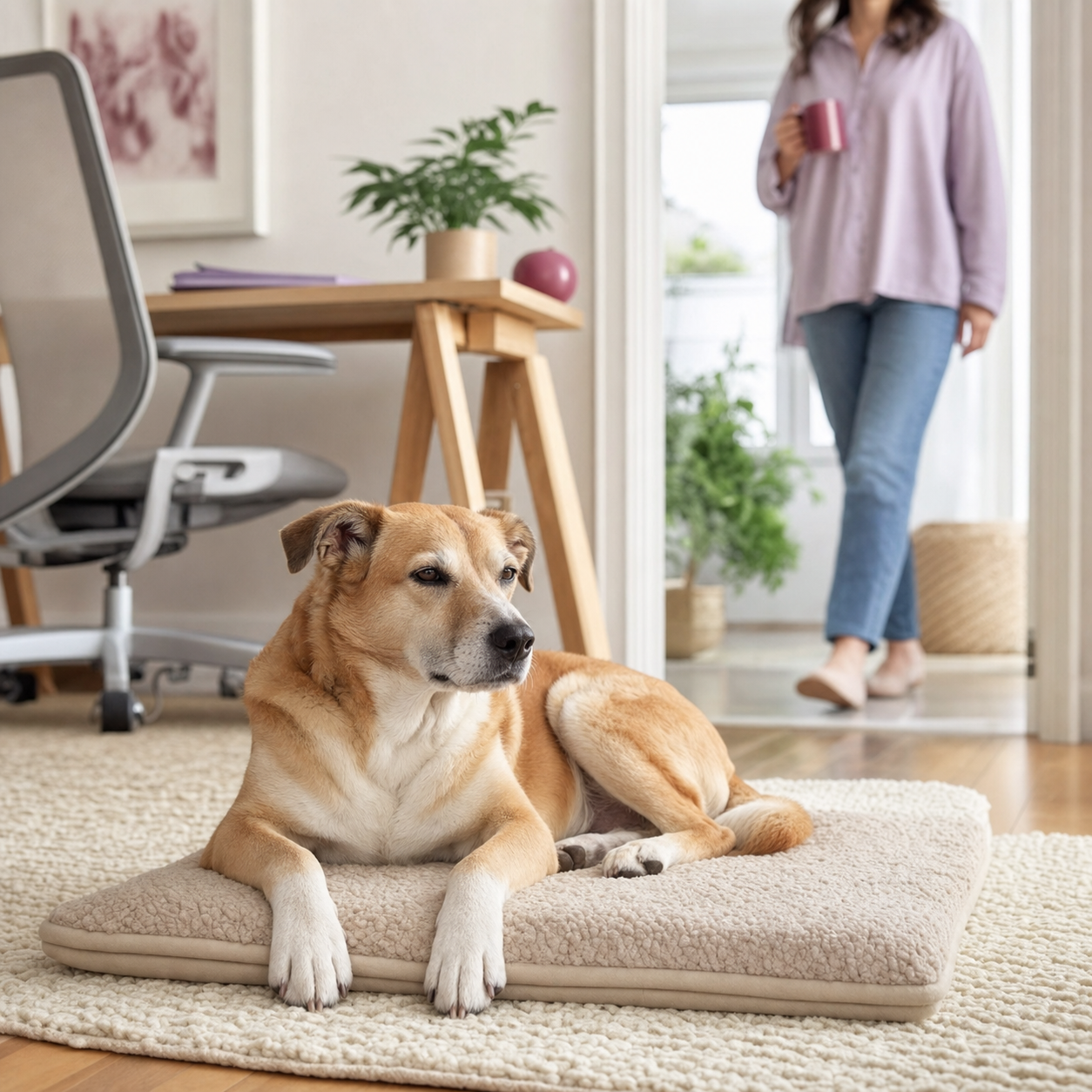
The same learning can build a sweet family ritual. Your dog trails you to the home office, curls up in the usual spot and settles while you work. That is following too, but it ends in rest rather than constant checking.
Problems are more likely when the dog has no comfortable alternative, cannot disengage or becomes increasingly demanding and unsettled. The goal is not to make a social dog stop liking you. It is to make calm choices available as well.
The pattern is similar to other learned greetings and attention routines, including dogs who bring toys when you come home.
Give Them a Landing Spot

If your dog follows happily but you would like a little more independence, give them somewhere good to stop.
Choose a bed, mat or open resting area where the dog already feels comfortable. Reward them for choosing it. Offer a safe chew, food toy or calm enrichment activity there. Practise very short moments of staying settled while you stand up, take a few steps and return.
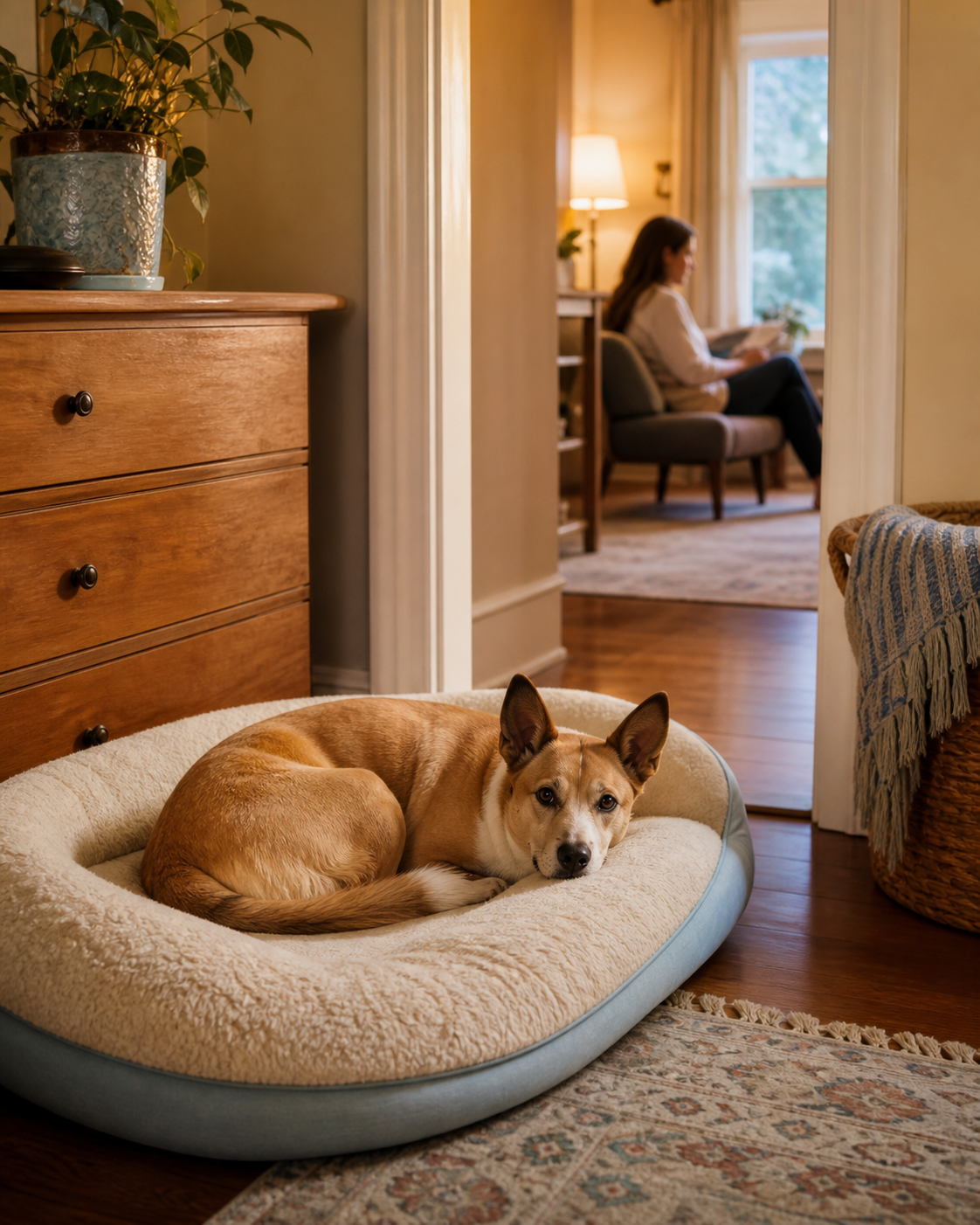
Keep the difficulty small enough that the dog remains relaxed. A few calm seconds are more useful than pushing until they get up, worry or fail. Gradually add ordinary movement as the resting spot becomes familiar.
Exercise, sniffing, play and predictable routines can help too. A dog whose physical and mental needs are met has more reasons to settle. A slower dog walk with time to sniff can be useful enrichment without turning every walk into a distance contest.
Do not punish following or repeatedly shut the dog away to prove a point. Reward the behaviour you want: relaxed resting, independent exploration and calm recovery when you move around.
Close Is Not a Diagnosis
A dog who likes being close does not automatically have separation anxiety.
Separation-related distress is about what happens when an important person is absent. Dogs may vocalise, pace, pant, drool, scratch doors, damage exit areas, toilet indoors, refuse food or struggle to settle. Some dogs react to departure cues before the person has even left.
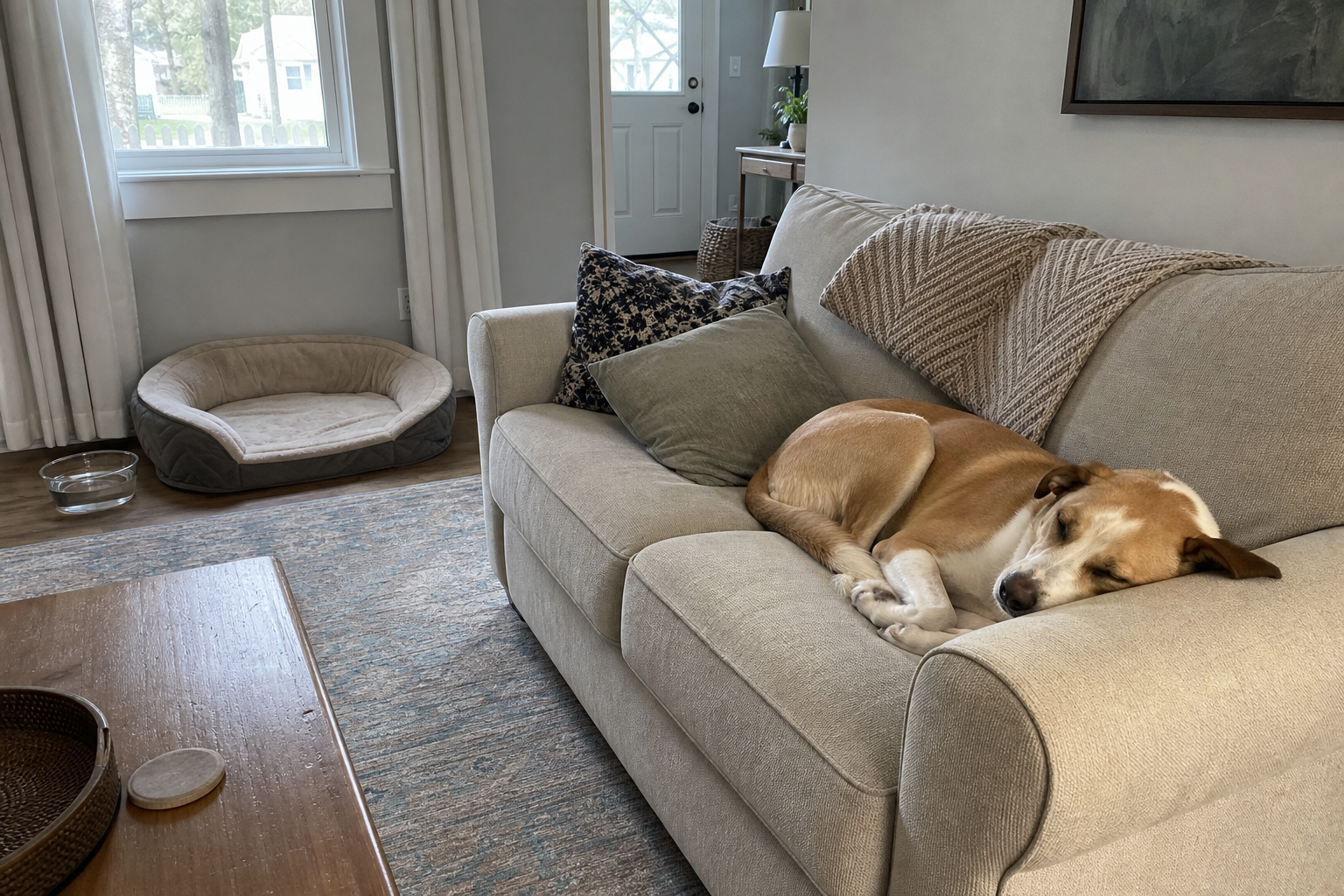
Following can appear alongside those signs, but it cannot diagnose the problem on its own. Plenty of affectionate dogs follow their people around and then sleep peacefully when left for an appropriate period.
The useful distinction is flexibility. Can the dog choose a bed across the room? Can they stay with another trusted person? Can they recover after you leave their sight? Does closeness look comfortable, or does it look urgent?
Watch What Happens Alone

If you are worried about separation distress, a camera can show what guessing cannot.
The American Veterinary Society of Animal Behavior (AVSAB) recommends recording the dog during ordinary and off-routine absences, especially the early part of the departure. Dogs Trust also suggests checking for signs such as pacing, panting, whining, barking, scratching, destructive behaviour or an inability to eat and settle.
Look at the sequence, not one isolated moment. A dog who checks the door and then naps is giving different information from a dog whose distress builds or continues.
Do not punish damage, noise or toileting that happened while you were away. If the behaviour is driven by distress, punishment does not teach calm and can make the emotional problem worse. Speak with your vet and a qualified reward-based behaviour professional for an individual plan.
Suddenly Glued to You?

A sudden change deserves more attention than a familiar lifelong habit.
Dogs Trust advises speaking with a vet when following is new or unusual. Pain, illness, sensory changes and cognitive changes can all affect how secure a dog feels. A new home, a changed routine, a family member leaving, building work or another stressful event may also increase closeness.
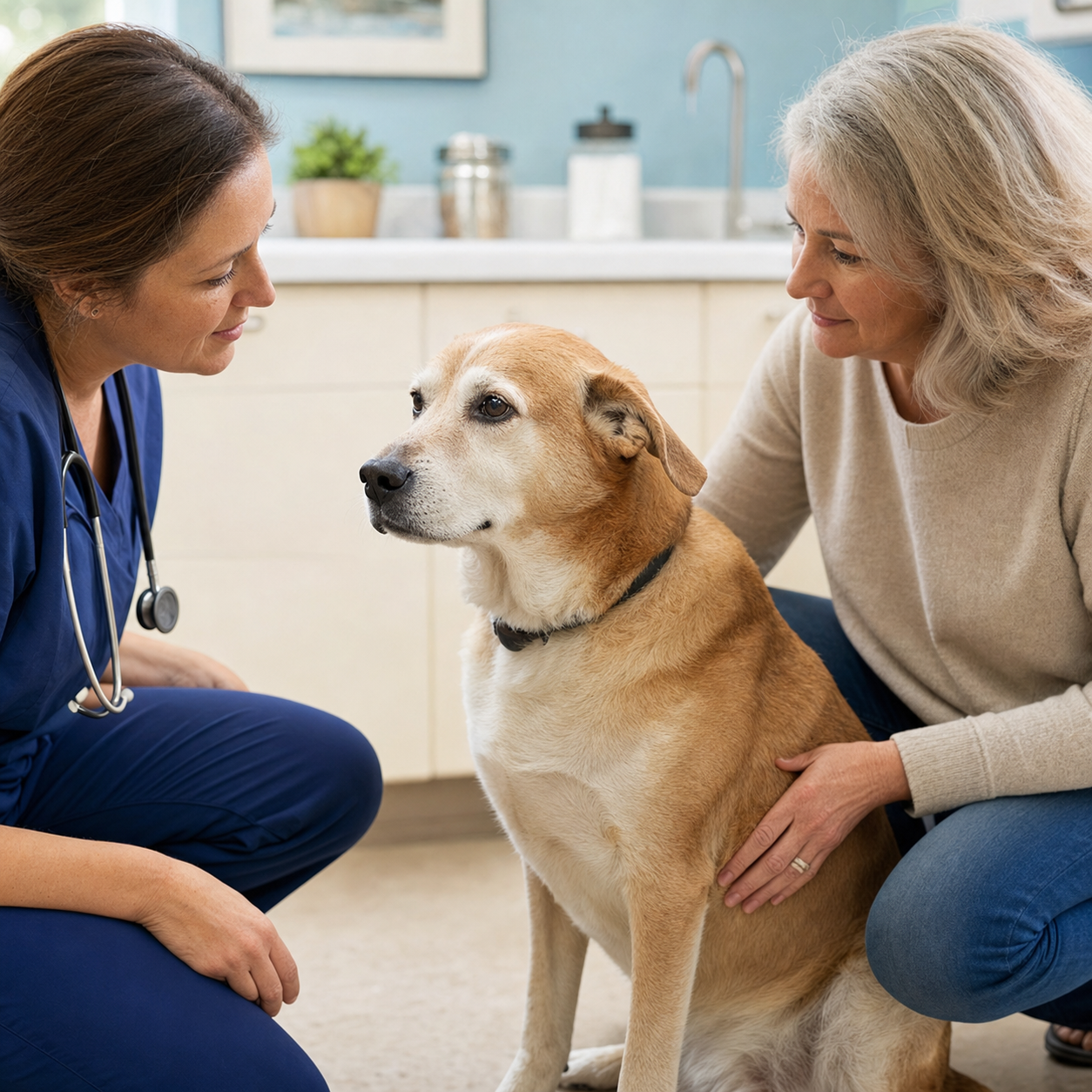
Book a vet check if increased following arrives with panting, pacing, trembling, appetite changes, disturbed sleep, accidents indoors, reluctance to move, sensitivity to touch, confusion or a clear change in personality.
The dog may still be asking for company. The important part is noticing why the request suddenly became louder.
The Tiny Shadow Read

Most room-to-room following is ordinary dog logic: company feels good, humans make useful things happen and the next room might be interesting.
Enjoy the escort. Also notice whether your dog can choose rest, tolerate small moments apart and recover easily when you move away. Give them comfortable landing spots, predictable routines and rewarding things to do that do not require standing directly behind your ankles.
If following becomes sudden, frantic or linked with distress when alone, bring the whole pattern to your vet or a qualified behaviour professional. A short home video can be much more useful than trying to translate one clingy moment.
The final CloudyAww reading is simple: your dog may love you deeply. Your dog may also believe you are walking toward snacks. Both can be true.
More tiny pet logic lives in Aww Articles, where funny animal moments usually have a small real reason hiding underneath them.
Sources and Further Reading
- Dogs Trust: Why your dog follows you
- Dogs Trust: Separation anxiety in dogs
- VCA Animal Hospitals: Separation anxiety in dogs
- American Veterinary Society of Animal Behavior: Separation anxiety guidance