

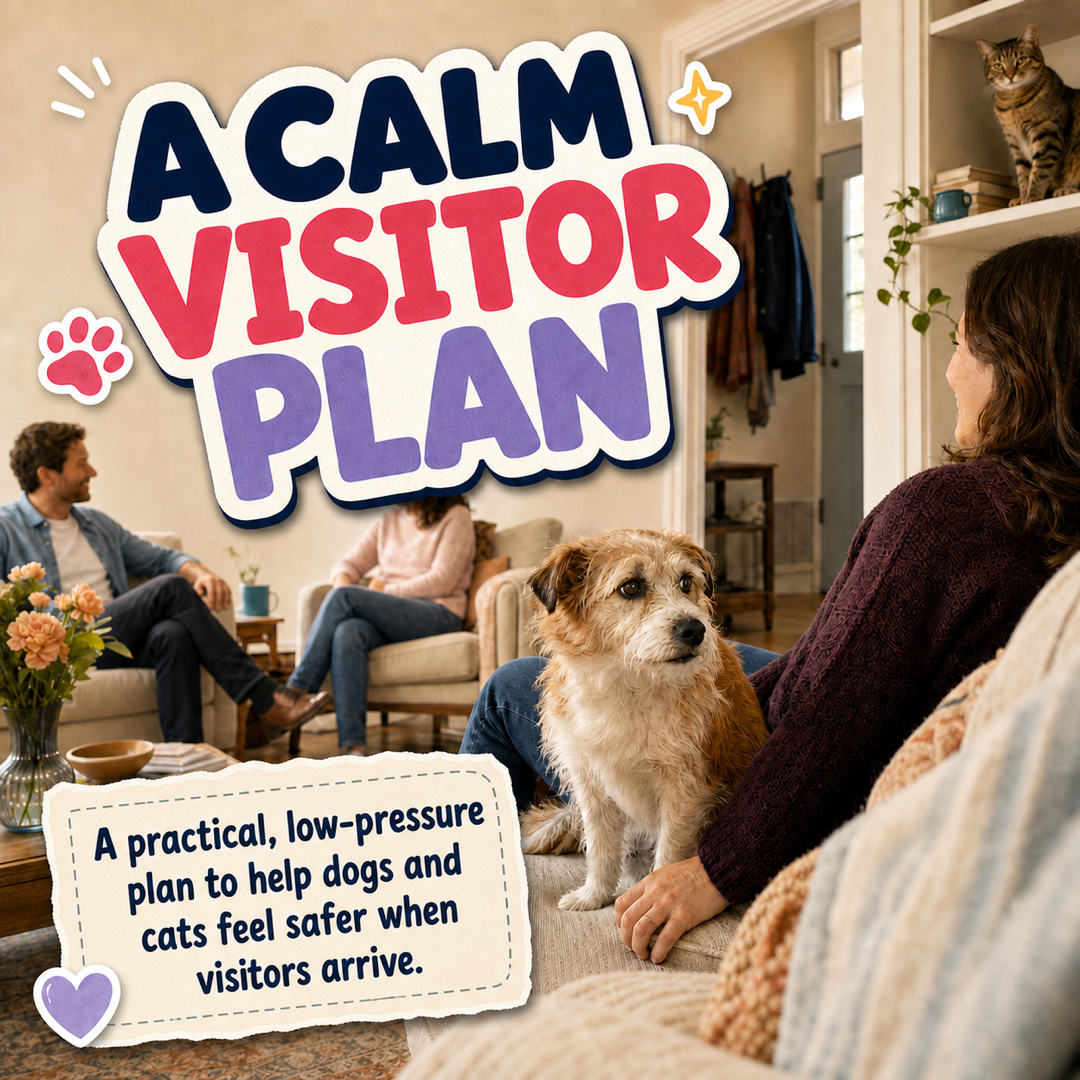
Visitors can change the sound, smell and movement of a familiar home in about twelve seconds. The doorbell goes. Coats arrive. A bag lands in the hallway. Someone laughs in the voice usually reserved for spotting a puppy across the street.
For a dog or cat who loves a predictable day, that can feel less like “a couple of friends popping in” and more like the house has developed weather.
To help pets cope with visitors, the aim is not to make every animal greet every person. A good visitor plan gives your pet a reliable retreat, makes the arrival less intense and lets them choose whether to come closer. Success might be a polite sniff. It might also be a peaceful nap in another room. Both count.
Same House, Different Weather

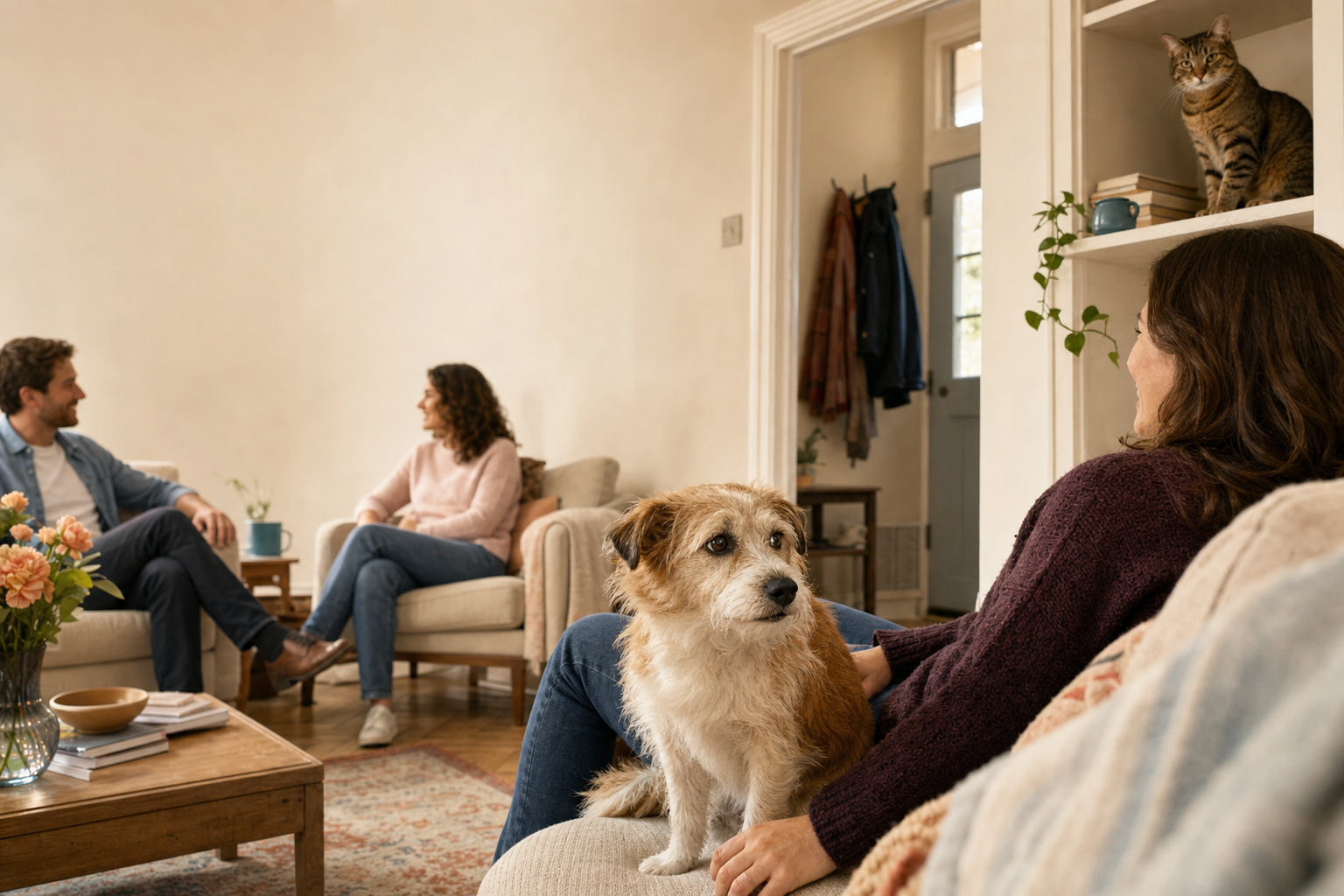
Pets notice more than the number of humans in a room. They notice the knock, the opening door, unfamiliar scents, louder voices, blocked routes and the sudden appearance of feet where the quiet floor used to be.
That change can produce different responses. One dog may rush to the entrance and bark because the whole sequence has become wildly exciting. Another may keep backing away. A cat may watch from a shelf, disappear beneath a bed or approach only after everyone has stopped looking at them.
Try not to reduce all of this to “good” or “bad” behaviour. Look at the whole pattern instead:
- Can your pet move away without being followed?
- Does their body soften once the visitors settle?
- Will they rest, sniff, eat or use their usual resources?
- How long does it take them to return to normal after the visit?
Those clues are more useful than whether they performed a perfect hello.
Build the Exit Before the Doorbell

The calmest part of a visitor plan should exist before anyone arrives: a familiar place where your pet can opt out.
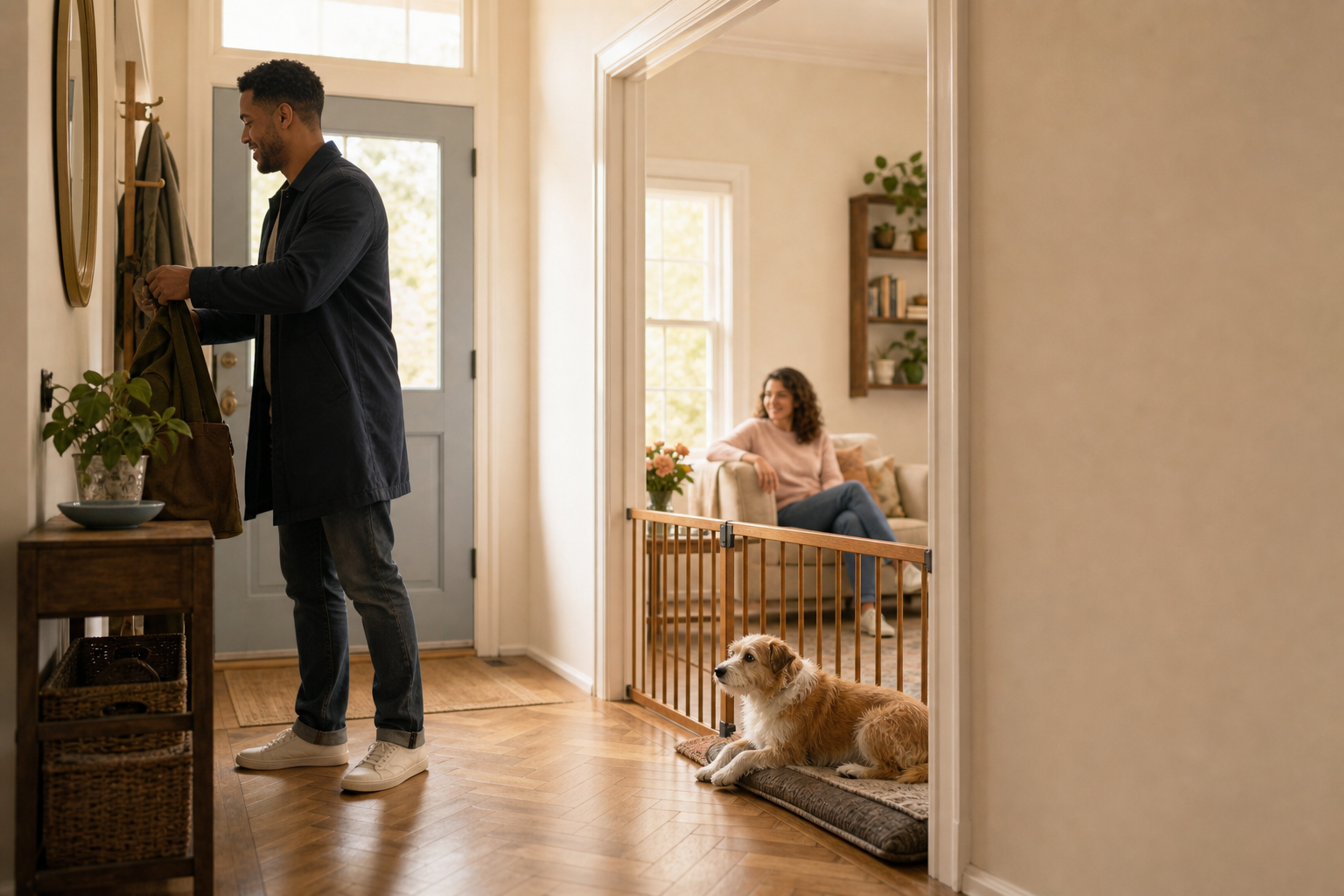
For a dog, that might be a bed in a quiet room, an open crate they already enjoy, or a comfortable area behind a stair gate. Add familiar bedding, water and a safe activity they already know. Dogs Trust recommends preparing safe spaces before disruptive events and making sure the dog can rest there without being disturbed.
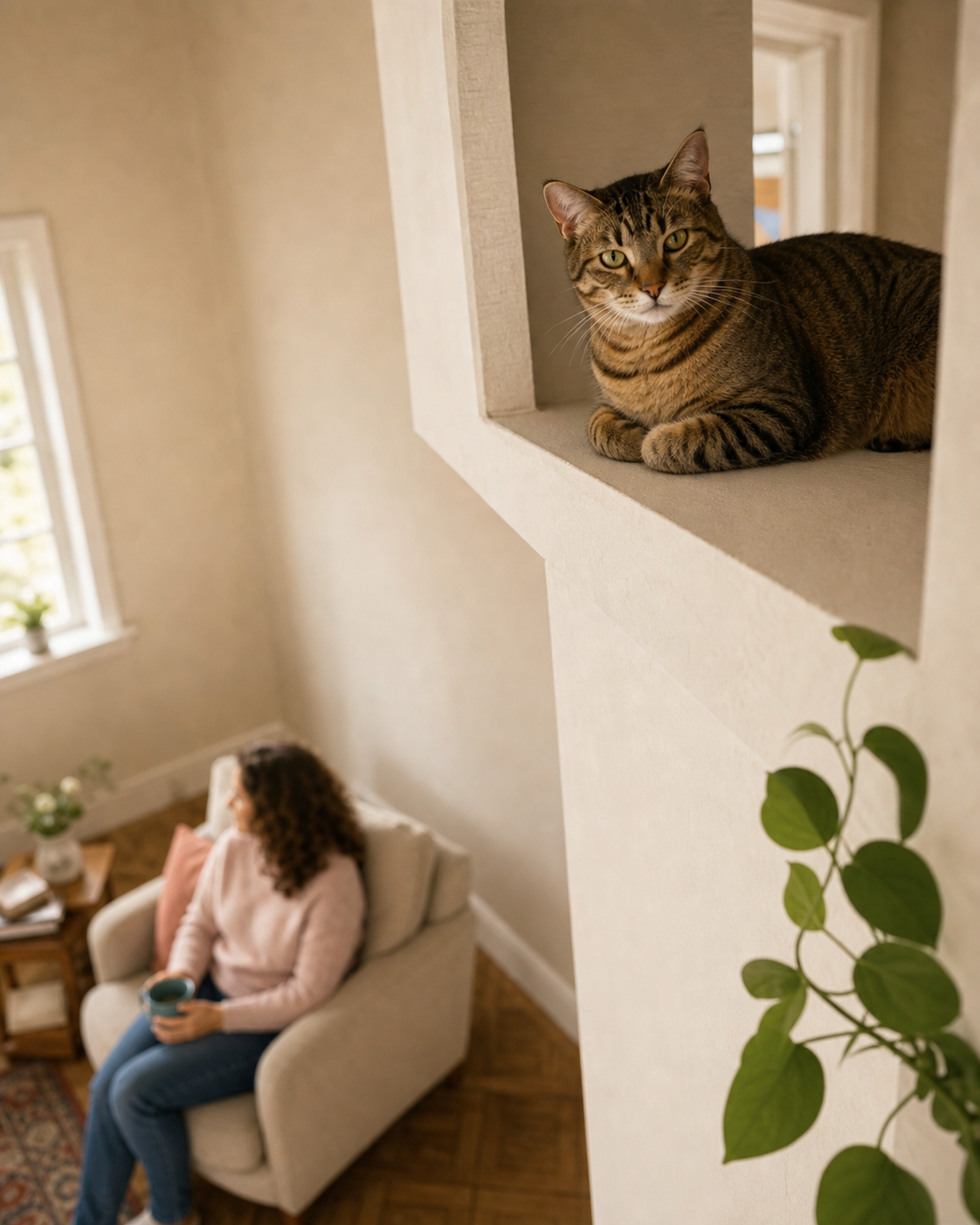
For a cat, think in three dimensions. A covered bed, a high shelf, a quiet room or an open route to a favourite hiding place can all provide distance. Keep water, litter and normal resting routes accessible. Cats Protection advises allowing cats to make the first move with visitors and giving them an escape route or high hiding place.
The important detail is privacy. A retreat stops working if a guest follows the pet to “make friends.” It is not a meet-and-greet lounge. It is the tiny members-only room where the membership list contains one animal.
If the space is new, introduce it on ordinary days. A retreat should feel familiar and safe, not like somewhere your pet is suddenly sent when the house becomes difficult.
Make the Arrival Smaller

The front door is often the loudest, fastest part of the visit. Reduce how many things your pet has to process at once.
Before the guest arrives:
- Keep feeding, walks and toilet breaks close to their usual times.
- Clear the hallway so your pet has an obvious route away.
- Put a dog’s mat, gate or lead setup in place before the knock.
- Check that your cat can reach their favourite high or covered spot.
- Ask the visitor to message instead of ringing if the doorbell is a major trigger.
Then separate “person enters the house” from “pet meets person.” The visitor can come in, put down their things and sit while the pet remains at a comfortable distance.
This is especially useful for dogs who treat every arrival as an urgent vacancy in the home-security department. Dogs Trust’s visitor-training guidance recommends teaching a dog to go to their bed or settle when the door cue happens, then letting the visitor enter before considering a calm introduction.
If your pet is already worried or highly aroused, skip the introduction. Distance is not a failed training session. It is information used well.
Watch Visitor Mode Activate
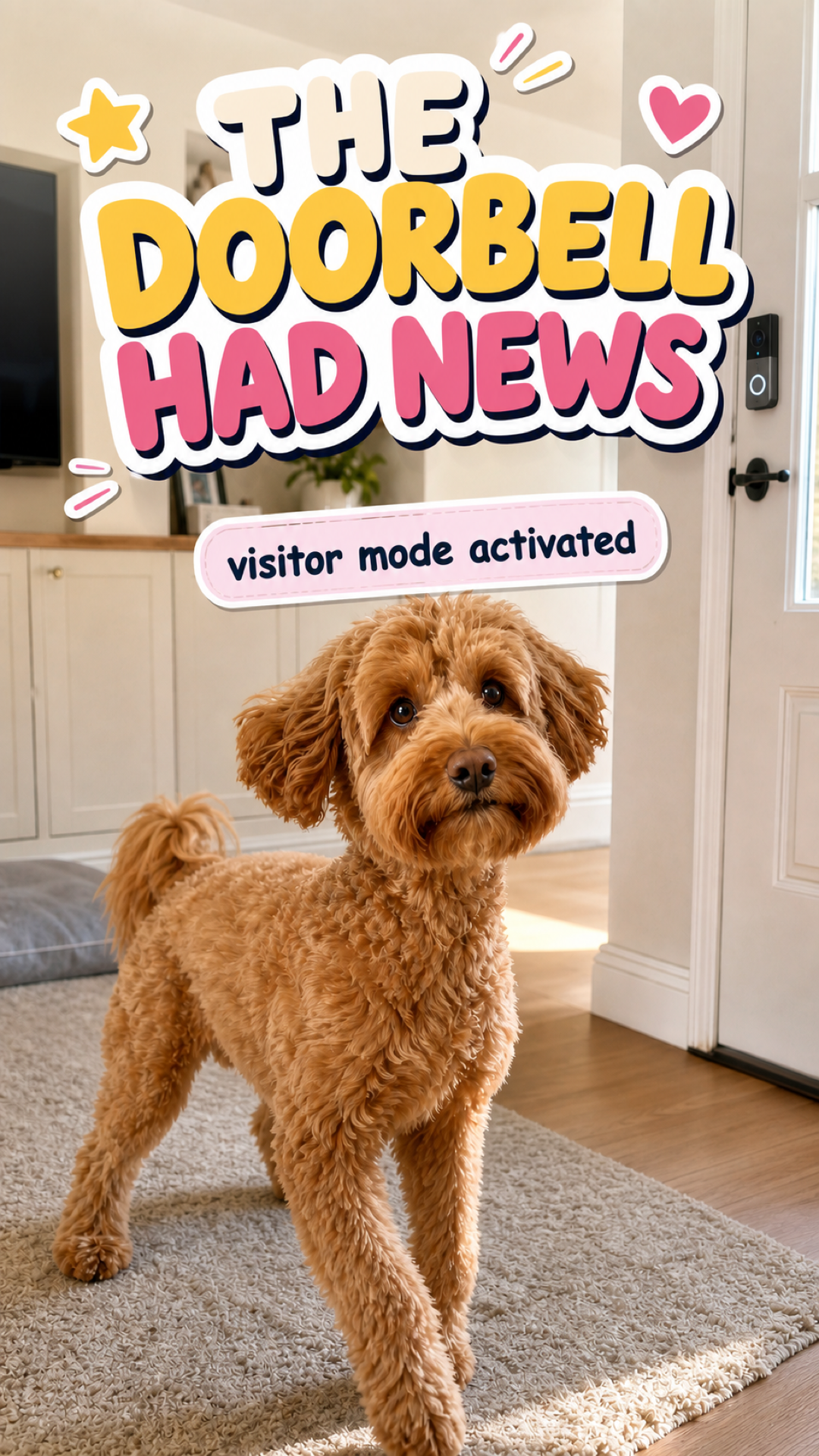
The doorbell had news.
This Daily Awws moment shows why the arrival itself can be the loudest part of a visit: one sound, six dogs, and an instant promotion to household security.
Dogs Can Skip the Front-Door Job

Many dogs have accidentally rehearsed the same job hundreds of times: noise at door, sprint to door, shout at door, inspect human. The more often the sequence happens, the more automatic it can become.
Practice when no real visitor is waiting. Use a very quiet knock or door sound, reward your dog for moving to a mat or safe area, and stop while they can still think. Gradually build the difficulty over several short sessions. If the sound immediately sends them over threshold, make it softer or work farther from the door.
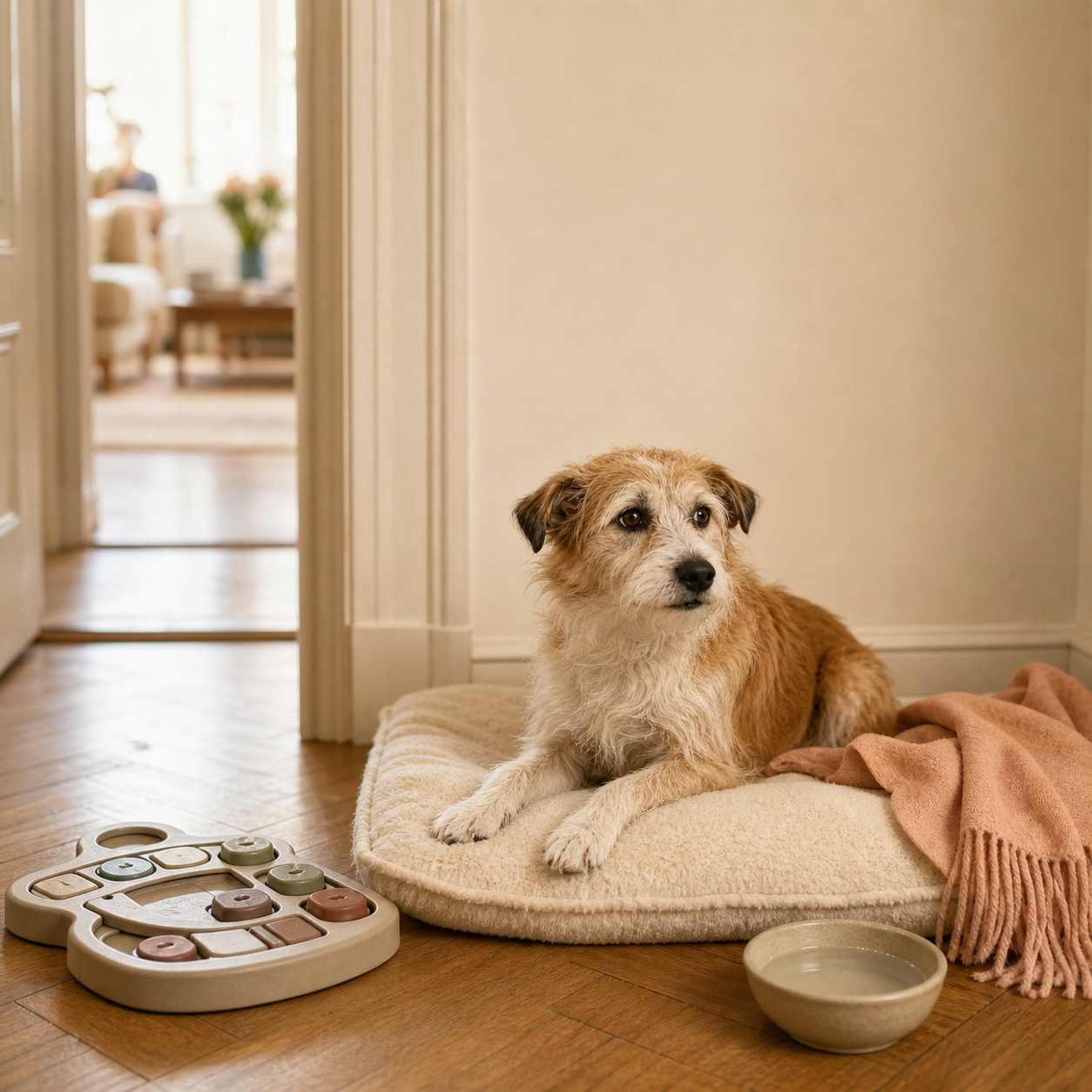
During a real visit, give the dog something predictable to do away from the entrance. That could be settling on a mat, sniffing for a few scattered treats or enjoying a familiar food toy—provided food around people is already comfortable and safe for that dog.
Once the guest is seated, the dog can choose whether to approach. Keep greetings brief and loose. A visitor who turns slightly sideways, keeps their hands quiet and avoids leaning over the dog is much easier to investigate than a human-shaped welcome committee.
If the dog retreats, freezes, stiffens, repeatedly barks or cannot disengage, increase the distance. Dogs who lunge, snap, guard space or become intensely distressed need an individual plan from a qualified, reward-based behaviour professional rather than more surprise practice.
Cats Get to Choose the Distance

Cats are excellent at noticing the moment a room starts paying attention to them. Unfortunately, a visitor’s natural response to seeing a cat is often to stare, reach and announce, “Cats love me.”
The better opening move is wonderfully boring.
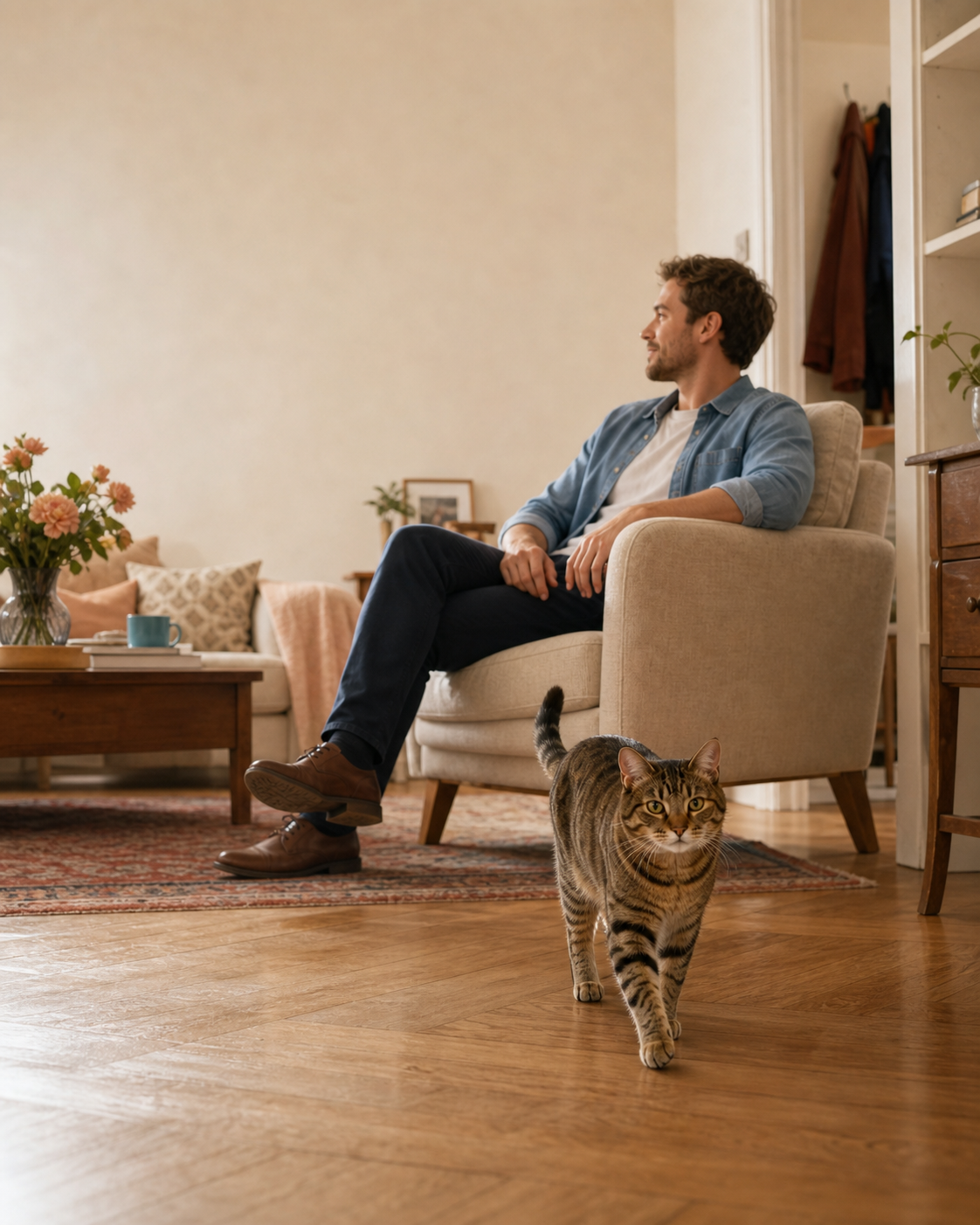
Ask the visitor to sit down, speak normally and ignore the cat at first. No reaching into hiding places, no blocking the exit and no attempt to pick the cat up. If the cat approaches, the visitor can offer a still hand at a comfortable distance and let the cat decide what happens next.
Some cats may observe from above for most of the visit. Some will appear after twenty minutes. Some will remain hidden until the door closes. Cats Protection notes that hiding can be a normal coping response and advises against coaxing a cat out. Quiet, covered and elevated places can help them feel secure.
The goal is not to shorten the distance for them. It is to make every available distance feel safe.
Give Visitors Three Tiny Rules

Visitors do not need a lecture on animal behaviour. They need three memorable rules:
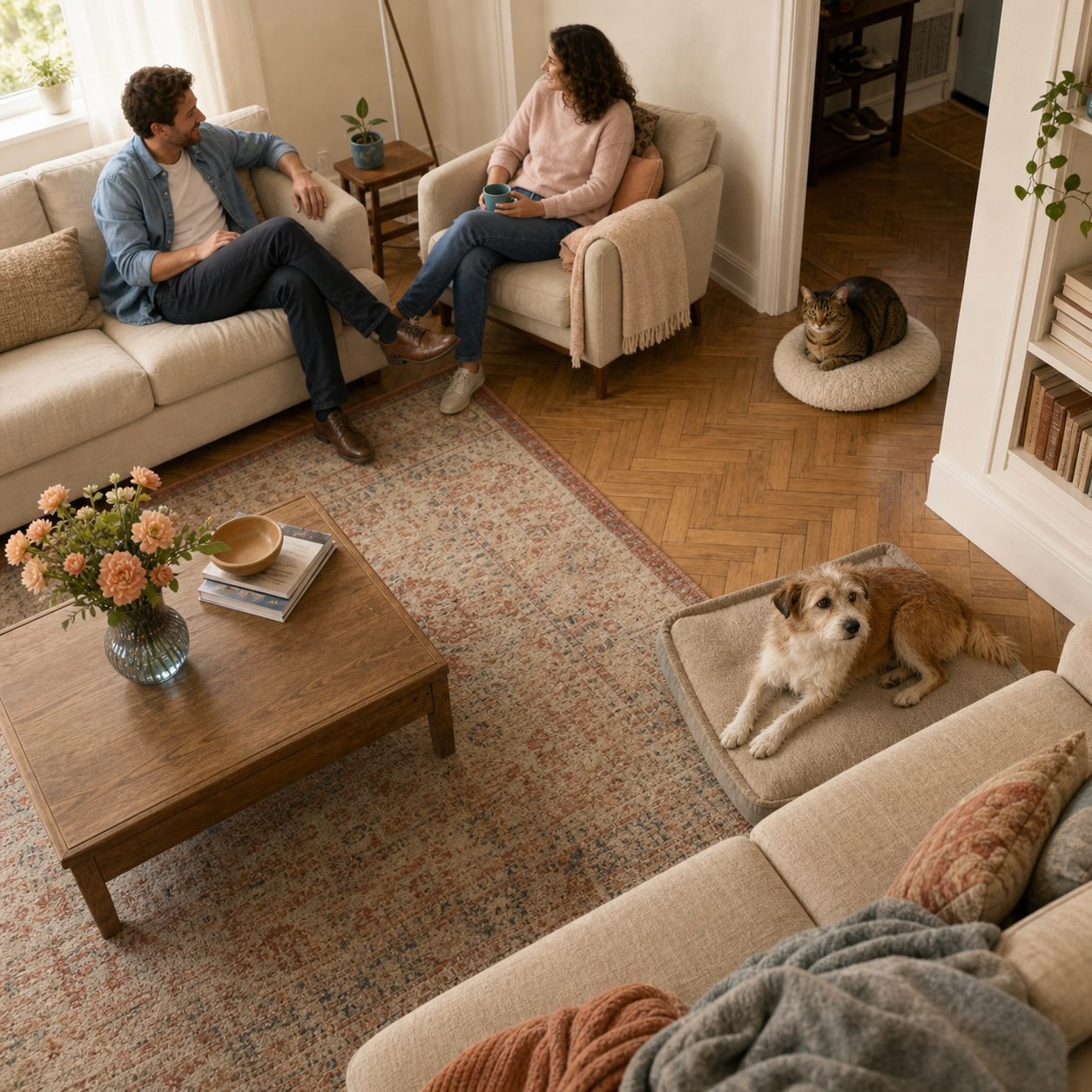
- Ignore the pet at first. Let the animal gather information without social pressure.
- The safe space is private. If the pet leaves, nobody follows.
- Stop when the pet says enough. Turning away, moving off, hiding or becoming tense ends the interaction.
For children, add calm adult supervision and keep the plan even simpler. No chasing, hugging, cornering or taking food and toys. If that cannot be managed reliably, let the pet relax separately with familiar resources.
You can make the rules sound friendly: “She’ll come over if she wants to,” or “That bed is her little no-human zone.” Clear boundaries do not make a visit awkward. They prevent the animal from having to make the boundary louder.
Read the Whole Visit

No single signal tells the entire story. A dog may yawn because they are tired, but yawning alongside a turned head, pinned-back ears, repeated lip-licking and a tense body deserves more space. A wagging tail does not automatically mean a relaxed dog if the rest of the body is stiff.
A cat may pause, crouch, flatten their ears, flick their tail sharply, widen their pupils or retreat. A hidden cat who later eats, grooms and returns to their normal routine may simply have chosen the most comfortable plan. A cat who remains withdrawn, stops eating or changes their toileting needs closer attention.
Watch recovery as well as the greeting. Can your pet settle while people are still there? Do they repeatedly patrol the room? Are they unusually clingy, restless or absent afterward?
The useful question is not “Did my pet behave?” It is “How hard did my pet have to work to feel safe?”
Reset the House, Then Watch the Pattern

When visitors leave, return the home to normal without turning recovery into another event. Open usual routes, put resources back where they belong and lower the volume. A dog may appreciate a quiet sniff outside. A cat may prefer everyone to pretend nothing happened while they conduct a full inspection of the recently occupied chair.
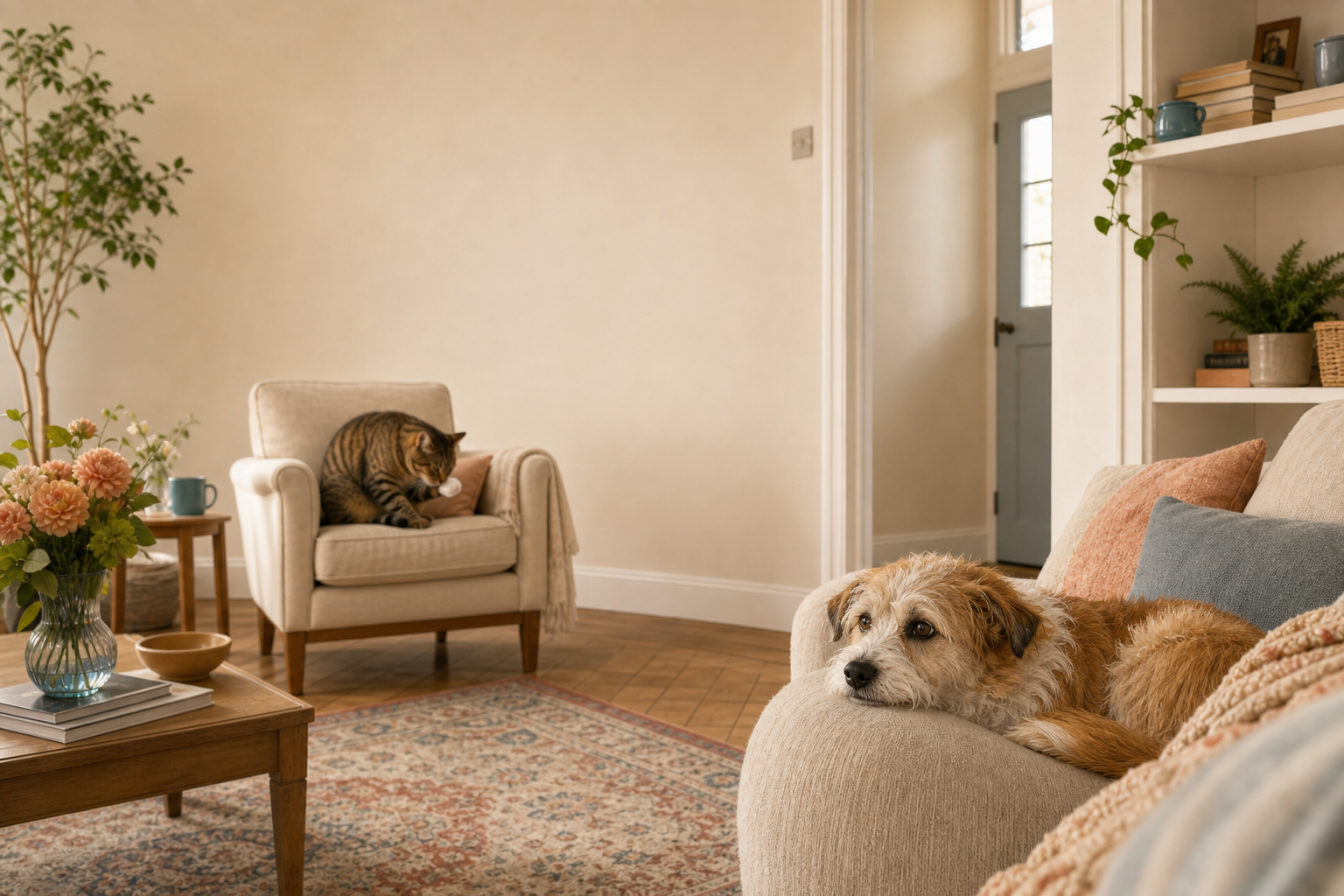
Make a short mental note: what happened at the door, which distance worked, whether your pet used the retreat and how long recovery took. That gives you a better starting point next time.
If fear or agitation appears suddenly, becomes more intense, continues long after visits, or comes with appetite, toileting, sleep or mobility changes, speak to your vet. Pain and illness can change how safely a pet can cope with social pressure. For repeated barking, escape attempts, hiding, lunging, snapping or panic, ask your vet to recommend a qualified, force-free behaviour professional.
Helping pets cope with visitors is not about producing a tiny host with flawless manners. It is about making the house predictable enough that they do not have to manage the crowd alone.
And if their chosen version of hospitality is sleeping behind a closed door while you serve the biscuits? Honestly, that is an excellent boundary.
If the hard part begins before anyone arrives, When Suitcases Make Pets Suspicious looks at another familiar-home change. For calmer everyday decompression, see why a better dog walk starts with time to sniff, or explore more warm, practical stories in the Aww Articles library.
Sources and Further Reading
- Dogs Trust: Creating a safe space for your dog
- Cats Protection: Helping your cat meet other people
- Dogs Trust: Visitor training
- Cats Protection: Why cats hide
- Cats Protection: Stress in cats
- RSPCA: Creating the right environment for your dog