

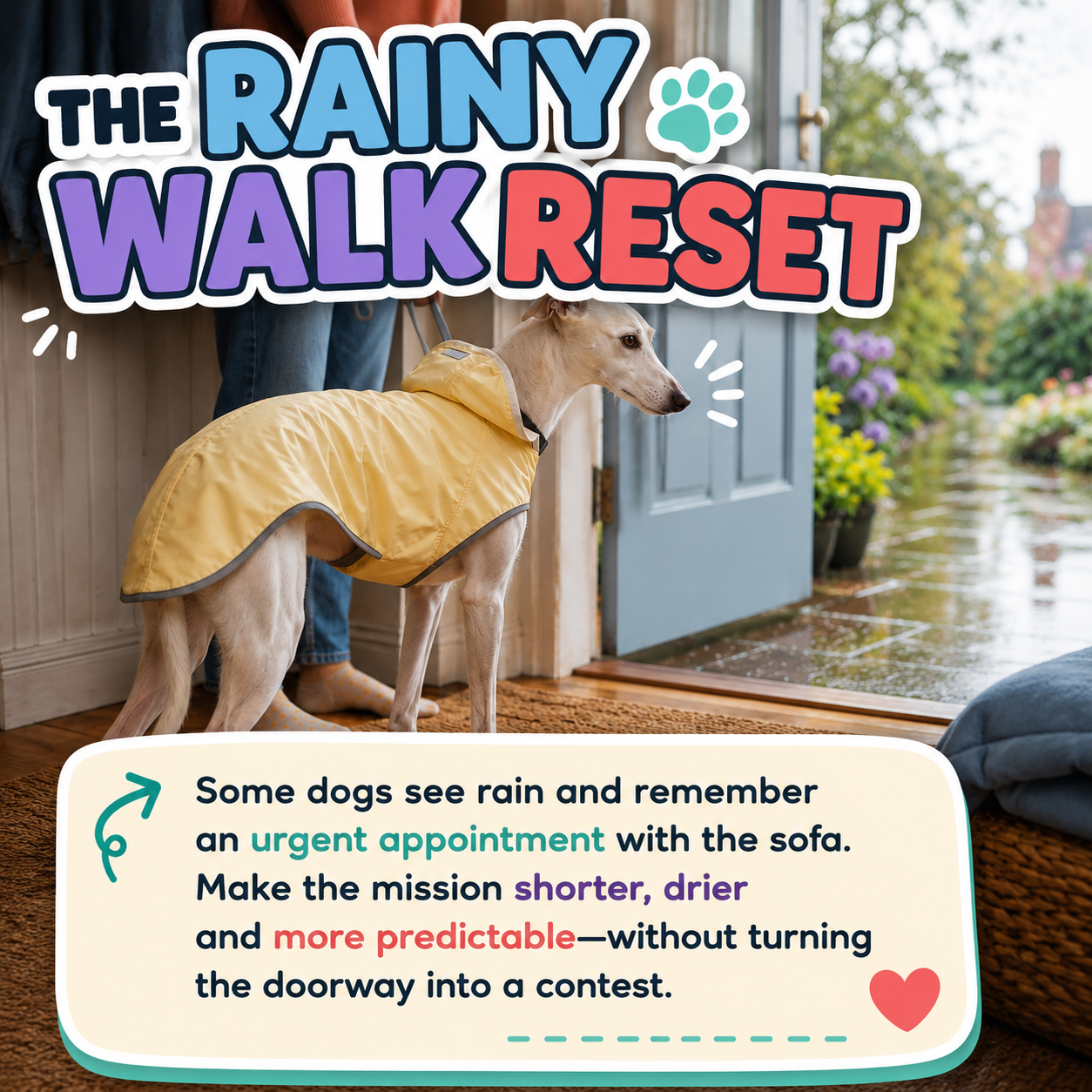
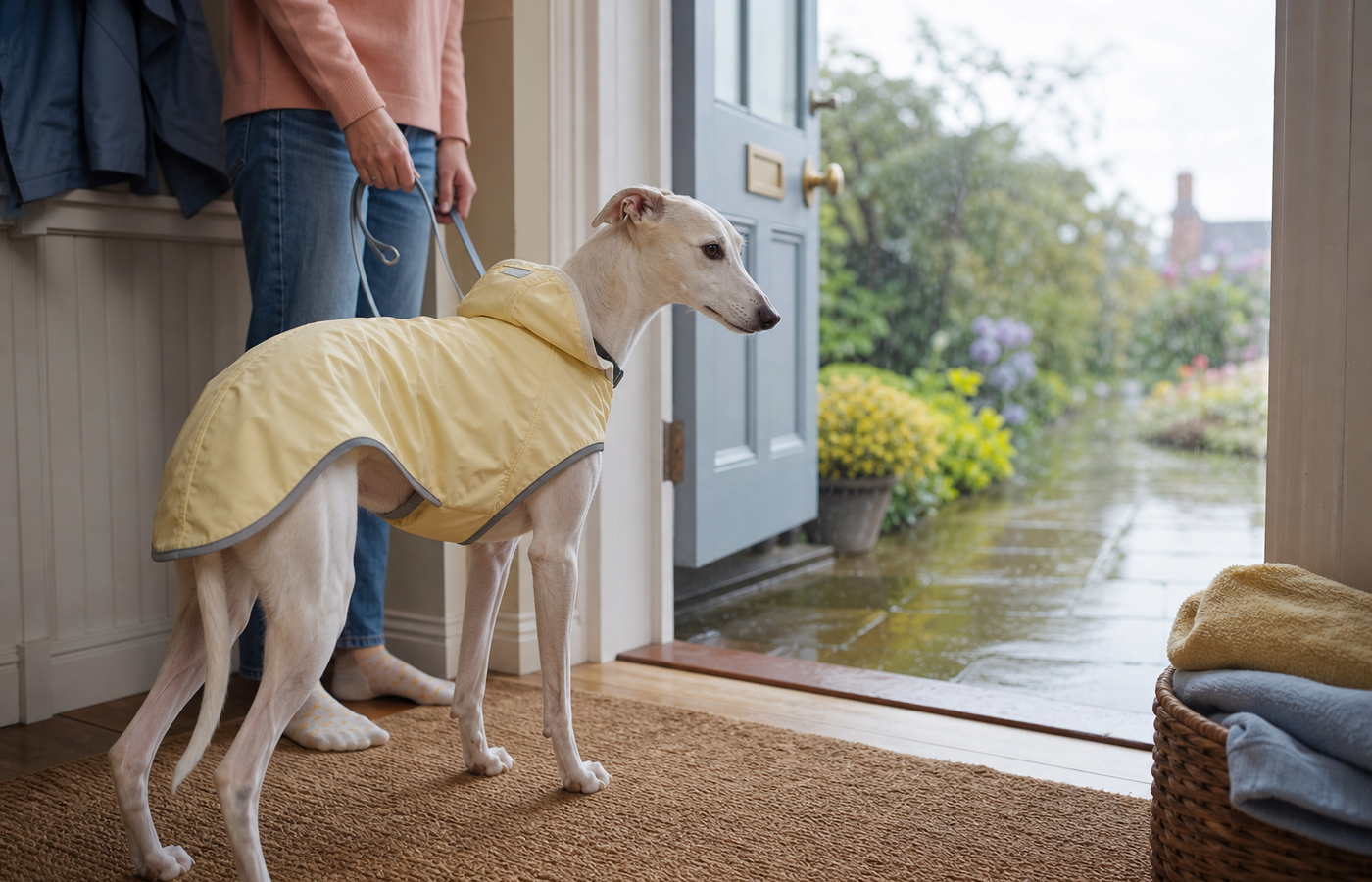
Some dogs hear rain and prepare for an adventure. Others stand in the open doorway as if the garden has been replaced by a suspiciously damp legal dispute.
The lead is attached. The person is wearing a coat. The route has been verbally described with unnecessary optimism. The dog looks at the rain, looks back at the person and makes a quiet but comprehensive counterproposal: no.
A rainy-walk refusal is not always stubbornness. Wet fur, cold air, noisy gutters, slippery paving, a poorly fitting coat or a previous unpleasant outing can all make the doorway feel less inviting. A sudden change can also point to pain or illness.
The kind plan begins by lowering the stakes. Do not turn one wet morning into a contest of strength. Ask what part of the scene is difficult, then make that part smaller.
Start With the Dog in Front of You

Rain does not feel the same to every dog.
A young Labrador with a dense coat may view a puddle as a personal invitation. A fine-coated whippet, elderly terrier or small dog close to the cold ground may become uncomfortable quickly. Dogs with sore joints may move more slowly when it is cold and wet. Dogs with sensitive feet may dislike wet grass, grit or a slippery threshold.
The PDSA’s coat guidance notes that thin-coated, young, old, underweight or unwell dogs may benefit from a well-fitted coat, while many healthy dogs do not need one. The useful answer is individual, not fashionable.
Notice exactly where the refusal begins:
- before the coat appears;
- when the harness goes on;
- at the open door;
- on the wet step or pavement;
- when wind, heavy drops or traffic noise increase;
- after a few minutes outside.
That location is your first clue.
Make the First Mission Tiny

If the dog is worried at the threshold, “the usual forty-minute route” is too large a first question.
Open the door. Let the dog look and sniff. Reward voluntary movement toward the doorway. If they step outside, allow a short investigation rather than immediately marching away from home. For some dogs, one calm toilet break and a few minutes of sniffing is enough during the wettest part of the day.
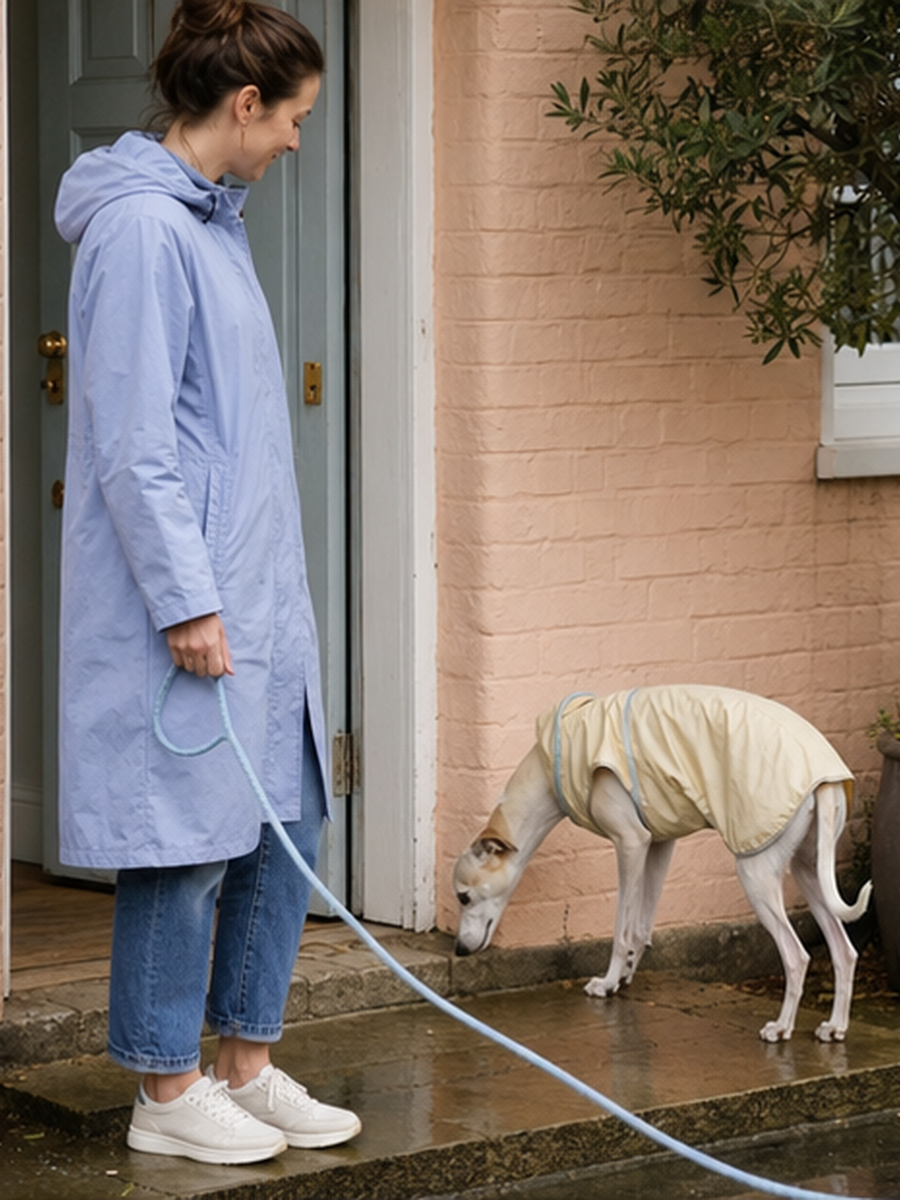
Keep the lead loose. Pulling may move the body forward while making the doorway feel less safe. If the dog freezes, pause. Turn sideways, reduce social pressure and let them gather information.
The goal is not to teach that rain never happens. It is to show that wet-weather outings can be brief, predictable and survivable—and that the dog’s quieter answers change what happens next.
Choose the Easiest Version of Outside

Not all rain is equal.
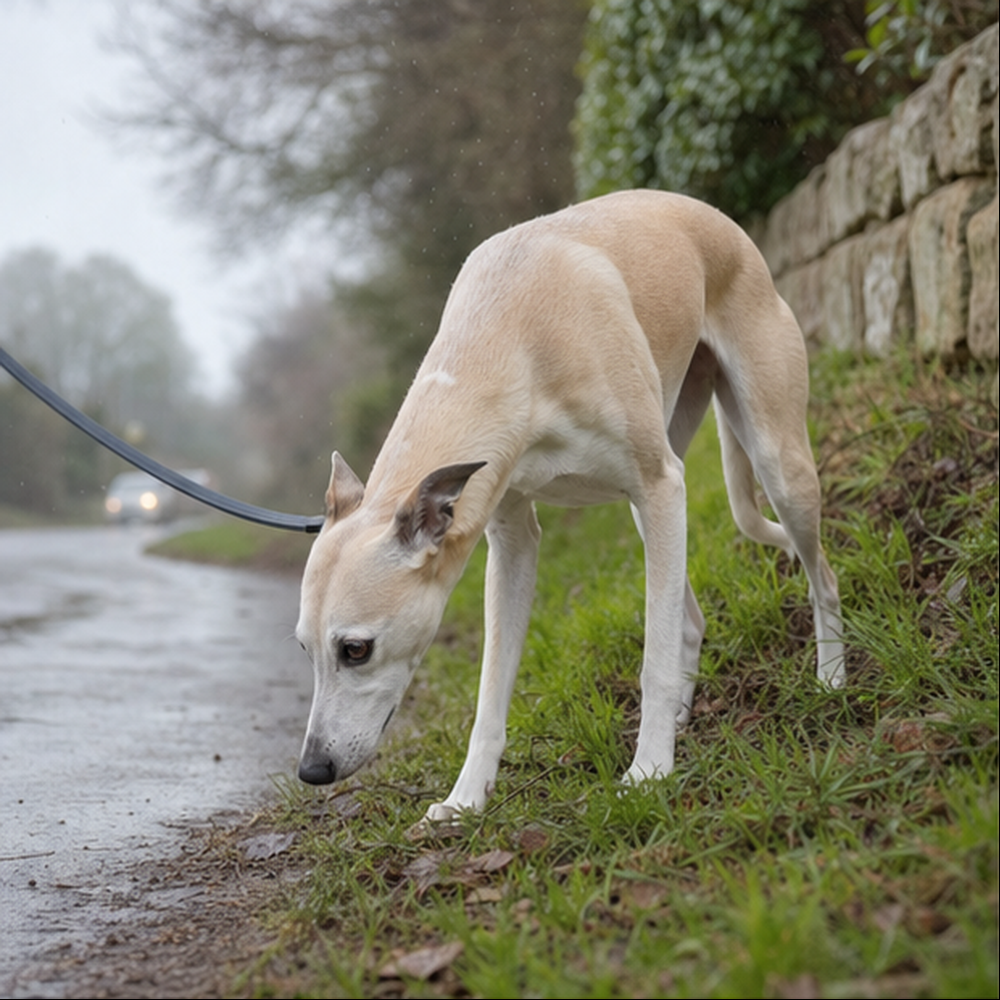
A light drizzle on a sheltered street may be manageable when a windy downpour is not. A quiet pavement can feel easier than a park full of flapping umbrellas, rushing water and excited dogs. Check the forecast and use the gentlest available window.
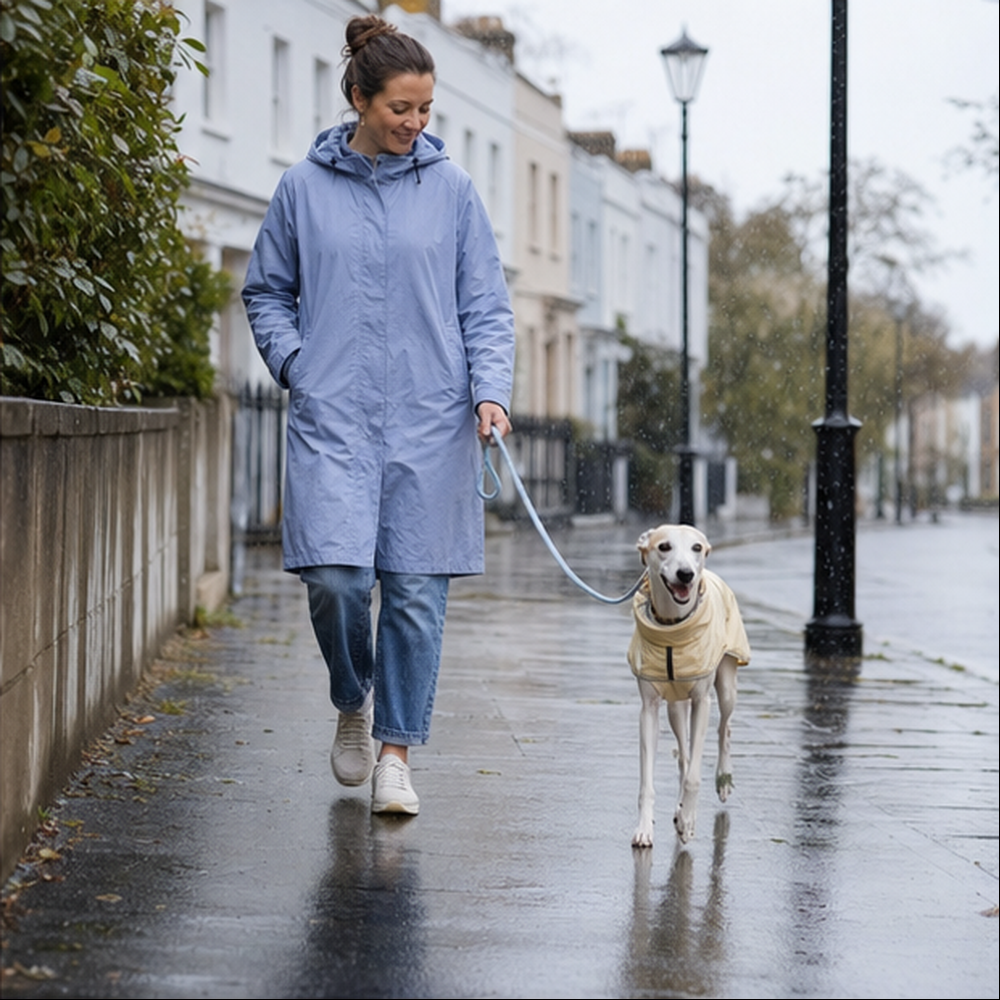
Dogs Trust recommends adapting routines during stormy weather, avoiding extreme conditions and keeping dogs secure. During ordinary rain, you can still simplify the route:
- use a short familiar loop;
- choose sheltered paths and good lighting;
- avoid deep or fast-moving water;
- let the dog spend the outing sniffing rather than covering distance;
- return before the dog becomes cold or overwhelmed.
Distance is not the only measure of a useful walk. A slow ten-minute sniff can contain more information than a rushed kilometre completed under protest.
A Coat Should Help, Not Become a Second Problem
A waterproof layer can help some dogs stay warm and dry, especially those with fine coats or health needs. It is not compulsory equipment for every wet dog.
Fit matters. PDSA advises measuring the neck, chest and back and checking that the dog can run, jump and go to the toilet normally. Watch for rubbing, scratching, biting at the coat, restricted shoulders or a changed stride.
Introduce clothing indoors before relying on it outside. Let the dog investigate the coat. Put it on briefly, pair it with something pleasant and remove it while the dog is still comfortable. Build duration gradually.
If the dog becomes still or avoids you when the coat appears, the clothing may be part of the standoff rather than the solution. A dry towel waiting at home may be more useful than a raincoat the dog hates.
Give Wet Paws a Better Route

The ground can be the entire problem.
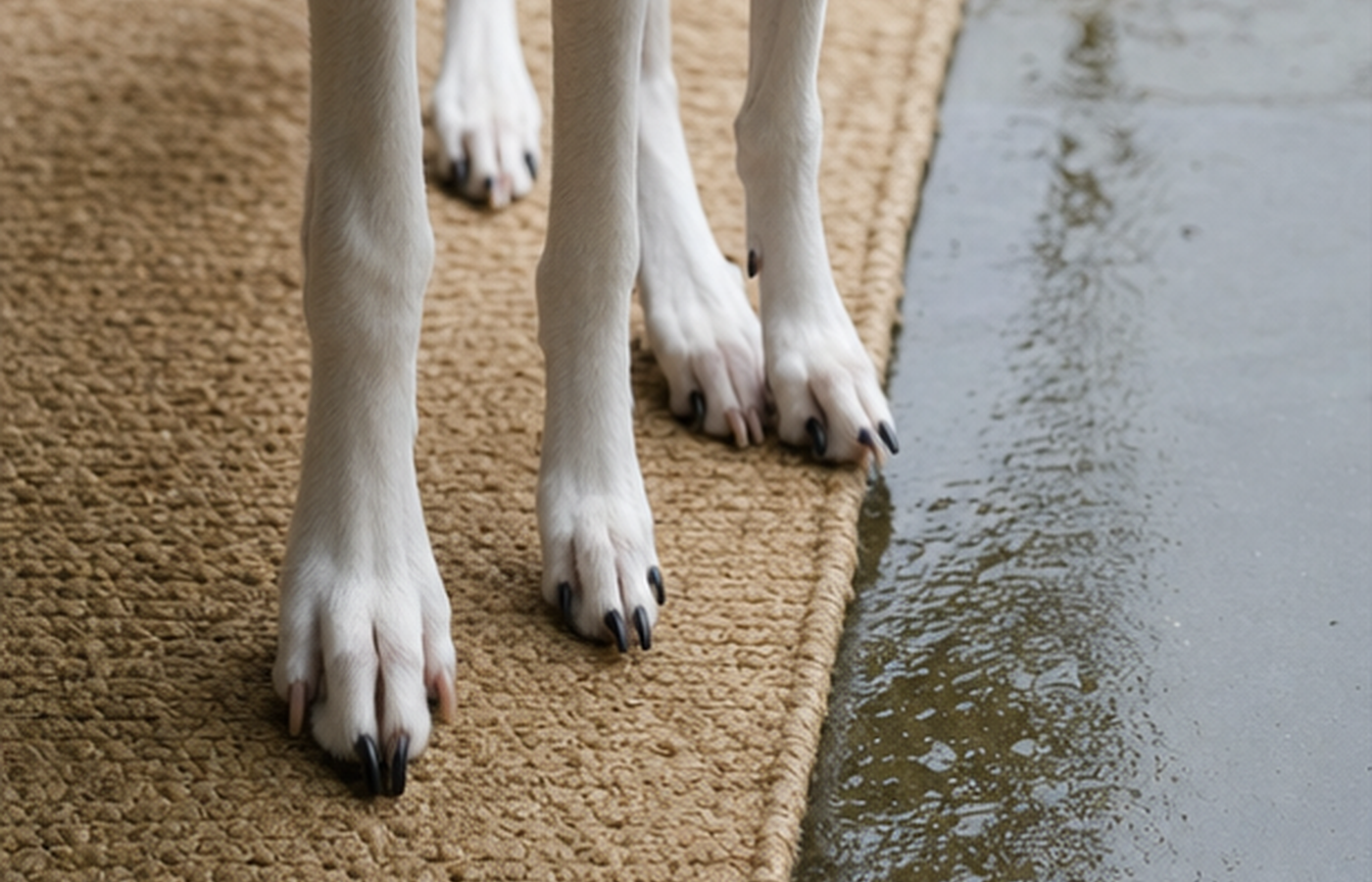
Smooth tiles at the entrance may become slippery. Long wet grass brushes the belly. Grit and road residue can irritate skin. A dog with sore feet or joints may hesitate where a confident dog walks straight through.
Create an easy route:
- put a secure non-slip mat across a slick threshold;
- use the driest exit available;
- avoid forcing the dog through deep puddles;
- check paws, nails and the skin between the toes after the walk;
- wipe legs, feet and belly when you return.
Dogs Trust advises wiping dogs after wet, cold walks, while the RSPCA notes that damp fur can contribute to skin irritation and matting.
Practical comfort is not bribery. It is good route design.
Build a Towel Station Worth Coming Home To

Some dogs dislike the walk less than the chaotic ceremony afterward.
Prepare the landing before you leave: a non-slip mat, two soft towels and treats within reach. Keep the drying sequence calm and predictable. Start with the areas your dog already accepts and avoid trapping them in a corner.
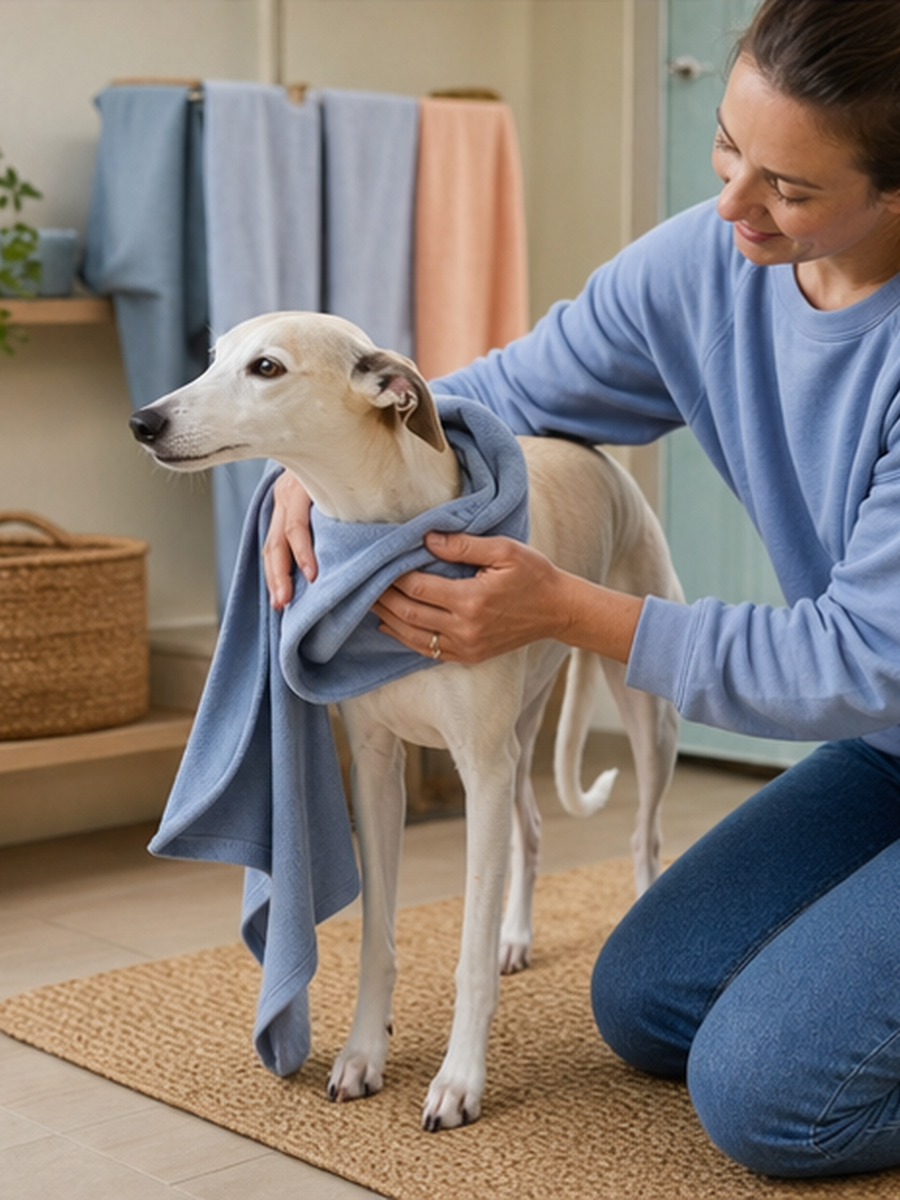
If towel handling is difficult, practise on dry days. Show the towel, reward investigation, touch one shoulder briefly, then stop. Gradually build a routine the dog can predict.
Do not chase a wet dog around the kitchen with a large flapping towel. The CloudyAww weather department has reviewed this method and found it operationally loud.
Replace Distance With Indoor Work

On a very wet day, a shorter outdoor mission can be paired with safe indoor enrichment.
Scatter part of a meal across a snuffle mat. Hide treats in cardboard tubes or loosely folded paper. Practise a few familiar cues, create a simple scent trail or let the dog search for a favourite toy. Keep games appropriate for your dog and supervise anything that can be chewed or swallowed.
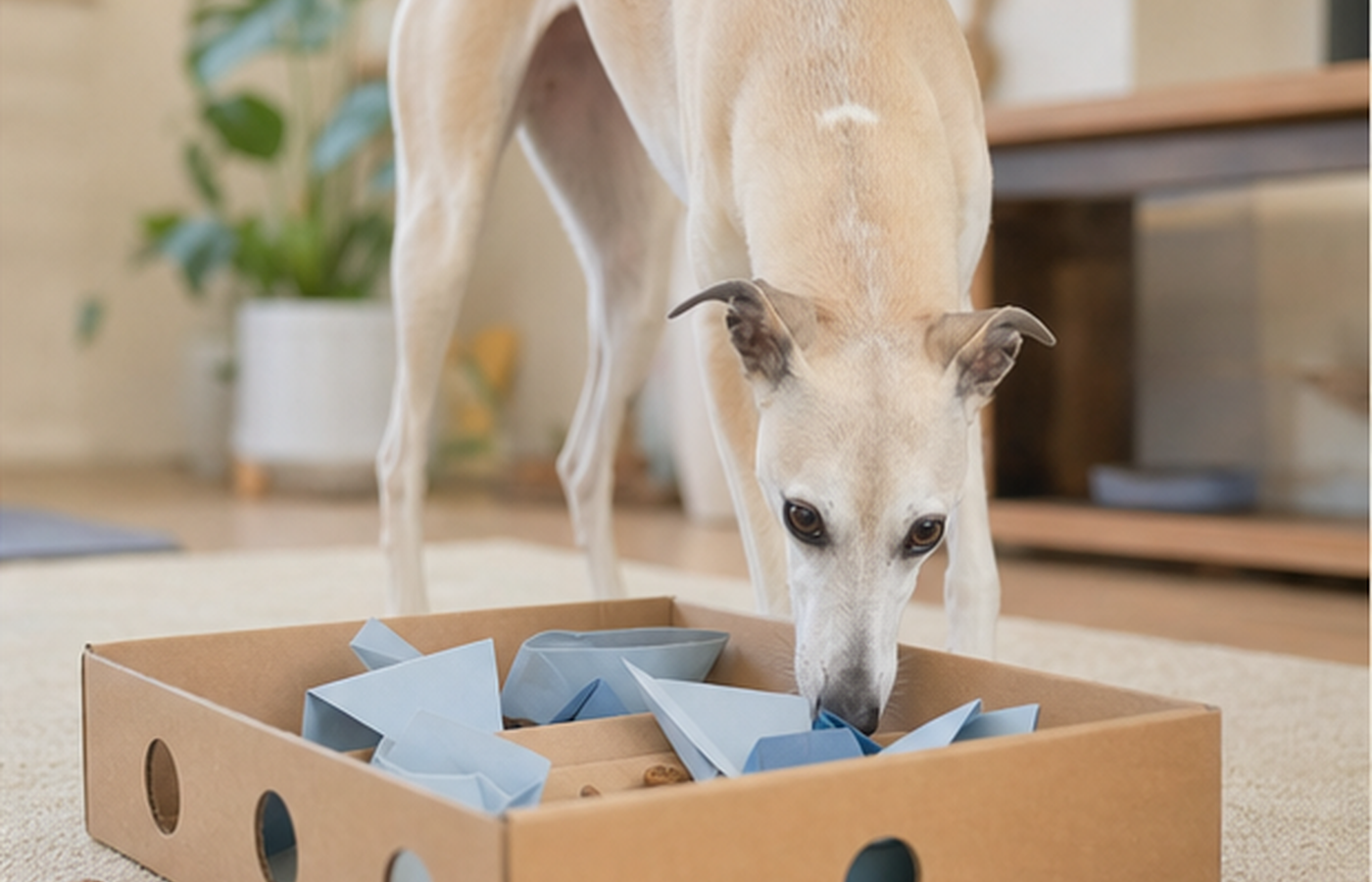
This is not a permanent substitute for every walk. It is a way to meet some sniffing, thinking and interaction needs without turning dangerous or overwhelming weather into a moral test.
The RSPCA’s hot-weather guidance makes the same wider point in a different season: dogs do not need to complete a standard walk regardless of weather, and indoor scent or training games can provide useful mental activity.
Adaptation is part of responsible exercise.
When Refusal Is New

A dog who has always disliked rain may simply have a strong preference. A dog who suddenly refuses any walk, moves differently or seems uncomfortable needs a closer look.
Contact your vet if reluctance appears with:
- limping, stiffness or difficulty rising;
- yelping, trembling or sensitivity to touch;
- sore, cracked or repeatedly licked paws;
- reduced appetite, low energy or a change in sleep;
- coughing, breathing difficulty or unusual fatigue;
- refusal that continues in dry, mild weather;
- a marked change from the dog’s usual mood or movement.
The RSPCA’s cold-weather guidance notes that dogs slower to rise when conditions are cold and wet may be showing signs of osteoarthritis. Weather does not cause every problem, but it can make discomfort easier to notice.
Do not increase the pressure until you know what changed.
The Gentler Rainy-Walk Plan

The CloudyAww version fits on one slightly damp note:
Shrink the mission: start with the doorway, a toilet break or a short sniff.
Choose the easy weather: use lighter rain, quieter routes and sheltered ground when possible.
Fix the equipment: a coat should fit and help; a threshold should not slide.
Make home predictable: prepare the towel station before leaving.
Swap distance for thinking: add indoor scent work when the outdoor outing must stay short.
Notice change: sudden reluctance, pain or refusal in good weather belongs with your vet.
The goal is not a dog who loves every raindrop. It is a dog who can step into the weather without being dragged into a conflict. Some days the route will grow. Some days the entire expedition will be eight metres, one important sniff and a prompt return to the sofa.
That still counts as useful information—and, on certain mornings, excellent project management.
For another walk that improves when the dog gets more choice, read why time to sniff matters. If handling at the doorway is part of the problem, explore how to help a dog feel calmer around visitors, or browse the full Aww Articles library.
Sources & further reading
- Dogs Trust: Stormy Weather
- Dogs Trust: Cold Weather Advice
- PDSA: Does My Dog Need a Coat on Winter Walks?
- RSPCA: How to Help Dogs in Cold Weather
- RSPCA: Heatwave pet-care guidance