

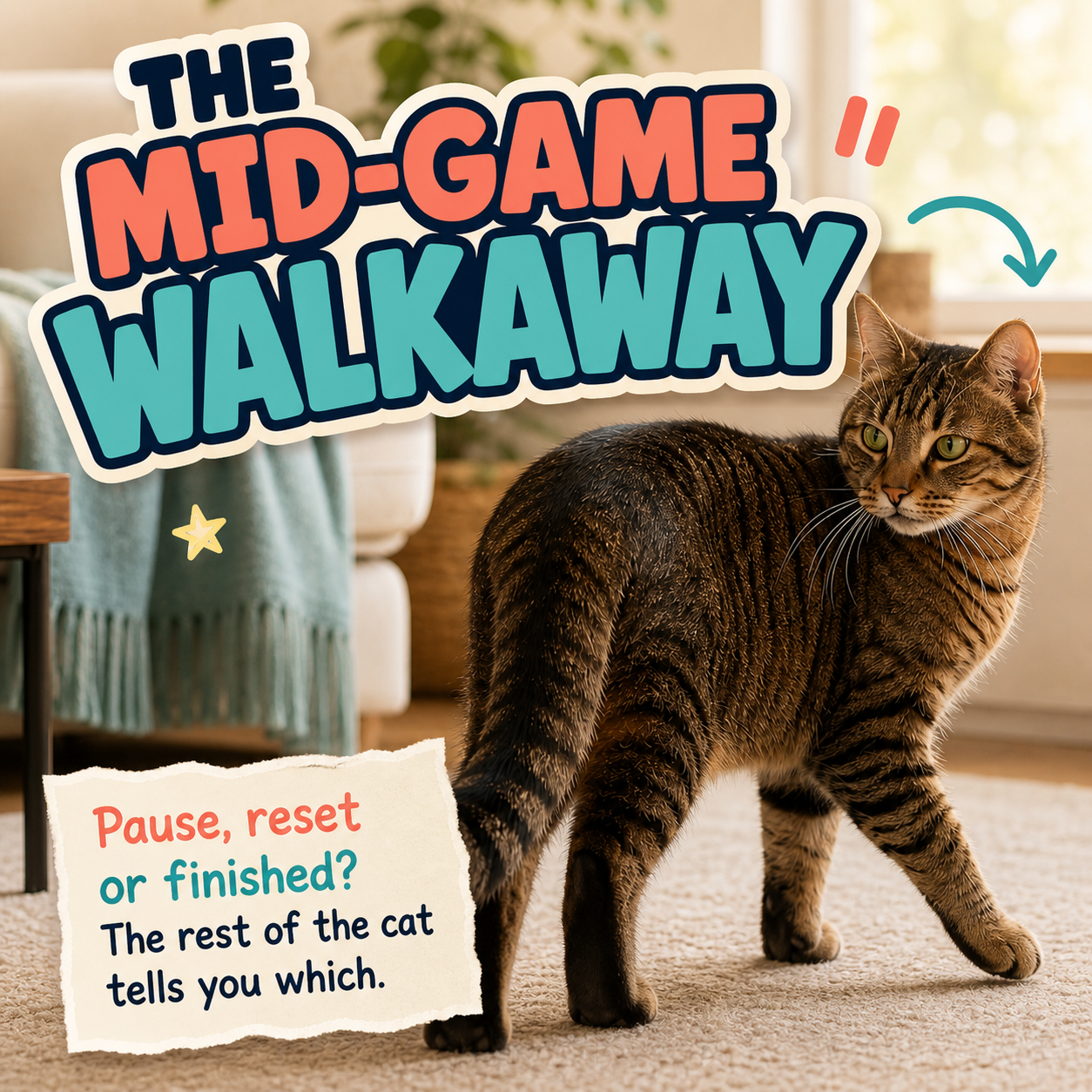
The game is going beautifully. The feather is behaving like a tiny criminal. Your cat is stalking it with the concentration of somebody defusing a laser-protected sandwich.
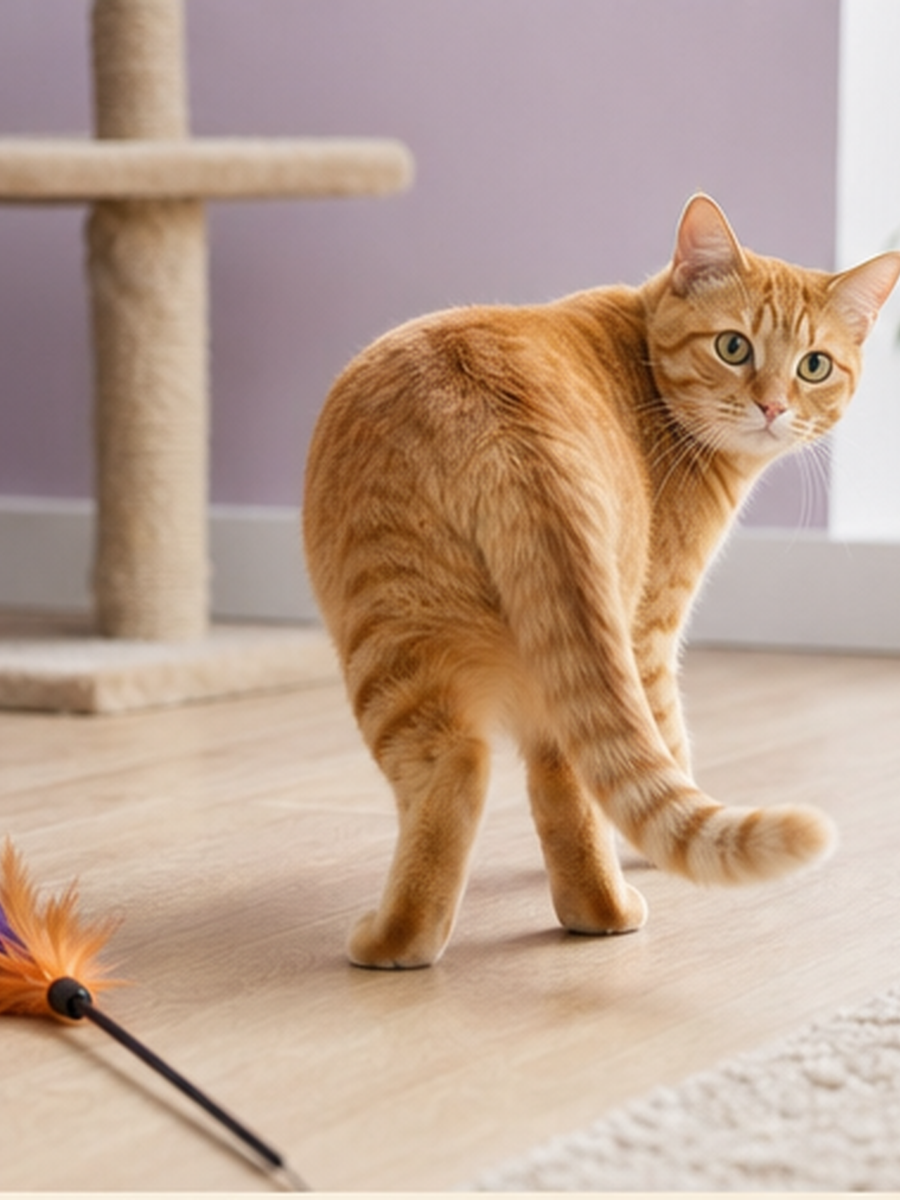
Then they stand up and leave.
No explanation. No formal resignation. They simply walk three metres away and inspect a chair leg as though the last ninety seconds never happened.
It is tempting to wiggle the toy harder, follow the cat across the room or assume the game has failed. Sometimes your cat really is finished. Sometimes the walkaway is a short pause, a change of position or a chance to watch the “prey” from somewhere better.
The useful question is not, “Why did my cat reject the toy?” It is: what did the body look like, what happened immediately before the departure, and what did the cat choose next?
The Walkaway Needs an Ending

A walkaway is easy to notice but incomplete on its own.
The Cat Friendly Homes guide to playing with cats gives a clear boundary: when a cat walks away, do not force the interaction. Let the cat choose and control what happens next. That is the safest default because it works whether the cat is briefly pausing or completely done.
Now watch the ending.
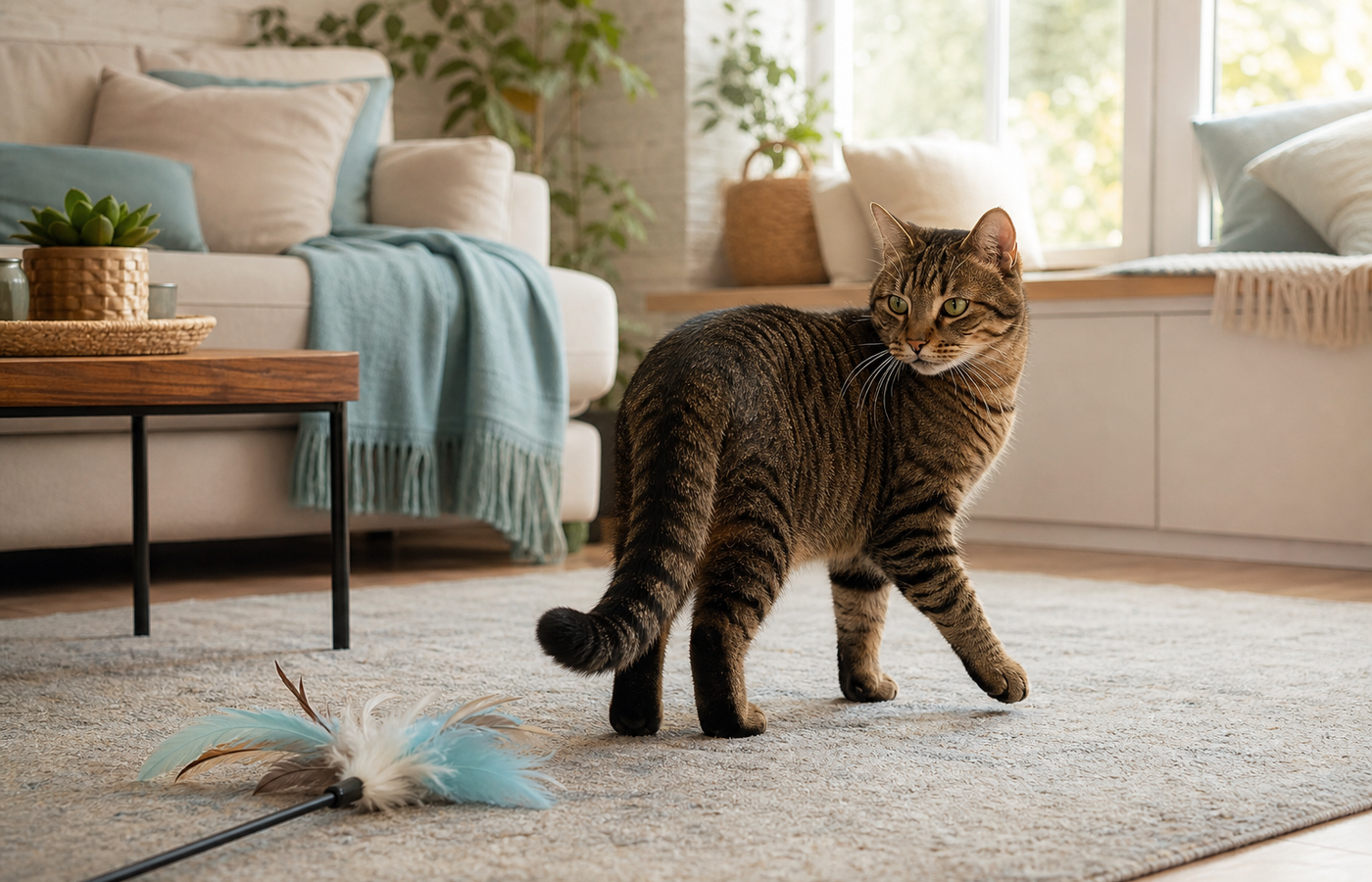
A cat who moves a short distance, stays loose and keeps watching the toy may still be interested. They might crouch beside a table, disappear behind the sofa or sit in a doorway with their eyes fixed on the feather. In hunting-shaped play, distance can be useful. The new position creates another place to stalk from.
A cat who keeps walking, turns their attention elsewhere, settles down or leaves the room is giving a different answer. The game does not need a final pounce and a closing ceremony. Walking away can be the ending.
A Loose Pause Looks Like This

A pause still contains information.
Look for a body that remains ordinary for your cat: ears in a neutral or gently forward position, muscles that are not rigid, a tail that is resting or moving normally, and movement that looks deliberate rather than frantic. The cat may stop and watch the toy, sniff the floor, groom briefly or reposition behind furniture.
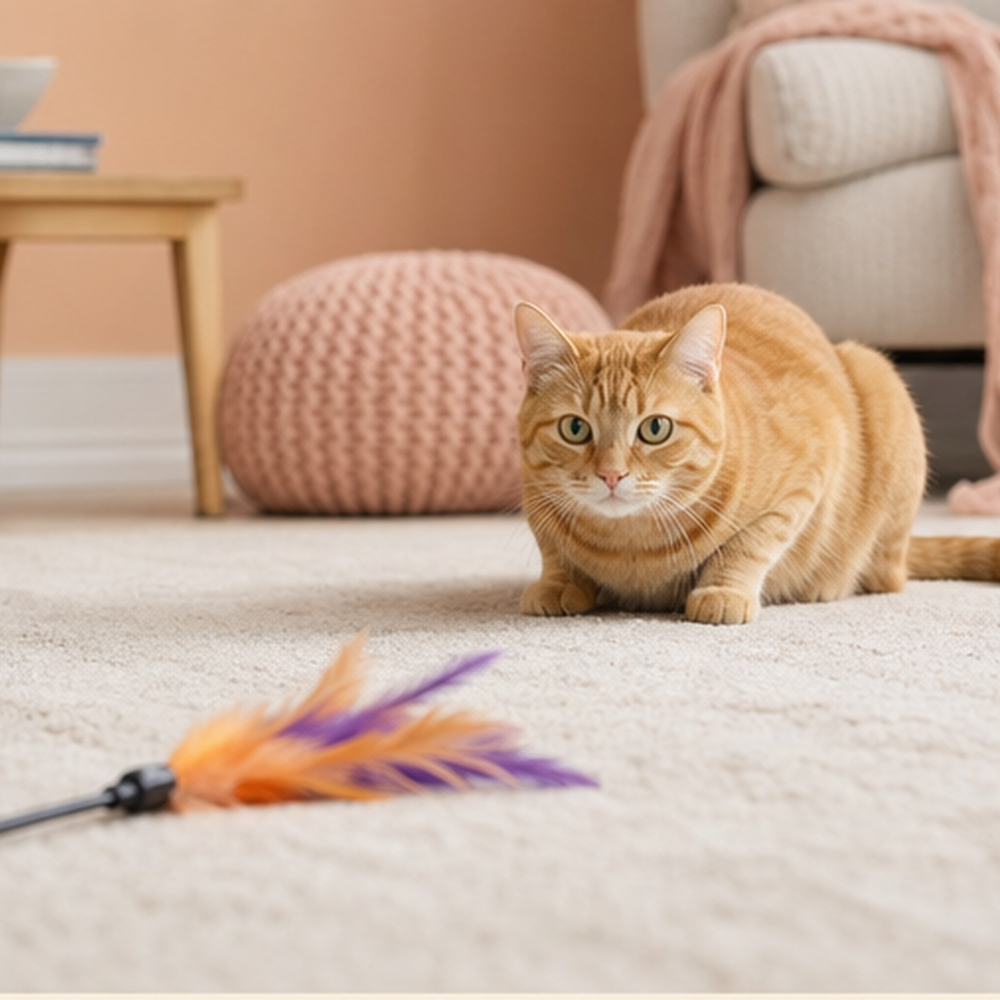
The pause may be seconds long or longer. Do not use a stopwatch as a translator. Your cat’s usual rhythm matters more than an exact number.
Signs that the game may still be open include:
- the cat keeps the toy in view;
- the head or ears track a small toy movement;
- the cat takes up a new stalking position;
- the body stays low and springy without looking tense;
- the cat returns or re-approaches without being followed;
- a small, prey-like movement brings attention back naturally.
None of these signs creates an obligation to continue. They simply suggest that the departure may have been a reset rather than a full stop.
Give the Pause Room
When the cat steps away, make the toy quiet.
Hold the wand still or let the toy “hide” partly behind a cushion. Wait. A real pause is easier to read when the human is not turning the feather into an emergency helicopter and pursuing the cat around the room.
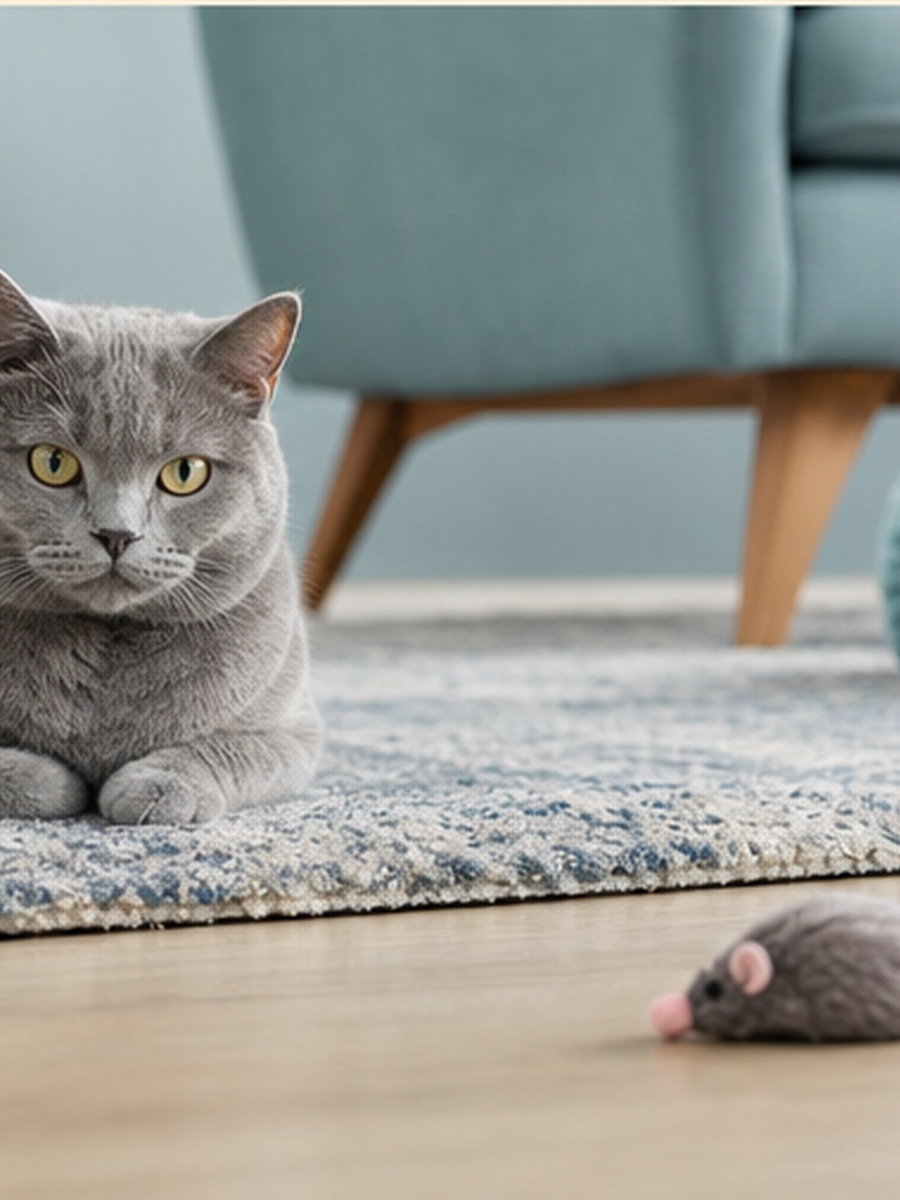
After a little space, you can try one small movement away from the cat—not at their face and not directly into their body. The Cats Protection play guide recommends moving toys like prey and allowing the cat to catch them periodically. Prey tends to flee, pause and hide. It does not repeatedly poke the hunter on the nose.
If the cat watches, approaches or stalks, the game has received a fresh yes. If they ignore the movement, continue walking or settle, let the game finish.
The CloudyAww rule is simple: offer information, not pressure.
A Return Is a Fresh Choice

When a cat comes back after a pause, treat the return as a new decision.
Restart gently. A slow toy movement behind a chair leg can be more inviting than instantly returning to maximum speed. Give the cat room to stalk, wait and catch. A cat who re-enters slowly is not asking to be launched straight into the championship round.
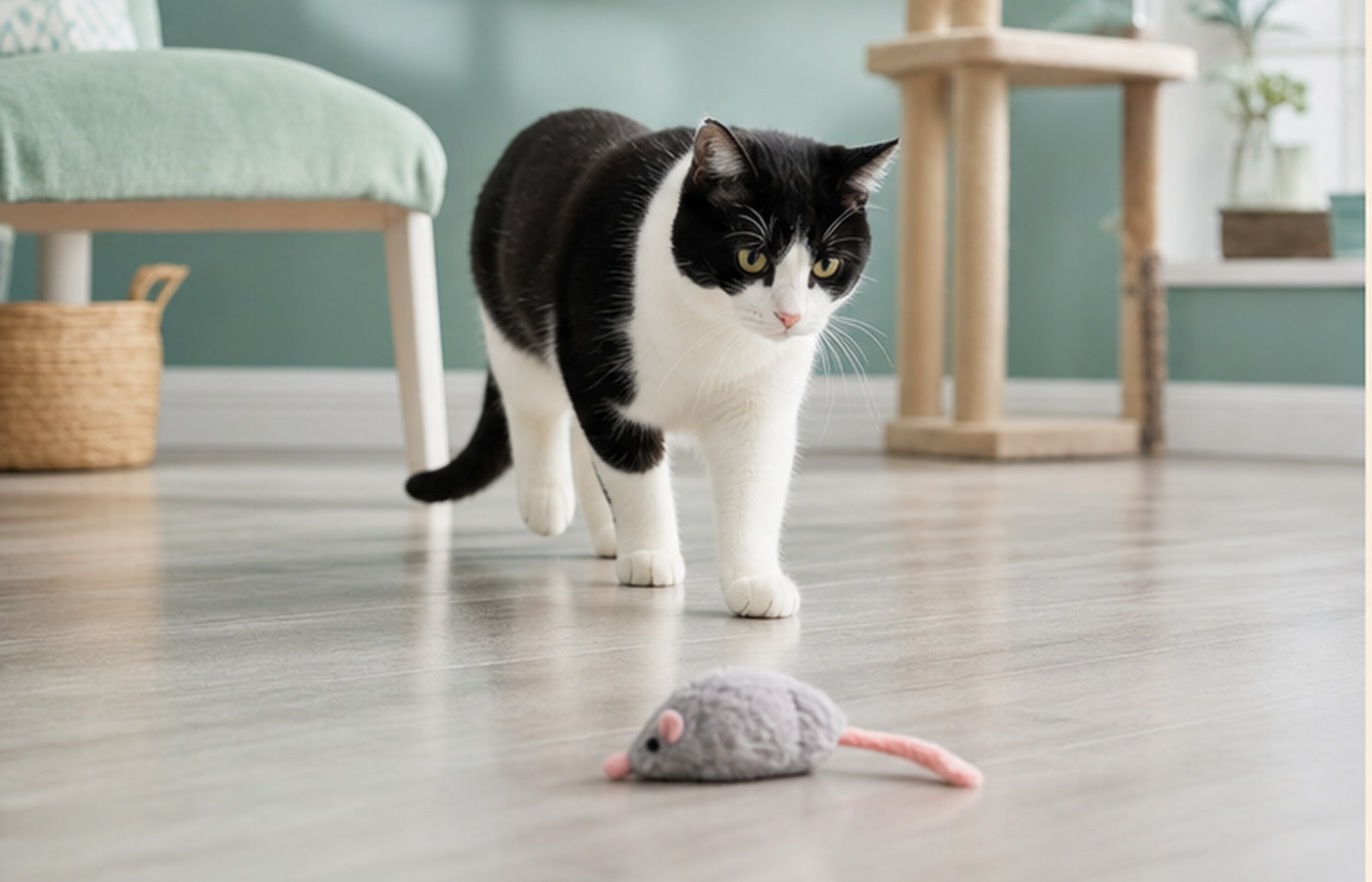
This is also a useful moment to notice what kind of return you are seeing.
A loose re-approach, soft body and controlled pounce fit a game that has reset well. A cat who rushes back with a thrashing tail, very tense posture or hard repeated grabbing may be over-aroused. Stop the toy and let the nervous system come down rather than trying to tire the cat out through intensity.
If you want the wider structure—stalk, chase, catch and finish—CloudyAww’s guide to the play session your indoor cat is actually waiting for builds the full game. Here, the important part is smaller: a return counts because the cat chose it.
When the Body Says Finished

Sometimes the walkaway is exactly what it looks like.
The cat leaves the room. They climb into a bed, begin a different activity or stop tracking the toy completely. Their body may stay relaxed; they are simply done. That is a perfectly good ending.
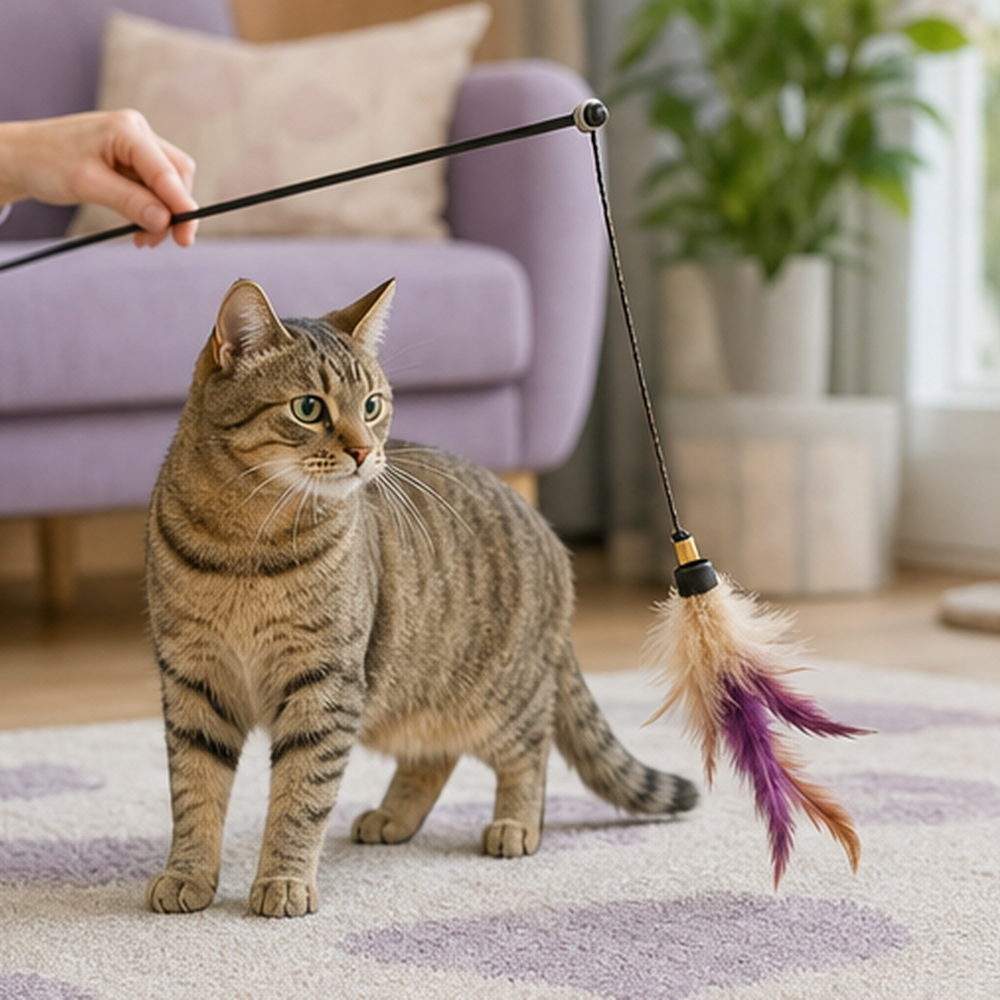
Other departures carry discomfort or rising arousal. Cats Protection lists signals such as looking away, nose licking, fast tail-tip twitching and ears moving to the side or back as subtle signs that a cat may be uncomfortable. Its play guidance also notes that skin twitching, tail flicking, swiping, hissing, yowling or attempting to run away can mean the interaction is no longer fun.
End the session and give space if you see:
- ears flattened or held sharply sideways;
- a rapidly flicking or lashing tail;
- skin rippling across the back;
- a tense crouch, hard stare or sudden freeze;
- swatting, hissing or vocalising that changes the tone;
- repeated attempts to escape or hide;
- the cat turning away every time the toy approaches.
Do not wait for a bite to prove that a quiet signal mattered. The walkaway already gave you a safe moment to stop.
Do Not Chase the Game

Following a departing cat with the toy can turn choice into pressure.
It can also make the toy less convincing. Good interactive play creates a little distance between hunter and prey. It lets the cat decide when to observe, approach and pounce. Chasing the cat removes that decision and can push an interested pause into irritation.
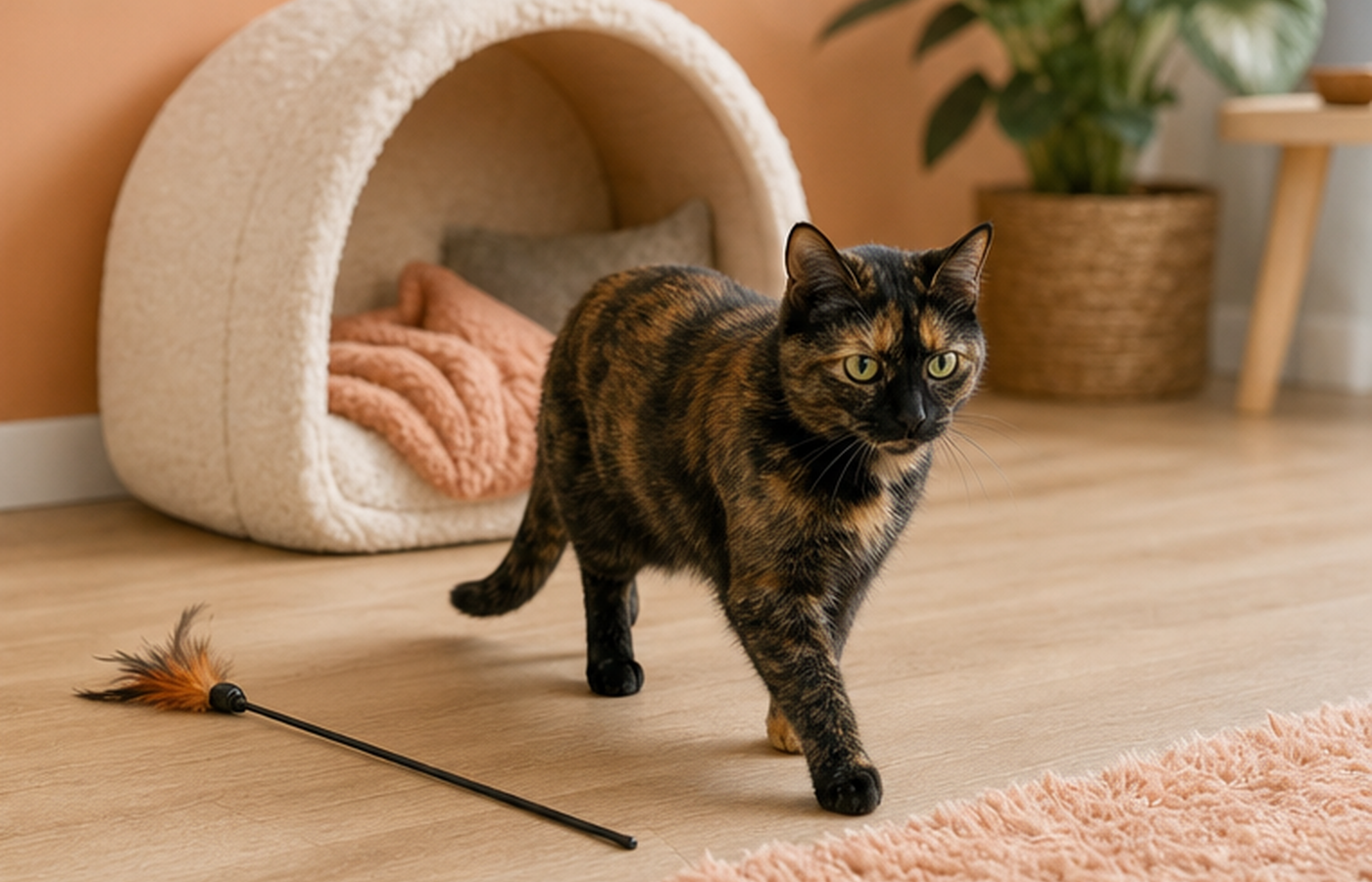
Keep hands and feet out of the prey role. Use a wand or other suitable interactive toy, and inspect it regularly for loose parts. Cat Friendly Homes warns that string, yarn, ribbons and similar materials can be swallowed and may cause serious intestinal problems. Put string-type and feather-wand toys away after supervised play rather than leaving them accessible.
If the cat is finished, finish cleanly: stop the toy, offer the catch if the cat is still engaged, then store it safely. You are not losing the game. You are proving that leaving works.
When the Pattern Changes
An occasional mid-game departure is ordinary. A sudden or persistent loss of interest deserves a different kind of attention.
VCA’s guidance on pain-related behaviour in cats advises that a sudden decrease in playfulness can be a sign of pain. Contact your vet if your cat stops enjoying a familiar game, tires much sooner than usual or repeatedly walks away alongside other changes such as:
- reluctance to jump, climb or use stairs;
- stiffness, limping or a changed walking style;
- hiding more or interacting less;
- reduced appetite or changes in drinking;
- altered grooming or sensitivity to touch;
- breathing changes, coughing or unusual tiredness;
- a noticeable change in mood, sleep or litter-tray habits.
One short play session cannot diagnose a health problem. The useful evidence is the change from your cat’s own normal pattern and the other signs around it.
The Tiny Mid-Game Read
When your cat walks away during play, try this:
Pause: Stop the toy and give the departure room.
Body: Look for loose interest, clear disengagement or signs of tension.
Next: Let the cat decide whether to watch, return, settle or leave.
Change: Notice whether this is normal for your cat or a sudden new pattern.
Sometimes your cat has ended the game. Sometimes they have moved to a better ambush station. Sometimes a chair leg has briefly become more important than anything you could possibly understand.
You do not need to drag the answer out of them. Make the toy quiet, read what happens next and let the walkaway count.
For more cat-shaped decisions, explore what a slow blink may mean and CloudyAww’s tiny guide to cat night zoomies, or browse the full Aww Articles library.
Sources & further reading
- Cat Friendly Homes: Playing With Your Cat
- Cats Protection: Cats and Play
- Cats Protection: The Importance of Play
- VCA: How Pain Affects Behaviour in Cats