

The cat is warm, folded neatly beside you and running a tiny invisible engine. The room feels calmer. Your hand slows. The purr seems to say that everything has been approved.

Often, that reading is perfectly reasonable. Cats commonly purr while resting comfortably, greeting familiar people, kneading or settling into contact. But a purr is not a medical certificate stamped all fine.
Cats can also purr when stressed, uncomfortable or in pain. The useful question is not simply, “Is the cat purring?” It is, “What is the whole cat doing, and is this normal for this cat in this moment?”
Comfort Is the Common Reading
A relaxed purr often arrives with a soft body. The cat may curl on their side, tuck their paws comfortably, blink slowly, knead a blanket or lean into familiar contact. Eating, grooming, toileting and movement remain normal.
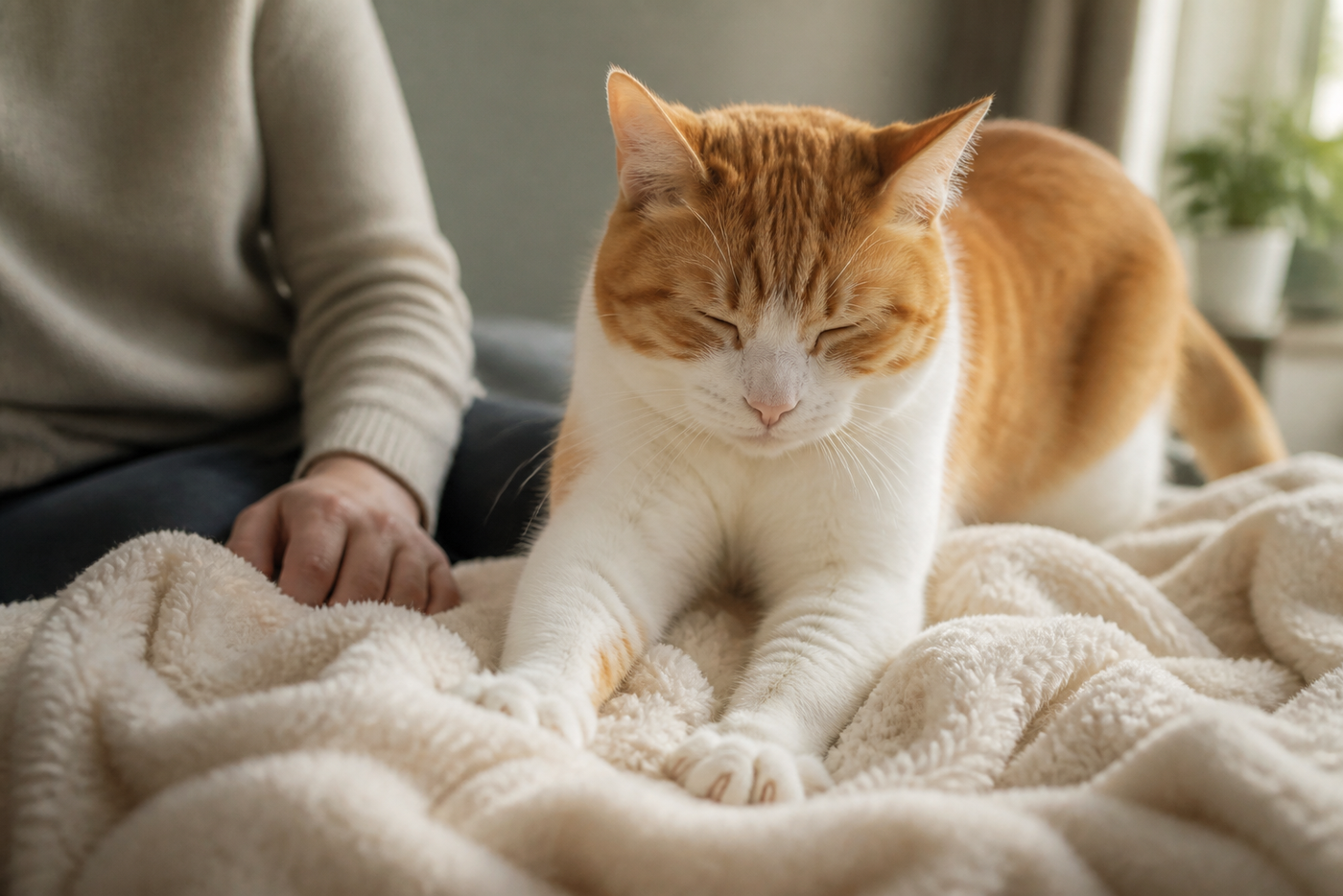
VCA Animal Hospitals notes that purring is usually associated with a calm, relaxed cat. That everyday association exists for a reason: many purring moments really are contented ones.
The Sound Does Not Work Alone
Purring is a vibration, not a sentence with one fixed translation. Listen to it alongside posture, face, location, timing and the behaviour that came before and after.
A cat purring on a favourite blanket after dinner gives you one picture. A cat purring under the bed, sitting hunched and refusing food gives you a very different one.
The same context rule appears in our guide to reading a cat’s tail as part of the whole cat. No single sound or shape gets the entire vote.
Look at the Face and Posture
A comfortable cat often has softly positioned ears, a relaxed muzzle and eyes that are open normally or gently narrowed. The limbs and spine look settled rather than guarded.
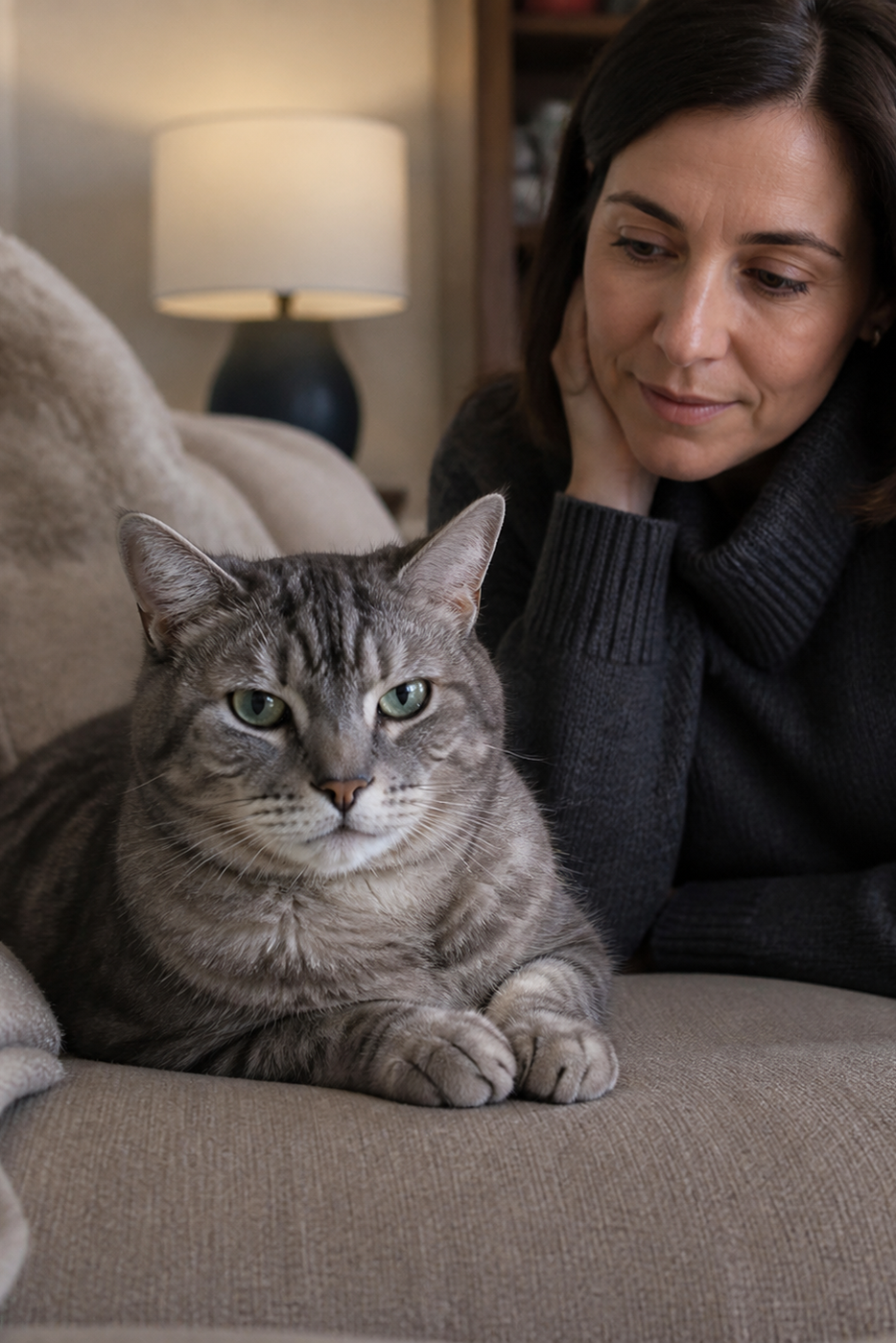
Possible discomfort may appear as a hunched or stiff posture, difficulty settling, narrowed eyes, ears rotated outward or back, a tense muzzle, unusual withdrawal or resentment of handling. These signs are not a home diagnosis; they are reasons to pay closer attention.
Compare With the Cat’s Baseline
The best reference is not a generic internet cat. It is the cat who lives with you.
Notice when your cat normally purrs, where they choose to rest, how they climb, how they enter the litter tray, how much they groom and what their usual appetite and social rhythm look like.
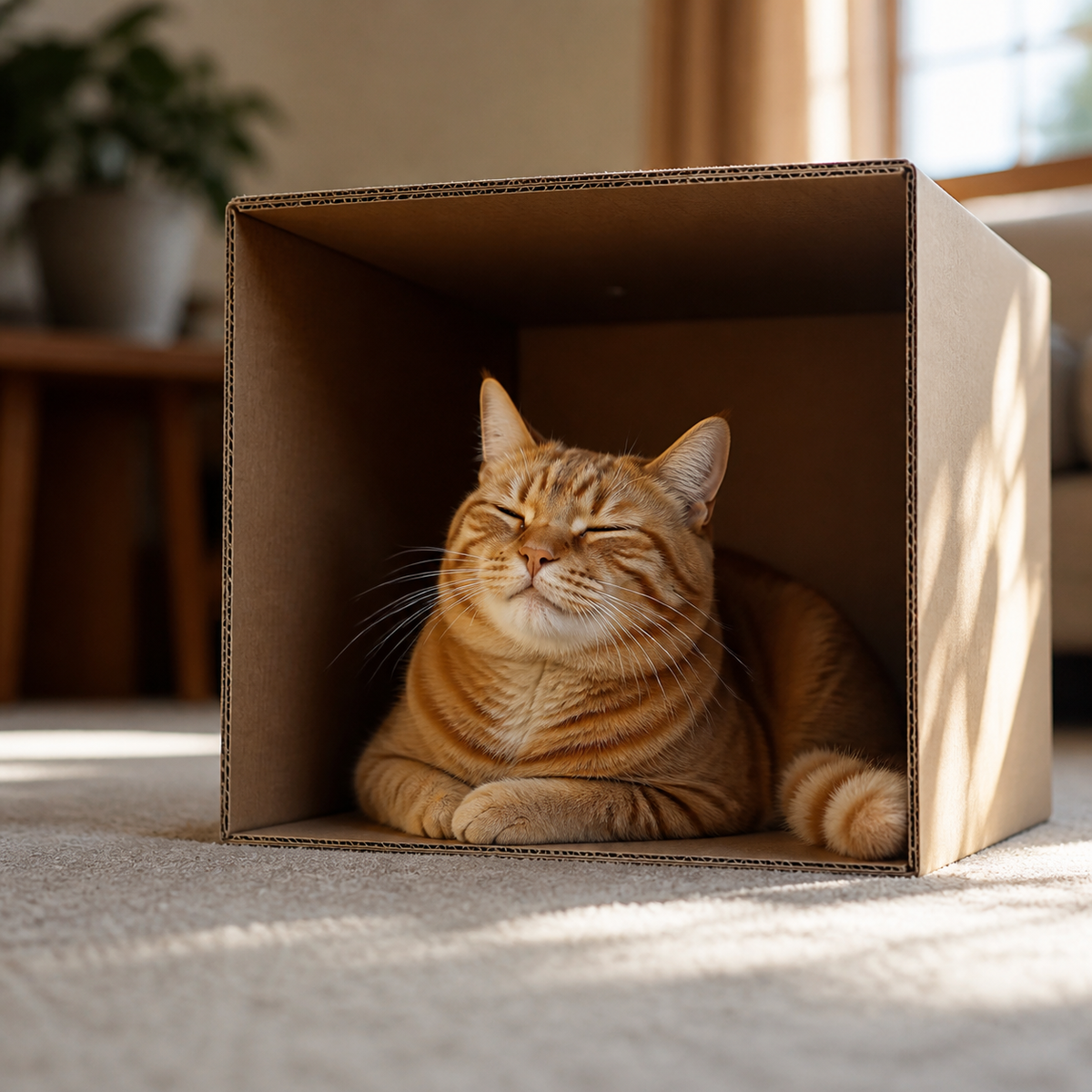
A new purr in an unusual setting matters more when it arrives with another change: hiding, reduced jumping, less grooming, restlessness, appetite change, toileting difficulty or a different reaction to touch.
A Purr Can Be Self-Soothing
Cats may purr in situations that are not obviously pleasurable, including veterinary visits, recovery or stressful moments. One cautious interpretation is that purring can accompany self-soothing as well as social comfort.
That does not mean every worried cat will purr, or that the sound proves a particular emotional or medical cause. It means the old equation—purr equals happy—has exceptions large enough to respect.
Do Not Test the Cat by Pressing the Issue
If the cat has moved away, hidden or become tense, do not keep touching them to see whether the purr continues. Give space, reduce noise and observe without turning the moment into an examination wrestling match.

If touch seems painful, stop. A cat who normally enjoys stroking but suddenly flinches, growls, guards an area or avoids contact needs a veterinary conversation rather than more experiments at home.
Check the Everyday Systems
Look beyond the sofa moment. Is the cat eating and drinking normally? Are they urinating and passing stool? Can they move, jump and stretch as usual? Are they grooming and engaging with familiar routines?
Pay special attention to repeated litter-tray visits, straining, crying, passing little or no urine, vomiting, collapse, difficulty breathing or severe weakness. Urinary obstruction—particularly in male cats—can be an emergency and needs immediate veterinary care.
For another gentle piece of feline communication, explore what a slow blink may mean.
Record the Change, Not Just the Sound
If something feels different, note when it began, what else changed and whether the purring appears during movement, rest, eating, toileting or touch. A short video may help your veterinarian see posture and behaviour, provided filming does not delay care or disturb the cat.
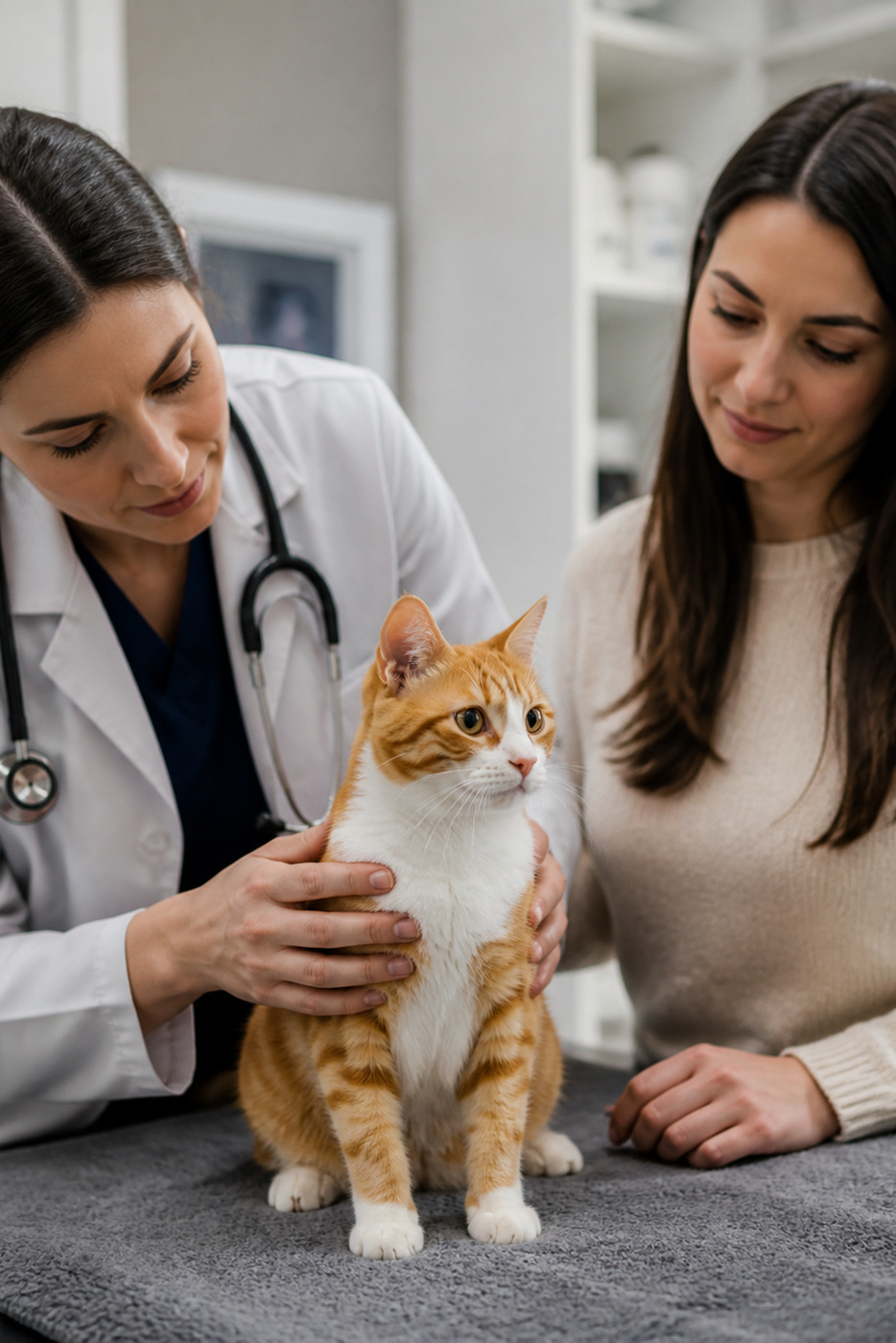
Avoid giving human pain medicine. Common over-the-counter medicines can be dangerous or fatal to cats. Contact a veterinary clinic for safe guidance.
When to Call the Vet
Arrange veterinary advice when unexpected purring comes with reduced appetite, hiding, stiffness, limping, difficulty jumping, poor grooming, unusual aggression, repeated restlessness or another sustained change from normal.
Seek urgent help for breathing difficulty, collapse, severe weakness, significant trauma, inability to urinate or obvious severe distress. Do not wait for the cat to stop purring before taking the rest of the evidence seriously.
The Whole-Cat Purr Check
- Setting: Is this a familiar comfortable moment?
- Body: Does the cat look loose and settled or tense and guarded?
- Routine: Are food, movement, grooming and toileting normal?
- Change: Is this purring unusual in timing, frequency or context?
- Company: Does another sign suggest pain, fear or illness?
Enjoy the warm sofa purr. It is one of the loveliest sounds in a home. Just let it be a clue rather than a conclusion—and listen to the rest of the cat as carefully as the tiny engine.
Trusted Sources
- VCA Animal Hospitals: Meaning of different cat sounds
- VCA Animal Hospitals: How do I know if my cat is in pain?
- International Cat Care: Cat Carer Guide to acute pain
- Cornell Feline Health Center: Feline lower urinary tract disease