

The cat walks over with the calm focus of somebody about to stamp a passport. Their forehead meets your hand, there is one determined little push, and then a cheek slides past your knuckles. Inspection complete. You have been officially re-scented.
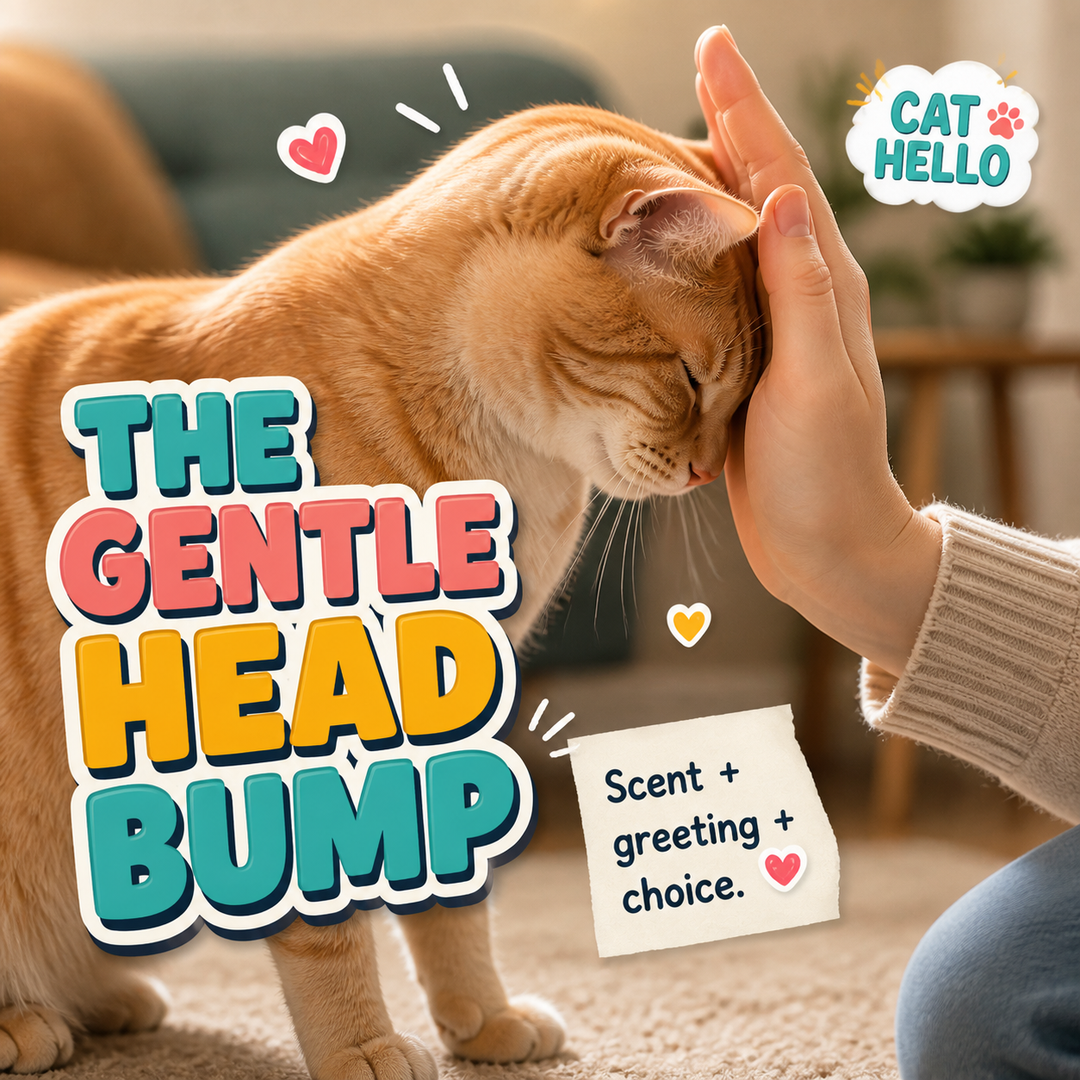
That gentle contact is often called head bunting. It can overlap with greeting, familiar scent, social contact and a request for attention. It is usually a warm, ordinary part of cat communication—but it is not a one-gesture dictionary entry.
The useful read comes from the whole moment: who approached, how the body looked, whether the cat could leave, and what happened next.
The Bump Has a Name
Head bunting is the friendly-looking forehead or cheek contact a cat makes with a person, another cat or an object. It may begin with a soft push from the top or side of the head and continue into a cheek rub.
Cats Protection and VCA Animal Hospitals describe facial rubbing as a form of scent communication. Cats have scent-producing glands around areas including the cheeks, chin, forehead and near the ears. When the face moves across a familiar person or surface, scent is left behind even though a human nose will not notice it.
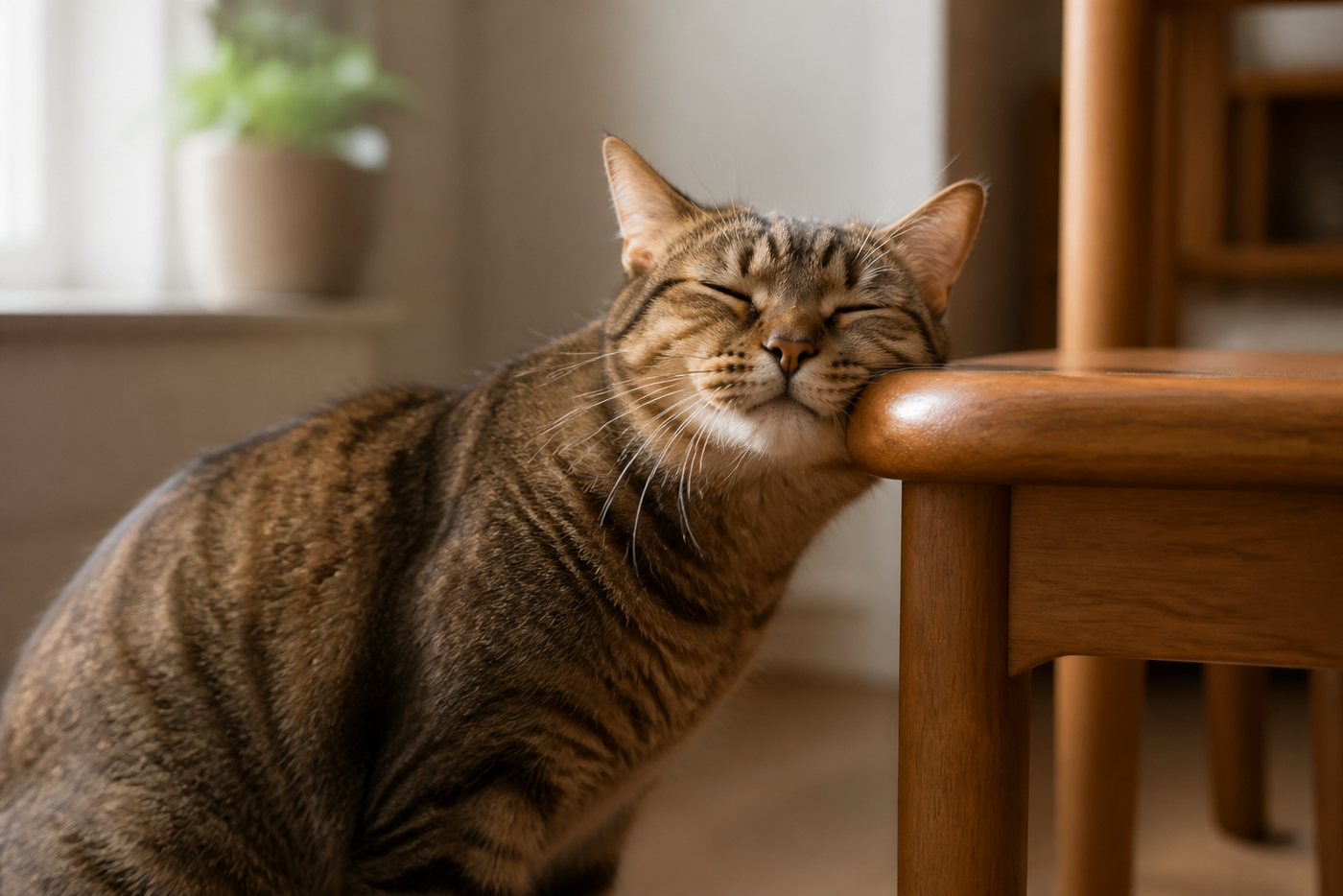
This helps explain why the same cat may bump your hand, rub a chair leg and sweep a cheek across the corner of the sofa. The behaviour can be social and practical at the same time. Cat communication is very comfortable with doing two jobs before breakfast.
Familiar Scent Helps Build a Safe Map
Cats live in a world organised heavily by smell. Facial rubbing can help mark people and places as familiar, creating a scent map that feels known rather than strange.
That does not mean your cat is claiming you like a tiny landlord with a clipboard. A better interpretation is that your scent and theirs are becoming part of the same familiar environment. Cats Protection notes that cats in the same social group may rub against one another and maintain a shared scent profile.
The same context-first approach matters when reading movement. Our guide to a cat’s tail in context explains why no single curve or flick should overrule the rest of the cat.
A Greeting Can Also Be a Request
A head bump may arrive when you return home, sit down, open the food cupboard or finally stop moving long enough to become useful. Greeting, attention and learned routine can overlap.
If a cat repeatedly nudges your hand and then leans back in, they may be inviting more contact. If they bump once and walk toward a toy, door or bowl, the next part of the sequence adds useful information. Cats can learn that a successful forehead memo gets the human department moving.
Avoid reducing every bump to food, affection or ownership. Watch what the cat actually does next. A gesture can begin a conversation without containing the entire agenda.
Let the Cat Set the Pressure
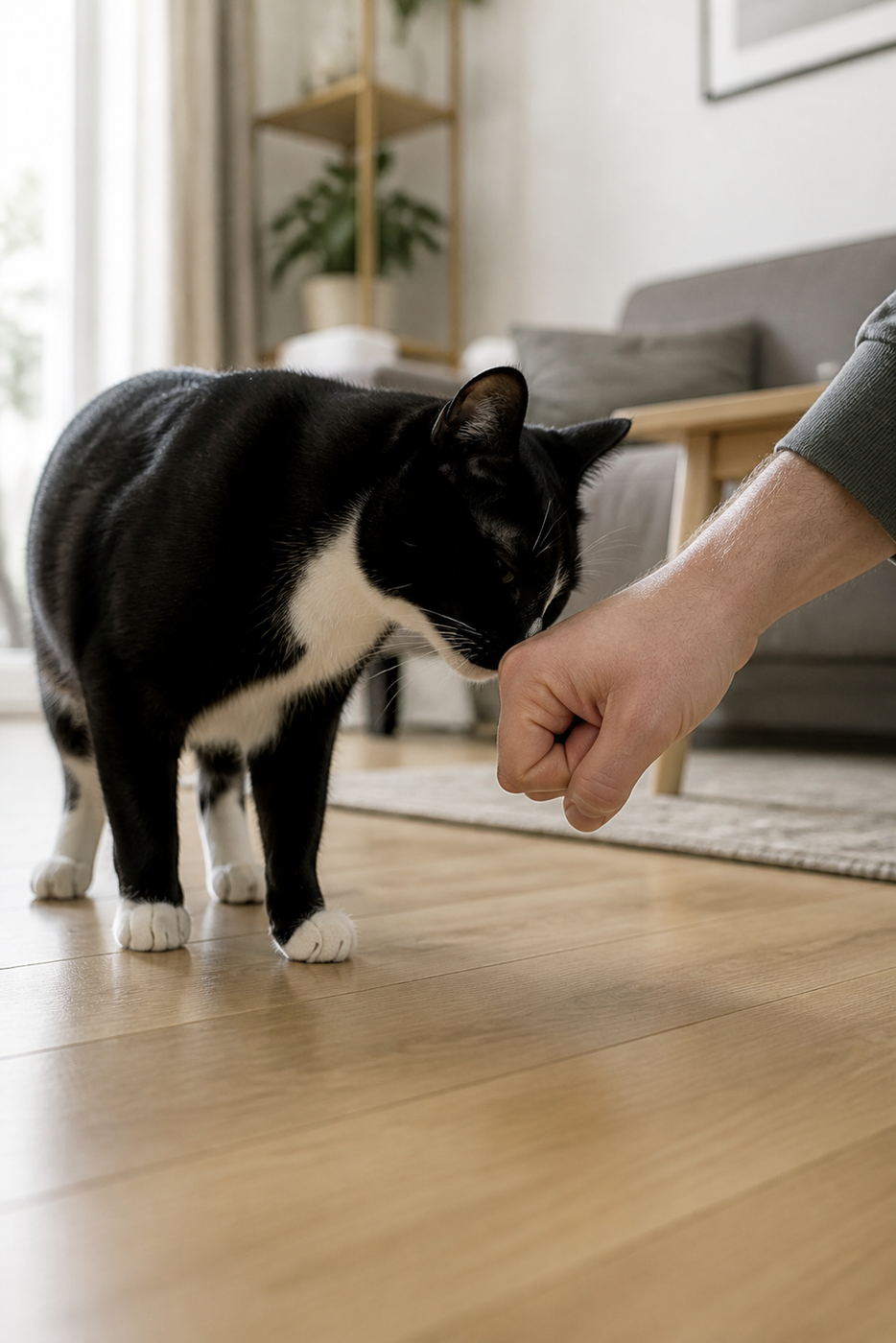
The easiest respectful response is wonderfully low-tech: keep your hand relaxed and let the cat choose the contact. International Cat Care’s homing guidance recommends offering a slightly closed hand at the cat’s level and allowing the cat to approach, sniff and rub rather than reaching down from above.
If the cat presses their cheek into your still fingers, you can try a gentle cheek or chin stroke. Pause after a few seconds. If they remain loose, nudge for more or return to your hand, the conversation is continuing. If they turn away, lower their body, flatten the ears or move off, let the conversation finish.
Choice is not a mood-killer. It is part of what makes the interaction feel safe.
Read the Whole-Cat Hello
A relaxed greeting often includes a comfortably raised tail, neutral or forward ears, soft eyes, an easy approach and freedom to move away. Purring or a trill may appear, but neither is required.
Look at speed and tension too. A soft forehead nudge from a loose cat differs from frantic repeated rubbing paired with restlessness, loud vocalising or a sudden change in routine. One snapshot can be charming; the sequence tells you more.
For another quiet greeting signal, explore what a cat’s slow blink may mean. As always, eyes, ears, posture, movement and context belong in the same reading.
Cats May Bunt Other Cats Too
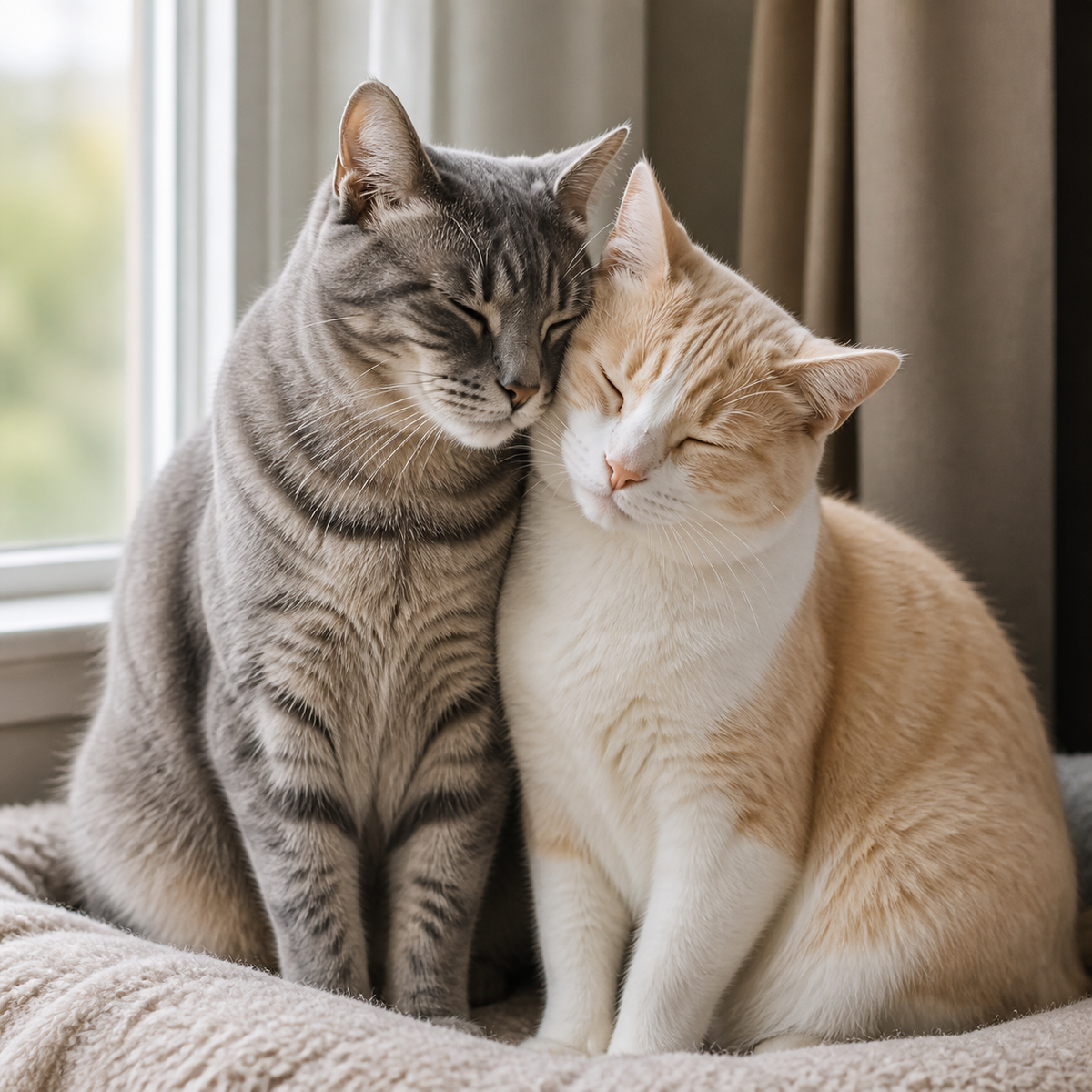
Cats who share a friendly social relationship may rub heads or cheeks. This can help maintain a familiar group scent and may appear alongside sleeping in contact, mutual grooming or relaxed time spent close together.
Do not use one head rub to declare two cats best friends. In a multi-cat home, also notice access to food, water, litter trays, resting places, high routes and exits. Quiet blocking and avoidance can coexist with occasional contact.
A good household setup gives each cat enough separated resources and enough choice that friendliness never has to be negotiated at a bottleneck.
Do Not Turn a Hello Into Mandatory Petting
A cat can rub against you without requesting a full-body massage. Some cats enjoy cheek and chin contact but dislike long strokes along the back. Others want a greeting and then simply want to sit nearby.
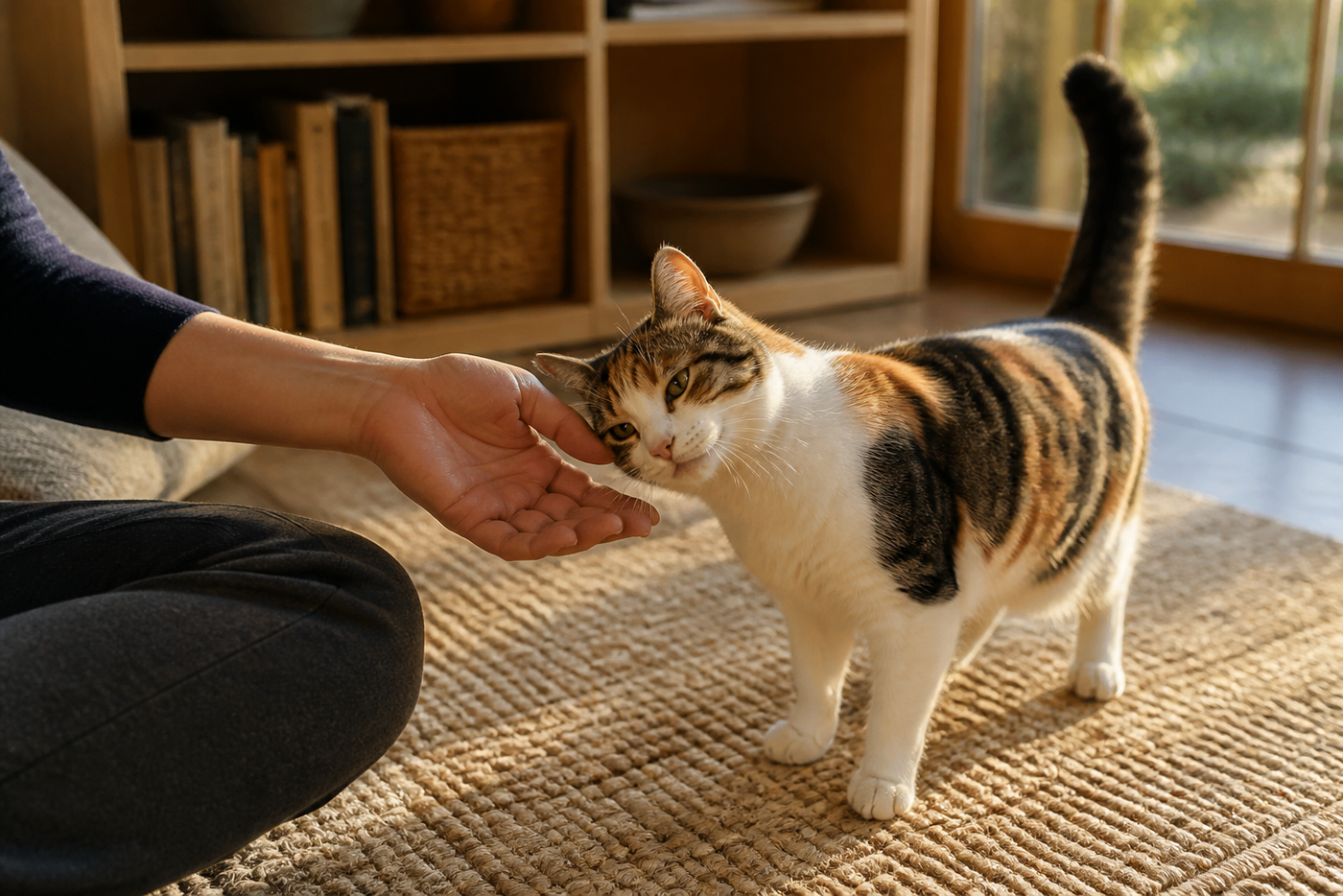
Cats Protection advises keeping petting on the cat’s terms: let the cat approach, watch their body language and stop if they move away or become tense. Repeated tail flicks, skin twitching, ears turning back, a sharp head turn or a sudden freeze can be useful stop signs.
The same rule protects play. In why a cat may walk away during a game, the exit is information—not an invitation to chase the cat with the activity they just paused.
Notice Changes From the Usual Pattern
Head bunting is commonly normal, but a sudden change in social behaviour deserves attention. A cat who normally greets you and stops, or a cat who suddenly becomes unusually clingy or withdrawn, may simply be responding to a change in the home. It can also accompany pain, illness or stress.
Look for supporting clues: appetite, drinking, litter-tray use, grooming, jumping, walking, sleep, hiding and reaction to touch. A change across several systems is more informative than one missing forehead bump.
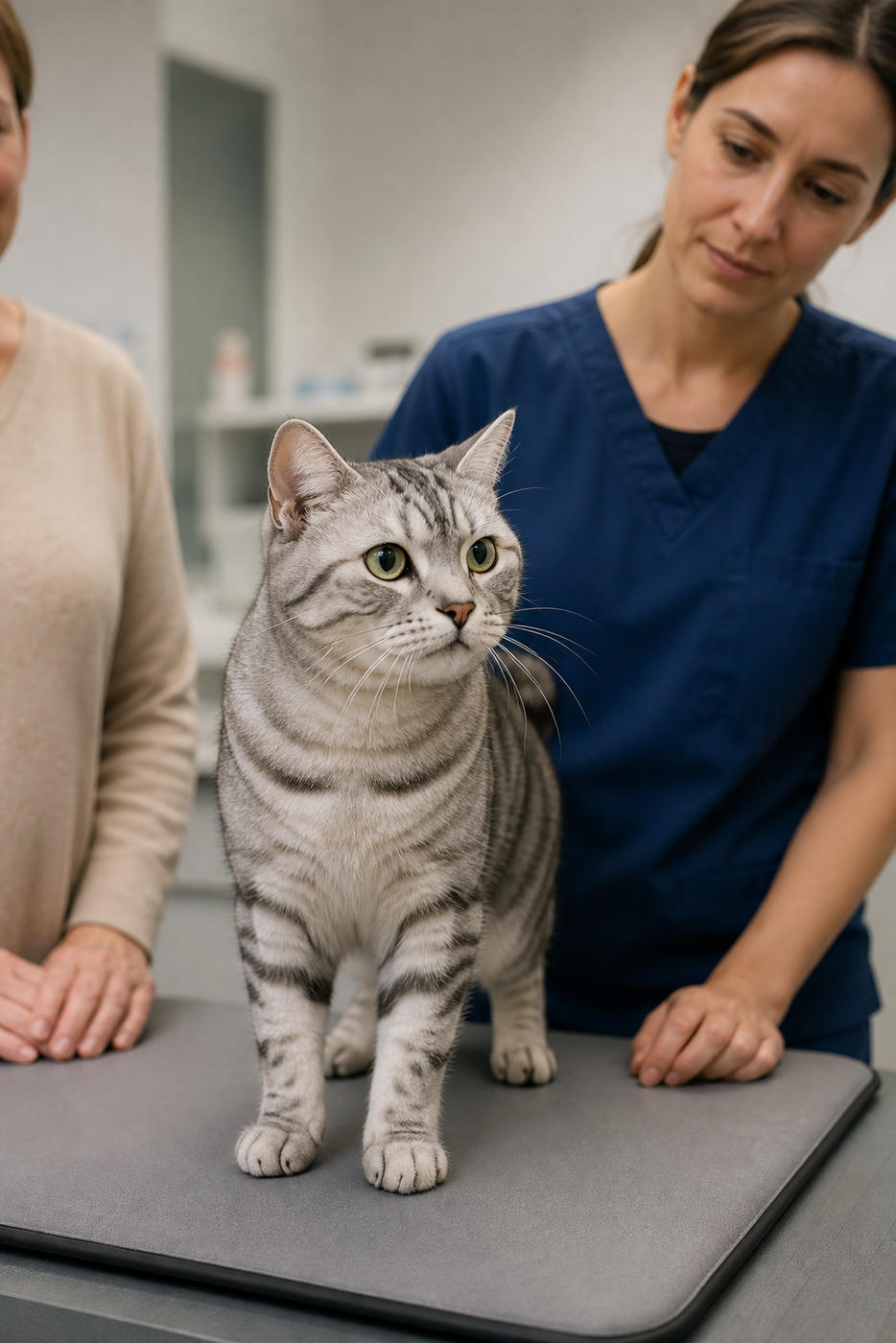
Contact a veterinarian when the behaviour change is persistent or appears with pain, weakness, disorientation, appetite loss, toileting changes or another clear departure from normal.
Head Bunting Is Not Head Pressing
A social head bump is brief and directed: the cat approaches, makes contact, rubs and then continues interacting or moves away normally.
Head pressing is different. A cat may hold or push the head against a wall or other surface and appear disoriented, poorly responsive, unsteady or otherwise abnormal. That is not affectionate bunting and needs urgent veterinary advice, especially when it appears with circling, seizures, weakness or loss of coordination.
Do not wait for a concerning neurological-looking behaviour to become more dramatic. Record a short video only if it is safe and does not delay contacting a veterinary clinic.
The Two-Second Head-Bump Check
- Approach: Did the cat choose to come closer?
- Body: Are the ears, eyes, tail and muscles loose rather than tense?
- Contact: Is this a brief forehead or cheek rub rather than persistent pressing?
- Choice: Can the cat stop and move away whenever they want?
- After: Do they continue normally, ask for something, settle or leave?
- Change: Is anything else different from this cat’s usual routine?
A Small Hello With a Scent Signature
The gentle head bump is one of those perfect cat gestures: affectionate-looking, practical, subtle and slightly administrative. It can help make a person smell familiar, open a social interaction and turn an ordinary hand into part of the cat’s safe map.
Offer the hand. Let the cat choose the pressure. Read the rest of the body. Then accept the tiny forehead stamp for what it is: a warm clue, not a compulsory cuddle contract.
Trusted Sources
- Cats Protection: Why does my cat rub against me?
- Cats Protection: How to pet a cat
- International Cat Care: Cat Friendly Homing Information Pack
- VCA Animal Hospitals: Why do cats headbutt you?