


There is a particular patch on some dogs that seems to contain a tiny, badly labelled switch.
Your fingers find it. The hind leg starts thumping. The dog looks mildly surprised by its own equipment. For a few seconds, the living room has acquired a furry drum machine.
The useful answer is less mysterious than the button makes it look: that rhythmic leg movement is usually a scratch reflex. Touch in a sensitive area sends a signal through the nervous system, and the hind leg answers automatically. Your dog is not consciously deciding to perform a kick routine every time your hand reaches the correct coordinates.
The movement is real, quick and often funny. It is also only one part of the moment. A kicking leg does not, by itself, tell you whether the dog wants the scratching to continue. For that, you need to look at the rest of the dog.
The Hidden Button Is A Reflex

The scratch reflex is an involuntary response. In plain language, receptors in the skin notice the touch or irritation, sensory nerves carry that information towards the spinal cord, and motor nerves send an answer back to the muscles of the leg.
Watch The Kick Button In Action
That short route is useful because it does not have to wait for a long, conscious committee meeting in the brain. The body can produce a fast, repeated scraping movement near the spot that has been stimulated.
Humans have reflexes too. A clinician tapping below your kneecap can make your lower leg move even though you did not issue a personal instruction to kick the room. A dog’s scratch reflex is not exactly the same test, but the automatic quality is the helpful comparison: the movement can happen before intention enters the story.
Why One Spot Works And Another Does Not

If you move your hand two centimetres and the leg suddenly stops, you have not broken the dog. Different parts of the skin can have different sensitivity, and individual dogs do not all react in the same places or with the same strength.
The classic button often seems to live around the side of the chest, belly, flank or near the base of the neck, but there is no universal map. One dog produces an immediate helicopter leg. Another offers a single polite twitch. Another does absolutely nothing and looks at you as if this experiment requires better snacks.
That variation is normal. A reflex can also be easier to trigger on one side, in one position or on one day than another. What matters is not collecting the strongest possible kick. The useful question is whether the whole interaction remains comfortable.
A Kick Is Not A Five-Star Review
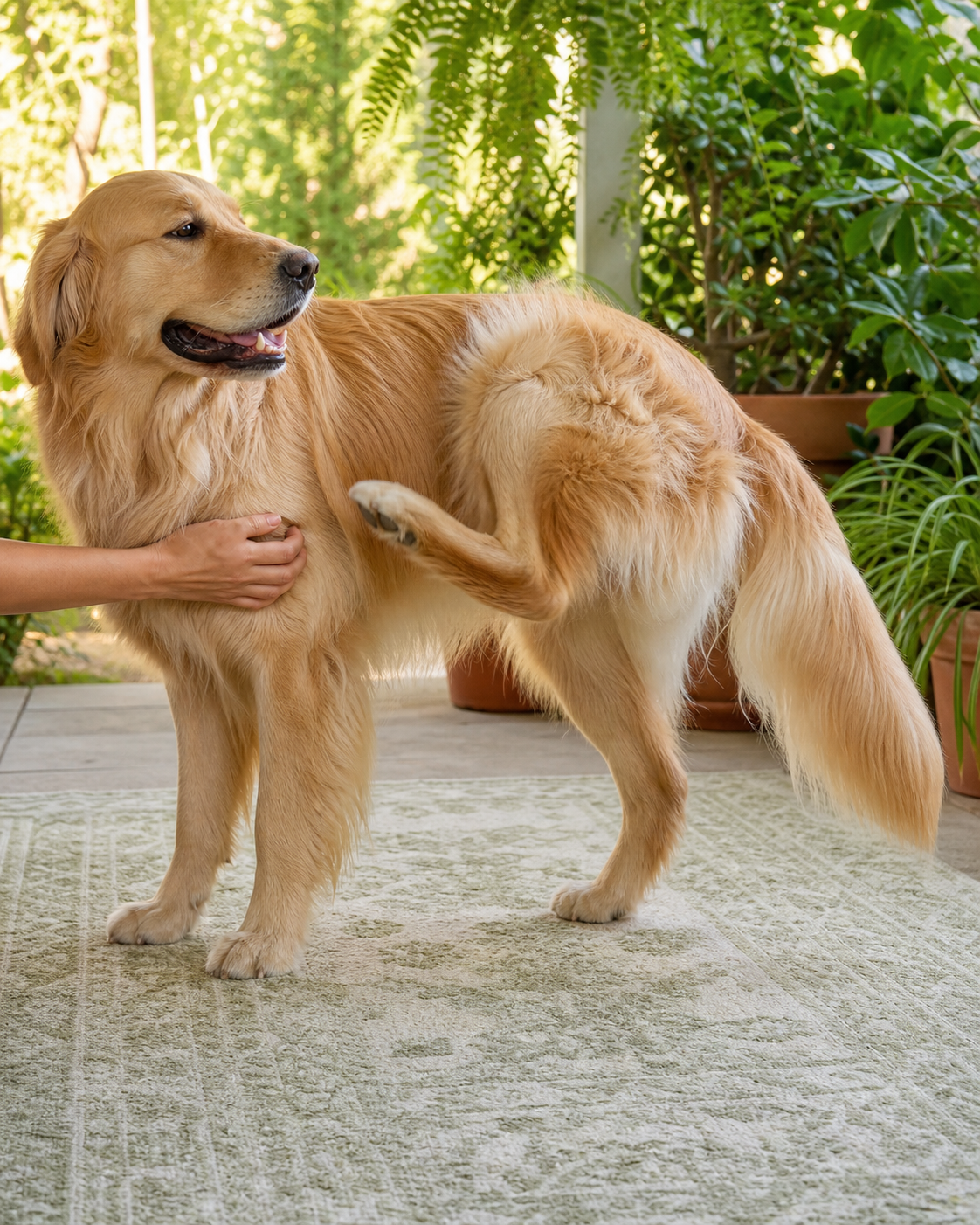
This is the part worth remembering: automatic movement and enjoyment are not the same thing.
A dog may enjoy the attention while the reflex happens. A dog may feel neutral about it. A dog may also be itchy, over-stimulated or quietly ready for your hand to go somewhere else. The leg alone cannot separate those possibilities because the leg is busy doing its automatic job.
Read the voluntary signals around it.
A dog who is comfortable may stay loose, lean towards your hand, nudge you when you stop, keep soft eyes and choose to remain close. A dog who wants a break may become still or tense, turn the head away, close the mouth, pin the ears, lick the lips, shift their weight, move away or block your hand.
Our tiny guide to dog body language goes deeper into why ears, eyes, posture, movement and pauses are more useful together than any single signal.
Read The Dog Around The Leg
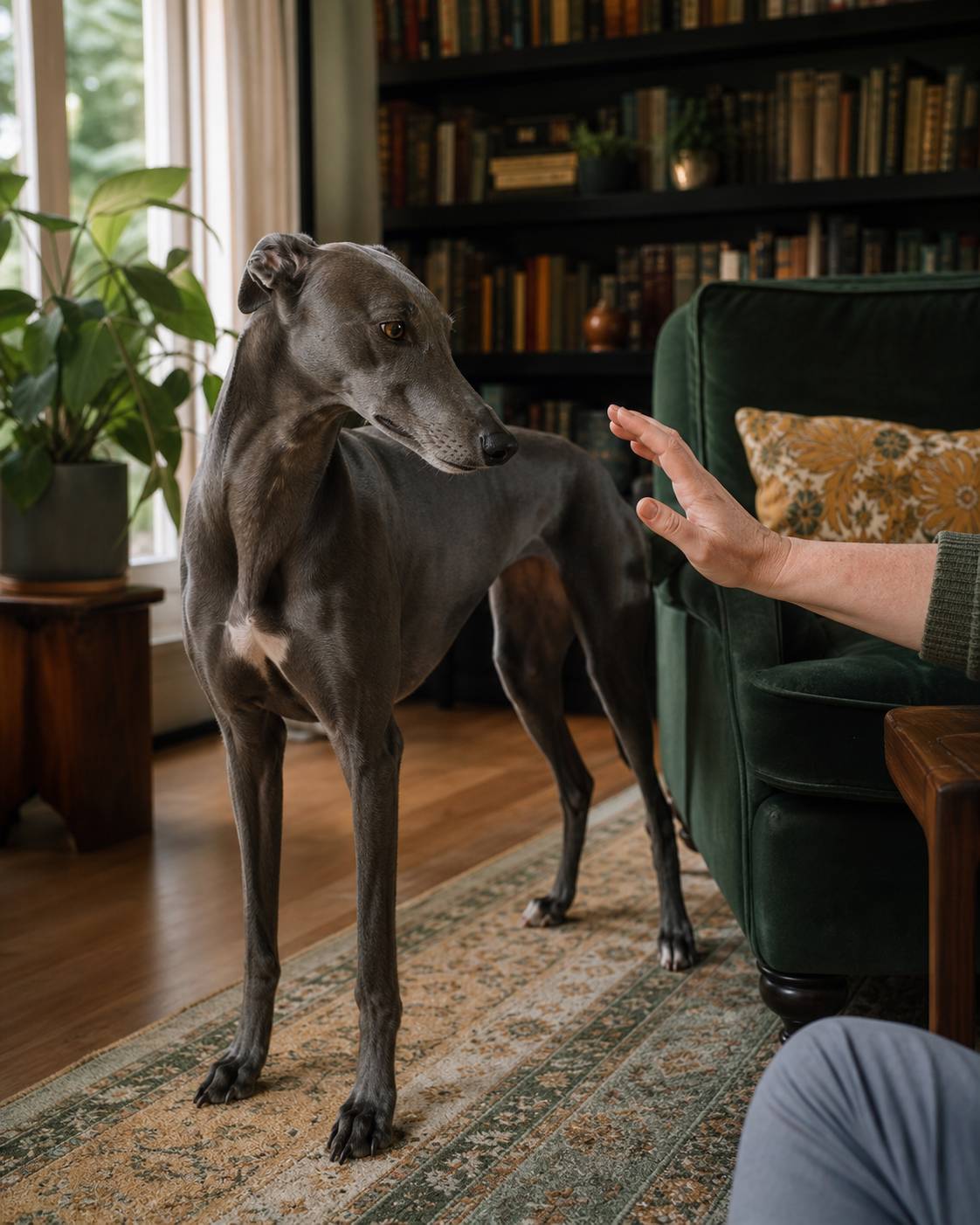
Try a whole-dog check while you scratch:
- Face: soft eyes and a relaxed mouth, or a tight mouth, worried brow and repeated turning away?
- Body: loose and wiggly, or stiff, lowered and trying to create distance?
- Choice: can the dog leave easily, and do they choose to stay?
- After: do they ask for more contact, settle comfortably, or move away and shake off?
Context matters too. A familiar person scratching a relaxed dog on the sofa is a different scene from a visitor reaching over a dog who is cornered between furniture. The same kick can appear in both, while the rest of the body tells two very different stories.
Dogs Trust recommends looking at the whole body, context and individual dog. That is especially useful here because the most dramatic moving part—the leg—is not necessarily the part making the choice.
Try The Three-Second Pause
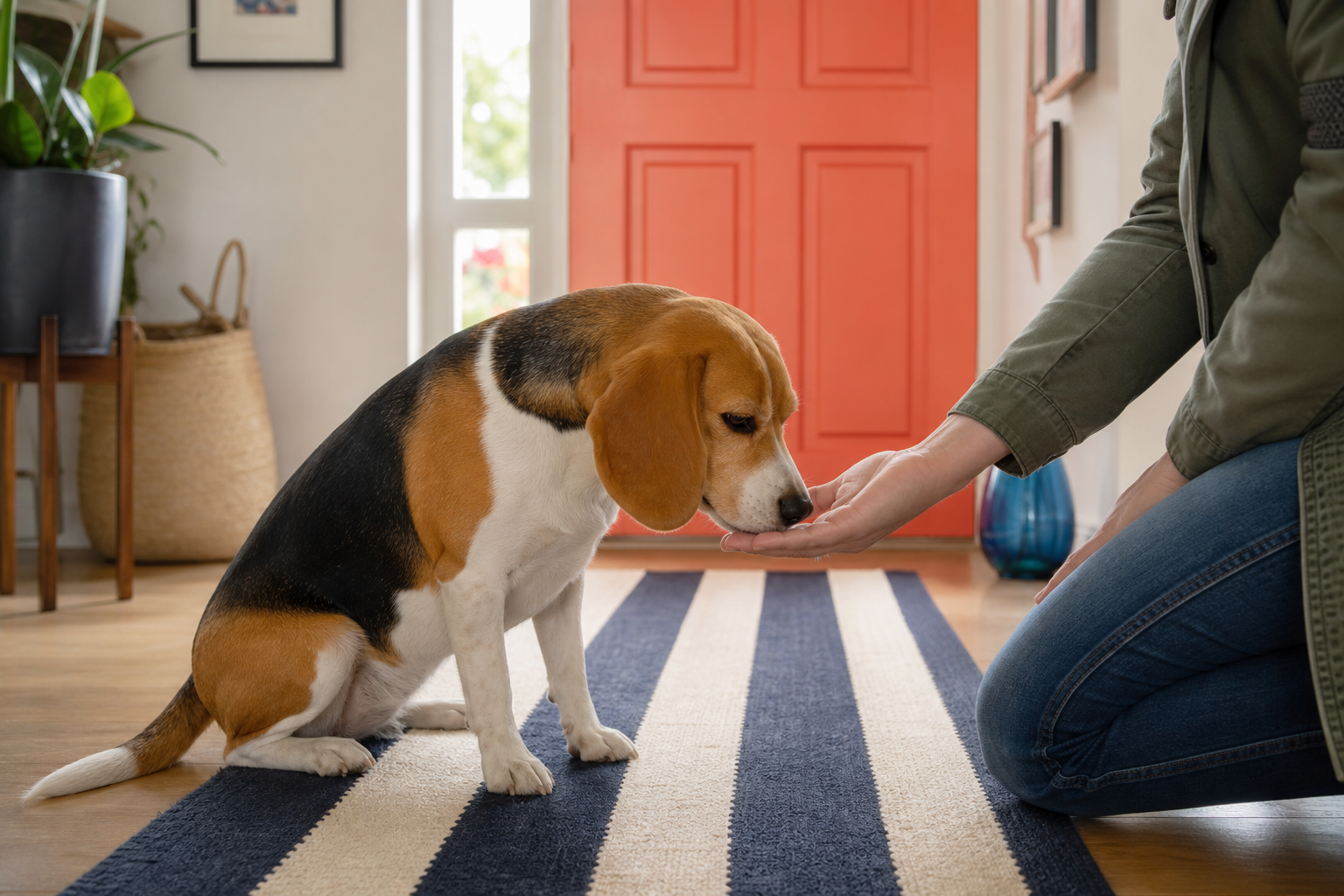
The simplest comfort check does not require specialist equipment. Scratch gently for a few seconds, then take your hand away.
Give the dog room to answer.
- If they lean back in, nudge your hand or clearly re-start the interaction with a loose body, you can continue gently.
- If they stay where they are without asking for more, let the pause remain a pause.
- If they turn away, move off, stiffen, avoid the hand or show other signs of discomfort, stop and give them space.
This is not a perfect laboratory test of emotion. It is a kind everyday habit that puts choice back into the interaction. It also prevents the game from becoming “how many times can I press the button?” when the dog would rather retire from customer demonstrations.
If your dog shakes off after contact, that can be part of a normal reset. Our guide to why dogs shake off when they are not wet explains why the moment before and after the shake matters.
When The Itch Is The Real Story
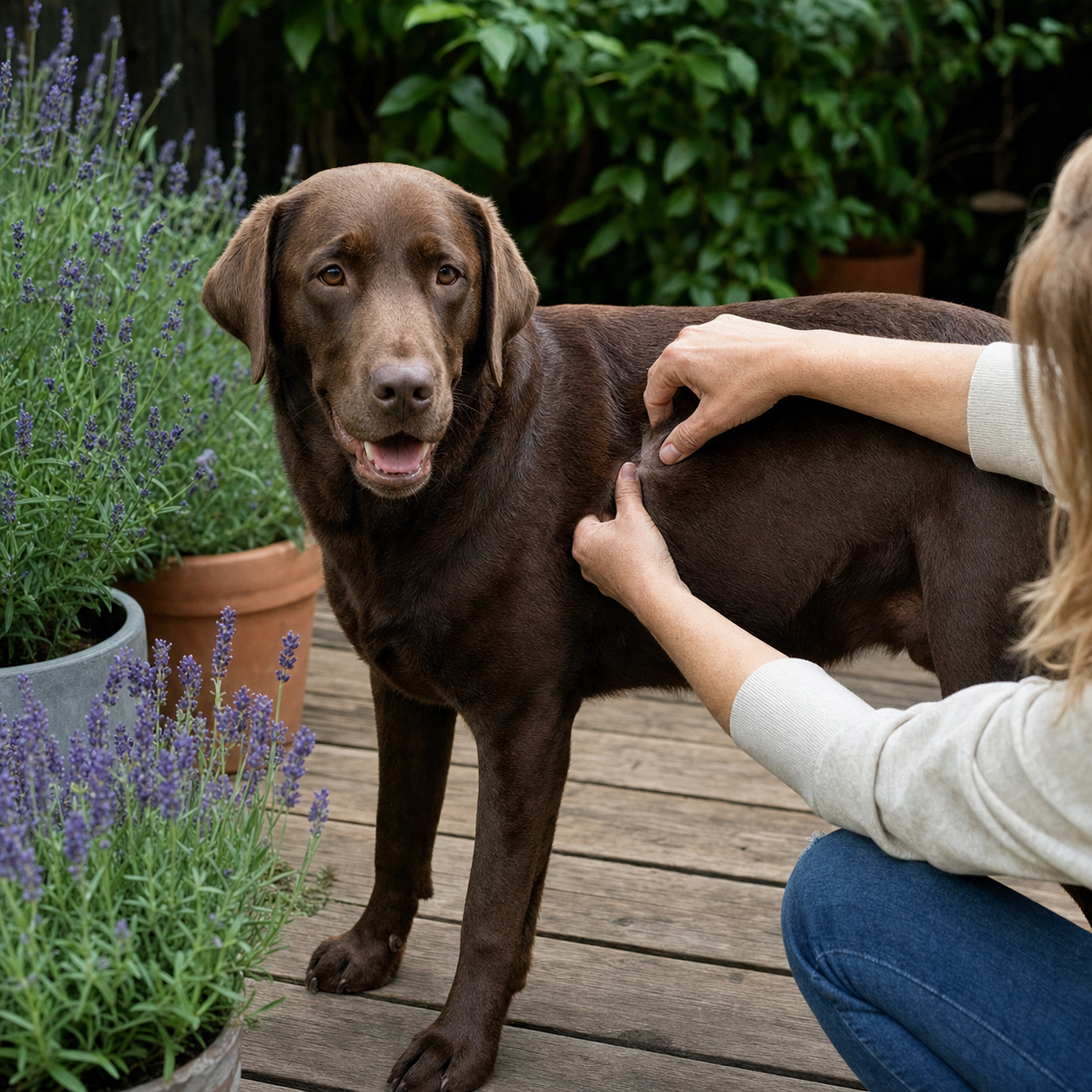
An occasional reflex during gentle scratching is usually just that: a reflex. A dog who is repeatedly scratching, chewing, licking or rubbing the same area needs a different kind of attention.
Look for changes such as:
- itching that is sudden, intense, frequent or waking the dog;
- red, inflamed, flaky, greasy or unusually smelly skin;
- hair thinning, bald patches, scabs, sores or broken skin;
- persistent licking or chewing of paws, belly, tail base or one specific spot;
- flinching, yelping, guarding the area or avoiding normal touch;
- ear scratching with head shaking, discharge or odour;
- a wider change in sleep, appetite, energy or behaviour.
Fleas are not always easy to spot, and one flea bite can cause a much larger reaction in a dog with flea allergy. Allergies, parasites, infection, pain and other skin problems can also produce itch. That list is precisely why guessing from the sofa is not the useful move.
If the pattern is new, persistent or paired with skin, coat or behaviour changes, contact your vet. Avoid repeatedly scratching the area to test it, and do not apply human creams or leftover treatments unless your vet has advised them for that dog.
A Kinder Way To Find The Good Spots
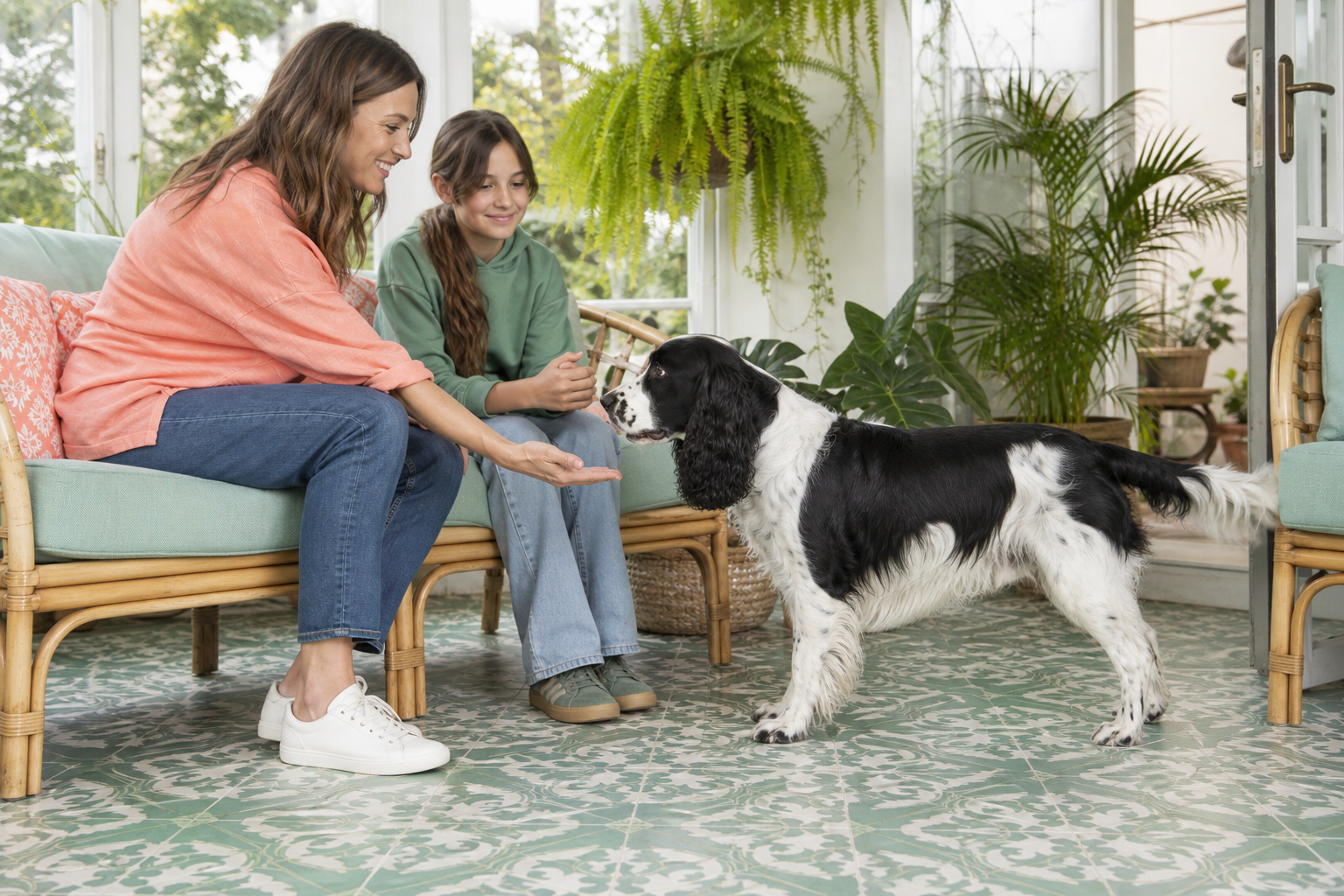
Good scratching is less about discovering a secret control panel and more about having a small conversation.
Start where your dog already seems comfortable. Use light pressure. Keep the dog free to move. Pause before the contact becomes relentless. Notice which places invite a soft lean or a nudge, and which places make the body turn away.
Some dogs love a chest rub and dislike hands over the head. Some prefer the shoulders and avoid the belly. Some want ten seconds of affection and then have urgent carpet business elsewhere. Preference is allowed to be specific.
Children and visitors should be helped to use the same gentle rule: invite, pause and let the dog choose. A dog does not owe anyone a belly rub because they rolled over, and a moving leg is not permission to keep pressing the spot.
The CloudyAww Read
The hidden kick button is a lovely little piece of dog machinery. Skin notices something, the nervous system takes a shortcut, and the hind leg begins a performance nobody consciously booked.
Enjoy the ridiculousness—but read the whole dog.
If the body stays loose and your dog asks for more after a pause, carry on gently. If they turn away or become tense, let the hand retire. If the “button” appears inside a bigger pattern of itch, pain or skin changes, call the vet rather than trying to unlock a harder kick.
The leg explains the reflex. The rest of the dog explains the moment.
Browse more warm, practical pet logic in the Aww Articles library.
Sources And Further Reading
- American Kennel Club: Are dogs ticklish?
- Merck Veterinary Manual: The neurologic examination of animals
- Dogs Trust: How to understand your dog’s body language
- Dogs Trust: How to handle your dog
- RSPCA: Understanding a dog’s body language
- VCA Animal Hospitals: Itching and scratching in dogs
- VCA Animal Hospitals: Flea allergy dermatitis