
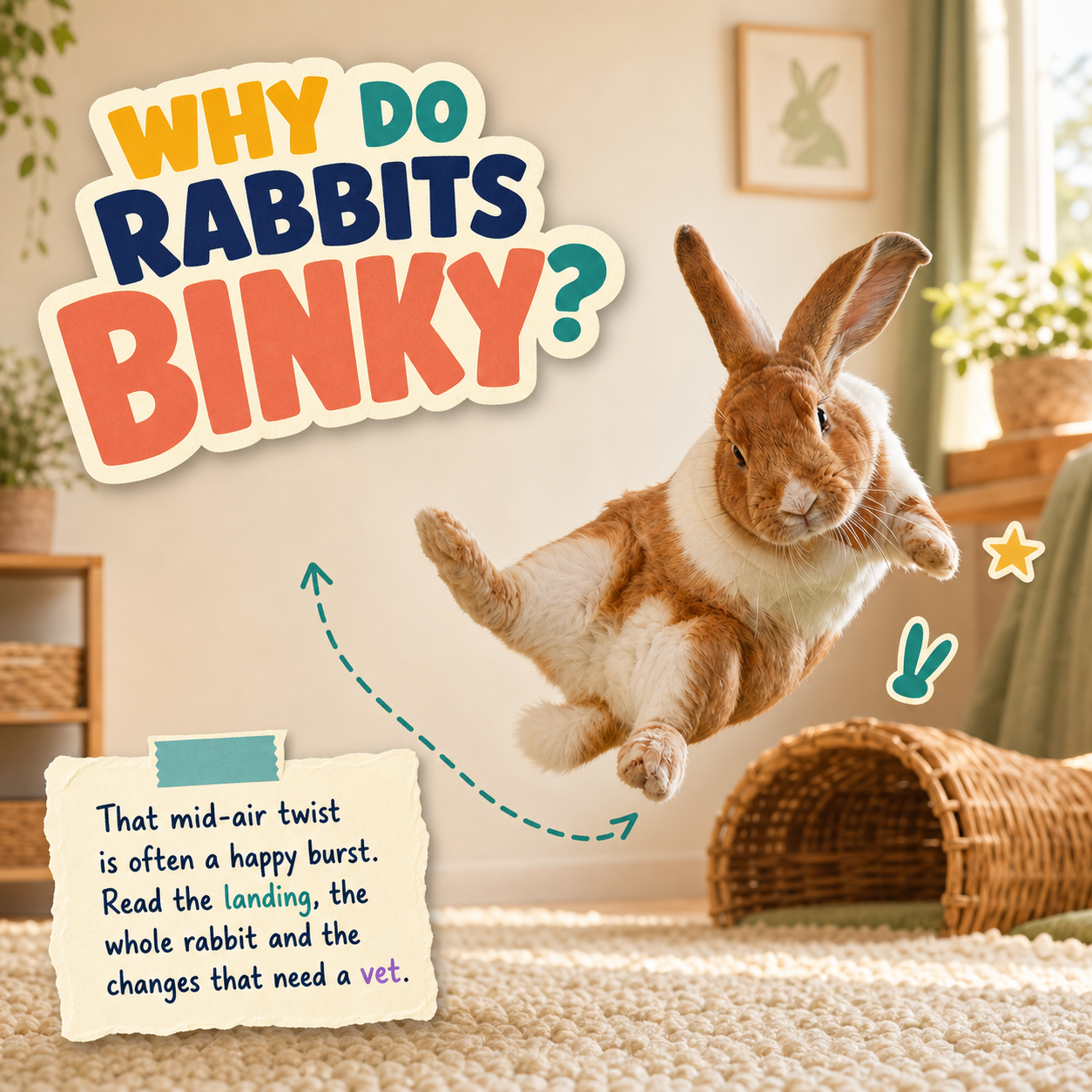
A rabbit can be crossing the room in a perfectly ordinary way and then, without filing any paperwork, launch into the air and fold sideways.
There may be a twist. There may be a kick. The ears briefly forget which direction they belong in. Then the rabbit lands and carries on towards the hay as if gravity did not just receive a formal complaint.
That joyful-looking jump is commonly called a binky. It is often seen when a rabbit feels happy, excited, playful or newly free to move. But one airborne photograph is not the whole explanation. The useful read includes what happened before the jump, how the rabbit landed and what the rest of their body did next.
In other words: enjoy the tiny stunt show, but read the whole rabbit.
The Jump With A Twist
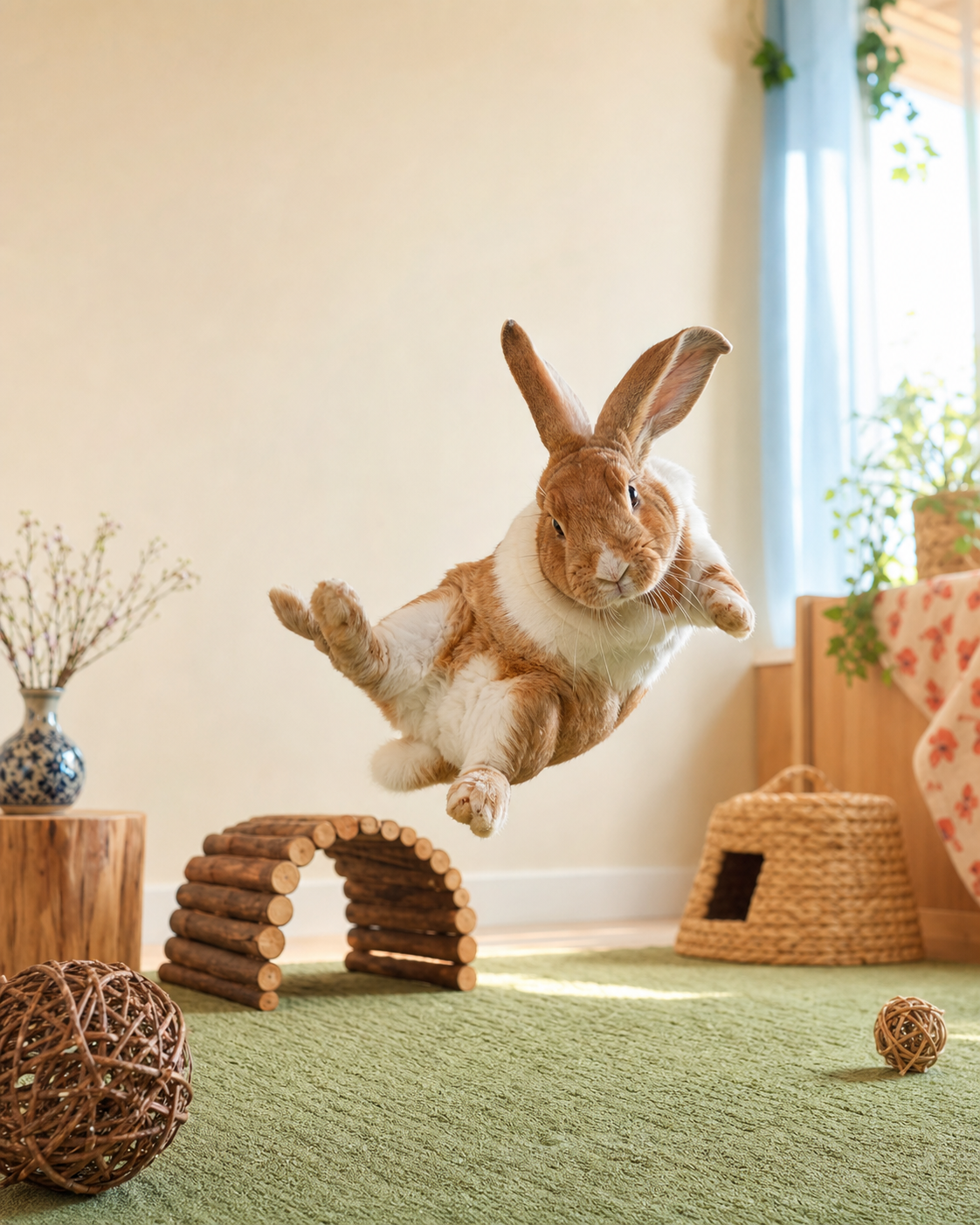
A classic binky usually combines several movements in one quick burst: a hop or leap, a twist through the body, a flick of the head or ears and sometimes a sideways kick from the back feet.
Some binkies are enormous. The rabbit seems to leave the known world for half a second and returns facing a different postcode. Others are compact: a quick hop, a shoulder wiggle or a head flick while the feet barely leave the floor.
Rabbit-welfare guides generally place the leap-and-twist among relaxed, happy body-language patterns. That does not mean every sudden jump has one guaranteed translation. Rabbits also move quickly when startled or when trying to create distance. The shape of the jump matters, but so does the scene around it.
If a rabbit launches during relaxed free-roam time, lands cleanly, stays bright and returns to exploring, eating or playing, the binky interpretation fits the whole picture.
Full Binky, Half-Binky
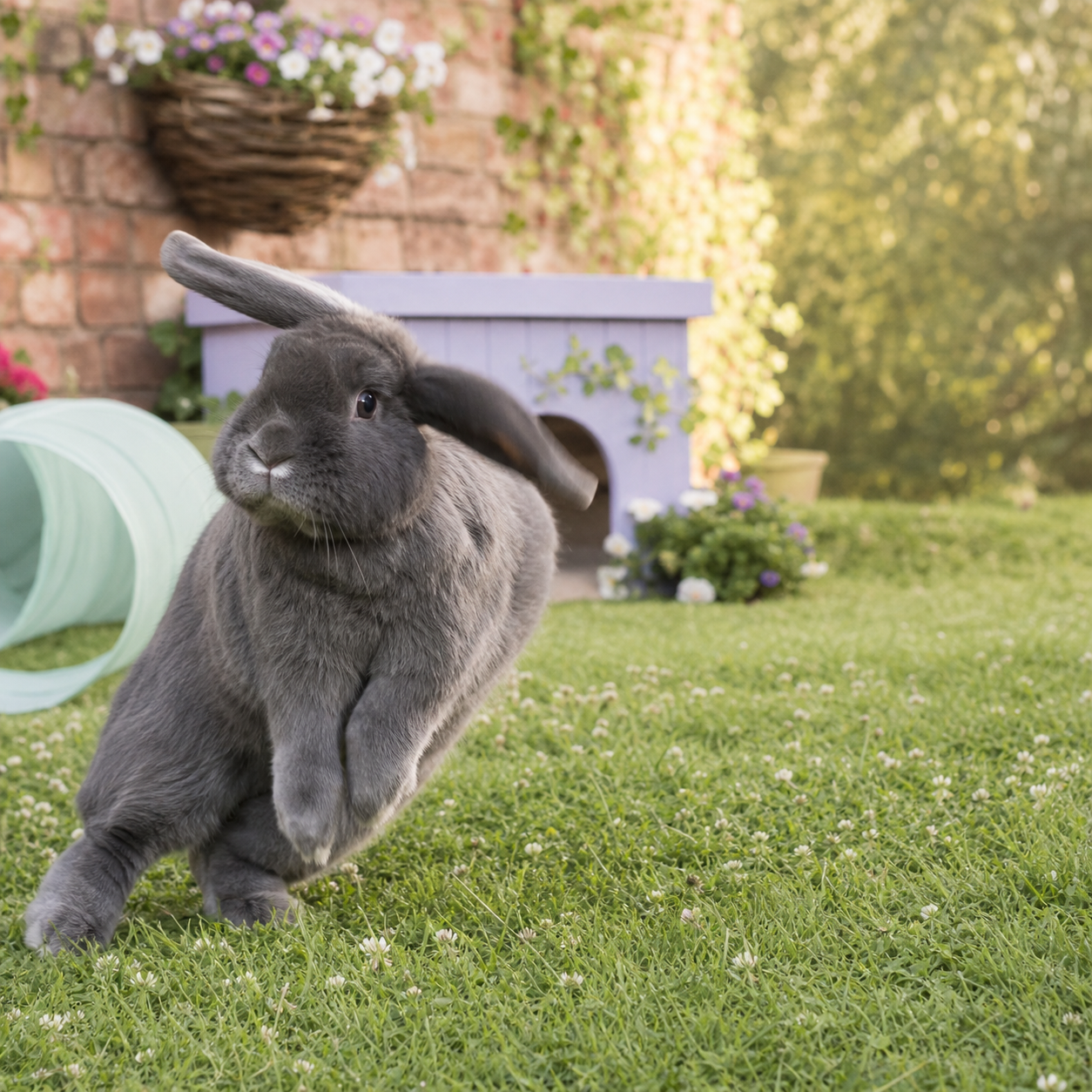
Rabbit people often use half-binky as an everyday label for the smaller versions: a quick head shake, ear flick, little sideways hop or body twitch that carries the same fizzy energy without the full airborne twist.
It is not a happiness score.
A rabbit who produces a spectacular four-paw corkscrew is not necessarily happier than one who offers a single ear flick and a tiny hop. Age, fitness, confidence, flooring, available space and individual style can all change how much movement you see.
Young or energetic rabbits may turn free-roam time into a sudden burst of zooming and binkies. An older rabbit may express the moment more quietly. A rabbit on a slippery floor may shorten the movement because the landing does not feel secure.
The important question is not, “Was that binky dramatic enough?” It is, “Did this movement sit inside an otherwise comfortable, coordinated rabbit moment?”
Read The Whole Rabbit
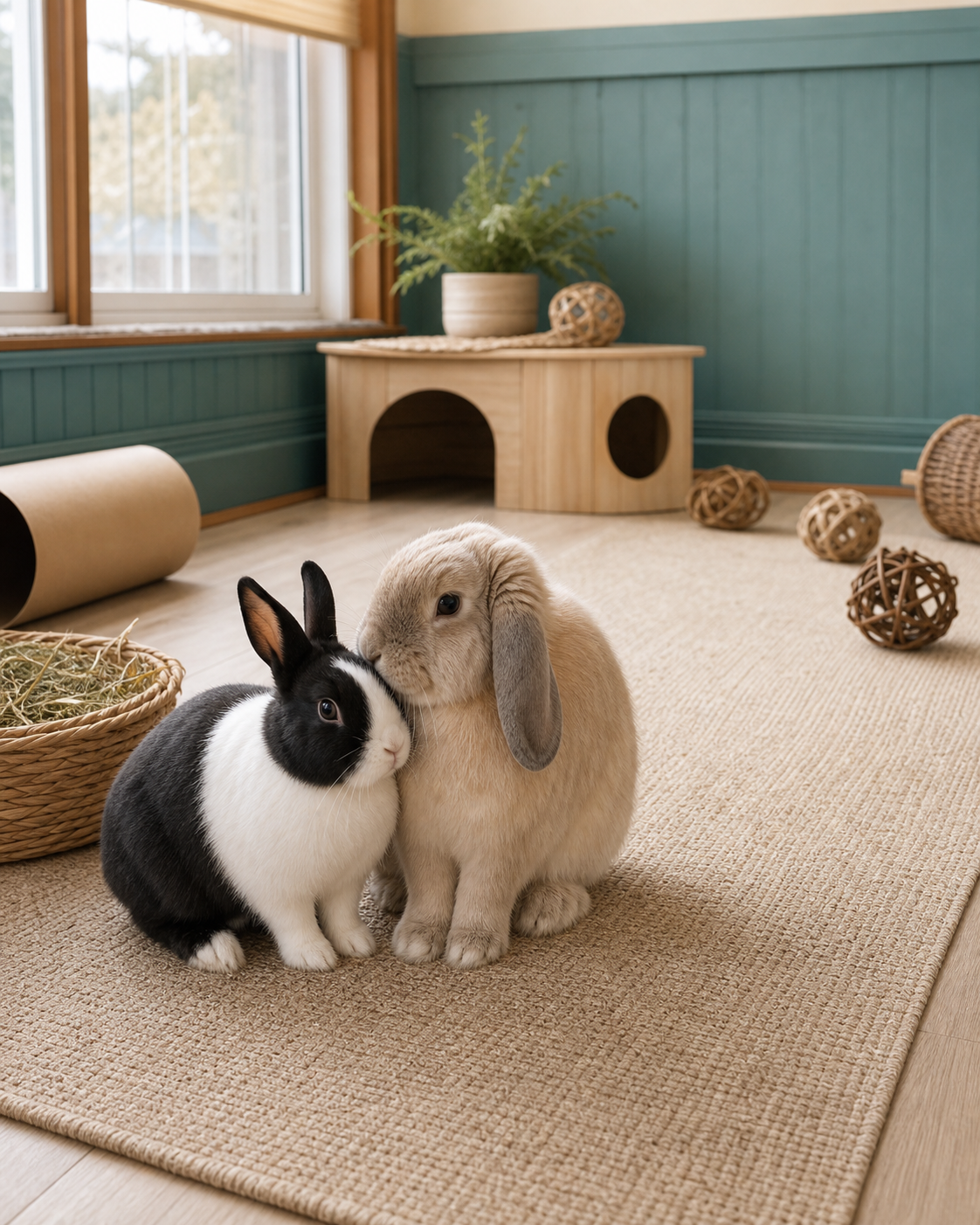
Start with the body before and after the jump.
A comfortable rabbit may look loose and lively, with a normal posture, bright eyes and an easy return to ordinary rabbit business. They may continue running, investigate a tunnel, approach a companion, groom, eat hay or settle down without looking distressed.
A startled rabbit tells a different story. You may see tense muscles, a crouched body, ears flattened back, wide eyes, urgent hiding or a repeated effort to escape from a person, sound or object.
Context turns movement into meaning:
- Did the jump happen during voluntary exploration or immediately after something frightening?
- Was there enough room to move, or was the rabbit trying to get away from a tight space?
- Did the rabbit land steadily and continue normally?
- Are appetite, posture, droppings, grooming and everyday movement otherwise unchanged?
One useful principle runs through most pet body language: the loudest moving part is not always the whole message.
The Landing Tells You Plenty
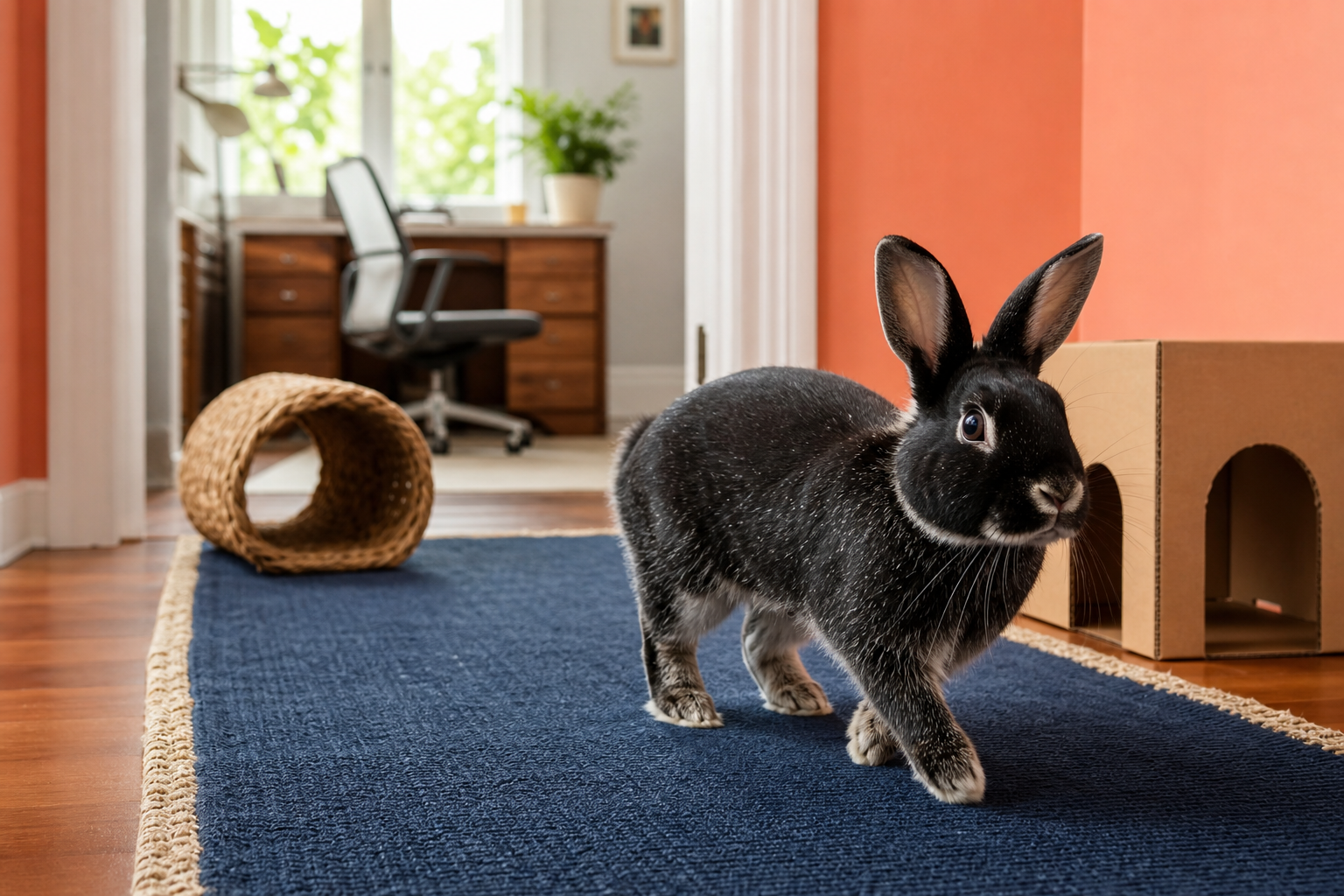
A normal binky may look untidy in the air, but the rabbit usually lands with control and quickly returns to coordinated movement.
That clean recovery is worth noticing. The twist ends. The feet find the floor. The rabbit runs on, pauses normally or resumes whatever important hay-related appointment was already in progress.
By contrast, repeated falling, staggering, uncontrolled rolling or an inability to regain balance is not something to file under “extra enthusiastic binky.” A persistent head tilt, flickering eye movements, circling, weakness or a new change in coordination needs veterinary advice.
If you are unsure, record a short video without chasing or repeatedly triggering the movement. Note what happened immediately before and after it, and contact a rabbit-savvy vet. A useful video plus a clear timeline is much better evidence than trying to recreate the jump for another look.
Give The Joy Somewhere To Land
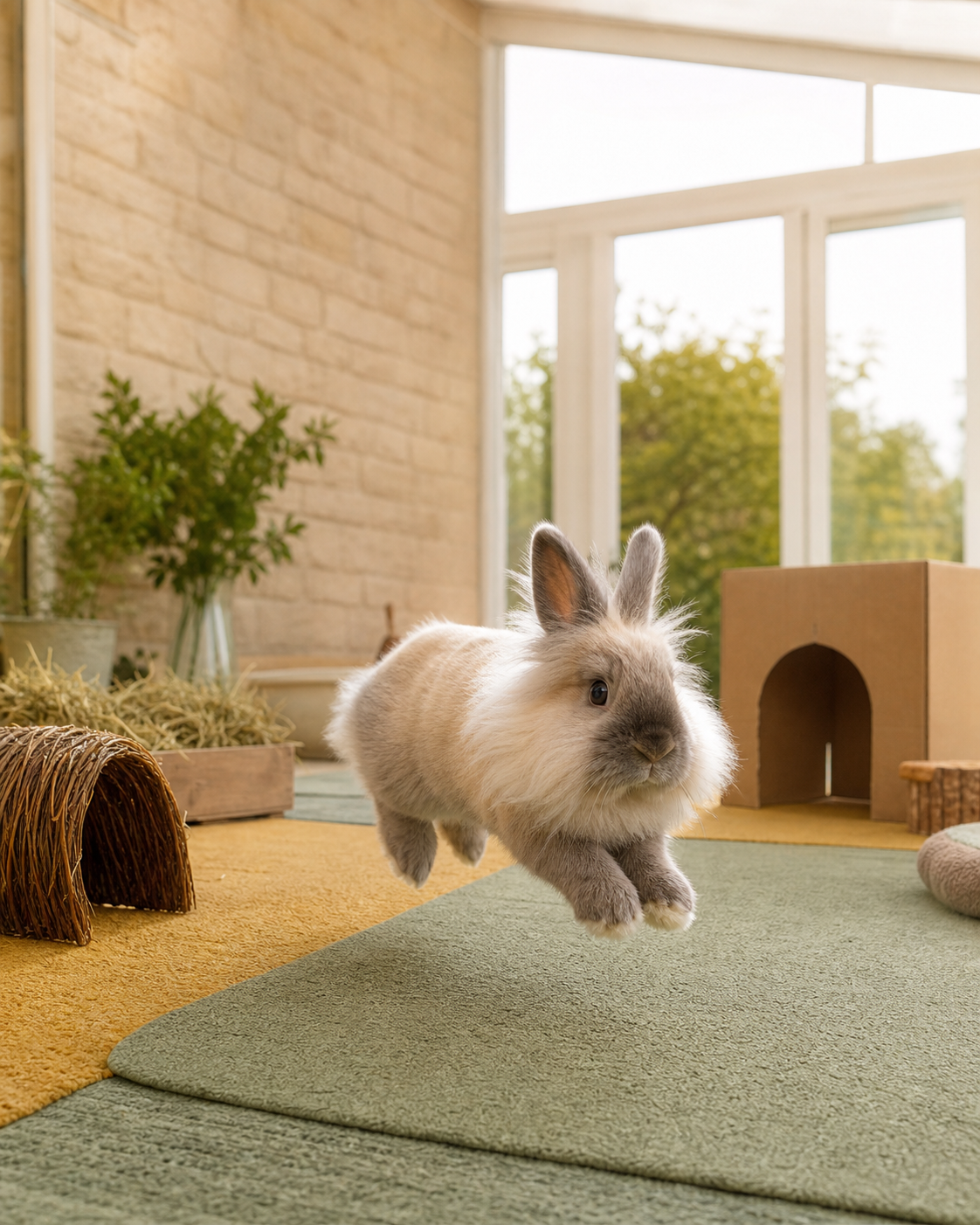
Binkies need space in three dimensions: room to accelerate, room to twist and enough height to finish the movement safely.
The Rabbit Welfare Association & Fund recommends a permanent living area of at least 3 metres by 2 metres by 1 metre high for a compatible pair of average-sized rabbits. The length allows running rather than only a few hops, while the height supports jumping, binkying and standing upright.
The surface matters too. Smooth laminate, polished wood or tile can make confident movement difficult. Add secure, non-slip runners or mats that do not bunch, slide or expose chewable rubber edges. Keep the route clear of sharp furniture corners, unstable objects, trailing wires and high drops.
Good enrichment does not need to turn the room into a rabbit theme park. A tunnel, a sturdy box with two exits, forage opportunities, hay, a digging area and places to hide can create plenty of choice without blocking the runway.
For more of that everyday rabbit logic, CloudyAww also has a guide to why rabbits chew everything and how to redirect that very committed mouth safely.
When It Is Not A Binky
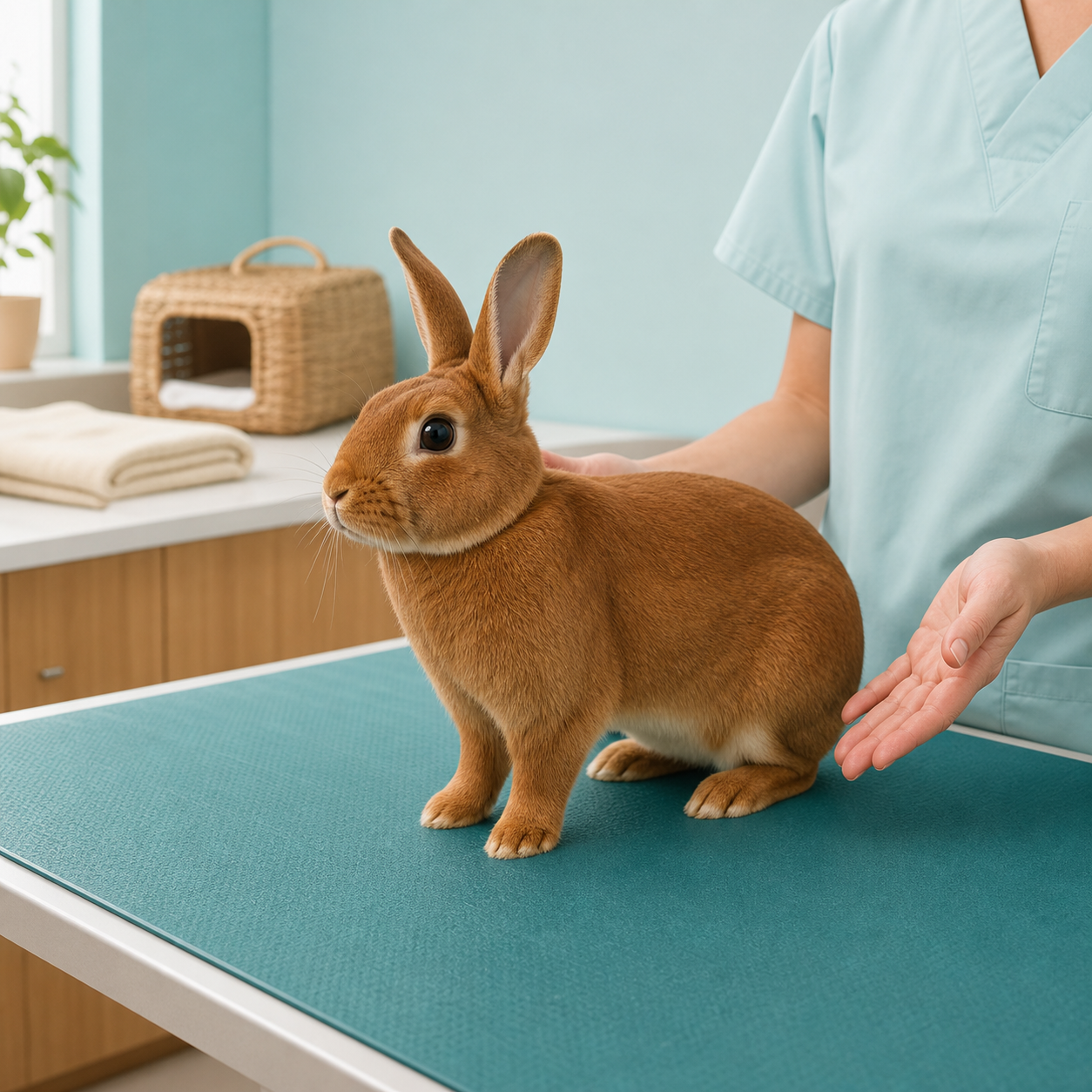
The phrase “binky” should not be used to wave away movement that looks persistently uncoordinated or comes with a wider health change.
Contact your vet promptly if you notice:
- a new or persistent head tilt;
- repeated loss of balance, falling or bumping into things;
- uncontrolled rolling or being unable to stand;
- flickering eye movements, tremors, seizures or marked weakness;
- obvious pain, distress or a sudden reluctance to move;
- reduced appetite, fewer droppings or stopping eating;
- a sudden, repeated pattern that is clearly different from your rabbit’s normal movement.
Problems inside the ear or brain can affect balance, and rabbits can become seriously unwell quickly when they stop eating. The right next step is a vet, not a longer home experiment.
The distinction is not “dramatic jump equals happy; dramatic jump plus one scary-looking frame equals illness.” It is the repeated pattern, recovery, coordination and whole-rabbit change that make the health boundary useful.
A Better Binky Setup
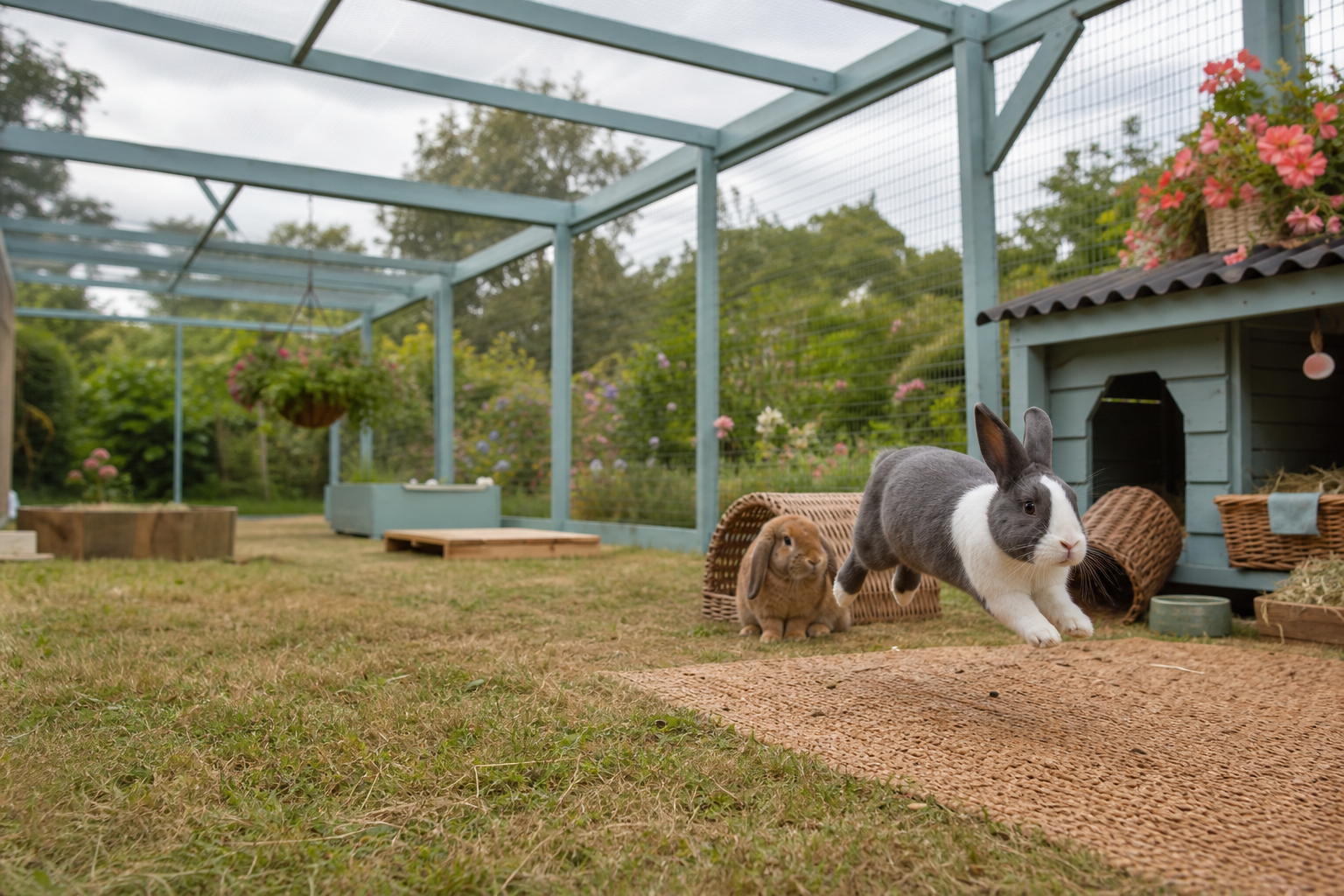
You cannot order a binky on demand, and you do not need to. The kinder goal is to make normal rabbit movement easy.
Try this quick setup check:
- Clear a proper run: create a long, uncluttered route rather than a tiny square of free floor.
- Add grip: secure rugs or runners so take-off and landing stay predictable.
- Keep exits open: boxes and hides should have more than one safe way out where practical.
- Protect the edges: cover wires, remove toxic plants and block dangerous drops or squeeze points.
- Offer choice: leave tunnels, hay, forage and resting places available without forcing interaction.
- Watch the busiest times: rabbits are often more active around dawn and dusk, so make sure their full living area is available then too.
If your rabbit does not binky, do not treat that absence as a verdict on your relationship. Look at the wider welfare picture: appetite, curiosity, relaxed resting, social contact, grooming, confident movement and the ability to choose where to go.
The CloudyAww Read
A binky is one of those lovely animal moments that looks complicated and feels simple: the body has more happiness or energy than an ordinary hop can carry.
The best response is not to grade the acrobatics. Give the rabbit room, grip, enrichment and an easy retreat. Notice the jump, then notice the landing and the rabbit who appears after it.
If they return to normal, coordinated rabbit business, enjoy the tiny airborne celebration. If balance, posture, appetite or recovery changes, call the vet and let the whole pattern lead the decision.
And if you enjoy small animals turning one movement into a complete event, meet the equally enthusiastic cast in what guinea-pig popcorning can mean.
Browse more warm, practical pet logic in the Aww Articles library.
Sources And Further Reading
- RSPCA: What does my rabbit’s behaviour mean?
- PDSA: Rabbit body language
- Rabbit Welfare Association & Fund: Space recommendations
- PDSA: Head tilt in a rabbit