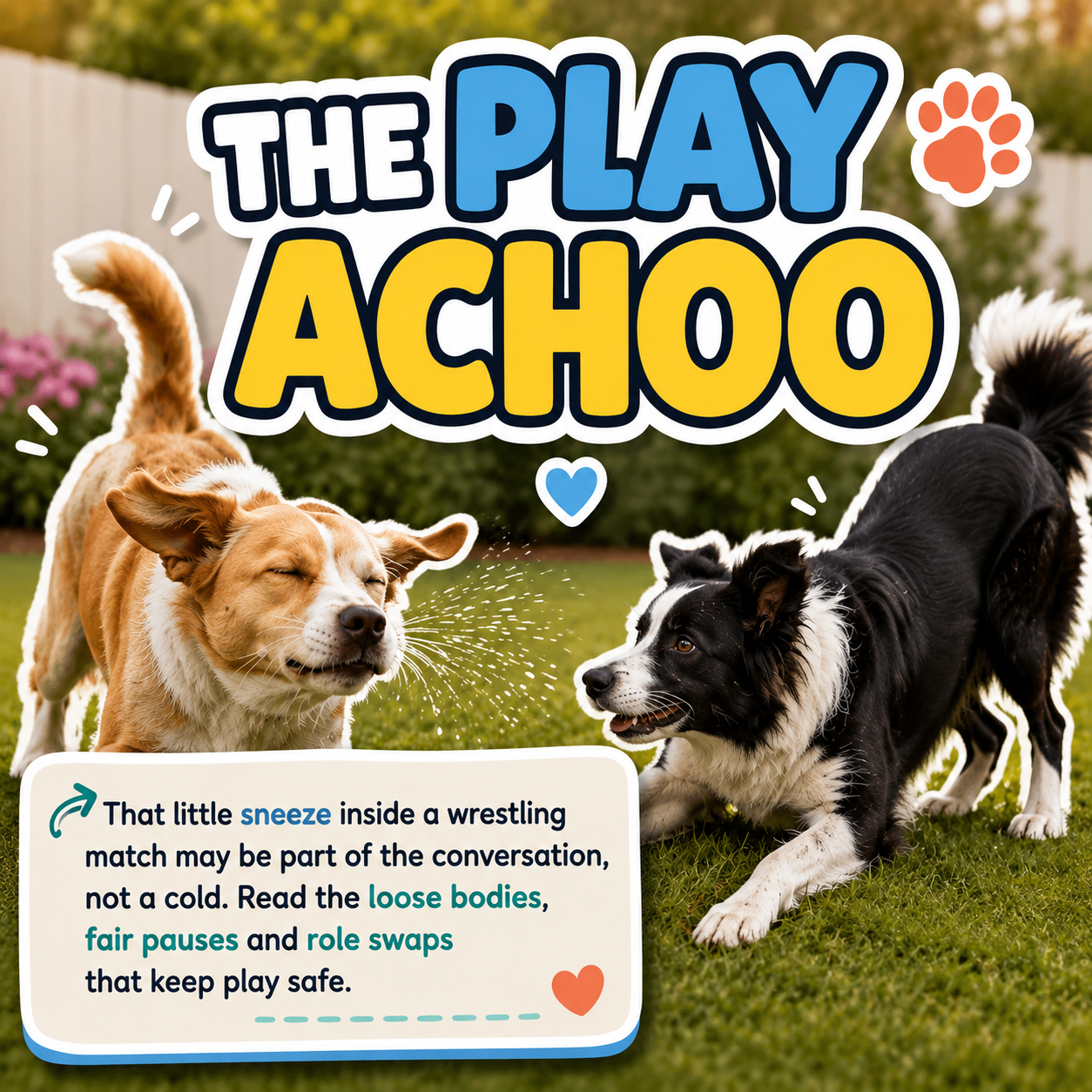
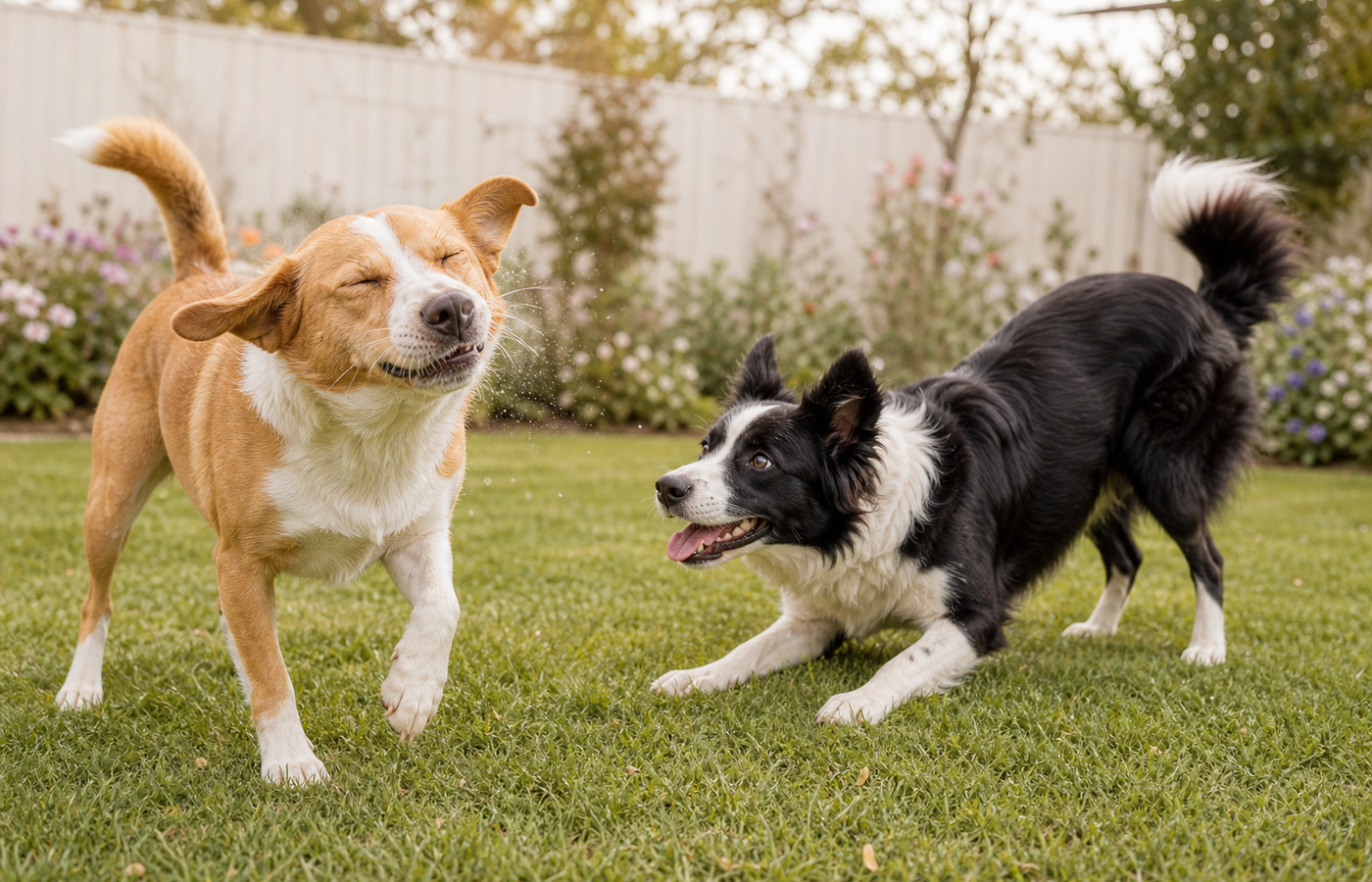
A dog play sneeze is a wonderfully small sound for something that can arrive in such a large game.
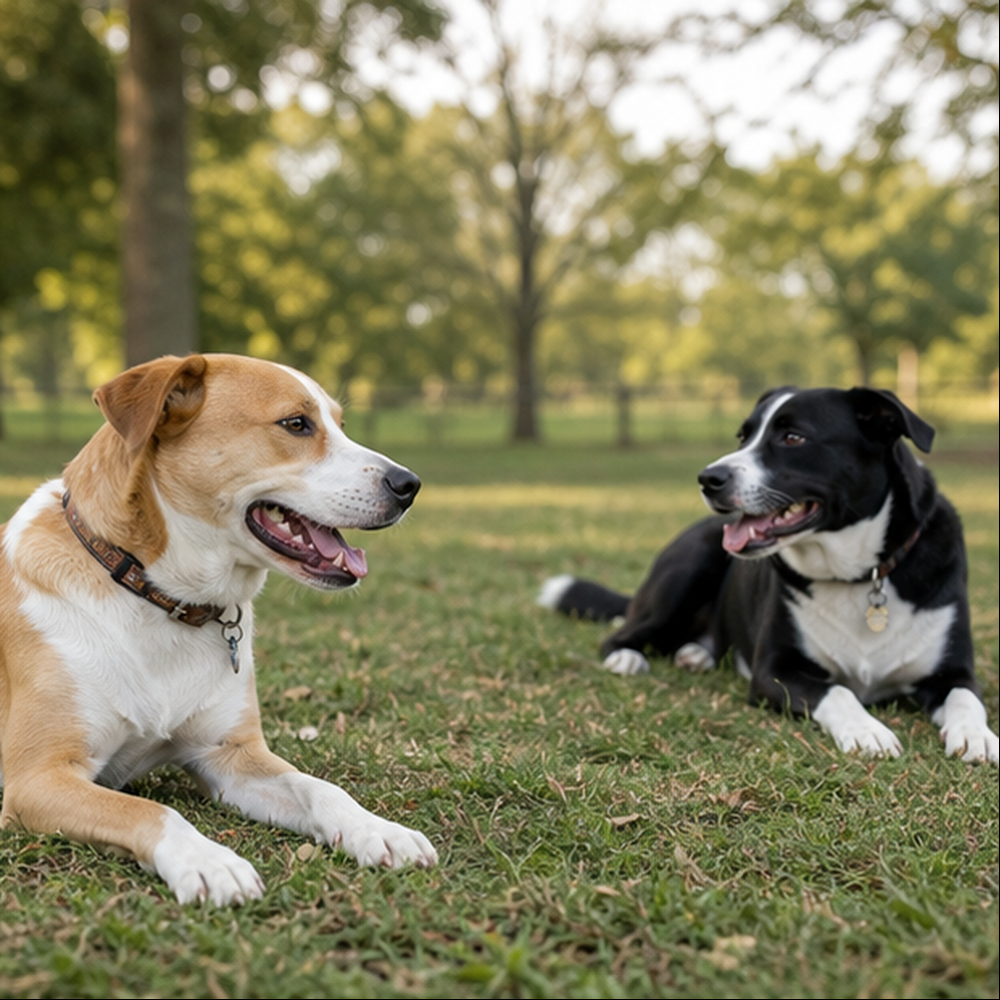
Two dogs are bouncing across the grass. One folds into a play bow, the other launches a dramatic sideways hop, and then—right in the middle of the tiny action film—somebody sneezes. The game pauses for half a beat. Both dogs stay loose. Then the chase resumes as though the sneeze was a comma.
Sometimes it almost is.
Dogs Trust includes sneezing among the signals that can appear in appropriate social play. VCA also notes that dogs may sneeze during play as communication, excitement or a request to slow the action. That does not mean every sneeze is behavioural. Noses also respond to dust, grass, pollen, scent and health problems.
The useful question is not simply, “Was that a play sneeze?” It is: what was happening around it, what did both dogs look like, and what happened next?
The Achoo Is Only One Clue
A sneeze is a physical reflex: air moves sharply out through the nose after something stimulates the nasal passages. During an energetic game, that “something” may be dust, grass or a nose that has spent several minutes close to the ground. It may also occur inside a friendly communication pattern.
The American Kennel Club’s veterinary guidance notes that sneezing during play can communicate playfulness. Dogs Trust goes further by placing the sneeze alongside the rest of healthy play: loose bodies, role switching, mirroring, self-handicapping and regular breaks.
This is why the noise cannot be translated on its own. A single sneeze from a bouncy dog who immediately returns to a balanced game is a different scene from repeated sneezing after one dog has tried to leave.
Look at the sentence, not just the punctuation.
Read the Whole Game
Healthy dog play often looks more dramatic than it feels. There may be chasing, growling, open mouths, wrestling and a level of theatrical collapse usually reserved for daytime television.
The safer clues are in the rhythm:
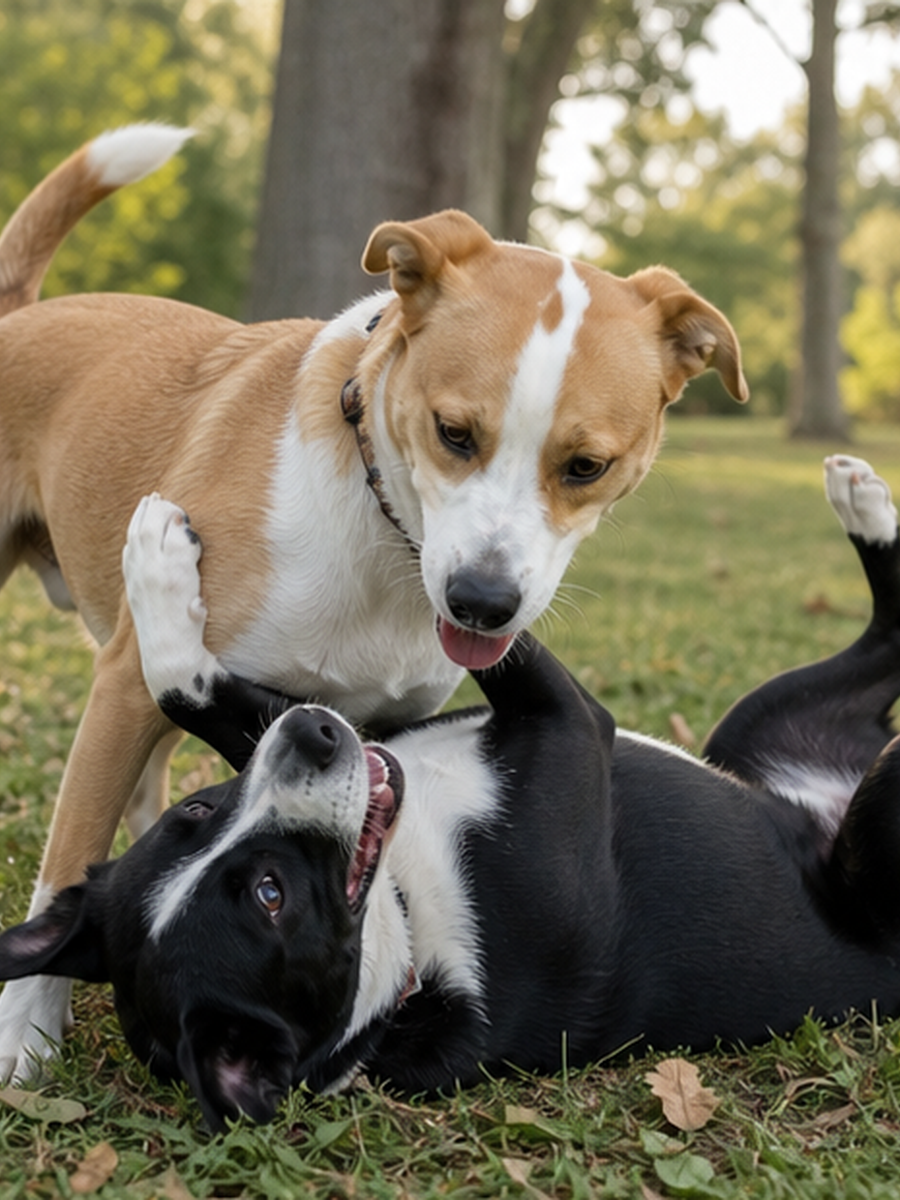
- both bodies remain loose and curved rather than stiff and forward;
- faces look soft, with normal eyes and relaxed mouths;
- the dogs take turns chasing, pinning or being pursued;
- a larger or faster dog sometimes reduces their advantage;
- pauses happen without one dog immediately restarting by force;
- either dog can move away, sniff or seek their person;
- after a pause, both dogs choose to return.
The RSPCA’s dog body-language guide recommends reading the whole posture. A relaxed dog may have a natural ear position, ordinary eyes, a loose mouth and evenly distributed weight. A worried dog may lower the body, tuck the tail, turn away or avoid eye contact.
A play sneeze makes most sense when the rest of the game is already saying, “We are both still in this.”
Fair Play Has Pauses
A good game breathes.
Dogs separate. One shakes off or sniffs the grass. The other waits, looks away or wanders toward a toy. Then one of them restarts the game with a play bow, a little pounce or a deliberately ridiculous run.
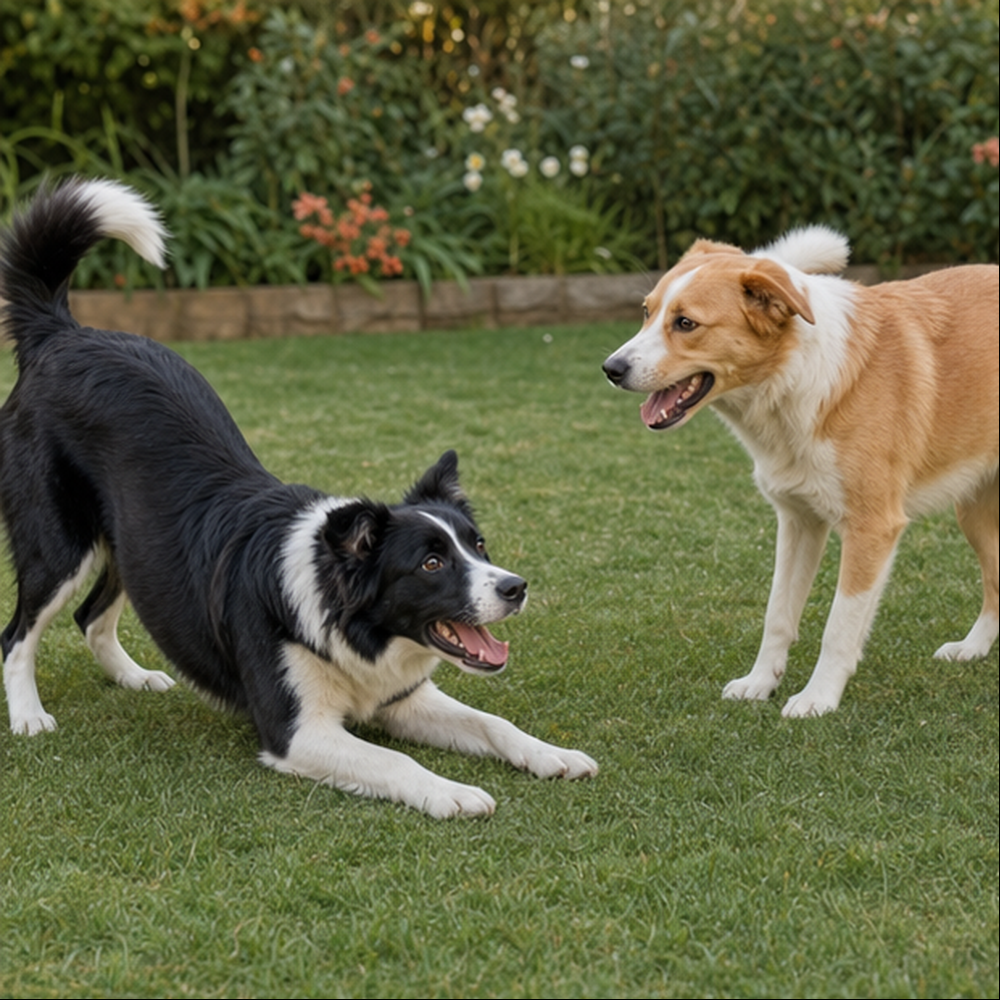
These pauses are not a failure of fun. They help arousal come down enough for both dogs to make another choice. Sneezing may appear at the beginning of play, during a busy wrestling moment or around one of these transitions.
If you are unsure whether the game is mutual, calmly call your dog away for a short pause. Avoid grabbing collars in the middle of fast movement if you can safely create distance another way. Let both dogs reset.
Then watch the vote. Two dogs trying to rejoin with loose bodies give you useful information. A dog who moves farther away, hides behind a person, becomes still or begins another activity is also giving you useful information. Respect that answer.
Role Swaps Matter More Than Volume
One dog may be naturally faster. Another may prefer wrestling. A tiny dog can produce a growl with the acoustic ambitions of a much larger animal. None of that automatically makes the game unfair.
Role switching is the more useful clue. Does the chaser become the chased? Does the dog on top sometimes roll underneath? Does the stronger dog pause or lie down so the smaller dog can re-enter the game?
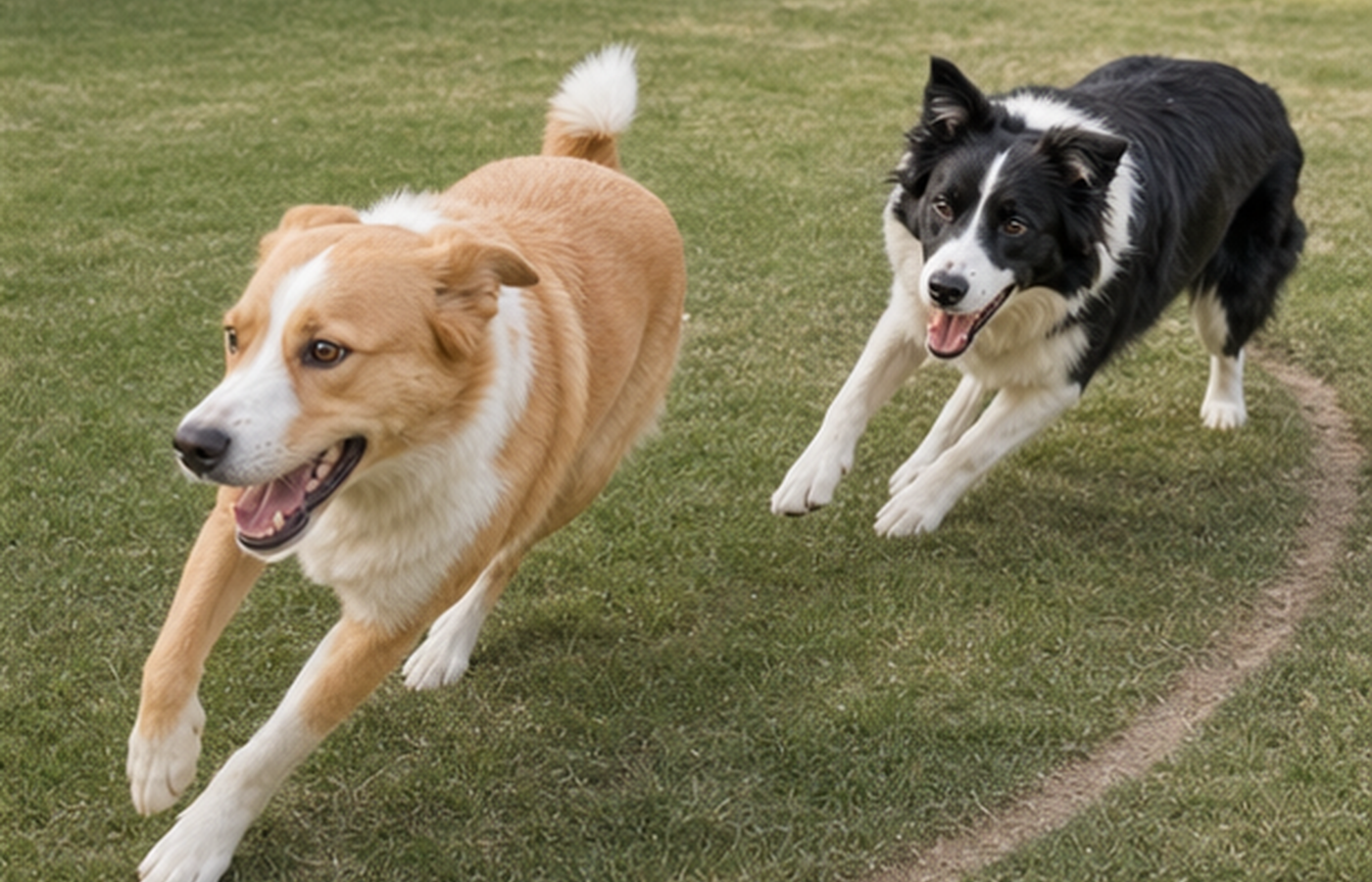
Dogs Trust calls this self-handicapping: a dog voluntarily limits an advantage so the social game can continue. It is one reason a large dog lying down beside a smaller playmate can be a reassuring scene rather than a defeat.
A sneeze inside that flexible, two-way pattern fits differently from a sneeze in a rigid, one-sided chase.
Sometimes It Means Slow Down
VCA’s communication guidance notes that sneezing can also occur when a dog wants play to slow or feels uncomfortable with what is happening. That possibility matters because “play sneeze” should never become a reason to ignore the rest of the dog.
Pause the interaction if you see:
- one dog repeatedly trying to leave while the other blocks or pursues;
- a tucked tail, pinned ears, low posture or frequent head turns;
- freezing, hiding, frantic movement or a sudden loss of the loose bounce;
- hard staring, a closed tense mouth or weight pushed forward;
- one-sided chasing with no role swap;
- increasingly hard mouthing, repeated mounting or a dog who cannot respond to a familiar cue.
Do not wait for a growl or snap before giving space. Quiet signals count. The goal is not to prove whether the sneeze “really meant” discomfort. The goal is to keep both dogs able to opt in or out.
A Play Sneeze Is Not a Reverse Sneeze
A normal sneeze pushes air out through the nose. A reverse sneeze sounds more like repeated snorting or gasping inward. During a reverse-sneeze episode, a dog may stand still, extend the head and neck and make several rapid inhalations.
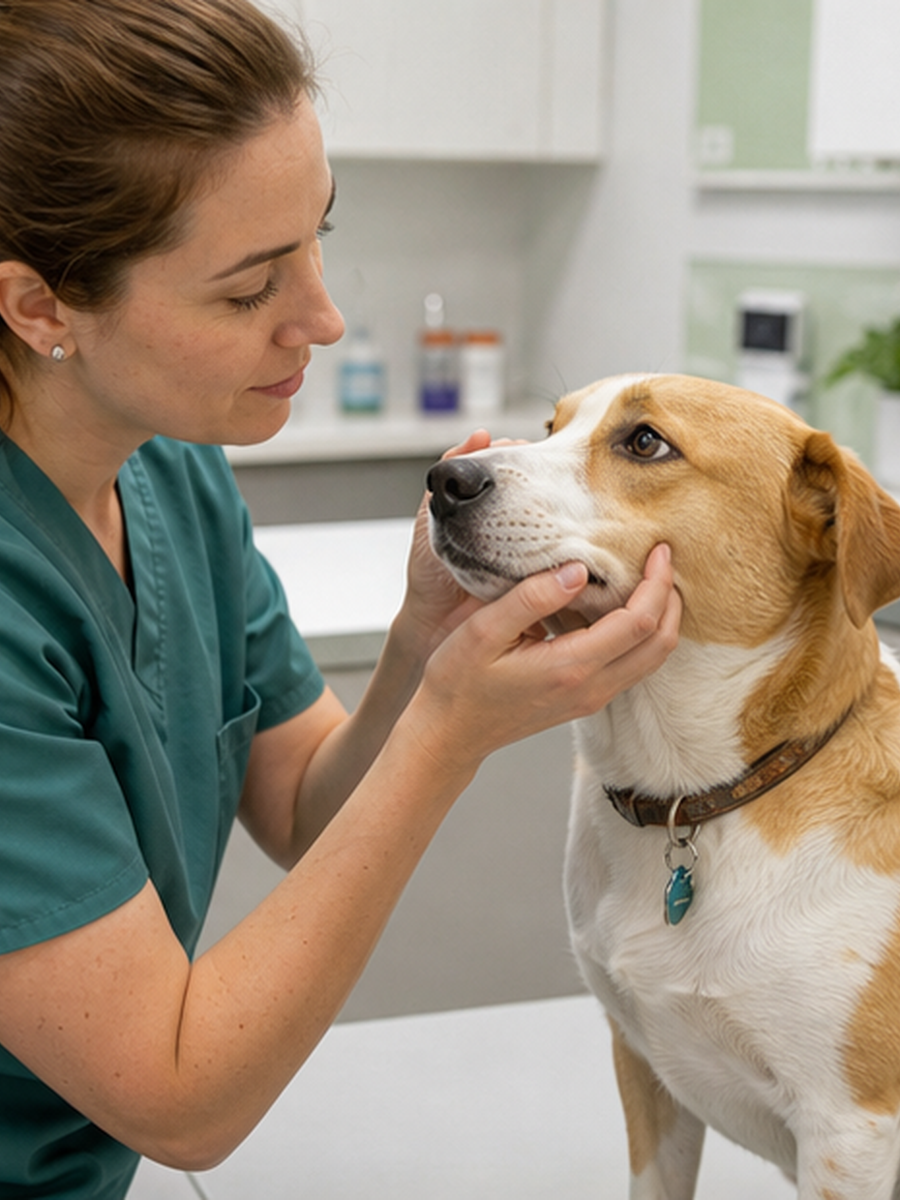
VCA’s reverse-sneeze guidance explains that episodes are often brief and dogs are usually normal before and after, although irritation, allergens, foreign material and other conditions can trigger similar signs. If you have not seen one before, filming a short episode from a calm distance can help your vet identify what is happening.
Do not assume an unfamiliar breathing noise is social communication. If a dog is struggling to breathe, treat that as urgent.
When the Nose Changes the Story
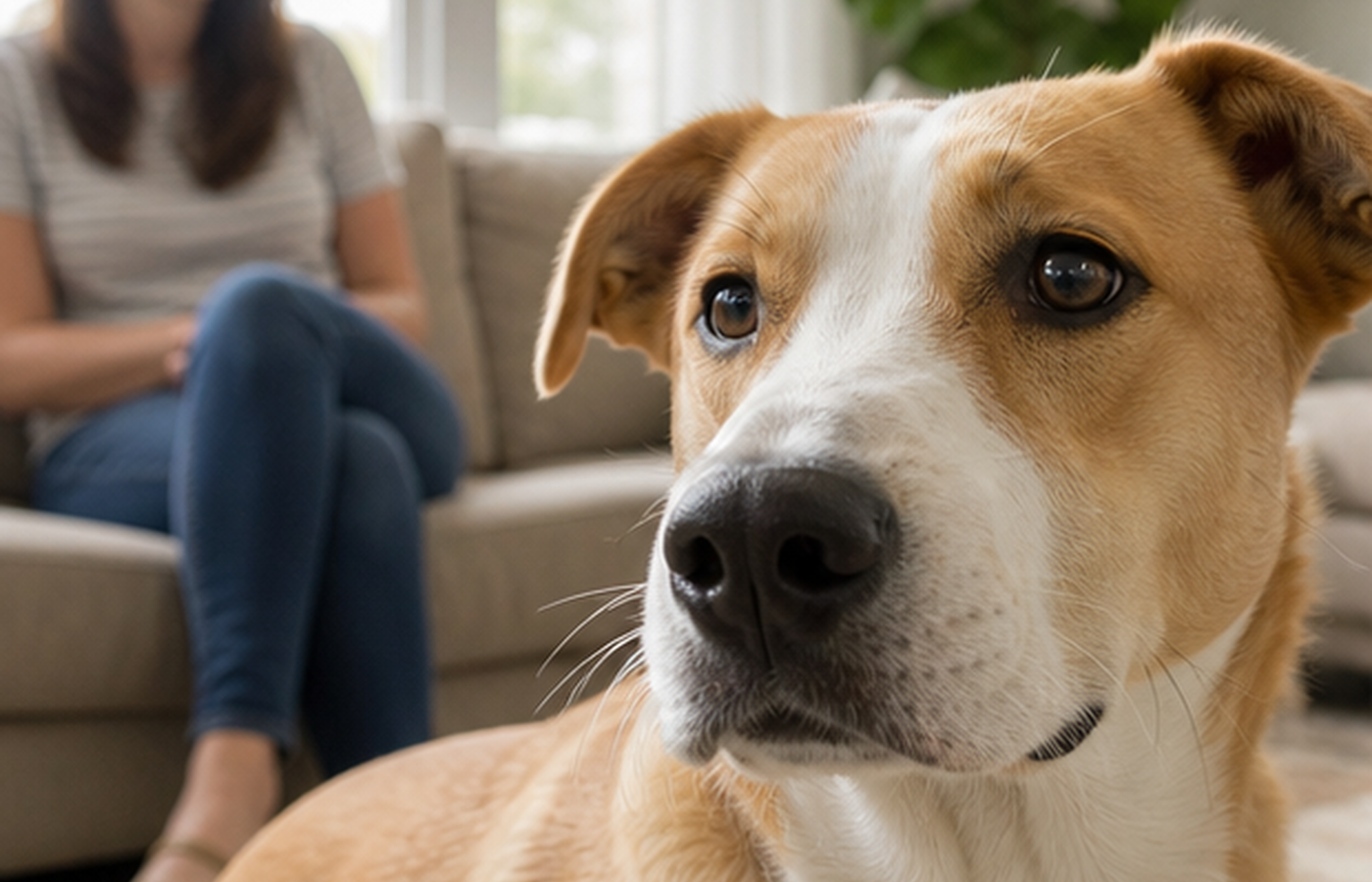
An occasional sneeze in a sensible play scene is usually not the same as a new pattern of repeated sneezing.
VCA Urgent Care advises veterinary assessment when sneezing does not settle after a short time or appears with excessive nasal discharge. Contact your vet if sneezing becomes frequent or persistent, or arrives with:
- discharge from one or both nostrils, especially thick, yellow, green or bloody fluid;
- pawing at the nose or face;
- coughing, wheezing, unusual tiredness or reduced appetite;
- facial swelling, pain or a sudden strong smell;
- violent sneezing after running through long grass or scrub;
- any clear change from your dog’s normal breathing or behaviour.
Difficulty breathing, shortness of breath or heavy bleeding needs urgent veterinary help. Do not put anything inside the nose or try to remove a suspected object yourself.
The Tiny Play-Sneeze Read
The CloudyAww version is pleasantly simple:
Scene: Did the sneeze happen inside a voluntary, bouncy game?
Bodies: Are both dogs loose, soft and able to move away?
Balance: Do roles swap, pauses happen and both dogs choose to return?
Change: Is the sneeze occasional and familiar, or new, repeated and joined by other signs?
The sneeze is not a friendship certificate. It is one clue inside a larger exchange. Sometimes it says, “This is still a game.” Sometimes it helps a dog soften a busy moment. Sometimes there is simply a blade of grass filing a complaint with the nose.
You do not have to translate the sound perfectly. Protect the pauses, read both dogs and respond to the pattern in front of you.
For more dog-shaped punctuation, read why dogs yawn and why dogs shake off when they are not wet, or browse the full Aww Articles library.
Sources & further reading
- Dogs Trust: How to Understand Your Dog’s Body Language
- RSPCA: Understanding Your Dog’s Body Language
- AKC: Why Does My Dog Keep Sneezing?
- VCA: Reverse Sneeze in Dogs
- VCA Urgent Care: Runny Nose, Coughing or Sneezing