
The gift may be part greeting, part big feeling
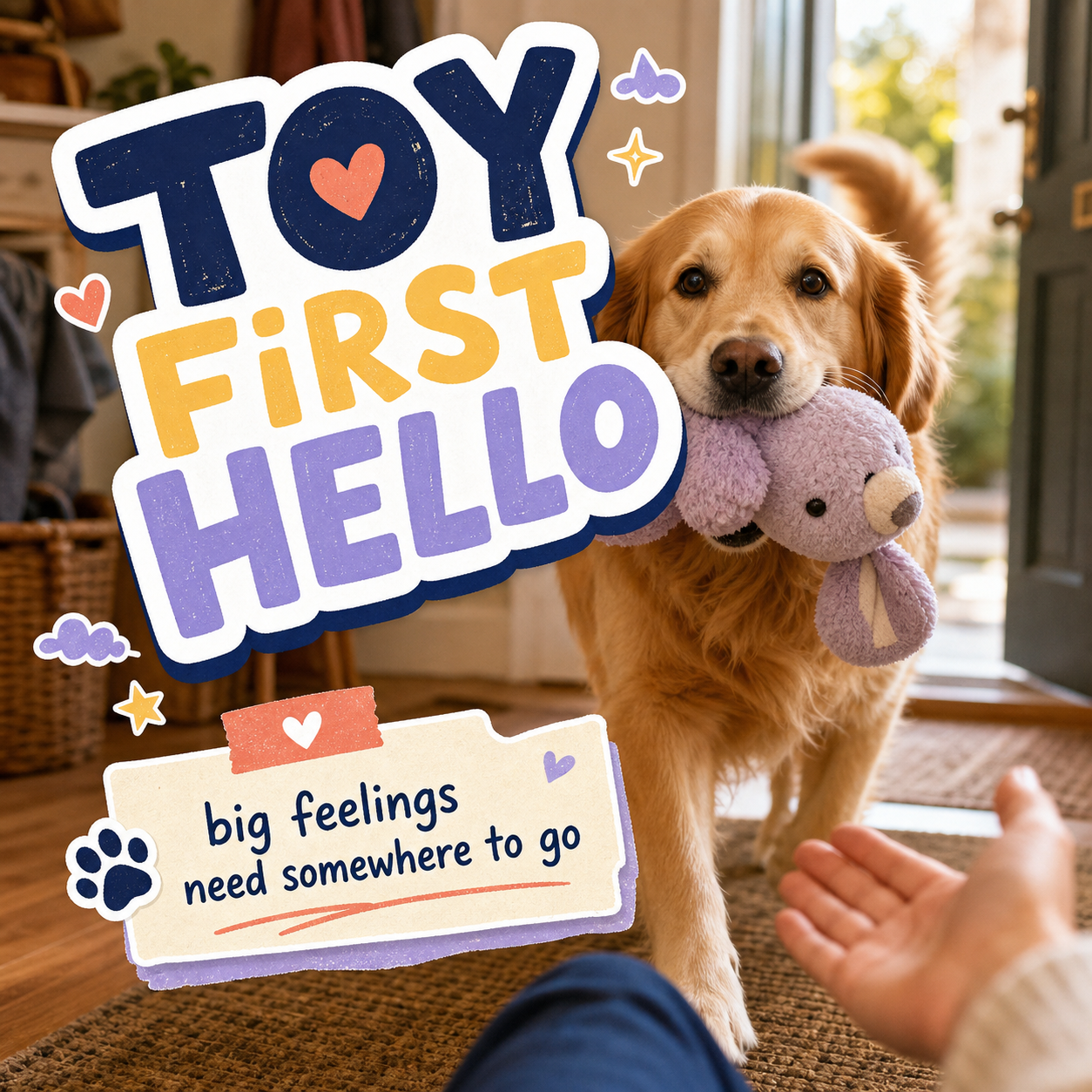
Some dog greetings come with a delivery service. The door opens, the paws start moving, and suddenly your dog appears with a toy like they have been waiting all afternoon to present evidence of joy.
It can look like a present. Sometimes it might feel like one. But a dog bringing you a toy when you come home is not always a neat little human-style gift. It can be excitement, a play invitation, a learned hello routine, a way to keep the mouth busy, or simply a happy dog giving big feelings somewhere safe to go.
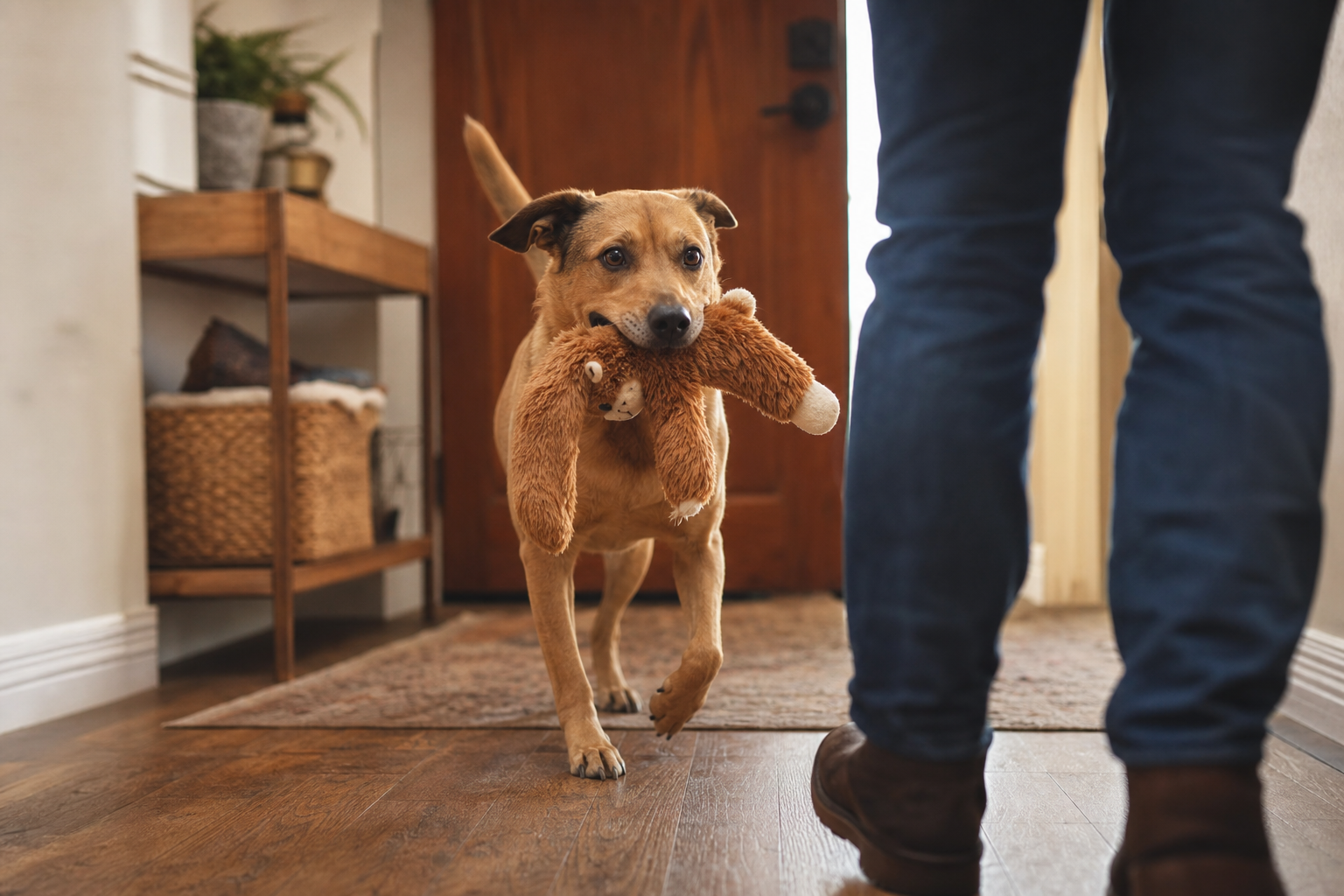
The useful question is not “does my dog know this toy is a gift?” The better question is: what does carrying the toy do for this dog in this moment?
A toy can give big feelings somewhere to go

Homecomings can be a lot. The sound of the key, the familiar footsteps, the door opening, the person returning, the whole household changing from waiting mode to hello mode. For some dogs, that excitement needs a job.
Picking up a toy can be that job. Instead of jumping, mouthing sleeves, barking, spinning, or trying to put every feeling directly into the human, the dog grabs something appropriate. The mouth has a safe task. The body has a tiny plan. The hello becomes slightly less chaotic.
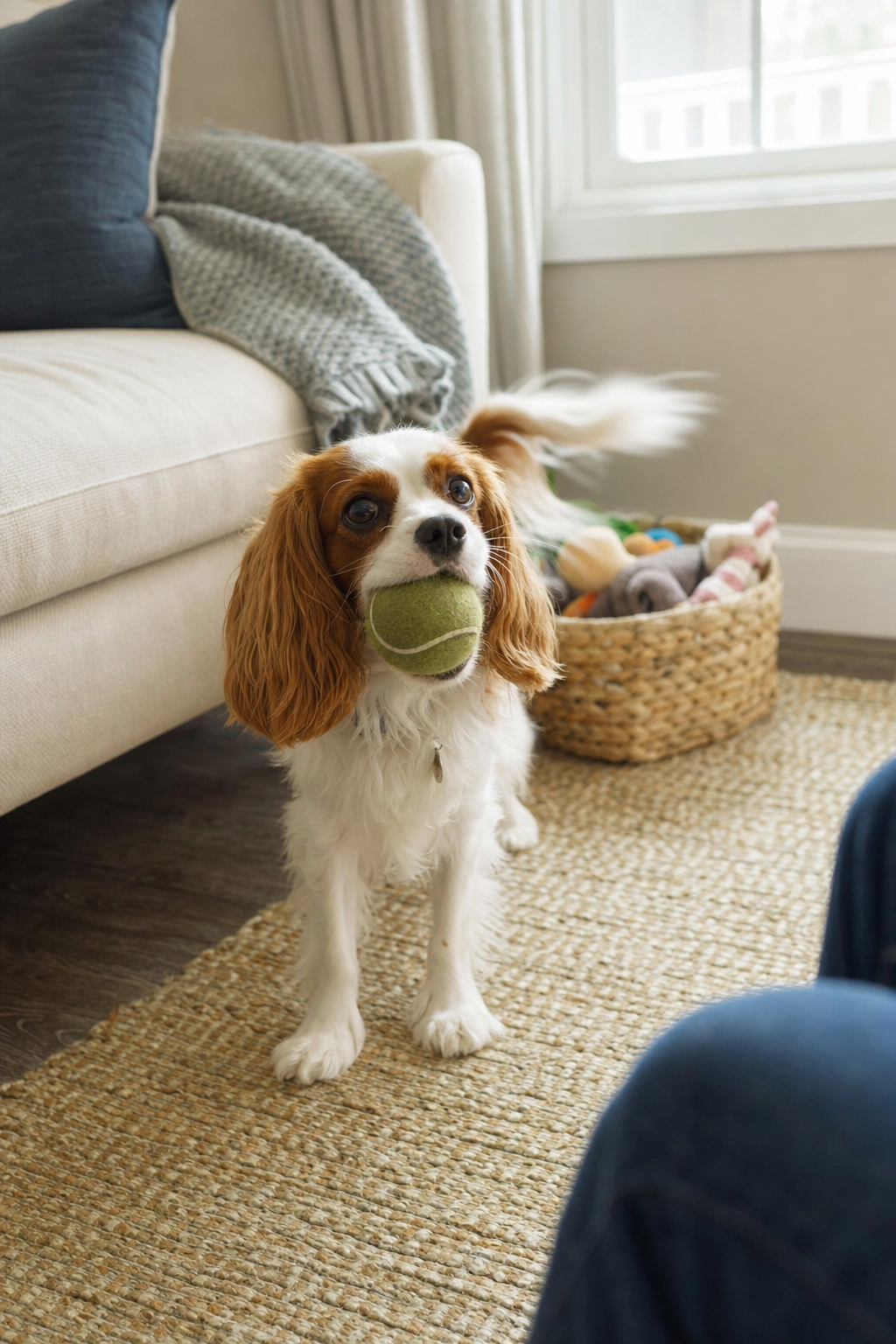
That does not mean every toy greeting is a training success story. Some dogs do it naturally. Some learn it because people respond warmly. Some were taught to “get your toy” during excited moments. The important part is that the toy can help turn a huge feeling into a clearer behaviour.
Dogs Trust describes enrichment as a way for dogs to use natural instincts, manage energy, build confidence, and support calmer behaviour. Blue Cross also notes that enrichment helps dogs express natural behaviours and supports mental wellbeing. A toy-at-the-door ritual can sit in that same practical family when it is safe, relaxed, and genuinely helpful for the dog.
Sometimes it means “play with me”
The toy may also be a very obvious proposal.
If your dog brings the ball, drops it near your feet, play bows, bounces away, keeps looking between you and the toy, or shoves a tug rope into your personal space with great confidence, they may be asking for interaction. Not a legal contract. More of a cheerful opening offer.
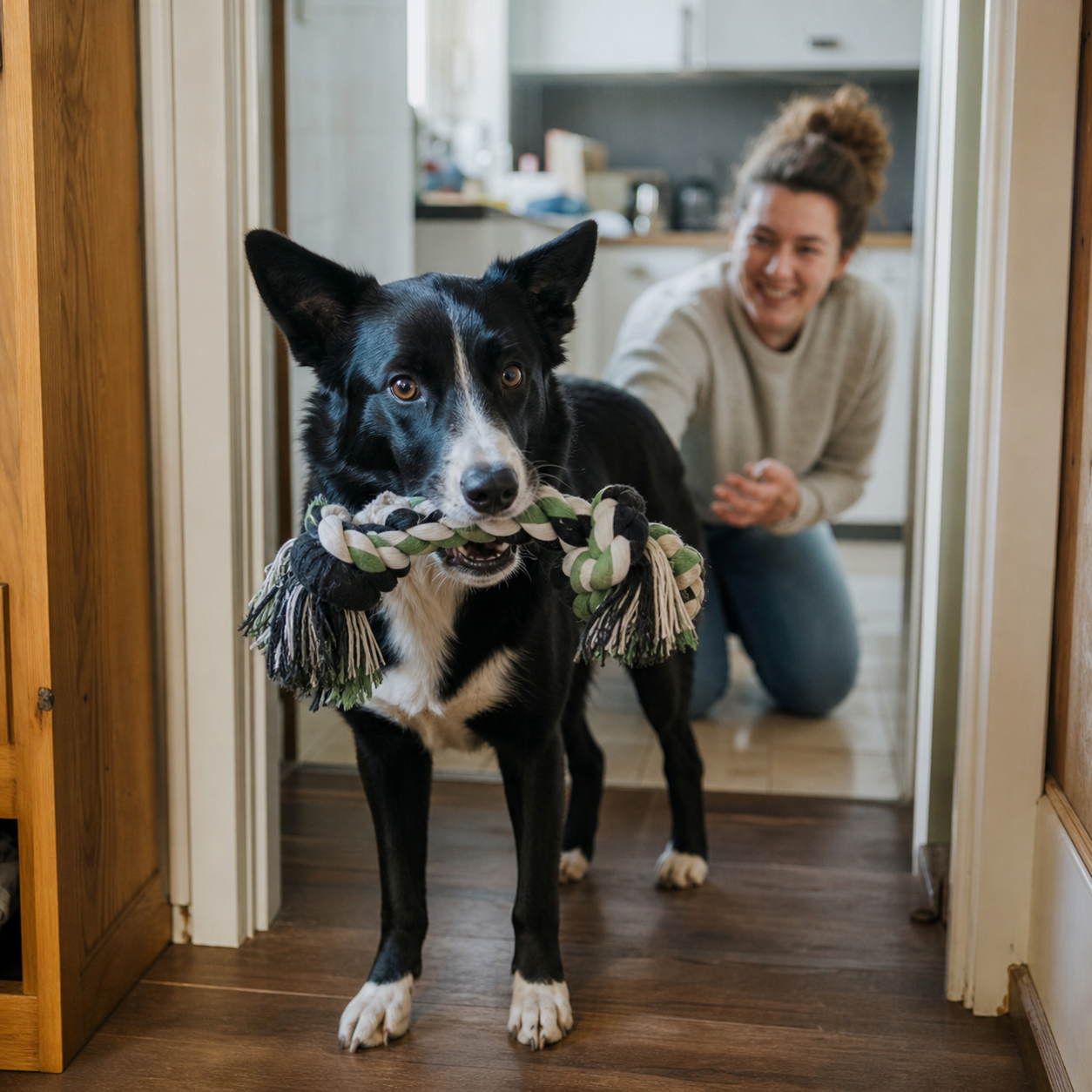
The body usually gives the clue. A playful dog tends to look loose and flexible. The tail may wag in a whole-body way. The mouth may be soft. The dog may move toward you and away again, inviting you into the game.
That does not mean you must launch a twenty-minute match every time you enter the room. A tiny routine can work better: greet calmly, ask for a sit or pause if your dog knows it, play one small tug or toss, then help the dog settle. The magic is predictability. The dog learns that the toy can start a nice hello without turning the hallway into a sports arena.
Sometimes it is a learned hello button
Dogs are excellent little pattern collectors. If bringing a toy makes the person laugh, talk, crouch, touch the dog, start a game, or give attention, the dog may learn that the toy is the correct button for making the greeting happen.
That is not manipulation in a dramatic way. It is learning.
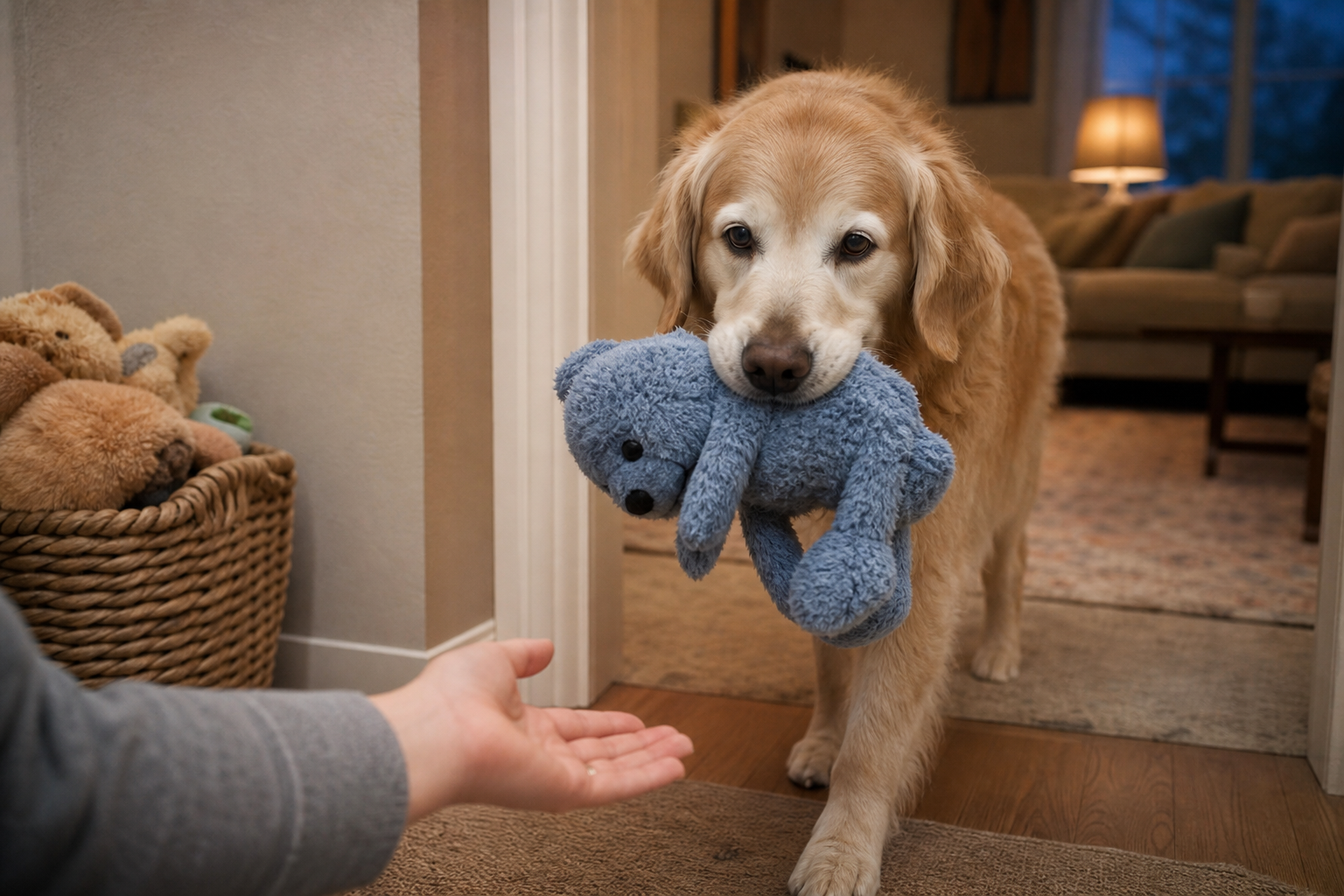
Maybe the dog once grabbed a toy because they were excited, and the whole room reacted with delight. Maybe someone started saying, “Go get your toy!” before greetings. Maybe the toy became part of the family script. Over time, the dog learns that the hello includes an object.
This can be lovely if everyone enjoys it and the dog stays comfortable. A learned toy greeting can also be useful for dogs who would otherwise jump, nip at clothing, or bark during arrivals. The toy gives the excitement a shape.
The CloudyAww version: the dog is not just saying hello. The dog is arriving with a tiny meeting prop.
Holding something can help a dog settle
Some dogs seem to relax faster when their mouth has something to do. They may carry a soft toy, hold a ball, or walk around with a plush animal during exciting moments. The toy becomes part comfort object, part activity, part emotional traffic cone.
If the dog looks loose, can move away from the toy, does not guard it, and can calm down after a minute or two, this is usually not a problem. It may even be a useful habit.
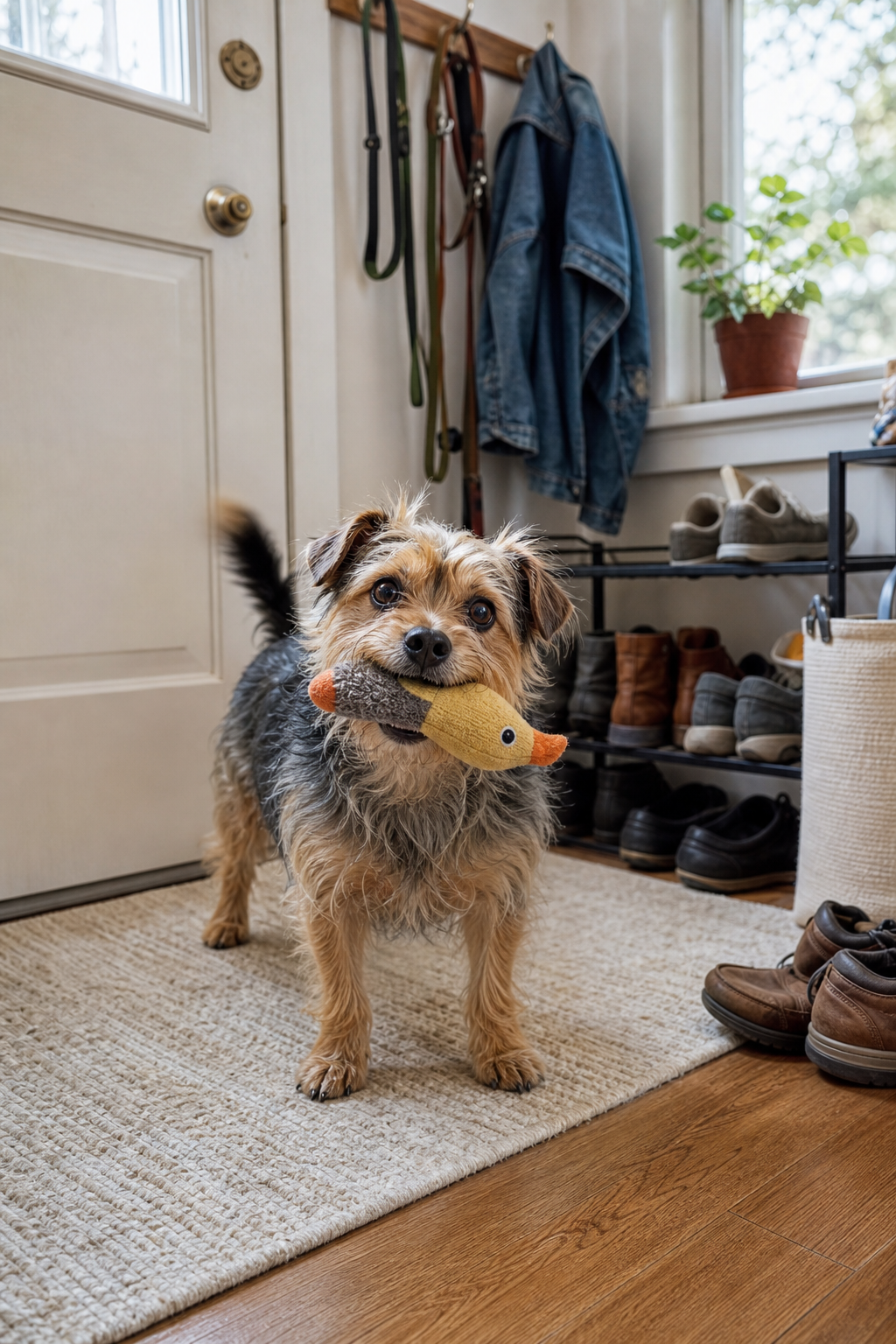
You can support it by keeping safe toys near the entrance and quietly cueing the behaviour before the dog gets too wound up. “Get your toy” can be easier for some dogs than “please have no feelings at all while your favourite person walks in.”
Keep the toy safe and suitable. Dogs Trust recommends supervising soft toys and checking that toy play is safe for the individual dog. Broken toys, squeakers, stuffing, and small pieces can become hazards, especially for dogs who chew and swallow first and think later.
Watch the whole dog, not just the toy
A toy in the mouth is only one clue. The rest of the dog tells you what kind of clue it is.
A relaxed toy greeting usually comes with loose movement, a soft face, normal breathing, flexible posture, and easy recovery. The dog can approach, move away, switch toys, or let the moment end without panic.
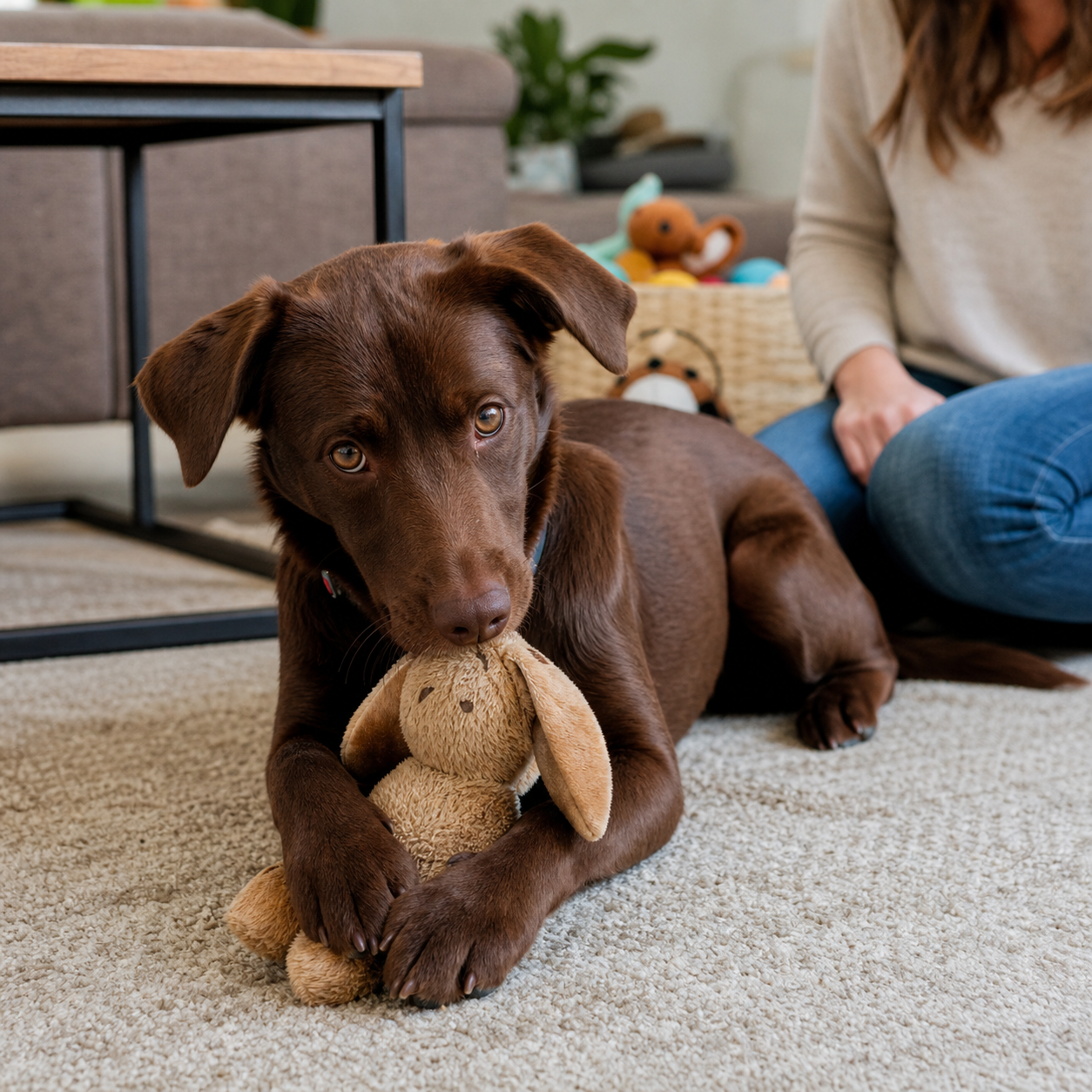
A worried or over-aroused dog may look different. Watch for a stiff body, hard stare, freezing, tucked posture, frantic pacing, repeated barking, inability to settle, or a dog who clutches the toy and seems unable to disengage.
Also notice whether the dog is choosing the toy or using it because the greeting is too much. A dog can look busy while still feeling overwhelmed. If arrivals are always loud, crowded, or physically intense, the toy may be helping, but the setup may still need to get easier.
Be careful if the toy becomes guarded
Most toy greetings are harmless. Toy guarding is different.
If your dog brings a toy but then stiffens when someone reaches for it, freezes over it, growls, snaps, runs away with it anxiously, or becomes tense around other pets or children, do not turn it into a grabbing contest.
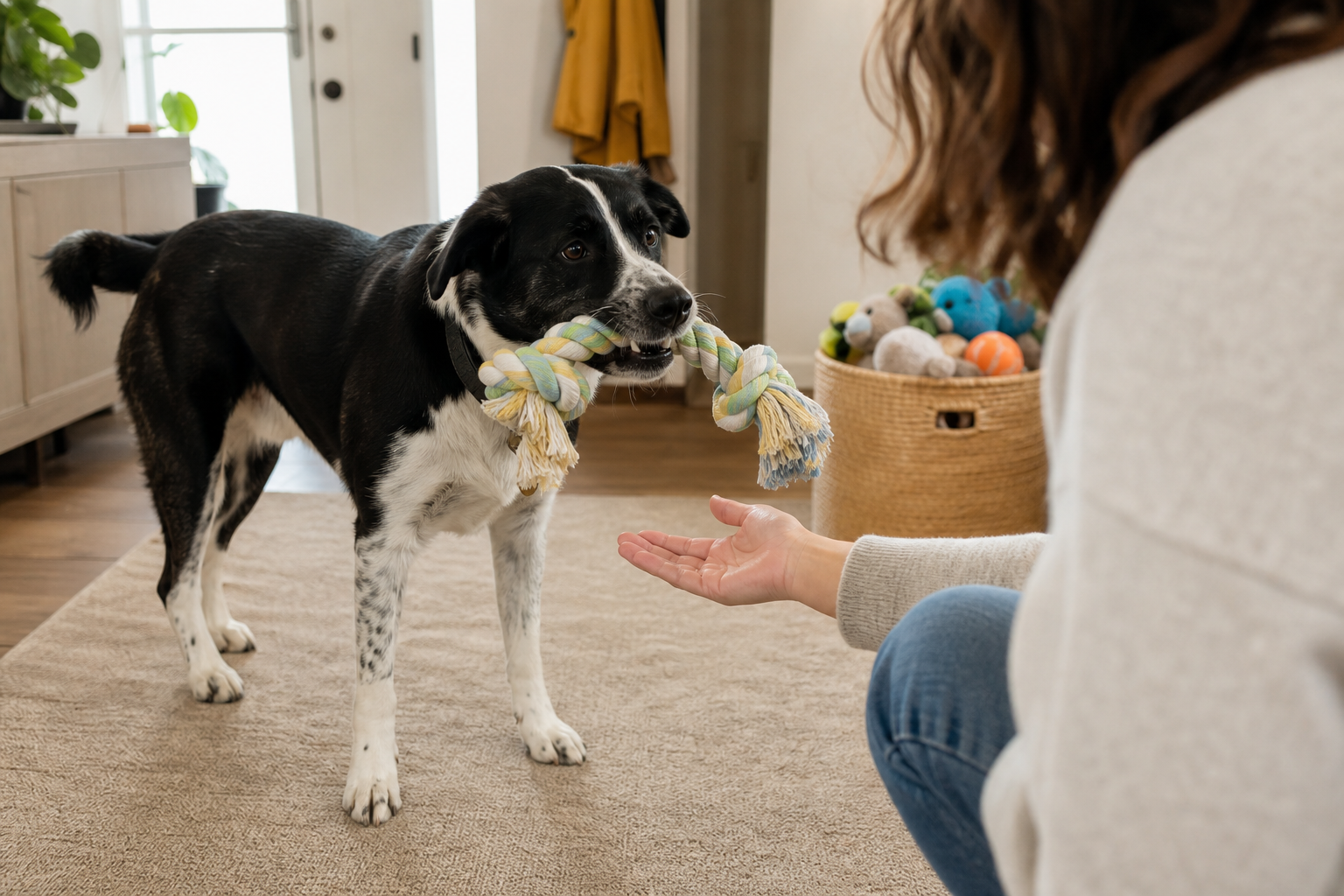
Instead, make the situation safer. Give space. Trade for something better instead of snatching. Teach a reward-based “drop” or “swap” away from high-pressure greetings. Keep children from taking toys directly from the dog’s mouth. Manage other pets if they create competition.
Resource guarding can be workable, but it deserves respect. Ask a qualified reward-based trainer or behaviour professional for help if guarding is intense, escalating, linked with bites, or happening around children. The goal is not to win the toy. The goal is to keep everyone safe and help the dog feel less defensive.
How to make the toy greeting work better
If your dog loves carrying a toy when you come home, you can make the routine clearer.
Keep two or three safe greeting toys near the door. Choose toys your dog enjoys but does not guard. Rotate them so they stay interesting. When you arrive, keep your own energy calm, invite the dog to get the toy if they have not already, then reward the greeting you want: paws down, soft body, toy in mouth, a little play, then settle.
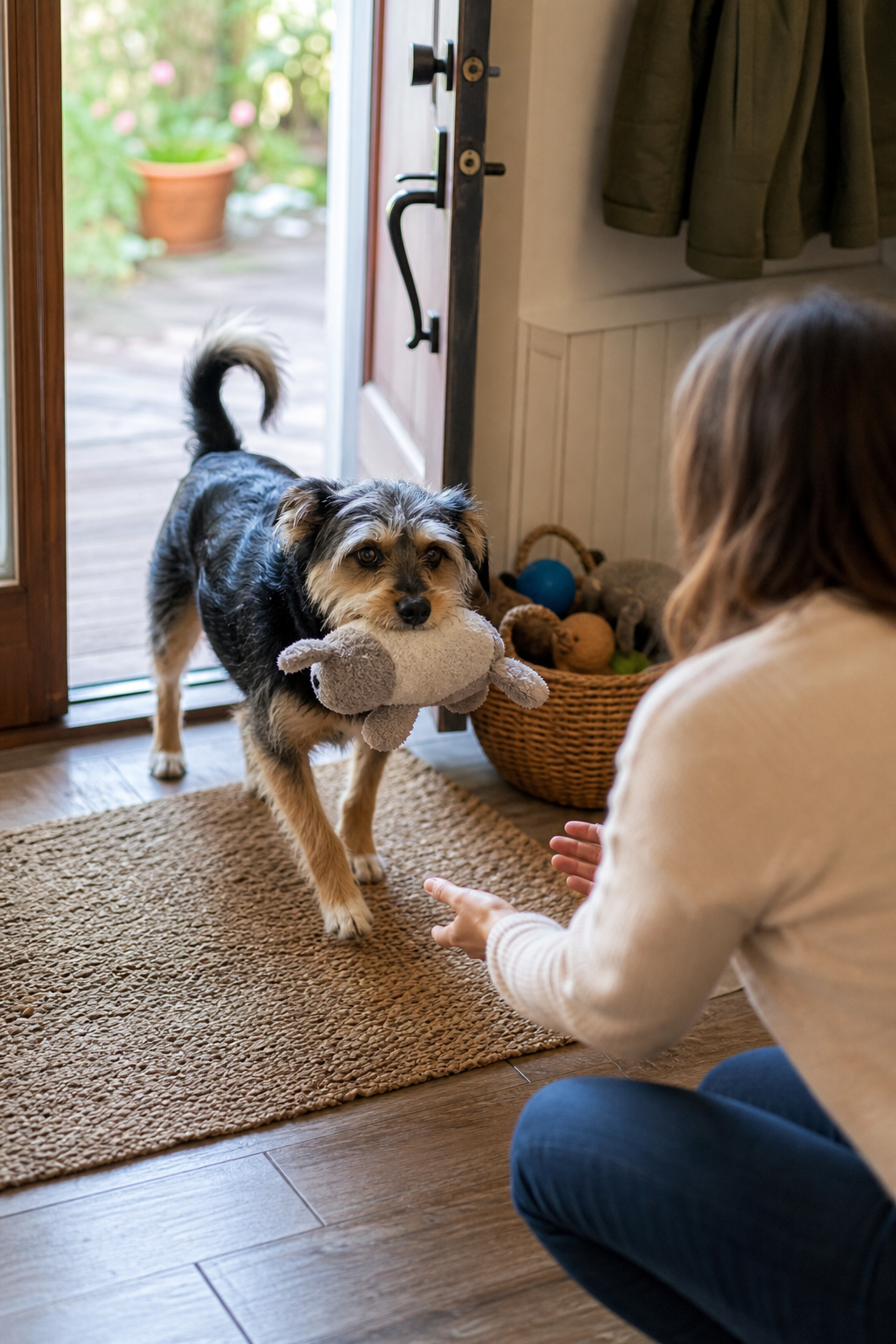
If your dog jumps before they can think, ask for the toy before opening the door fully, or have another person cue it from inside. If your dog gets too wild with tug, keep the first interaction short. If guests make the greeting huge, put the dog behind a gate for a moment, let them grab the toy, and bring them in when the first wave of excitement has passed.
This is not about removing the joy. It is about giving the joy a safer route.
When to ask for help
A toy greeting is usually normal and sweet. A sudden change deserves more attention.
Ask a vet or qualified behaviour professional if your dog suddenly starts frantic toy carrying, becomes unable to settle, guards toys, destroys and swallows toy parts, shows separation distress, panics when people arrive, or begins mouthing people hard during greetings.
Also check for pain or discomfort if the behaviour changes alongside limping, stiffness, low energy, appetite changes, sensitivity to touch, or unusual irritability. Behaviour can change when a dog does not feel well.
The goal is not to pathologise a happy dog with a teddy. It is to notice when a cute routine is actually carrying stress, pain, or conflict underneath.
The tiny toy-at-the-door read
Dogs bring toys when you come home for different reasons. Sometimes it is play. Sometimes it is habit. Sometimes it is excitement with a handle. Sometimes it is a learned way to keep the hello happy and safe.
The best response is simple: enjoy the sweetness, watch the whole dog, keep the toy safe, and shape the greeting into something everyone can live with.
If your dog appears at the door with a plush animal and the emotional urgency of a very small courier, yes, it is adorable.
And underneath the tiny delivery, there is usually a real feeling worth noticing.
More tiny pet logic lives across CloudyAww, where the funniest animal moments usually have a small real reason hiding underneath them.
Keep following the behaviour trail with Why Dogs Get So Excited When You Come Home and What Your Dog May Be Saying With a Paw. More warm, practical pet explainers live in Aww Articles.
Sources and Further Reading