

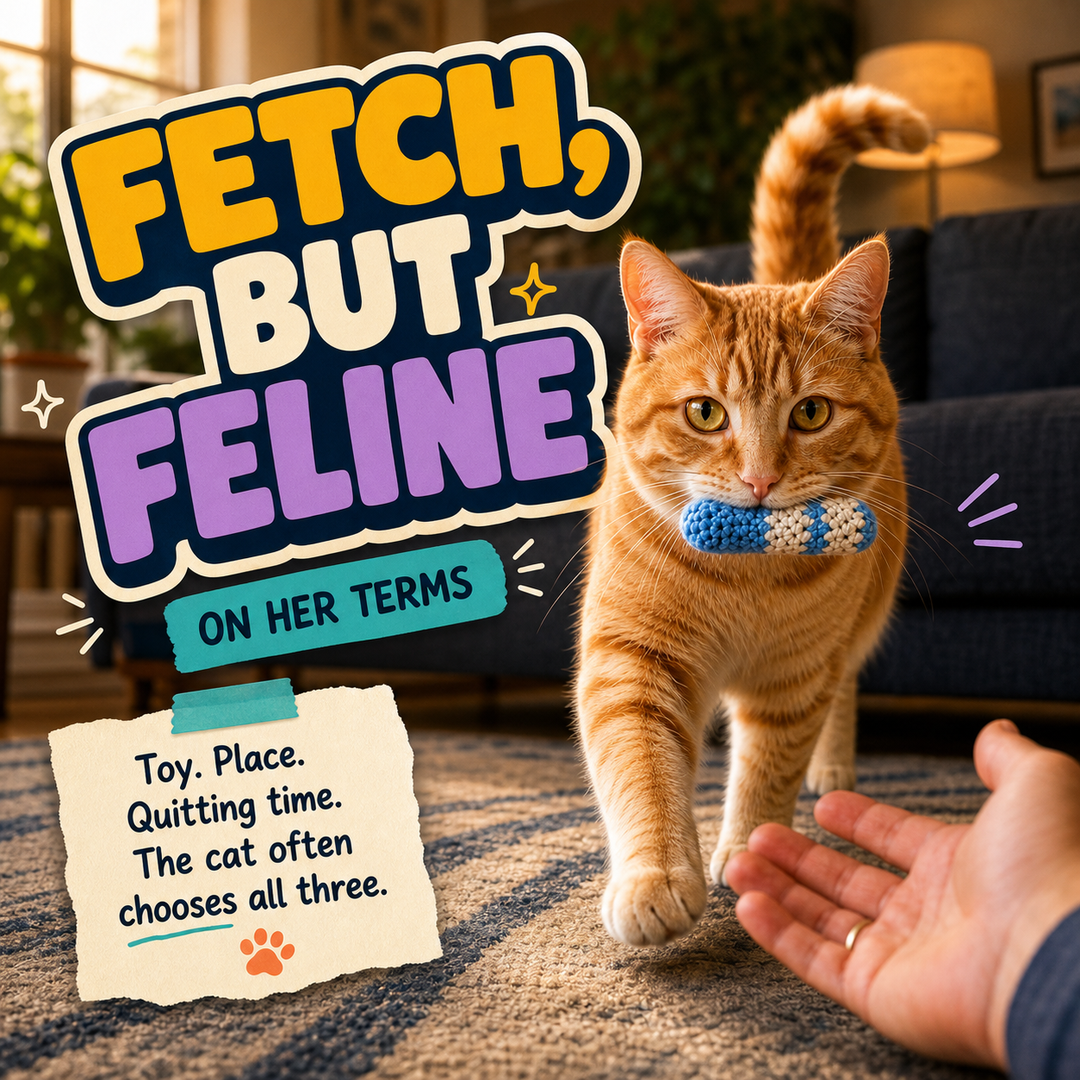
The toy leaves your hand, skims across the rug and disappears under the chair. Your cat launches after it, performs a brief inspection that appears to involve three separate departments, then trots back and drops it beside you. Congratulations: the fetch department is now feline operated.
Some cats really do play fetch, and many appear to invent the game without being formally taught. The interesting part is not that they can copy a familiar dog game. It is that cats often edit the rules: one toy, one favourite corridor, one approved human and a quitting time known only to management.
This guide explains what cat fetch can tell us about play, how to join without turning it into compulsory sport, and how to keep the game safe. It is not a test of intelligence or affection. A cat who brings back a knitted mouse is not cleverer than a cat who watches it land and files the matter under “not my problem.”
Yes, Some Cats Really Do Fetch
Fetch is not a rare internet illusion assembled from the same twelve unusually cooperative cats. In a large 2024 owner-survey dataset, nearly 41% of cats were reported to fetch at least sometimes. A separate 2023 study focused specifically on fetching cats and found enormous variety in how the game began and how it was played.
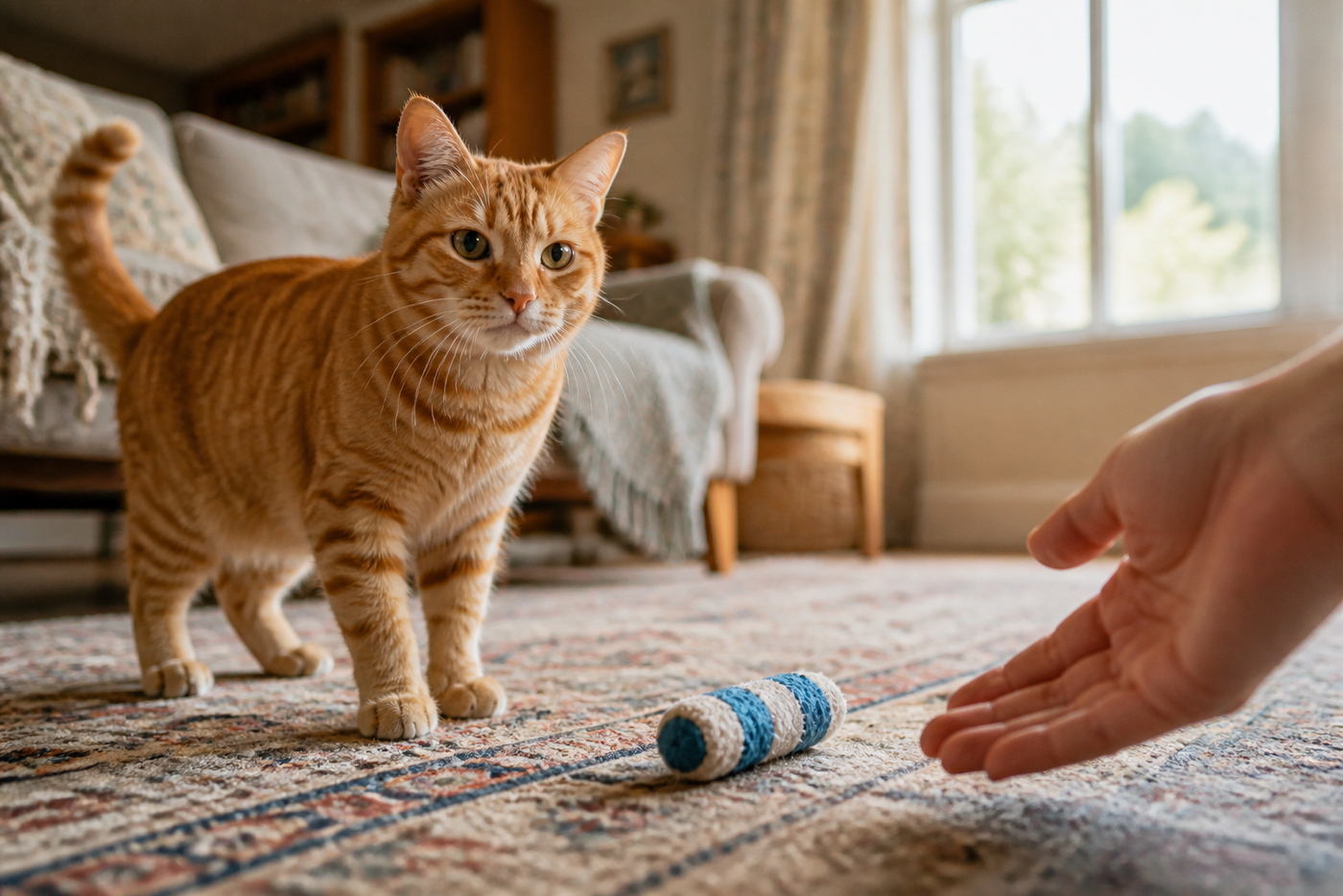
That does not mean four out of ten cats will reliably return a toy on command. The research relied on owner reports, and “fetching” covered a range of patterns: chasing a thrown object, picking it up, carrying it toward a person and sometimes repeating the exchange. Cats are very good at making a clear-looking game slightly difficult to put in a spreadsheet.
The broader point is useful: retrieving objects can sit comfortably inside normal feline play. Cats already chase, pounce, bite, carry and relocate small things. Fetch simply joins several of those actions into a social loop.
Fetch Is a Sequence, Not a Contract
A neat fetch cycle contains four visible parts: the object moves away, the cat pursues it, the cat picks it up, and the object comes back close enough for another round. Not every cat completes every step. One may return the toy directly to your hand; another may leave it two metres away and expect the human intern to close the final gap.
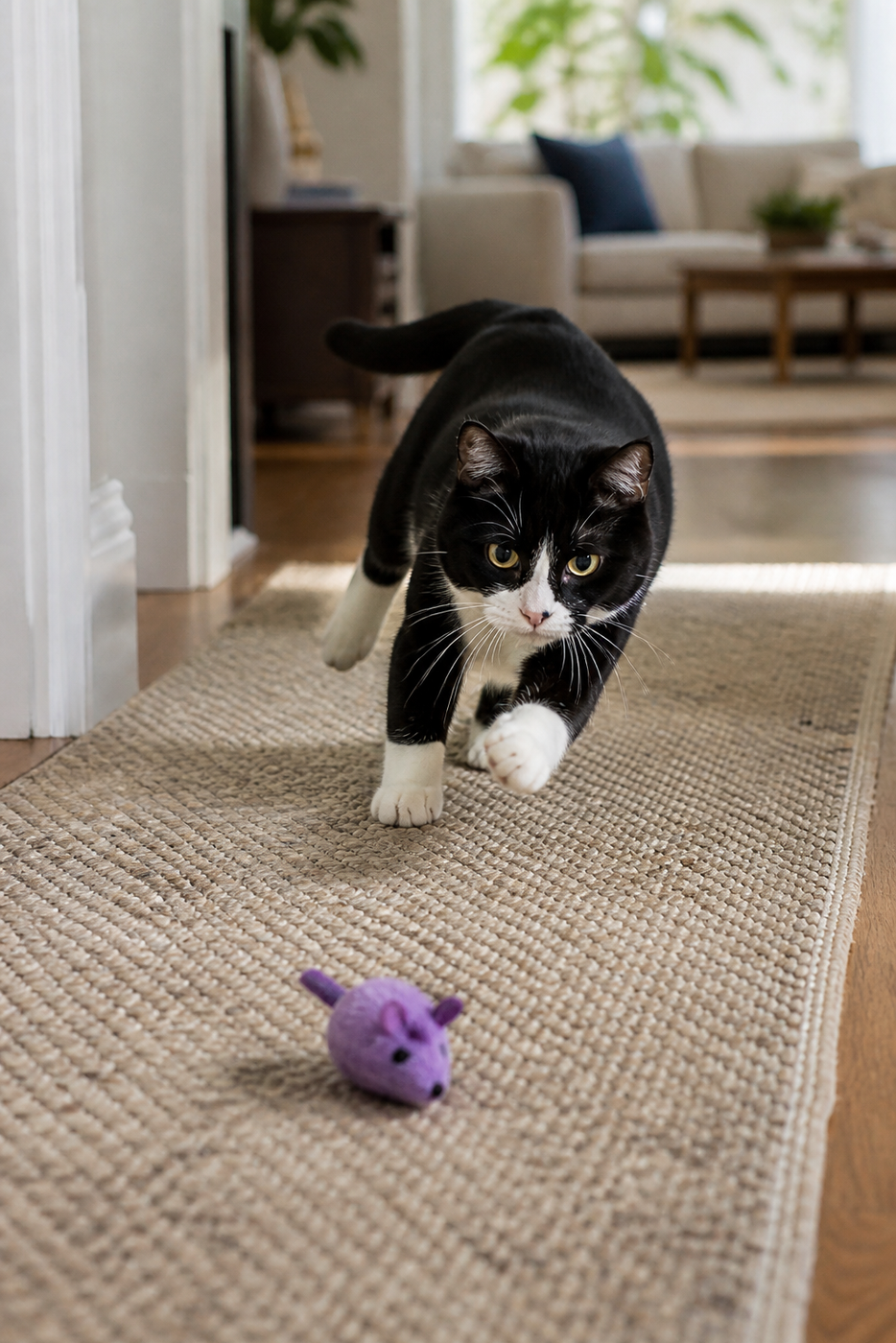
The chase itself can be rewarding because it resembles a short burst of hunting-style play. Catching and carrying the object may be satisfying too. The return can add a social reward: the person reacts, the toy moves again and the sequence resets.
This is one reason fetch is better understood as play than as proof of a cat being “dog-like.” The 2024 study found fetching was associated more strongly with playfulness than with predatory behaviour. It may borrow movements from hunting, but the living-room version has its own logic—and considerably more soft furniture.
The Cat Often Writes the Rules
One of the loveliest findings from the 2023 fetch study was how often the game appeared without deliberate training. Among owners in that fetching-cat sample, 94.4% reported that the behaviour emerged without explicit teaching. Owners also described cats showing strong preferences for particular objects, people and locations.
The cats frequently initiated sessions and decided when they were finished. That matches what many people see at home: the toy is deposited by your foot at 10:42 p.m., but the same offer made at 10:47 is regarded as an administrative error.

Letting the cat keep that control is good play practice. If they walk away, sit down, groom, stare through the window or simply stop returning the object, the session is over for now. Our guide to why cats walk away during play explains why a pause is information, not a personal rejection.
What Makes a Good Fetch Toy?
The best fetch object is small enough to carry but too large to swallow, light enough to move safely and sturdy enough to survive repeated teeth-and-floor negotiations. A soft toy mouse, a well-made fabric ball or another cat-safe object can work. The cat’s preference matters, but safety gets the final vote.
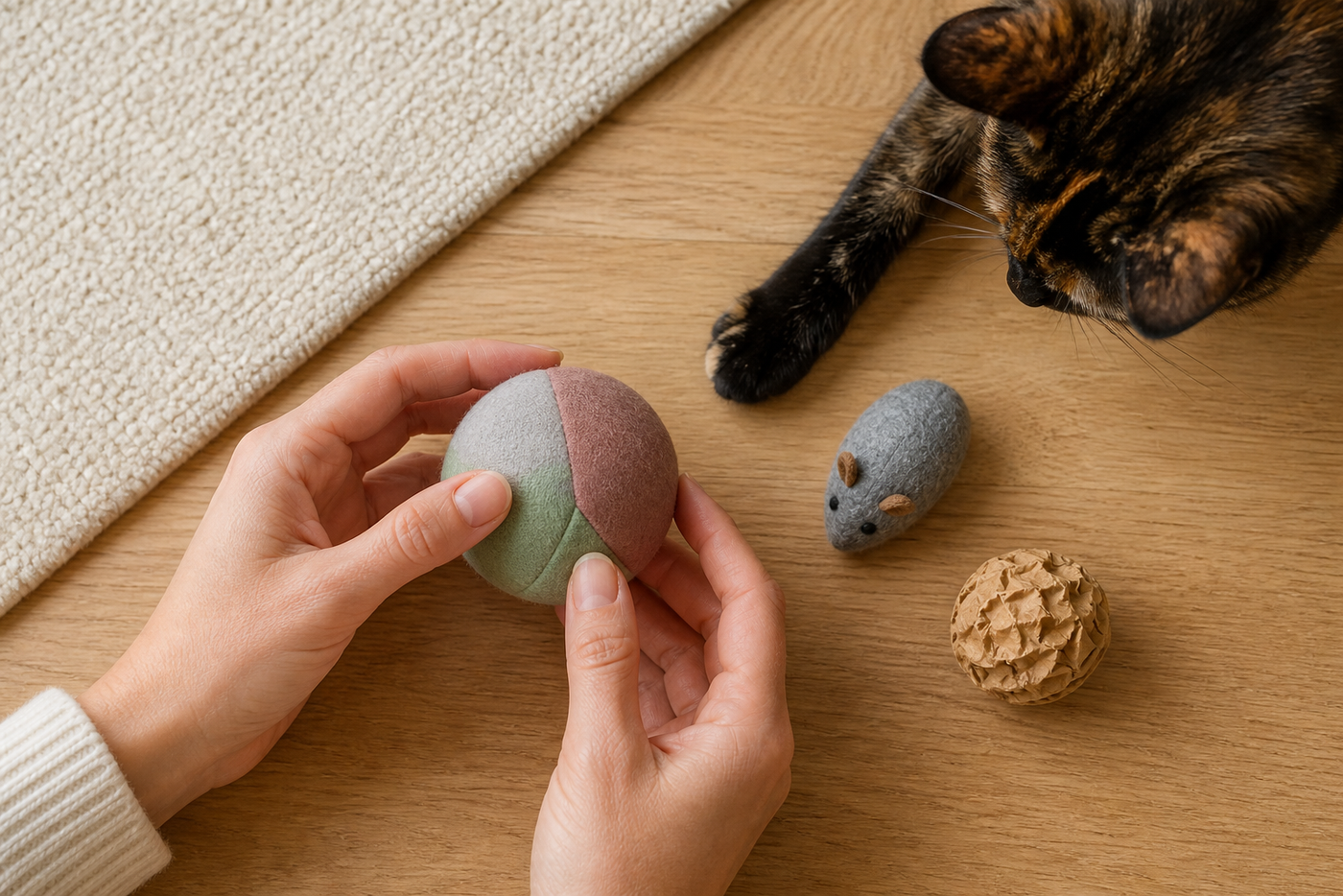
Inspect fetch toys regularly. Retire anything with exposed stuffing, loose bells, sharp seams, fraying elastic, detached feathers or string that could be swallowed. Wand toys and loose string can be excellent supervised play tools, but they are poor unsupervised carry-around prizes. Do not throw hard objects toward stairs, glass, other animals or a slippery landing zone.
Rotate a small selection rather than leaving every toy out all the time. Variety can refresh interest, while familiar favourites preserve the cat’s sense of ownership over the game. For more ways to make an indoor routine interesting, see how to play with an indoor cat.
How to Join Without Taking Over
If your cat already returns a toy, make the next round easy. Start with short, low throws across a clear floor. Wait for the cat to bring the object back voluntarily. A calm “good,” gentle attention or the next throw can reward the return; food is optional and should come from the cat’s normal daily allowance if used.
Do not chase the cat to recover the toy, pry it from their mouth or repeatedly call them back. Those moves can turn a shared game into guarding, avoidance or a very small hostage negotiation. If the cat drops the toy nearby, calmly pick it up. If they carry it elsewhere, let the round end.
For a cat who chases but does not return, roll the toy only a short distance and reward any movement back toward you. Keep sessions brief—often a few lively rounds are plenty. Stop while the cat still looks comfortable rather than waiting for play to tip into frustration or exhaustion.
Watch the Return, Not Just the Chase
The return is the part that makes feline fetch especially interesting. Chasing a moving object is common cat behaviour; carrying it back toward a person creates a repeatable social loop. In our Daily Aww, the orange recruit arrives with the toy already in place and completes the handover with the confidence of someone who has reviewed the job description.
Watch the whole exchange: approach, eye contact, body position, release and what happens immediately afterwards. Does the cat wait for another throw, rub against the person, remain loose and curious, or leave? The final second often tells you whether the game is continuing.
That whole-body reading matters. Tail position can add context, but it should never be interpreted alone; our guide to reading a cat’s tail in context combines tail, ears, eyes, posture and the surrounding situation.
Read the Whole Cat During Play
A comfortable fetch session usually looks loose and self-directed. The cat moves freely, approaches the object willingly and can disengage without being followed. Ears are generally neutral or forward, movements remain coordinated and the cat returns to ordinary behaviour between rounds.
Pause if you see repeated tail lashing, flattened ears, crouching, hiding, growling, panting, frantic over-arousal or repeated conflict with another pet. One signal is not a diagnosis; look at the cluster and the context. The goal is not to squeeze in one more throw because the content calendar demands a dramatic finale.
Fetch should also be one option inside a richer routine. Climbing, scratching, food-search games, quiet observation points and different styles of interactive play all exercise different parts of feline life. A cat may adore fetch tonight and choose a small nocturnal zoomies conference tomorrow.
When a Sudden Change Deserves Attention
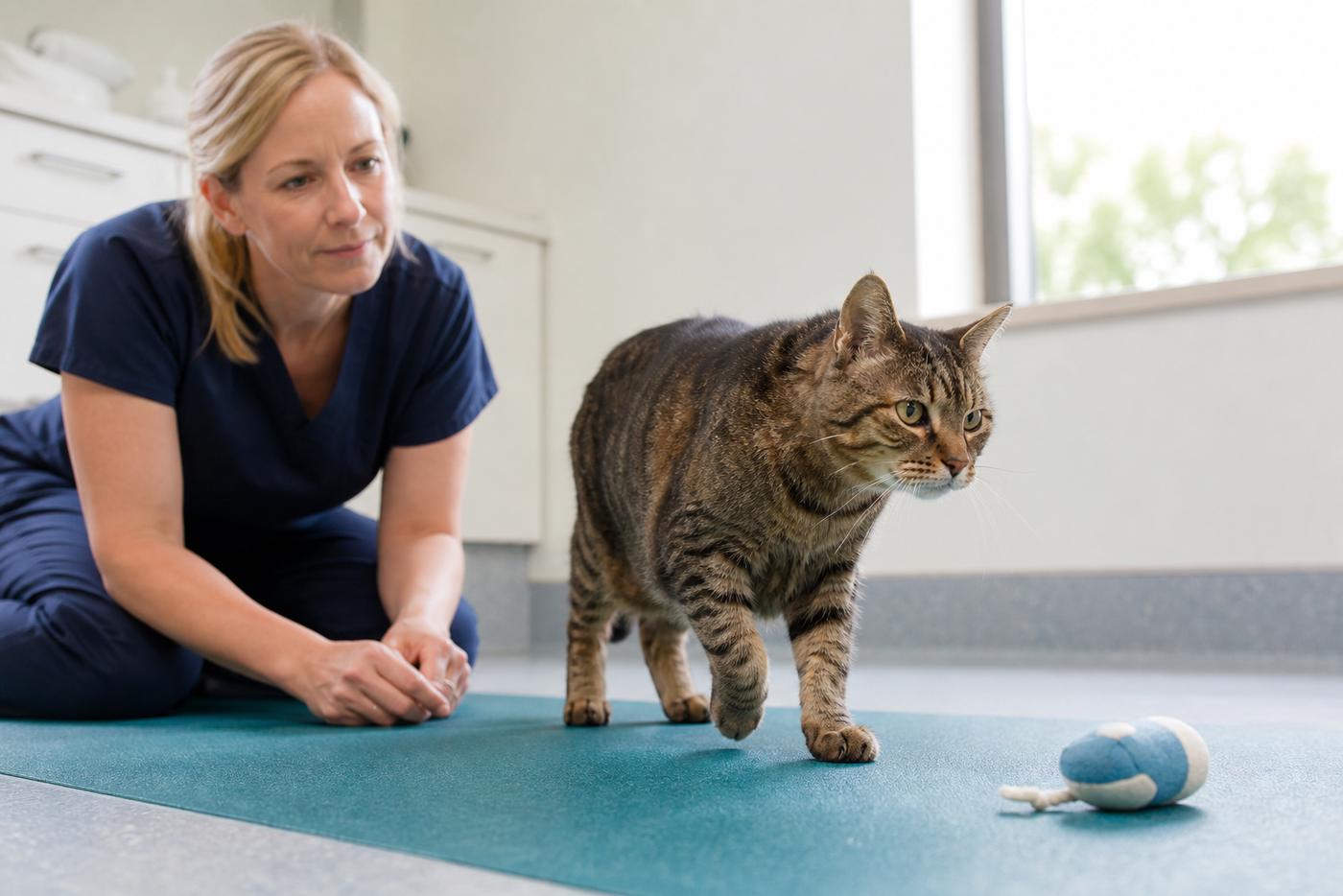
A cat who has never fetched does not need fixing. But a sudden change in a familiar game can be useful information. If a keen fetcher abruptly stops chasing, seems reluctant to jump, walks differently, drops objects repeatedly, paws at the mouth or appears painful, pause the game and observe carefully.
Contact a vet if the change persists or comes with pain, lameness, breathing changes, reduced appetite, hiding or another clear shift in normal behaviour. Problems involving teeth, joints, vision or general health can affect play, but a video cannot tell you which cause applies. Remove obvious hazards and let a veterinary professional assess the cat.
A Tiny Cat-Led Fetch Routine
- Choose one intact, carry-safe toy and a clear, non-slip route.
- Let the cat see the object, then roll or toss it a short distance away from people and pets.
- Wait. Chasing is optional; returning is even more optional.
- If the toy comes back, respond calmly and offer another round only if the cat remains engaged.
- End immediately when the cat disengages, looks uncomfortable or changes the subject.
Short sessions protect the fun. They also preserve the key ingredient that makes feline fetch so charming: the cat is participating, not being operated.
The Best Fetch Game Ends With a Choice
A cat bringing back a toy can look like a tiny miracle of cooperation, but it is really a conversation made of movement. The human sends the object away. The cat decides whether to chase, carry, return and restart. Both sides keep reading the answer.
So enjoy the delivery. Celebrate the absurdly specific favourite toy. Keep the route clear and the object safe. Then, when your cat deposits it under the sofa instead of beside your hand, accept that the fetch department has closed for inventory.
Trusted Sources
- Scientific Reports: Fetching felines—owner survey of cat fetching behaviour
- PLOS ONE: Prevalence and characteristics of fetching behaviour in cats and dogs
- Cats Protection: Cats and play
- VCA Animal Hospitals: Cat play behaviour and toy safety