

Some rabbits dig politely. Others approach a blanket, sofa corner or newly cleaned carpet with the focus of a tiny archaeologist who has received extremely specific coordinates. The behaviour is not a personal review of your interior design. Digging is normal rabbit work.
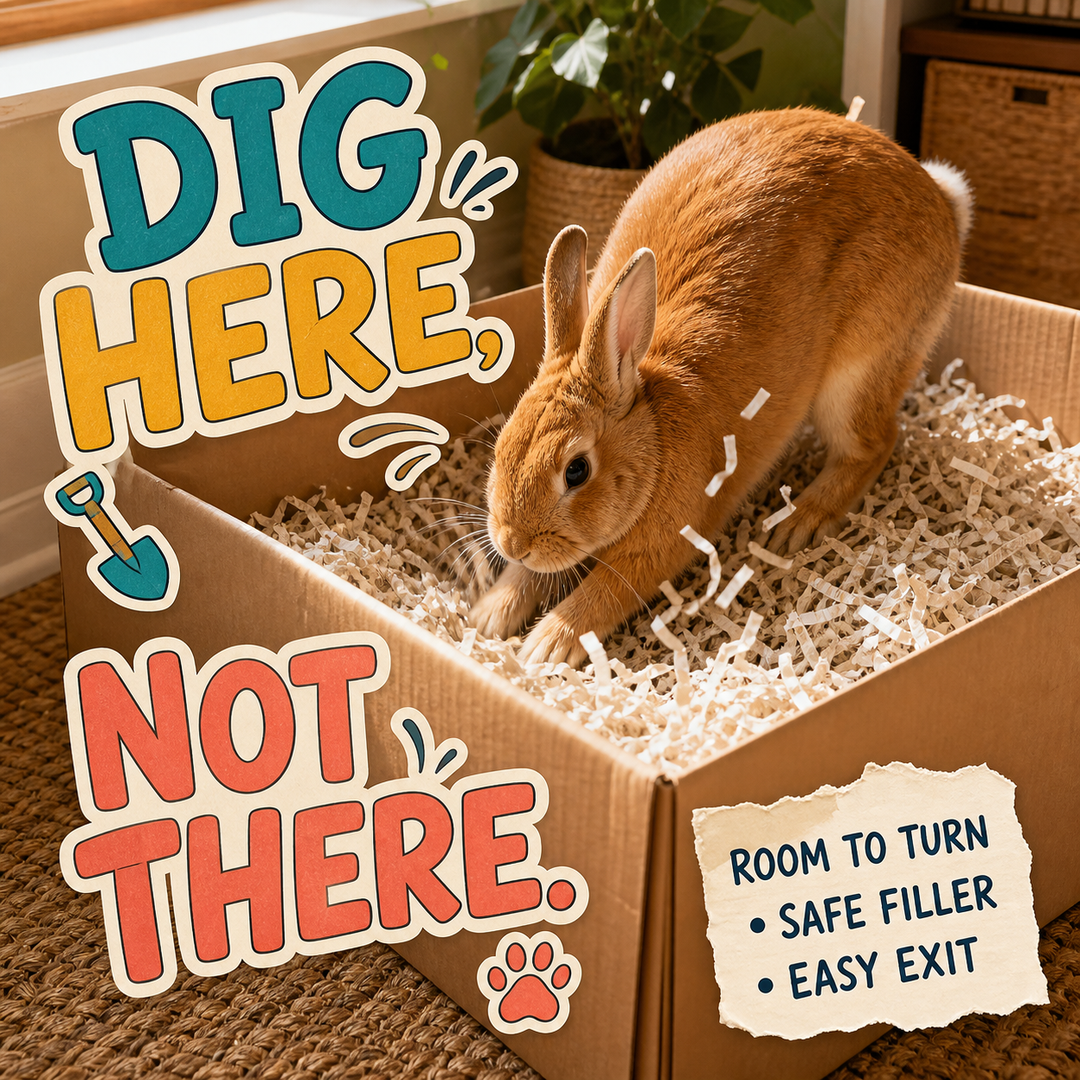
A good rabbit dig box gives that work somewhere appropriate to happen. It does not need to be expensive, but it does need enough room, a stable container, suitable material and a clear way in and out. It should also remain a choice. The goal is enrichment, not an assignment with a deadline.
This guide walks through a practical setup for indoor rabbits, including size, filler, placement, shared use and cleaning. It cannot make every rabbit immediately abandon the carpet—the carpet may have excellent historical significance—but it can make the approved excavation site far more interesting.
Digging Is the Job, Not the Crime
Rabbit Welfare Association & Fund describes digging as a natural behaviour that helps rabbits exercise and express themselves. In the wild, rabbits use powerful front feet to move soil and create burrows. Domestic rabbits still arrive with the equipment and the urge, even when the nearest hill is a folded duvet.
Repeatedly blocking the behaviour without providing another outlet can create frustration. A dig box is one option alongside tunnels, hides, chewable materials, foraging and enough safe floor space. It is not a replacement for a roomy home or daily movement.
Our guide to why rabbits chew everything follows a similar principle: the useful question is not how to delete rabbit behaviour, but how to provide a safer version of what the rabbit is trying to do.
Choose a Box With Real Working Room
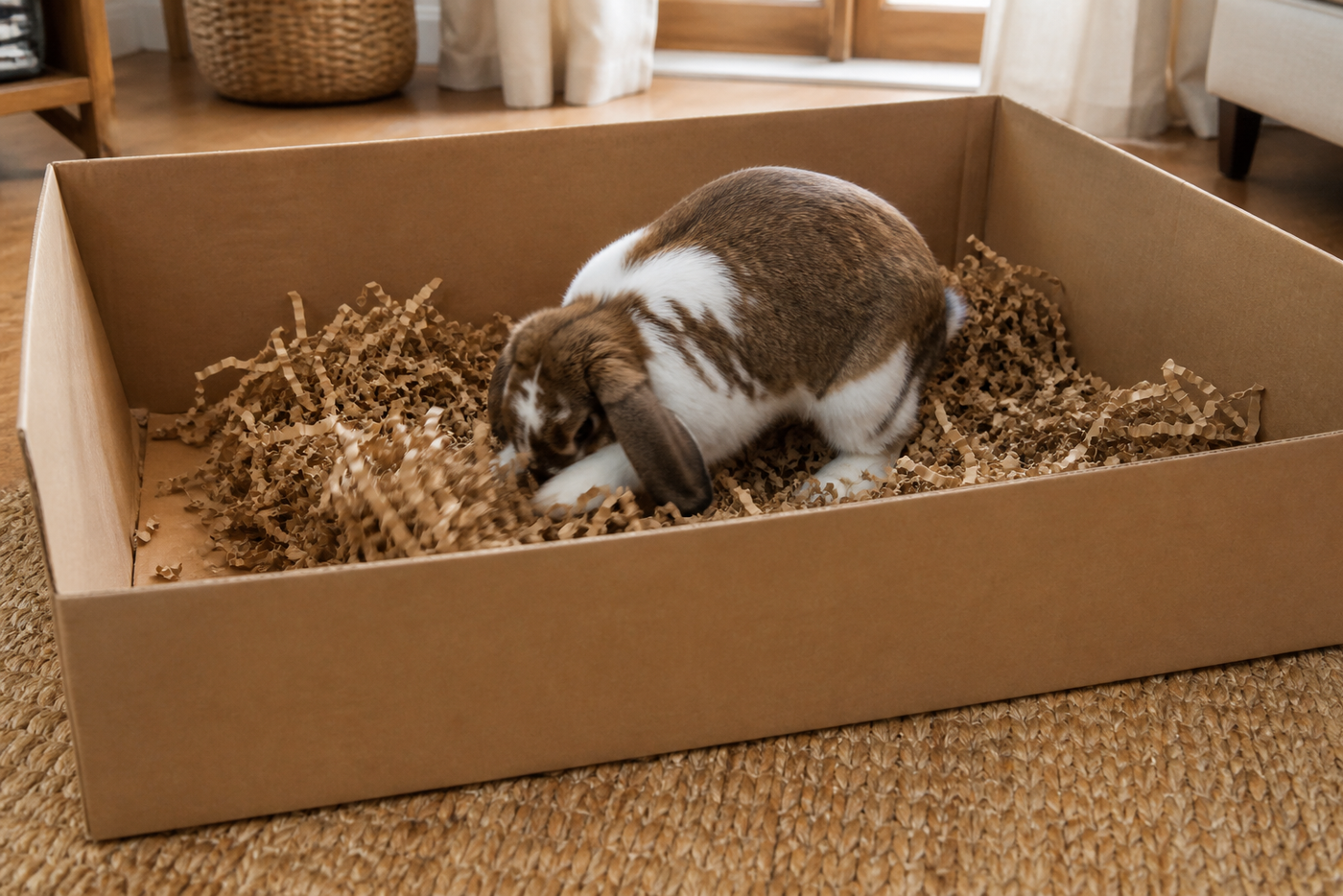
RWAF suggests a dig box at least twice the size of the rabbit. That gives the rabbit room to enter, turn, brace, dig and leave without being wedged between the walls. A high-sided cardboard box, sturdy plastic tray or other rabbit-safe container can work, depending on the rabbit and where the box will live.
The walls should help contain material without making entry awkward. Cut one or two doorways if needed, keeping every edge smooth and large enough for the rabbit’s whole body. Remove tape, staples, loose plastic and anything with sharp or easily swallowed pieces.
Large rabbits need a genuinely large setup. A box that holds the front half while the back half remains in the hallway is a serving suggestion, not a digging area.
Pick a Sensible Filler
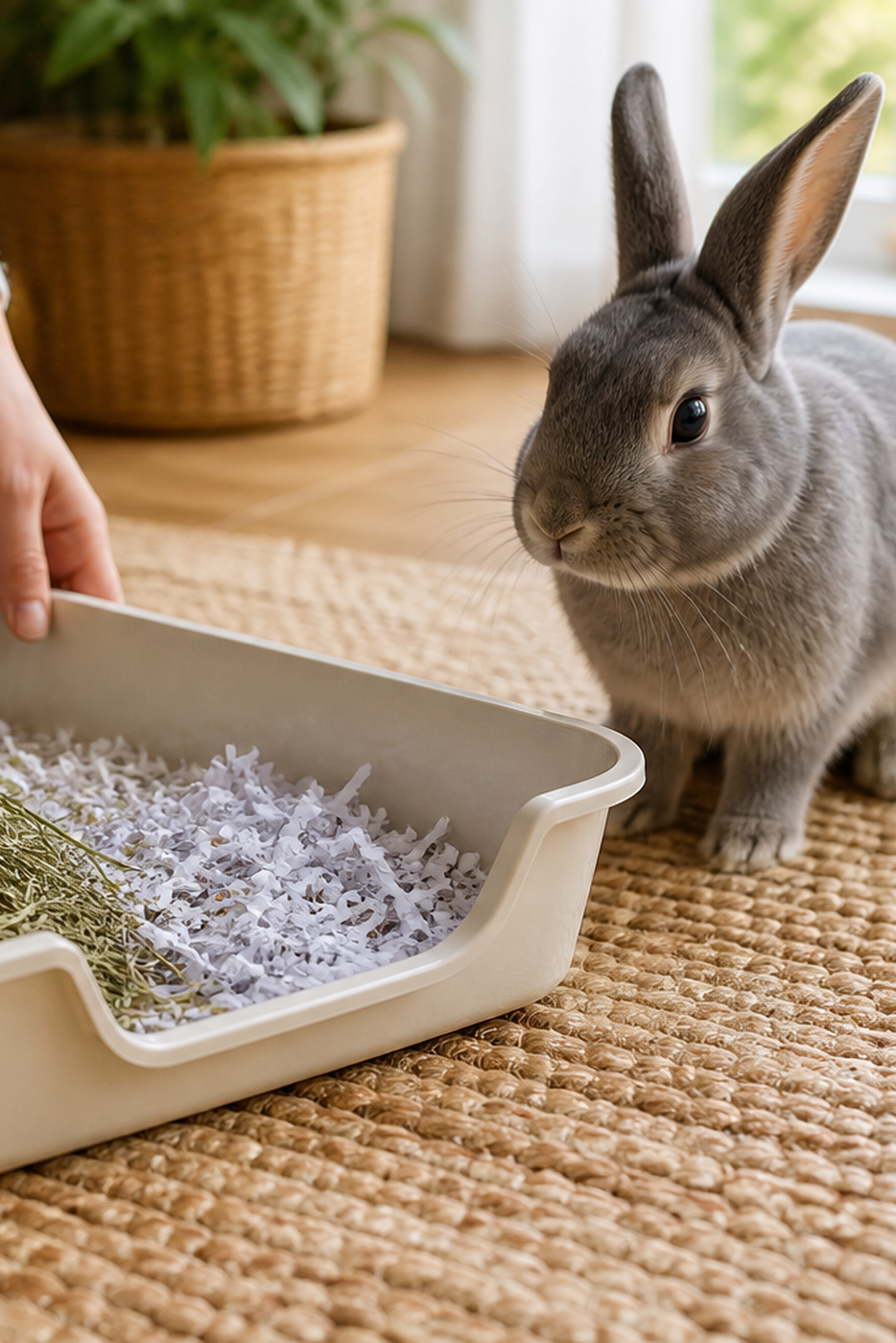
Useful fillers can include hay, plain shredded paper, torn unprinted cardboard or rabbit-safe soil where the environment makes that practical. RWAF also discusses earth and child-friendly sand as possible materials, while the RSPCA suggests soil or child-safe sand in a large litter tray. The best choice depends on ventilation, the individual rabbit and whether the box is indoors or outside.
Avoid dusty, perfumed, clumping or chemically treated materials. Do not use cat litter. Check paper and cardboard for coatings, plastic windows, glue-heavy labels and staples before they enter the box.
Start with one simple material or a loose mix of hay and plain paper. You do not need to create a seven-layer geological dessert. The rabbit will manage the redesign.
Build an Easy Entry and Exit
A rabbit should be able to approach, enter and leave without being lifted into the box. Use a low doorway, a stable step or a shallower tray if mobility makes a tall edge difficult. The base should sit flat and should not skid when the front feet begin working.
Two exits can be especially useful in a multi-rabbit home because one rabbit cannot easily block the only door. Avoid narrow handles or holes where a head or limb could become caught. If the box begins to collapse, split or develop sharp chewed edges, retire it.
Place the opening where you can see it. A rabbit disappearing into a box is charming; a box quietly eating the rabbit’s route to the water bowl is less successful.
Put It Where Mess Can Succeed
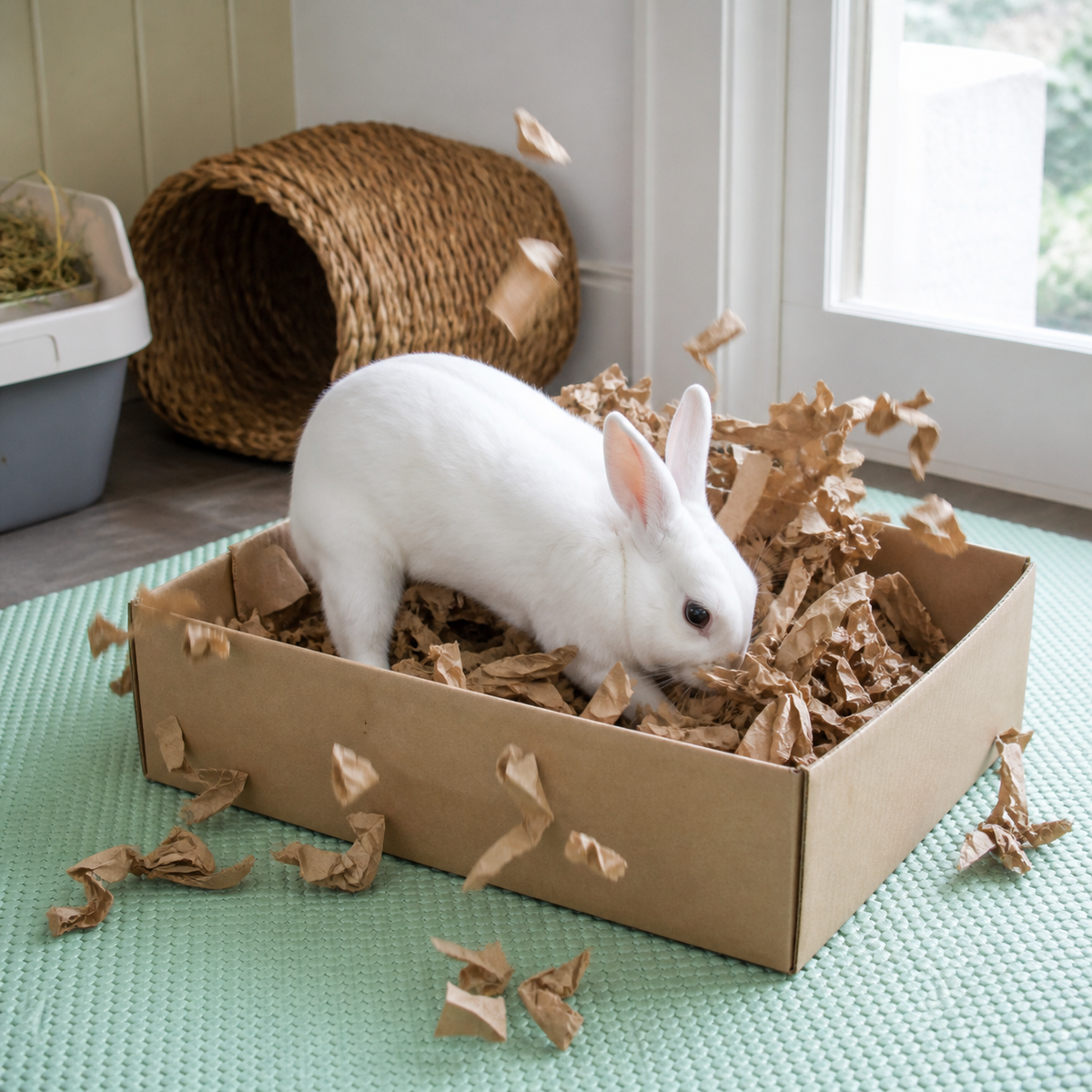
Digging moves material. That is the point. Put the box on a washable mat, hard floor or other easy-clean area, with enough clearance that flying paper cannot land in food or water. Keep it away from stairs, hot radiators, cables and routes that people need to use.
Some rabbits prefer the box near a wall or hide because it feels less exposed. Others want it in the middle of the activity. Try one sensible position and watch. If the rabbit ignores it, move it gradually or change the contents rather than rebuilding the whole room at once.
Protect any carpet or skirting around the area with rabbit-safe barriers. The approved digging site should be the easiest and most rewarding option available.
Introduce It Without a Demonstration
Set the box down while the rabbit is awake and let them inspect it. Do not place the rabbit inside, hold them there or repeatedly move their paws through the filler. Your demonstration will be scientifically interesting and socially unwelcome.
Scatter a small portion of the rabbit’s normal hay or a few pieces of the usual dry ration through the material. Keep quantities modest and count them as part of the normal food allowance. The reward is searching and manipulating, not a surprise second dinner.
Some rabbits begin immediately. Others need several days. Leave the box available long enough to become familiar, provided it remains clean and safe.
Add Foraging Carefully
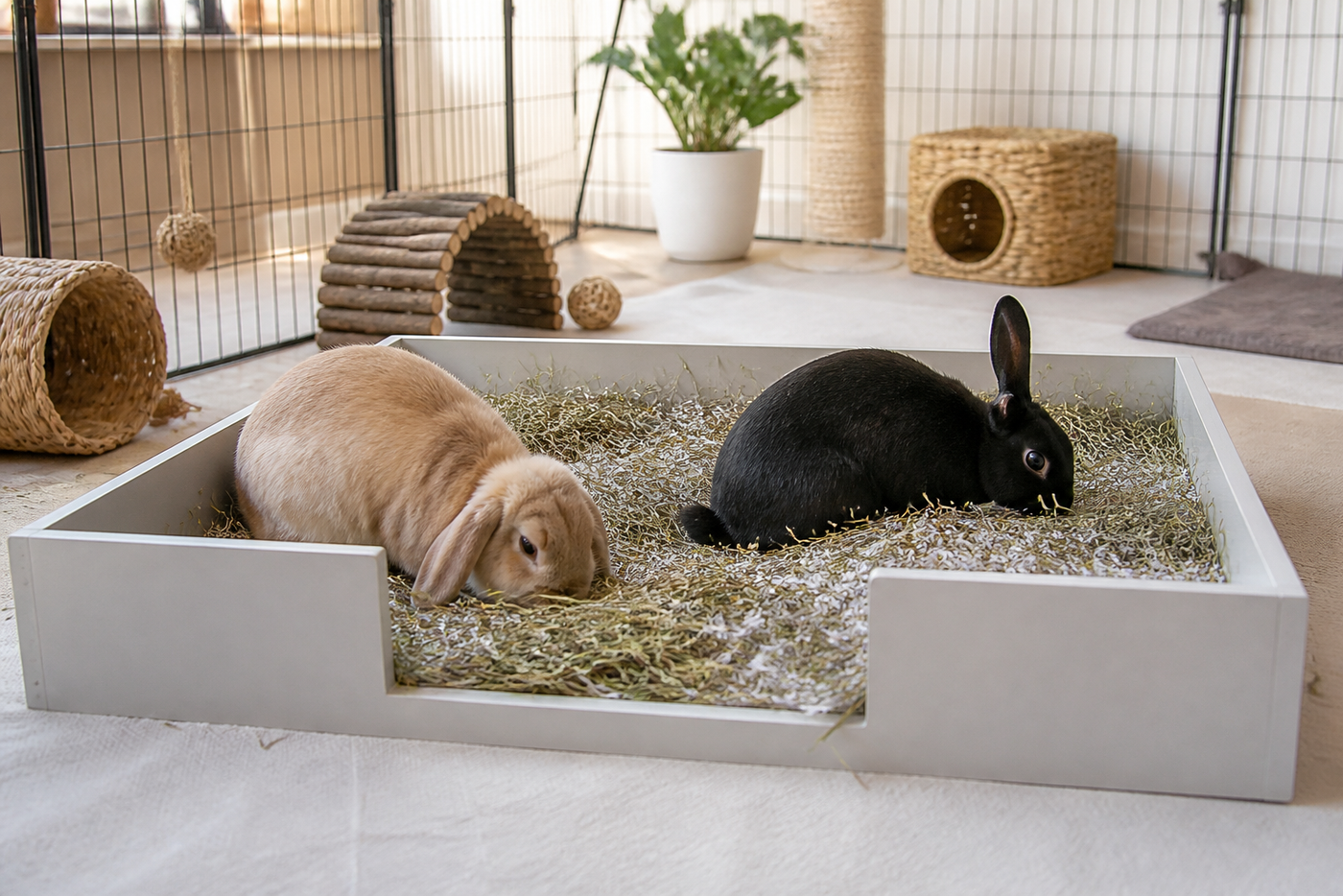
Once the rabbit uses the box comfortably, vary the work. Hide hay among loose paper, tuck a plain cardboard tube near one edge or add a small bundle of rabbit-safe plant material. Keep every item large enough and positioned so it cannot become a trapping hazard.
The RSPCA recommends opportunities to forage, dig, hide and explore. Combining those behaviours can make a simple box more useful, but complexity is not the goal. Watch what the rabbit actually does. If they spend the whole session trying to eat unsafe packaging, simplify the setup.
For another joyful movement clue, our guide to why rabbits binky explains the jumps, twists and context around those sudden airborne commas.
Share the Resource in a Multi-Rabbit Home
Rabbits are social, but valuable objects can still create competition. Make the box large enough for comfortable shared use or provide more than one digging area. Add two wide entrances, and avoid placing the box where one rabbit can trap another against a wall.
Watch for guarding, chasing or one rabbit repeatedly leaving when the other approaches. A peaceful-looking photograph does not tell you who had access ten seconds earlier. Check the whole session.
Duplicate other important resources too: hides, water, hay and resting places. A dig box is more enjoyable when nobody has to negotiate the entire household through one doorway.
Clean It Before It Turns Into Compost
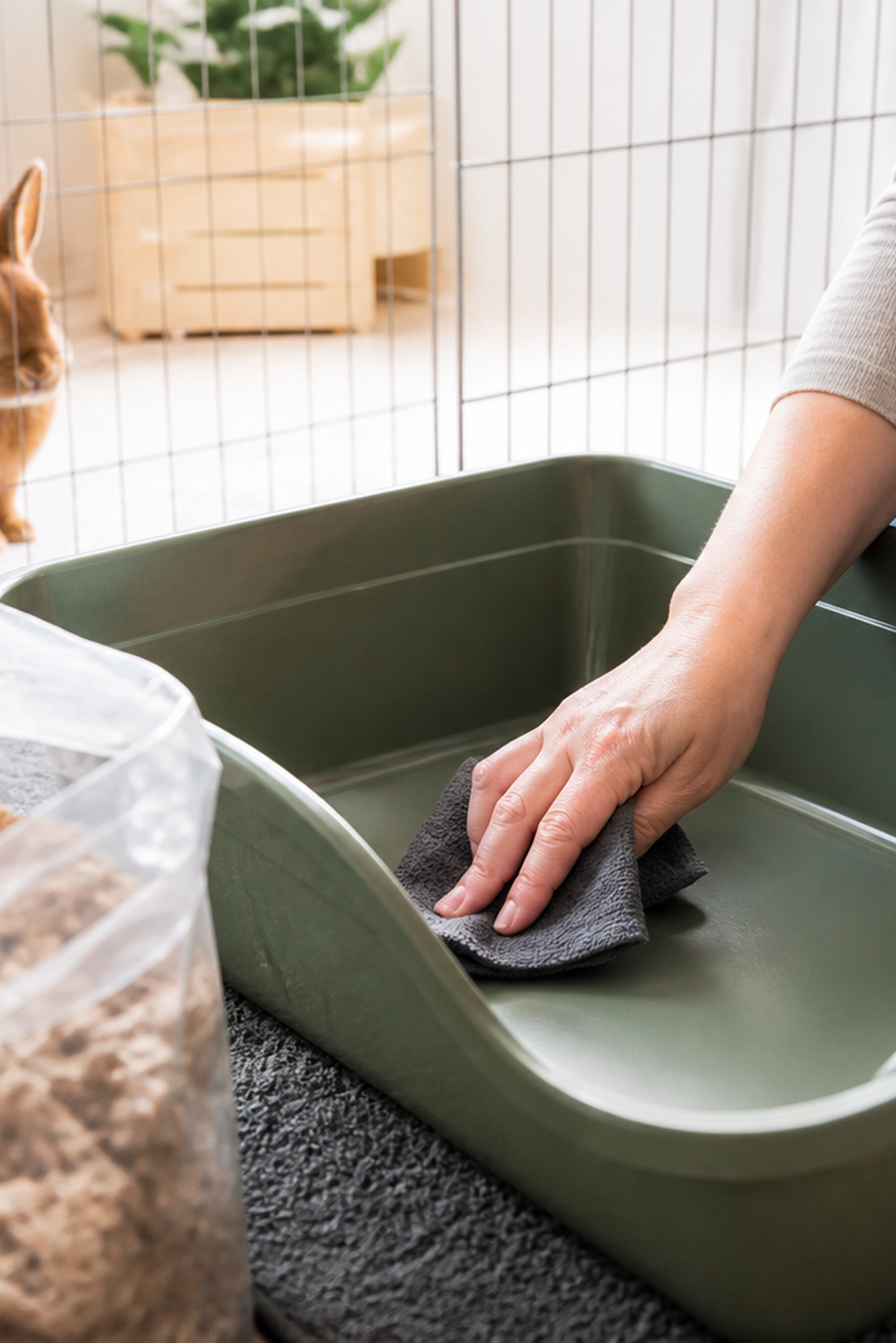
Check the filler every day. Remove urine-soaked material, droppings that are not normal dry pellets, damp hay and any sharp or damaged pieces. Replace the contents when they become dirty, flattened or uninteresting. Wash reusable containers with a rabbit-safe method, rinse where required and let them dry fully.
Do not erase every familiar scent from the entire environment at once. Clean the box because it needs cleaning, then return it to the same useful position. If cardboard becomes wet or heavily chewed, replace the whole box rather than trying to preserve its long and distinguished career.
Outdoor boxes need extra checks for rain, mould, insects, temperature and contaminated soil. Bring the setup under cover or remove it when conditions make it unsafe.
When Digging Changes Tone
More digging around nesting material can occur in unspayed female rabbits, including during false pregnancy. Sudden frantic digging, reduced appetite, hiding, unusual aggression, repeated straining, pain posture or a wider behaviour change should not be dismissed as enthusiasm for the new box.
Contact a rabbit-savvy veterinarian if digging changes suddenly alongside eating, droppings, movement, breathing, posture or energy. A rabbit who stops eating or producing normal droppings needs prompt veterinary advice.
Keep hot-weather rabbit care in mind too. On warm days, enrichment should not trap heat or encourage intense activity in an overheated room.
The Two-Minute Dig-Box Audit
Before declaring the excavation department open, check six things:
- Room: Can the rabbit enter, turn, dig and leave freely?
- Surface: Is the container stable and non-slip?
- Filler: Is everything plain, low-dust, non-toxic and free of staples or plastic?
- Exit: Are openings wide, smooth and impossible to guard easily?
- Placement: Is the box away from heat, cables, stairs, food and water?
- Condition: Is it dry, clean and structurally sound today?
If one answer is no, fix that part first. A cardboard box is wonderfully replaceable. A rabbit is not.
Give the Paws a Legal Department
A rabbit dig box works because it meets the behaviour halfway. The rabbit gets to push, scrape, search and rearrange. The human gets to choose a safer container, filler and location than the middle of the sofa.
Make it roomy. Make the footing stable. Keep the exits easy and the material suitable. Then let the rabbit decide whether today is for gentle foraging or a full planning-permission dispute.
The mess is not evidence that the box failed. Often, it is the signed completion certificate.
Trusted Sources
- Rabbit Welfare Association & Fund: Digging
- Rabbit Welfare Association & Fund: Housing and enrichment
- RSPCA: Enrichment for rabbits
- RSPCA: Suitable toys for rabbits